Few genres demand precision and personality like fighting games, making them one of the most compelling and competitive genres. But casual fans are also drawn to these games for their world, characters, and story. Marvel Tokon: Fighting Souls 2026 already feels like a contender for the year’s best fighting game. As someone who has grown up playing fighting games, I know how hard it is for any new entry to stand out in a space dominated by legacy franchises. But Marvel Tokon: Fighting Souls not only has the advantage of its Marvel name, but also a game mode essential to fighting games.
Videos by ComicBook.com
The team-based systems, stylish presentation, and deep roster make a strong first impression that goes beyond the usual Marvel fan service. Yet, it is the addition of a dedicated story mode that has me beyond excited. I wish Marvel Rivals had given us this, especially considering its unique story and crossovers. Marvel Tokon: Fighting Souls is poised to capitalize on this, and it has a unique opportunity. By approaching each team as a narrative unit rather than a random pairing of characters, Marvel Tokon: Fighting Souls adds depth to a mode many fighters overlook. Marvel’s comic book structure makes this approach feel not only natural but full of potential.
The Story Mode Could Become the Best in Any Marvel Fighter
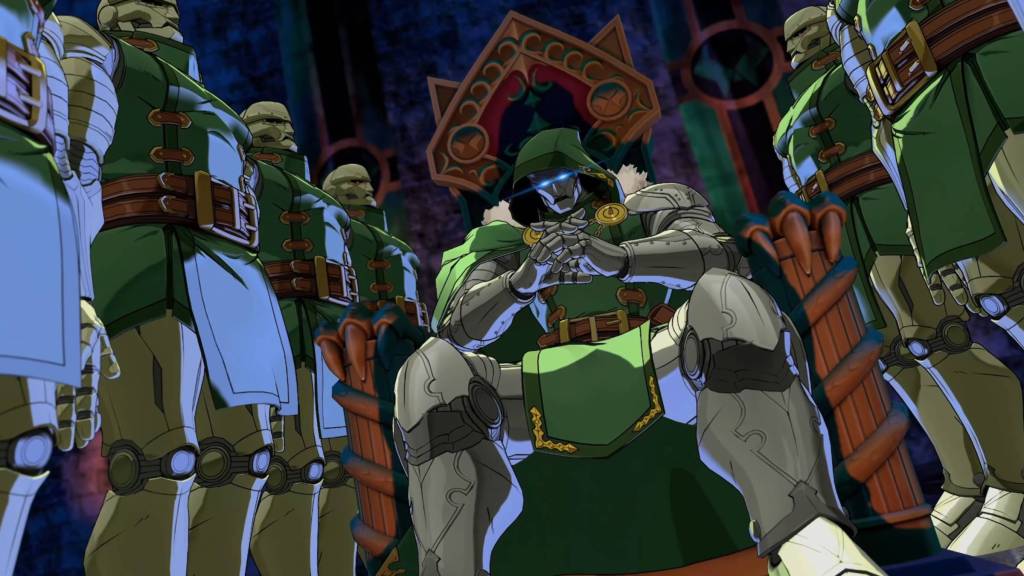
While gameplay is the core of any fighting game, the story is where Marvel Tokon: Fighting Souls can surprise everyone. With official confirmation of a narrative mode, expectations are high, but the team-based structure suggests something even more ambitious. Each team has the potential to feature its own story threads, pulling from Marvel’s comic book crossover events where multiple ongoing arcs converge toward a central plot. Four teams give fans four potentially different storylines, each with a different ending. Even among these branching stories, we could see different beats depending on which characters are used as the primary.
The February State of Play trailer gave fans their biggest clue yet for the story mode: the introduction of what is likely the game’s main villain. The shot of this villain defeating Gladiator sparked immediate debate. Gladiator is no small opponent, so if someone can overpower him, that instantly raises the stakes for the rest of the cast. Marvel has no shortage of villains, and speculation suggests we could see Champion of the Universe as the primary antagonist. Considering the deep pick of Danger as a playable character, this would fit with Arc System Works design and showcase a seldom-seen character.
What excites me most is the idea that story mode might explore these conflicts from multiple perspectives. Seeing the same event interpreted through the lens of different teams reflects the serialized storytelling Marvel has mastered for decades. When games, especially fighting games, embrace that format rather than treating story as an afterthought, it creates a campaign that fans return to repeatedly. If Marvel Tokon: Fighting Souls delivers on this structure, it could become a benchmark for how narrative can enrich a fighting game and make it 2026’s best entry in the genre.
Marvel’s Roster Depth Makes the Teams Meaningful
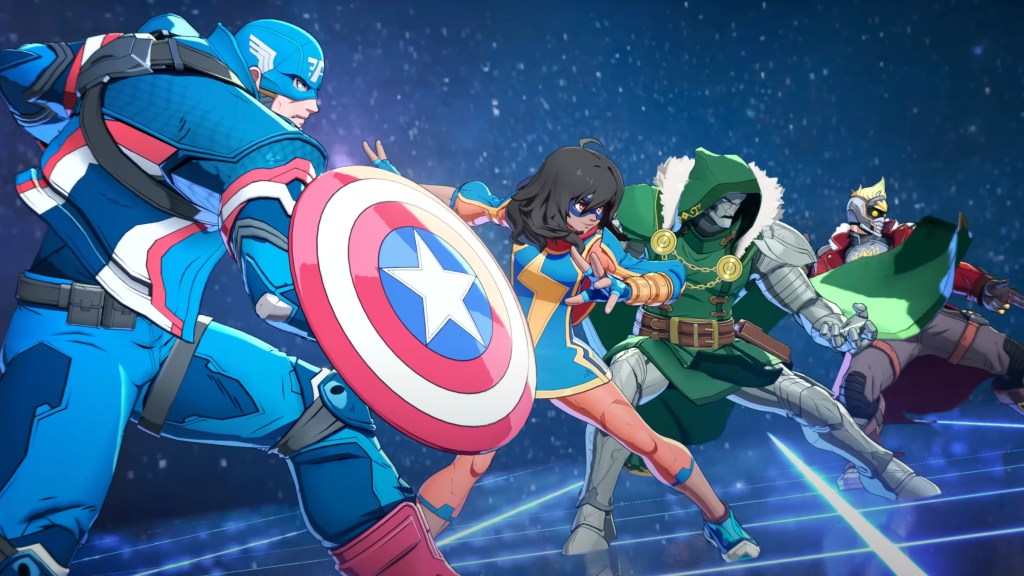
One of the advantages Marvel Tokon: Fighting Souls has over its competition is the sheer amount of narrative history behind its roster. Even before launch, fans are already imagining which characters might join future teams based on relationships, rivalries, and classic comic arcs. A Marvel fighting game will always benefit from the size of the universe, but Marvel Tokon: Fighting Souls can use that depth to further its story in more intentional ways.
Because teams are treated as units rather than loose collections, character selection feels like more than a list of favorites. A team featuring cosmic heroes plays nothing like a street-level duo. That distinction delivers variety without bloating the roster. Arc System Works will undoubtedly choose favorites, like Captain America and Spider-Man, but we’ve also seen more niche picks like Danger and rising Magik. Marvel Tokon: Fighting Souls represents an opportunity for lesser-known characters to get the spotlight. Not only that, but it can show that lesser heroes’ histories matter, and those histories shape how they fight together.
This creates the potential for an evolving meta that reacts to roster expansions. Each new character could influence multiple teams, and each new team could reshape competitive strategies. This long term flexibility is what keeps fighting games alive years after launch. Not only that, but Arc System Works could easily release story-based missions and challenges with each new character to blend into the existing roster. If Marvel Tokon: Fighting Souls supports this structure with updates that honor Marvel’s storytelling, it could maintain relevance in both the esports scene and among casual fans who love exploring character relationships.
The Team-Based System Is the Game’s True Innovation
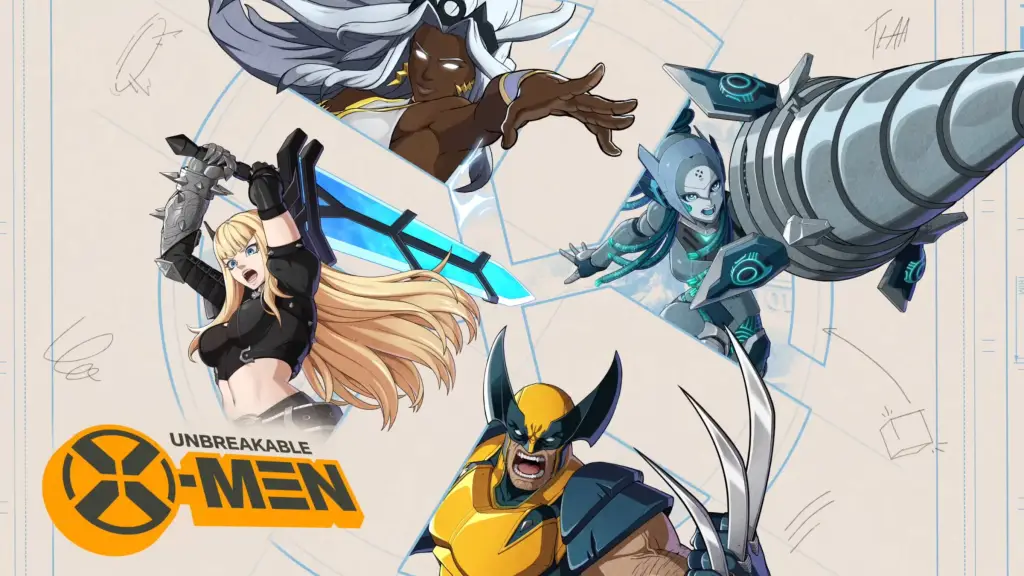
The defining feature that elevates Marvel Tokon: Fighting Souls is its team-based mechanic. Many fighting games use tag systems, but few treat teams as the core identity of the experience. Here, the synergy between characters is more than a gameplay bonus. The teams are curated to reflect relationships, rivalries, and arcs drawn directly from Marvel’s lore, and this will directly influence the main story. But it also gives each match a sense of narrative weight, even outside of story mode.
What stands out is how these team dynamics affect the flow of combat and personal narratives. Switching between characters feels purposeful, and teambuilding creates unique stories. The transitions showcase unique animations, dual supers, or cooperative attacks that reinforce why these pairings exist in the first place. But it also showcases how different each team-up can be. Seeing characters interact mid-battle in ways that reflect decades of storytelling makes the on-screen action feel richer and more connected.
This system also encourages experimentation. Each team plays differently, and understanding those differences becomes part of the fun. Instead of simply picking your strongest individual characters, you begin to think like a strategist and look at specific matchups. Which duo has the best pressure? Which combination can counter an opponent’s synergy? What characters shore up each other’s weaknesses? The result is a fighting game that rewards creativity and knowledge, not just mechanical skill. It is rare for a single feature to feel like it redefines a game’s identity, but Marvel Tokon: Fighting Souls manages exactly that, and I cannot wait to see how this plays out in the story mode.
What do you think? Leave a comment below and join the conversation now in the ComicBook Forum!
Most Viewed
-

Courtesy of Crunchyroll -

Images Courtesy of DC Comics