Wolfenstein 3D is one of those fundamental building blocks of the modern gaming industry that can’t be ignored. Developed by id Software and released 34 years ago today, Wolfenstein 3D was a huge step forward for id Software, playing a big part in their evolution into one of the most consequential developers of the 1990s. Their advancements in game design paved the way for the first-person shooter genre as we know it, laying the groundwork for generations of games.
Videos by ComicBook.com
Now considered to be the common ancestor of the shooter genre as a whole, Wolfenstein 3D remains an iconic chapter of the gaming industry that has been ported to dozens of platforms and inspired countless other games. On the anniversary of the game’s release, it’s worth looking back at how it came to be, the quick impact it had on the industry, and if the underlying game design is strong enough to help it compete against the generations of shooters it inspired.
How Wolfenstein 3D Changed Gaming’s Future
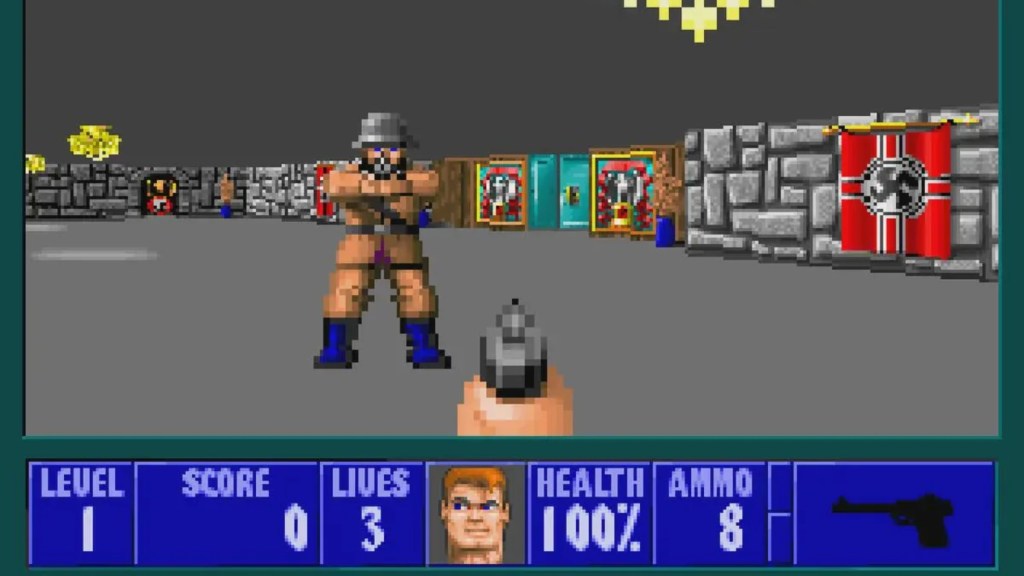
Released on May 5, 1992, Wolfenstein 3D was a game-changer in the nascent gaming landscape that completely reinvented how shooters work. Previously, 3D games had been primarily focused on adventure games and flight simulators that didn’t task early PCs too hard. The faster pacing of intense action games would have been too much for the platforms, especially with 3D surfaces that the machine would need to render quickly. However, with advancements in tech, developers like John Carmack at the newly established id Software began to experiment with ray casting, which allowed the computer to map larger 3D landscapes without overcommitting to creating the entire world.
By creating specific rooms and hallways based on the player’s line of sight rather than being forced to always be processing the entire world, Carmack was able to develop a 3D game engine that wouldn’t severely impact the computer. These developments, coupled with the ambitions of his colleagues like John Romero, led to the decision to remake 1981’s Castle Wolfenstein with the 3D game engine. The game pushed the boundaries of what broadly appealing gaming could be at the time, with heavier uses of blood and violence than a lot of games released at the time.
When the game was released, it quickly became one of the strongest-selling games of the year, with id Software estimating roughly one million copies of the shareware version of the game were sold within two years. In the years since, the game has been considered the “grandfather” of the FPS genre as we know it today. The advancements made by the team in action pacing and adjusting to the first-person perspective became norms in the medium, leading to waves of other shooters that looked to replicate that success. It helped make 3D a major selling point for developers and remains iconic decades later.
Does Wolfenstein 3D Still Hold Up?
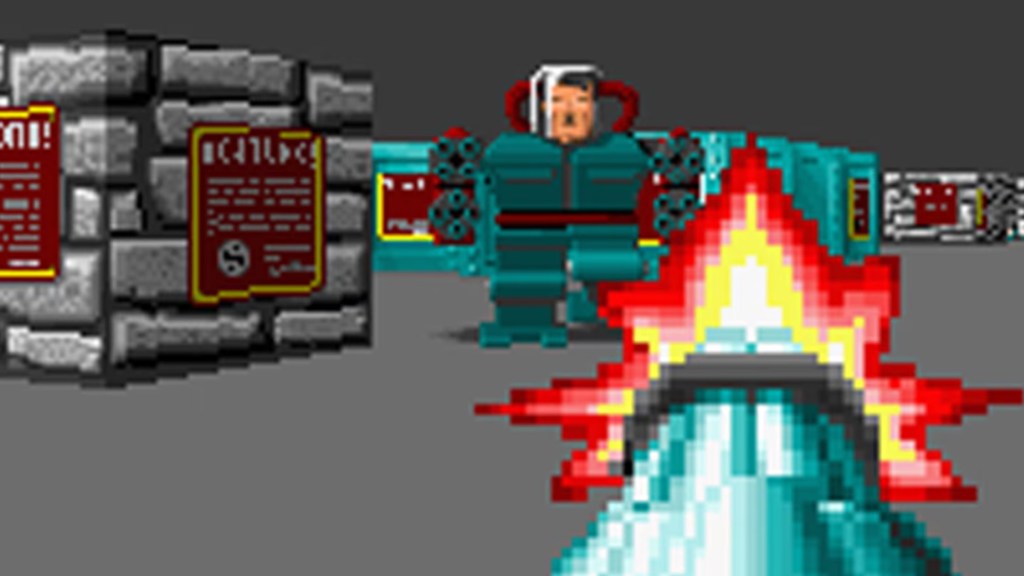
It’s not hard to revisit Wolfenstein 3D, which has been released on numerous platforms and can be played fairly well in most modern internet browsers. Comparing it to modern games may seem like a folly, but there’s something timelessly effective about the way the game’s design. Venturing back into Castle Wolfenstein, players are quickly thrust back into the role of B.J. Blazkowicz, who is tasked with fighting his way out of the castle before carrying out missions vital to the destruction of the German war machine. Similar to 2016’s Doom, there’s a straightforward simplicity to the game’s initial presentation that completely understands what the genre is all about.
The game opens with the player in the fortress, forced to try and escape with nothing but their skills and a stolen pistol. The game quickly throws players into the action, tasking them with finding an exit from the castle prison and the hordes of Nazis standing in their way. There’s little in terms of complex gameplay, with most of the action focused on exploration and gunfire. Secrets can be discovered along the way, but most of the standard gameplay is established within those opening minutes of action. It’s fast-paced and lacks a lot of the game design complexity that would come in later generations of FPS games. However, that quick pace highlights the kinetic action and frantic movement that come with escaping German soldiers.
The relatively straightforward qualities of the gameplay highlight how effective a simple shooting game can be, especially when it refines the action and keeps the primary loop simple. While modern shooters have much better action, visuals, and gameplay styles, there’s a streamlined simplicity to Wolfenstein 3D that makes it still engaging to play three decades after it came out. It speaks to the quick pacing that would come to define the genre, codifying it in an era where 3D games were the cutting edge instead of the standard style. Even though plenty of games would refine the tropes and mechanics that Wolfenstein 3D codified as an industry standard, there’s still enough tight combat and hectic boss fights to make Wolfenstein 3D a blast to play. It all speaks to the importance of underlying gameplay mechanics. While the graphics might have improved and the game mechanics have been refined, Wolfenstein 3D remains as fun as it was when it first came out.
More Gaming
-

Image Courtesy of Electronic Arts