Like all video game genres, adventure games have come a long way since their introduction in the 1970s. At first, adventure games started as text-based adventures, requiring the player’s imagination to proceed through the story. As the genre developed, it evolved, expanding to include various sub-genres, all of which share common elements. These often include problem-solving, an overarching narrative, exploration, gameplay as a hero, and the ability to collect and manipulate objects. We’ve dug through the genre’s history and highlighted ten games that significantly innovated with new mechanics, capabilities, and dynamic options.
Videos by ComicBook.com
1) Colossal Cave Adventure (1976)
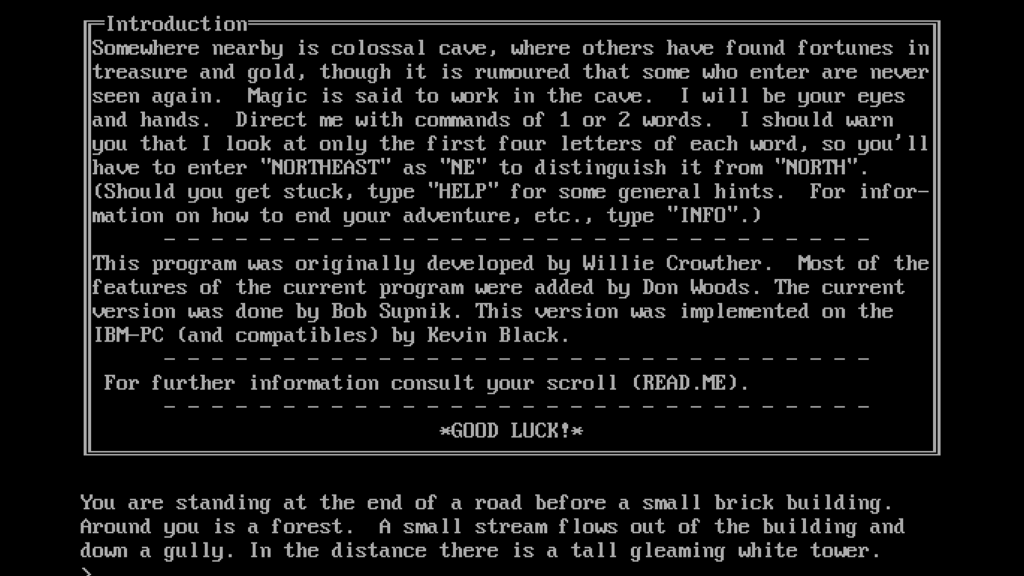
While it’s considered to feature early role-playing elements, the adventure game genre began in 1976 with Colossal Cave Adventure. While not the first text-based game, Colossal Cave Adventure is considered the first true adventure game, in which the player explores a cave system to find treasure. It features dozens of locations the player can explore, and doing so requires brief text commands. It’s probably the most important foundational game in the adventure genre, as it was the genre’s namesake. It influenced many text-based games, including Zork, which is probably better known today.
2) Mystery House (1980)
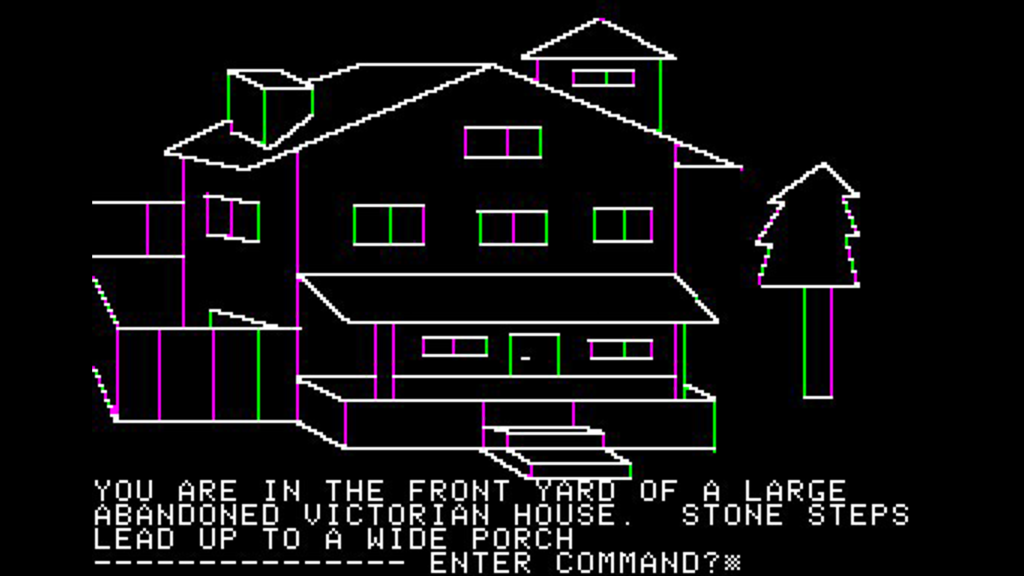
As technology evolved, enabling developers to code graphics into their games, they took advantage of it. The first graphical adventure game was Mystery House, which was heavily influenced by Colossal Cave Adventure and other text-based games that preceded it. Gameplay begins near a mansion, where the player enters and is locked inside. As you explore the mansion, you find people, bodies, and more as a mystery unfolds. The goal is to identify a killer before becoming their next victim. Mystery House features line drawings and text prompts, making it a hybrid between text-based and fully graphical games. Like Colossal Cave Adventure, Mystery House was a highly influential video game, and it’s also one of the first examples of a horror game.

3) Dragon’s Lair (1983)
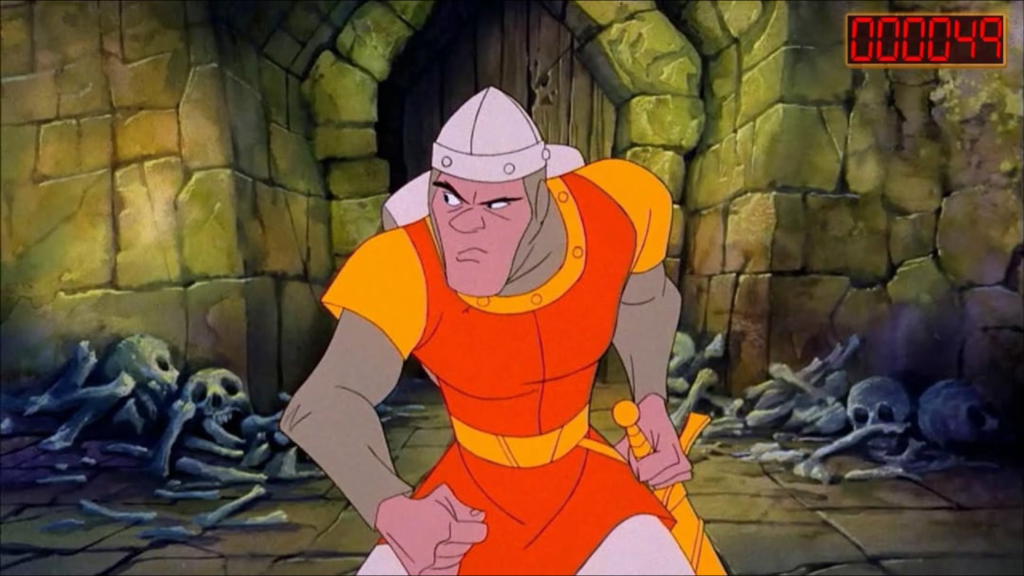
While computer games were rudimentary in the early 1980s, something interesting was happening in arcades. LaserDisc games launched in 1982 with Astron Belt, and the following year, a fantasy adventure game called Dragon’s Lair came along and absolutely blew everyone away. It featured beautiful animation by Don Bluth, an interactive story, and more ways to die than pretty much any game that has ever existed. This is the game people gathered around in arcades to watch others play, and it often included a secondary monitor on top of the cabinet for that purpose. It innovated in several ways, most notably showing that adventure games could be dynamic, and it was highly influential.
4) King’s Quest: Quest for the Crown (1984)
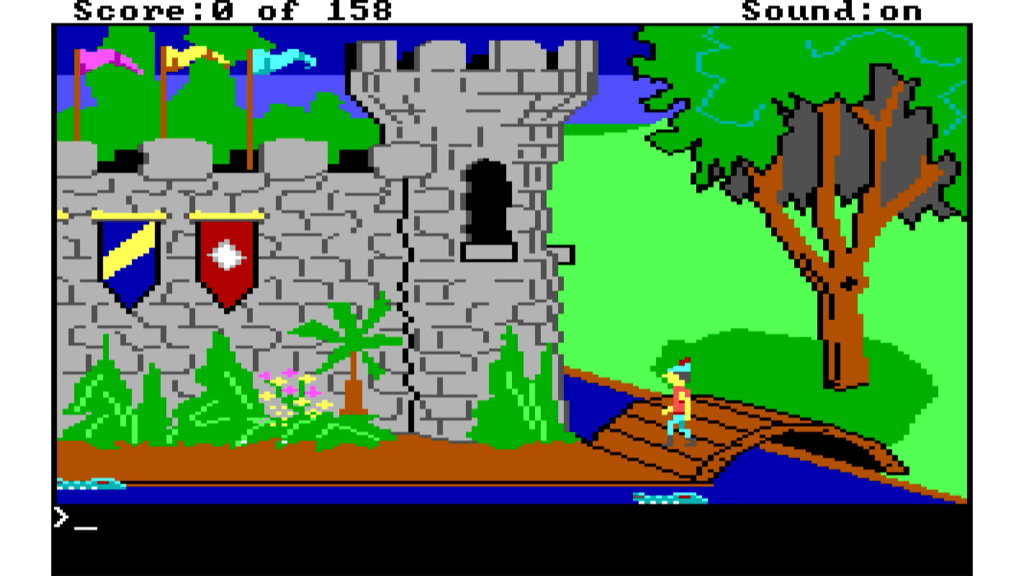
Moving back to computers, graphics significantly improved from lines to sprites, showing 16-color graphics and beautiful animations. King’s Quest: Quest for the Crown demonstrated improvement in these areas, making it influential in the genre’s development. With improved graphical capabilities, developers found they had greater options for stories, interactive components, and overarching narratives. The success of King’s Quest I launched a franchise, and it was one of the first truly successful commercial adventure game releases of its kind. The game expanded Sierra’s options to release more innovative and influential titles.
5) Enchanted Scepters (1984)
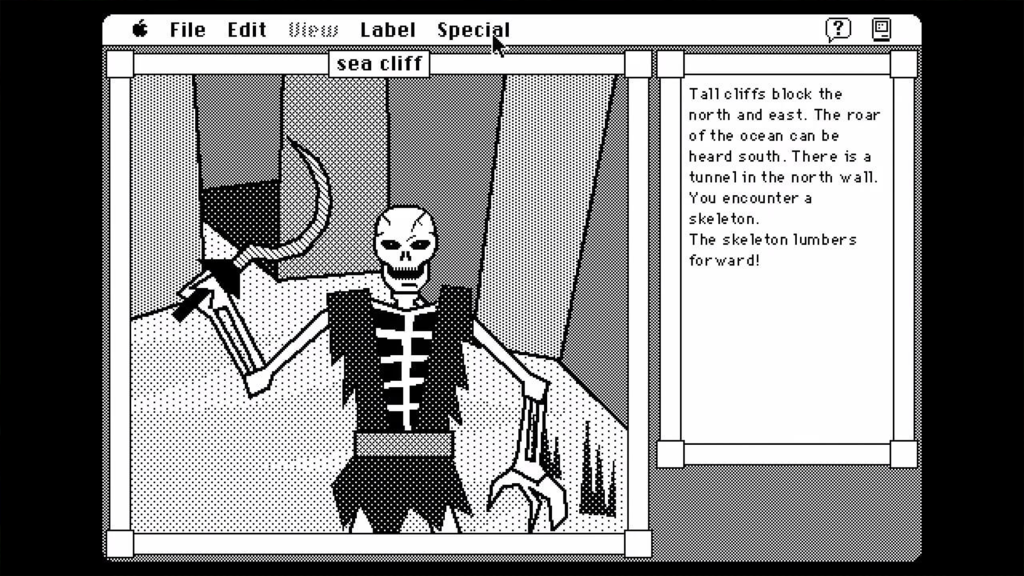
One of the biggest innovations in adventure games came with Enchanted Scepters, the first point-and-click adventure game. This model would be used throughout the 1980s and ‘90s as one of the primary mechanics going forward, so the game was highly influential. Players see the room they’re standing in with a description on the right, which mentions whatever items can be manipulated or used in various ways. It worked by combining graphics with clickable hotspots. Drop-down menus allowed players to select specific actions, a new concept at the time. Thanks to the innovative approach, point-and-click adventure games would quickly dominate the genre.
6) Maniac Mansion (1987)
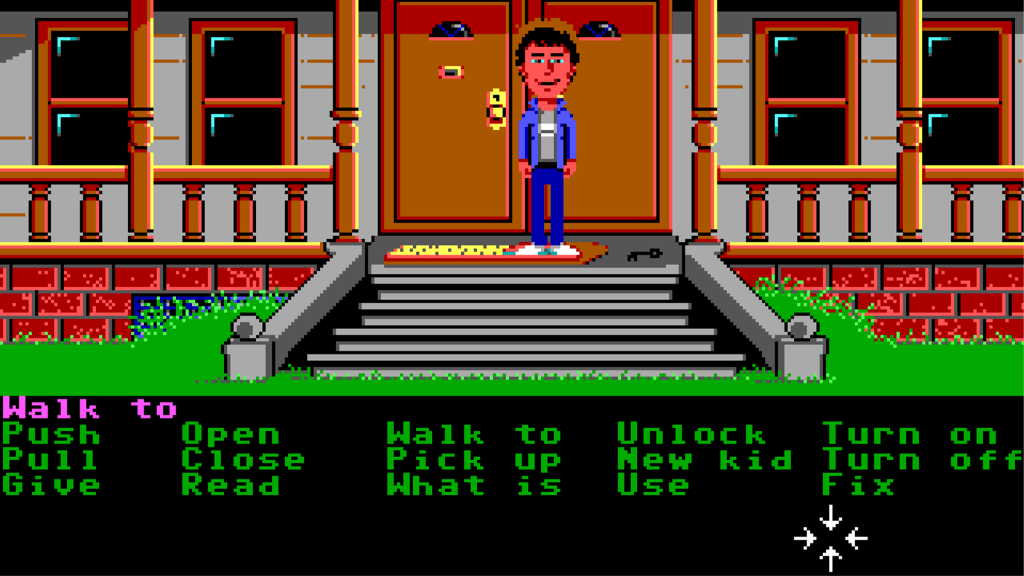
Several point-and-click games followed Enchanted Scepters, and one of the most successful and innovative was Maniac Mansion. The game received widespread critical acclaim, thanks to its cutscenes, impressive graphics, animation, and humor. While all of that was great, what made Maniac Mansion innovative was its approach to the point-and-click interface. It introduced something called a “verb object” interface. Previous games offered frustrating responses if you didn’t input a correct command, but the “verb object” interface worked differently. When you click, all available commands appear on the screen, so a player needs only choose the one they want to perform. This eliminated a ton of issues and changed how adventure games were made.
7) Myst (1993)

When Myst was released in 1993, it was a massive success, drawing in new players from around the world with its impressive graphics. Gameplay involves interacting with objects as they move through the environment, solving puzzles as the game’s backstory unfolds. It featured immersive music and pre-rendered graphics, unlike anything that had come before. These days, its graphics aren’t too impressive, but in the early 1990s, they were groundbreaking. Myst demonstrated how adventure games could be fun for adults, not just children, and it became the best-selling computer game for nearly a decade. It’s since been re-released, and there’s a VR version, but when it first arrived, Myst was something of a killer app.
8) Grim Fandango (1998)

While Myst had impressive graphics, they were pre-rendered and mostly static. One of the best early adventure games to use 3D computer graphics was Grim Fandango, which was easily one of the best adventure games ever made up to that point, and it was also a massive commercial failure. While critics were enamored, the adventure game genre began a significant decline around the turn of the century, and great games didn’t do well. Regardless, it followed the example of Alone in the Dark, the first 3D adventure game, though it’s now seen as a survival horror game. Grim Fandango was fun, innovative, and beautifully rendered, but its financial failure pushed LucasArts to abandon the genre.

9) Bone: Out from Boneville (2005)

Telltale Games’ second title was also the world’s first multi-chapter episodic adventure game, a sub-genre that continues today with hits like Dispatch. Bone: Out from Boneville is based on Jeff Smith’s first volume of his hit comic Bone, adapting the story into an adventure in which Fone Bone, Phoney Bone, and Smiley Bone are run out of town and wind up lost in the desert. It covers the source material incredibly well, and the game’s animation is on point. Bone: Out from Boneville isn’t Telltale’s best episodic adventure game, but being the first, it innovated the genre in new directions, paving the way for The Walking Dead and other popular Telltale Games series that followed.
10) Dear Esther (2012)
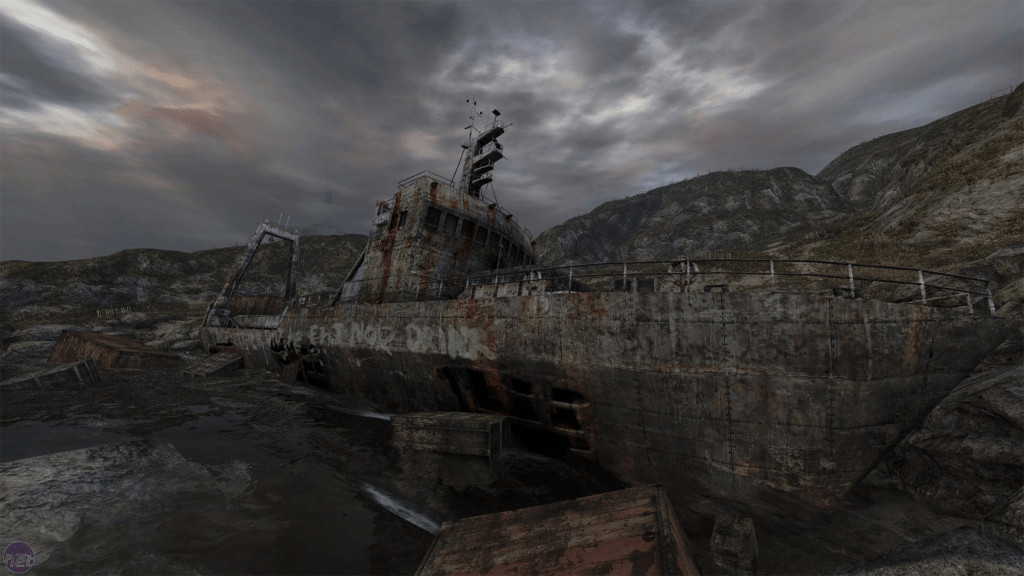
By the 2010s, the adventure game genre hadn’t seen much in the way of innovation for a while. That changed with Dear Esther, a narrative-focused game where the player barely interacts with the world. This was unusual and criticized upon release, but it helped popularize the walking simulator genre throughout the decade. The game’s objective is to explore an island while listening to a series of letters. They’re from a man’s deceased wife, and as you progress, you uncover the mystery of her death. This was a new type of adventure game that didn’t adhere to the standards of its predecessors, and it influenced games like Firewatch, The Stanley Parable, and the Discovery Mode of several Assassin’s Creed titles.
Which adventure game do you think contributed the most innovations to the genre? Leave a comment below and join the conversation now in the ComicBook Forum!
More Gaming
-

Courtesy of Asobo Studio and Focus Entertainment -

Courtesy of Starry Studio and NetEase Games -

Courtesy of Rebel Wolves