There are many reasons to love Pokemon cards, and the stunning artwork featured on so many cards is chief among them. Over the years, we’ve seen so many renditions of beloved Pokemon from Pikachu to Spewpa and beyond. As time goes on, some artwork becomes less common as it’s replaced by newer works. That’s one reason older cards can be particularly valued among collectors. But throughout Pokemon TCG history, just a handful of card artworks have been outright banned from returning to circulation.
Videos by ComicBook.com
These days, card art goes through a pretty intense vetting process before hitting the market. So by the time it hits shelves, you can be pretty sure that each Pokemon card meets The Pokemon Company’s standards. But the 90s and early 2000s were a different time, and several earlier card artworks featured designs that were later deemed inappropriate. In total, 12 Pokemon cards have had their art censored or outright banned throughout Pokemon history. As it turns out, one Pokemon and one gym leader are big-time repeat offenders. Here is every Pokemon card with art that will never be allowed back into circulation, and why.
12) Arcade Game (Neo Genesis)
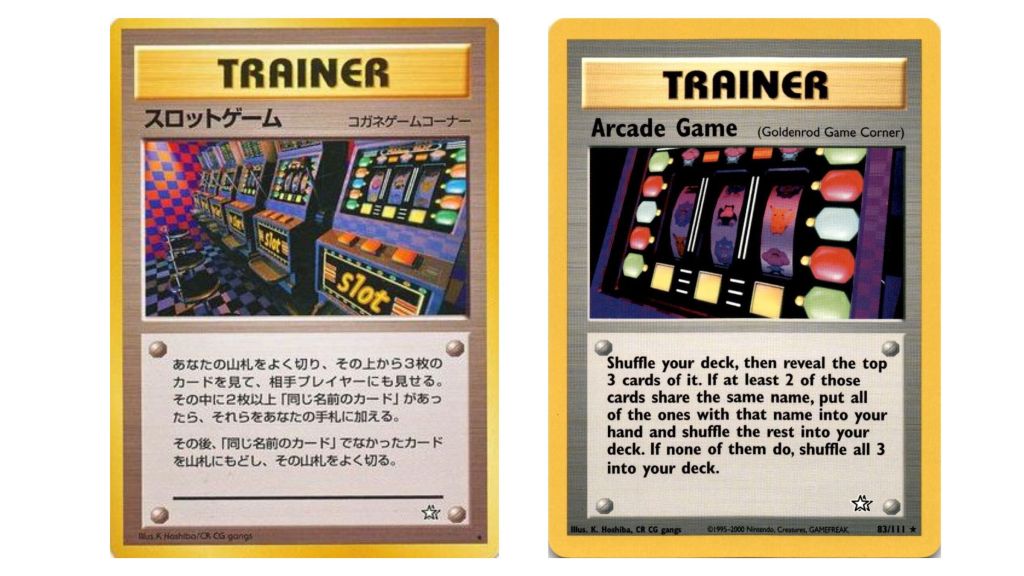
Much like the Game Corner itself, this early Pokemon card featuring Goldenrod City’s gambling hub has fallen out of favor. When the Pokemon TCG – Neo Genesis expansion first released in Japan, the card art featured a row of slot machines, like you see in Game Corner. And it’s the tacit encouragement of gambling that saw this card’s artwork censored for its Western release.
When the card was reprinted for English-language audiences, the original casino-style art was altered to show a close-up image of a single game. It was renamed “Arcade Game,” with the word “slot” no longer visible on the machine or in the card title. You can find the original, uncensored card on the resale market for just about $20 ungraded, if you’re in the market to collect banned Pokemon cards.
11) Card-Flip Game (Neo Genesis)
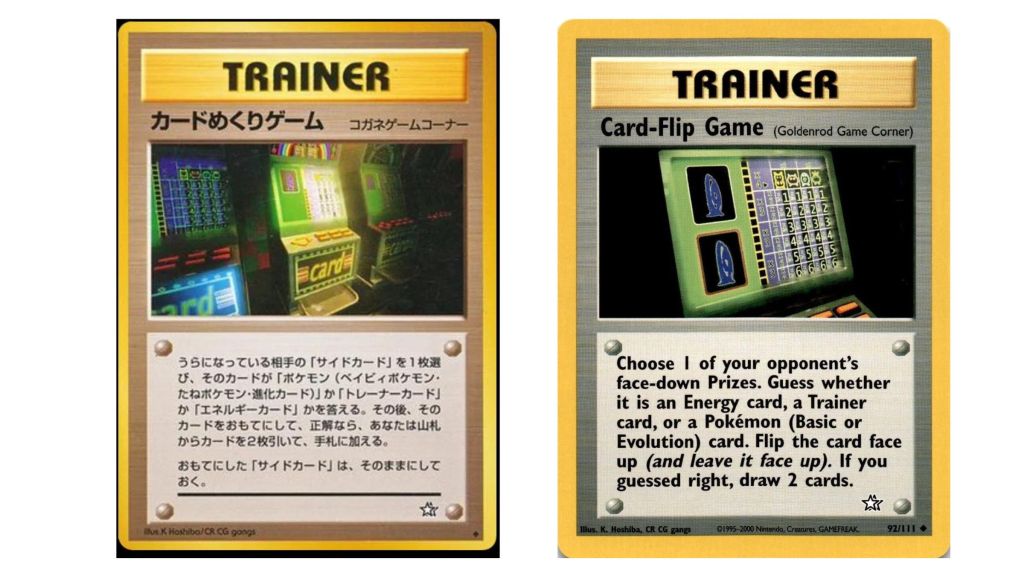
In case the name doesn’t clue you in, this card art was altered in the West for similar reasons to Arcade Game. In fact, the two are essentially companion cards that both depict games in the Game Corner. Here again, the original Japanese artwork shows a row of machines in a casino-like setting.
The alteration here is quite similar to the changes to Arcade Corner. The English-language release focuses on a close-up of the game itself, removing it from its casino context. The word “card” on the front is also no longer visible, though the Card-Flip Game name does still bring that aspect over. Ungraded, the original art can be found on resale sites for around $16, whereas the Neo Genesis U.S. is worth just about $2.
10) Grimer (Team Rocket)

The difference in this card, which released in 2000 as part of the Team Rocket set, is pretty subtle. In fact, it’s easy to miss if you’re not looking for it, but the reasoning does make sense. The Japanese Grimer card from what would become the English-language Team Rocket set features the Pokemon popping up from a sewer. A young woman is walking by, wearing a skirt. And Grimer’s eye angle is, um… questionable.
Regardless of whether the original art intended to imply what it seems to, the English-language card art was adjusted. Grimer’s eyes can be seen looking straight forward at the viewer, rather than in the direction of the girl walking by. Despite the subtle difference in artwork, the “banned” art will run you around $30 ungraded, whereas the Western release is worth just about $2.
9) Jynx (Base Sets 1 & 2 & Legendary Collection)
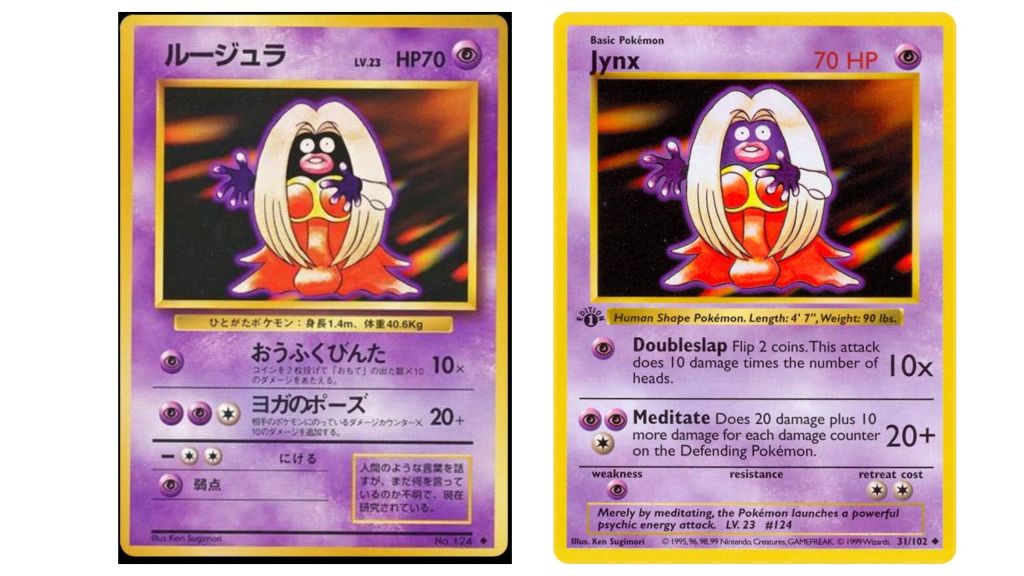
This card was printed three times in total. It debuted with the original Pokemon TCG base set and appeared again with Base Set 2, which reprinted cards from the original Base Set as well as the Jungle expansion. The English artwork was again used for the Legendary Collections set, which reprinted cards from a few different Japanese sets as special reverse holos. The version you have will matter for resale value, but both Jynx cards in the Base Set and Base Set 2 printings feature the altered art as opposed to the original Japanese rendition. It’s the same reason that many early Jynx cards have a spot on this list – Jynx’s skin color.
In the Japanese run for what became the English Base Set, Jynx is depicted with black skin. This, combined with her large lips, is considered a problematic depiction of someone doing blackface. So, the card art (and all depictions of Jynx) were changed to show the character with purple skin, instead. But because there were several Japanese sets in existence before this decision was ultimately made, many Western sets would have to alter the Jynx art prior to release.
8) Koga’s Ninja Trick (Gym Challenge)
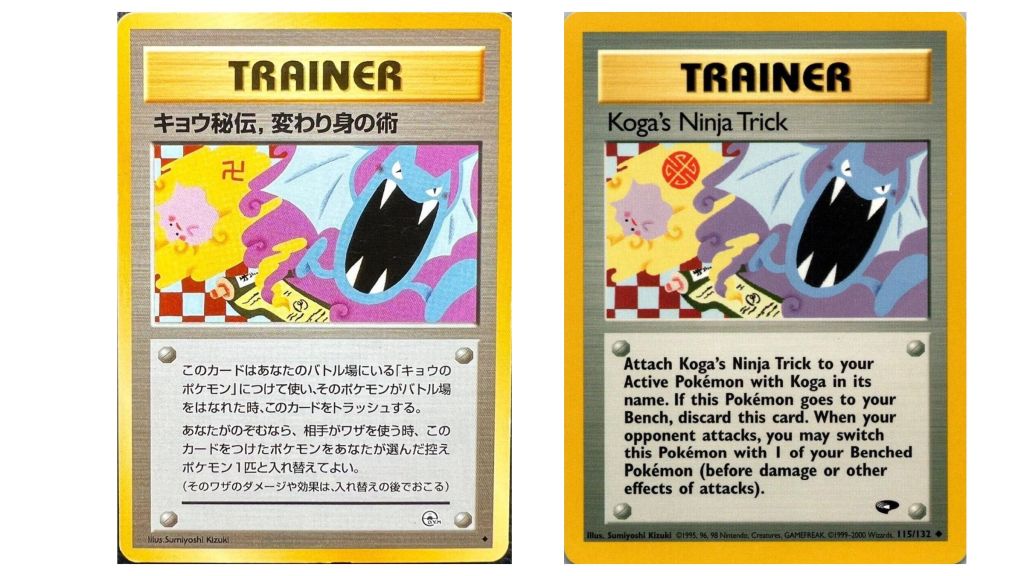
It doesn’t take long to see why this card’s artwork was banned both in subsequent Japanese reprintings and in the U.S. The original 1999 artwork from the Japanese Challenge from the Darkness set, includes a swastika symbol in the background. This symbol was originally a Buddhist symbol with a more positive meaning, which may be why a character like Koga might have it in his gym. However, its modern meaning is of course associated with Nazi Germany, so it’s pretty clear why this artwork will not be used again.
When this set made its way to the west as Gym Challenge, the card’s artwork was adjusted to include a different symbol in the background. The original artwork is banned in Japan as well, making it quite rare. If you collect banned cart art, you can get an ungraded Japanese version for around $107. The English-language card, on the other hand, is worth just about $3 today.
7) Misty’s Tears (Gym Challenge)
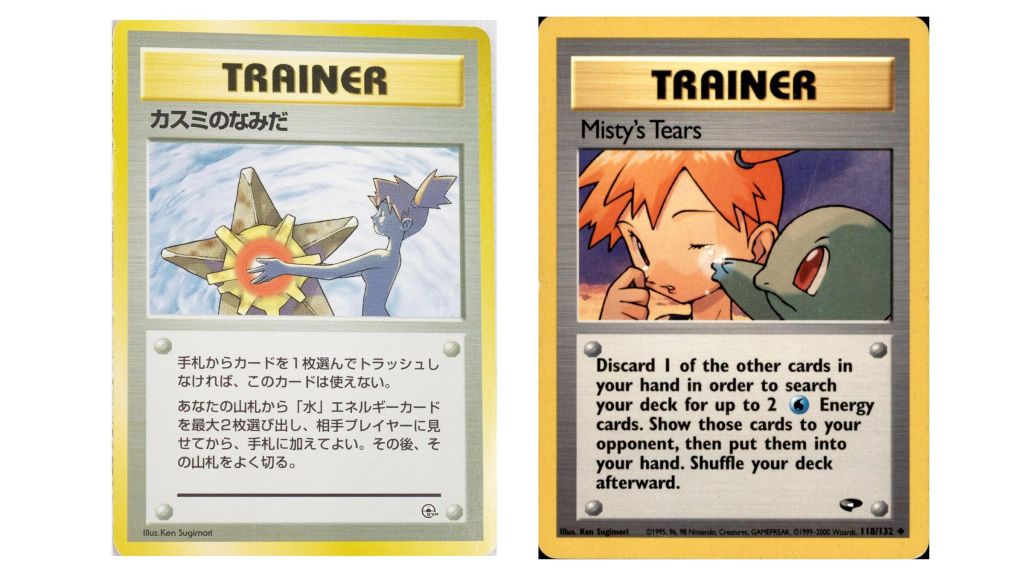
This card has one of the most dramatic art changes, with the original artwork entirely swapped out for a new design. Whereas many cards on this list featuer small changes, like zoomed-in artwork or minor adjustments, this one is completely different from the original. In the Japanese Hanada City Gym Theme Deck, it features a nude Misty embracing a damaged Staryu. The depiction of the nude gym leader was later deemed inappropriate, leading to a big swap for the English-language release.
When Misty’s Tears arrived in the Gym Challenge set, it depicted an entirely different image of the gym leader. This closeup image shows her crying while Squirtle wipes her tears. Not even the original Pokemon made it over to the new version. Ungraded, the original Misty’s tears is worth about $44, whereas the English-language version is worth about $18. Not as big a difference as manny banned cards, despite the vastly different card art.
6) Moo-Moo Milk (Neo Genesis)

Like Misty’s Tears, this card has entirely different artwork after its original version was deemed inappropriate. The original card from the Japanese New World set depicts Sentret drinking milk directly from a cow or maybe a bag designed to look like one, udder and all. Given that Moo Moo Milk is typiclly associated with Milktank, it’s kind of weird to see what looks like a normal cow as the source here. But the real issue that led to the original art being censored was the up close and personal depiction of the cow udder.
When Moo-Moo Milk made its way over to the English-language Neo Genesis set, it had a very different appearance. The card’s art is fully swapped, this time showing several jars of milk with a Milktank sticker on them. A cute Clefairy smiles in the corner, for some reason. The original, uncesored card runs for about $16 on the reesale market, making it one of the more affodrable banned cards to add to your collection. In English, the card brings in just about $2 ungraded.
5) Sabrina’s Gengar (Gym Heroes)
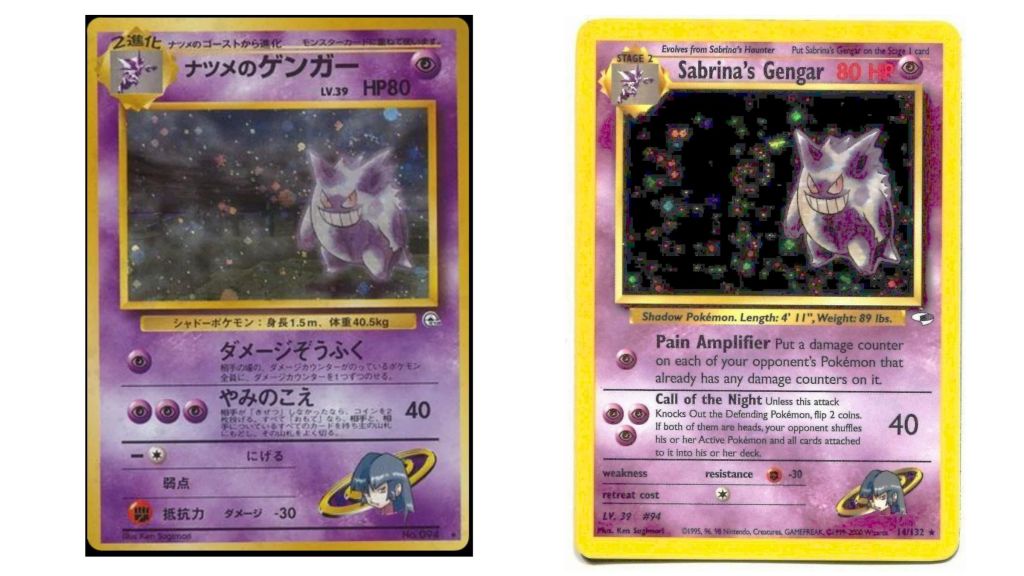
This one is subtle and, given the Cubone backstory of it all, a little bit baffling. The original Sabrina’s Gengar card features a faint depiction of a cemetery in the background. It’s honestly very subtle and easy to miss. However, the hint at a row of tombstones was apparently deemed too scary for Western audiences. This despite the fact that Lavender Tower is full-on haunted in the video games.
For whatever reason, the card art for Sabrina’s Gengar was altered when the set was released in English. The vague outlines of tombstones are gone altogether, replaced with a background that’s just the floating lights/stars from the first card. It’s one of the more subtle artwork changes, and it shows. The difference in price between the English-language Sabrina’s Gengar and the Japanese release is a much narrower margin of just around $40 for Ungraded copies.
4) Sabrina’s Jynx (Gym Challenge)
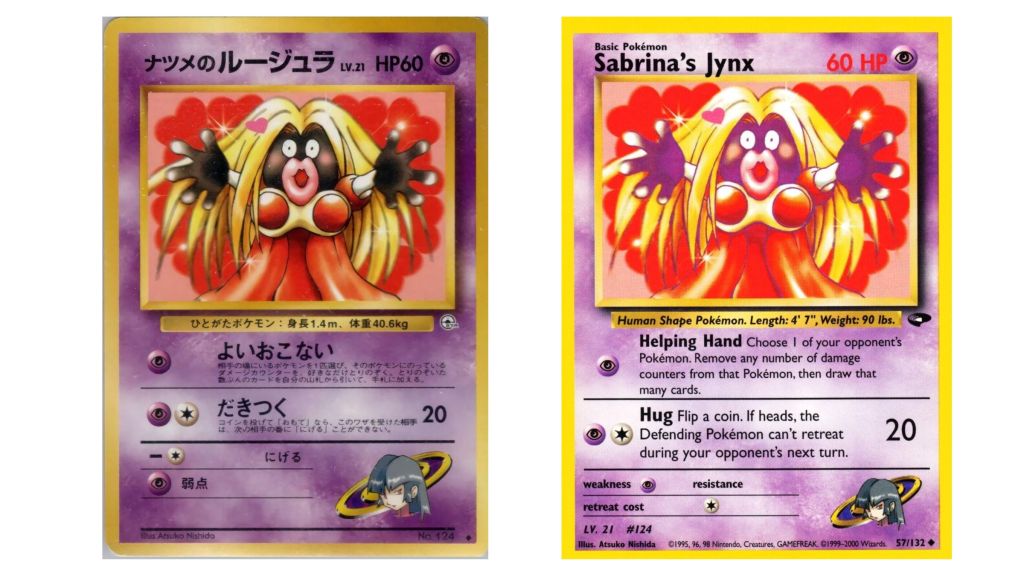
Perhaps because of her affiliation with Ghost and Psychic types, cards with Sabrina’s name in them saw a lot of banned or replaced artwork. In this case, though, the culprit is definitely Jynx itself. Like many early Jynx cards, the original art for Sabrina’s Jynx from Challenge from the Darkness depicted the Pokemon with pitch black skin, later deemed too close to blackface/minstrel shows.
When this card made its way to the U.S. as part of the Gym Challenge series, Jynx’s appearance was altered. The change here is minimal, with the skin swapped from black to purple. Otherwise, the image is relatively similar. The resale value isn’t too different, either, with the Japanese version at about $12 ungraded, whereas the English edition is $4.
3) Sabrina’s Jynx (Gym Heroes)

This card, though also called Sabrina’s Jynx, was released as part of the slightly earlier Yamabuki City gym deck. This 64 card deck centered on Sabrina, so it makes sense that Jynx found its way into the deck. Like other Jynx cards from 1999 to the early 2000s, it was later changed to feature purple skin for the Pokemon instead of the pitch black color.
When the card arrived with the Gym Heroes set in English, it had the same overall artwork for Jynx, but with purple skin. Otherwise, the cards are quite similar, much like the Sabrina’s Jynx from the Gym Challenge set. Ungraded, the original runs for about $12, with the English at about $3.
2) Sabrina’s Gaze (Gym Heroes)
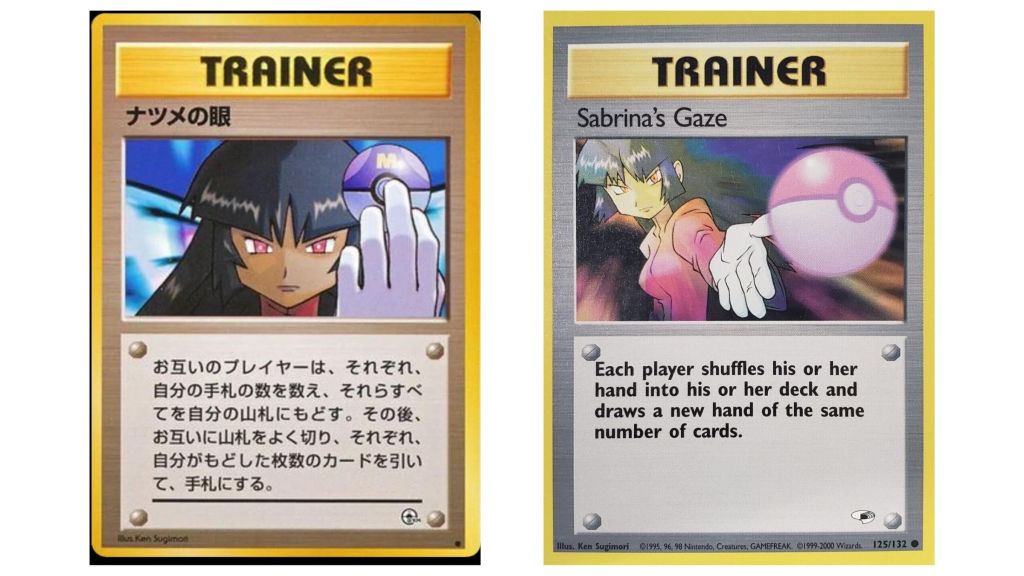
I told you Sabrina was a repeat offender for censored cards, didn’t I? Along with her Jynx, the gym leader herself was the subject of a card that had its artwork swapped out for the English printing. This one comes down to unfortunate hand placement in the original artwork, which apepars to show Sabrina’s middle finger extended towards the viewer. That gesture wasn’t as widely considered rude in Japan at the time, but it was banned from the U.S. print run for being potentially offensive.
In the English Gym Heroes set, the card gets a fully new piece of Sabrina artwork. Instead of just adjusting the hand positioning, the English version shows Sabrina with her arm extended, actually throwing the Poke Ball with her psychic powers. It’s also worth a lot less than the original, with the Japanese card sitting at a $20 ungraded value while the English one is just about $2.
1) Magmortar (Dragons Exalted)
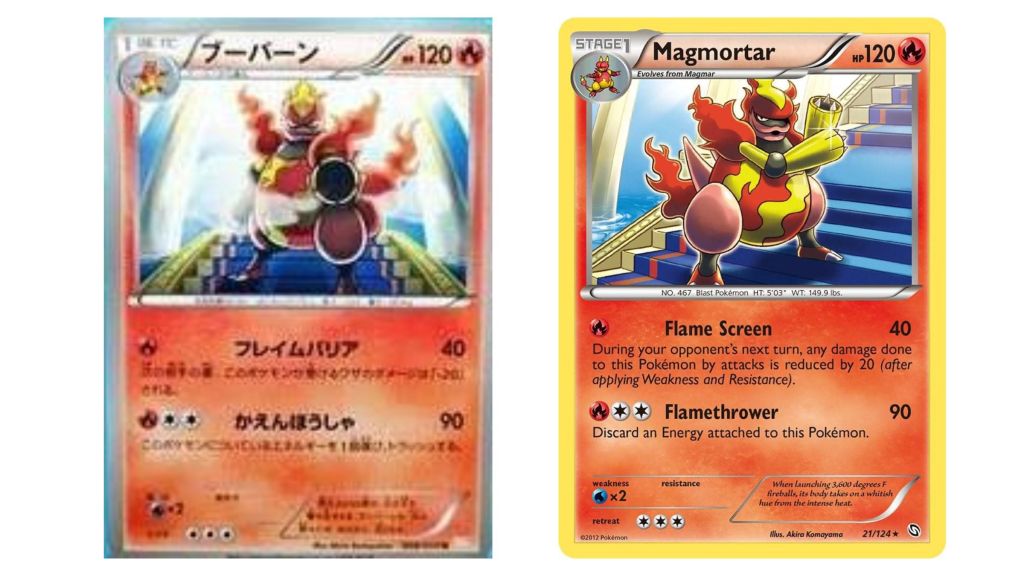
With the Dragons Exalted set released in 2012, this is the most recent card to be censored in the Pokemon TCG. The original card from the Japanese Dragon Blade set features Magmortar pointing its cannon arm directly at the viewer, smoke in the background. This very much looks like the Pokemon just fired a gun, and was considered to resemble real-world violence too much. So, it was changed for the set’s English release, making it the first card to do so in over a decade.
The updated, English-language artwork features Magmortar in a much different pose, holding its cannon arm up in the air. The background is shown from a different angle but is clearly meant to be the same staircase. If you want to grab the original, banned artwork, it is priced at around $36 on resale sites. The English version on the other hand, is worth about $2.
As of now, these are the only Pokemon cards to have their artwork banned in English. Given their censorship here in the West, the art has never appeared on English-language cars and likely will not be reprinted. So, some collectors like to try to gather the whole set for posterity.
Do you own any unique Pokemon cards like these banned artworks? Leave a comment below and join the conversation now in the ComicBook Forum!
More Gaming
-
Courtesy of The Pokemon Company -
Courtesy of Wildlight Entertainment