Octopuses are magnificent creatures. Elegant and slightly alien, these eight-armed cephalopods can squeeze into unimaginably small holes, have extremely complicated layers of skin that help them camouflage themselves, can use tools, and possess arms that can taste and think. They are wonderfully complicated and endlessly fascinating, making it strange that Darwin’s Paradox — a puzzle platformer centered around a bug-eyed octopus — is so shallow and uninteresting.
Videos by ComicBook.com
The charm it does have is relegated to its presentation. The surprisingly expressive titular octopus squashes and stretches to comical effect — even his basic movement animation is full of small bounces and flourishes — and Darwin’s Paradox’s few cutscenes contain a level of personality not too far off from the average Pixar short, despite being bereft of the deeper meaning or emotional core that usually powers those brisk films. Watching Darwin’s eyes balloon at the sight of danger or seeing him interact with his winged rival is always cute because of the liveliness baked into all of its animations.
Its lack of dialogue also allows the soundtrack to stick out, as it punctuates the action and quieter moments with its loud trumpets and sneaky basslines, respectively, while also weaving in some slick theremin notes that highlight the game’s obsession with aliens. When combined with the colorful art direction, it’s clear that these various elements work together harmoniously to create one cohesive audiovisual package.
Rating: 2.5/5
| Pros | Cons |
|---|---|
| Cute animation, visual style, and music | Its mediocre puzzles don’t require much thought |
| The sticky controls and small level design quirks make getting around a pain | |
| Undeserved cliffhanger ending |
Darwin’s Paradox Often Trips Over Itself
Nothing else in the game comes together as smoothly. Darwin’s Paradox is a puzzle platformer, but neither of those two halves provide enough mental stimulation or rewarding skill checks. The suction cup appendages of the soft-bodied hero mean platforming can be a little sticky, so jumping around is much more of a means to an end rather than something satisfying in and of itself.
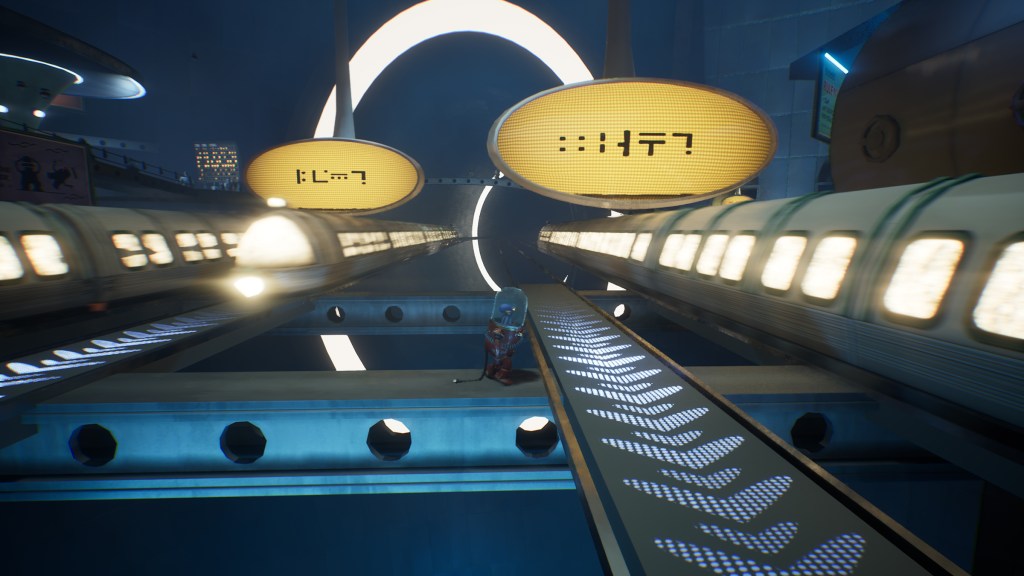
This lack of responsiveness can inhibit the puzzles, too, since many require some amount of dexterity to conquer and the ineptness of its protagonist make many sections arbitrarily more difficult. Other than just being generally sluggish, the googly-eyed mollusk will sometimes stick to unwanted surfaces, a level of stubbornness that often leads to being quickly turned into a thick blue and yellow paste. The mechanized diving suit utilized heavily in one late stage almost seems like a parody of these unideal controls since it adds a ludicrous amount of momentum to movement and is an absolute nightmare to control. It’s telling that this segment’s big puzzle revolves around simply moving across busy subway tracks and yet it still manages to become one of the worst stretches in the entire game.
This frustration is further compounded when dealing with its occasionally unhelpful level design. A vital movable object may be shrouded in darkness, the limited camera may hide a nefarious robotic shark that blasts the little tentacled guy if he swims one inch out of line, or it may not be clear whether or not that object in the background is a safe platform or convincing set dressing. These kinds of issues persist through the whole game and quickly halt the momentum the game has trouble building up in the first place.
Darwin’s Paradox‘s Puzzles Are Usually Either Too Simple or Annoying
The puzzles aren’t ever worth the hassle, either. Many of them are too basic and don’t require much critical thinking. The trouble isn’t solving them — that happens almost immediately — the taxing part is making Darwin behave long enough to get to the finish line unscathed.
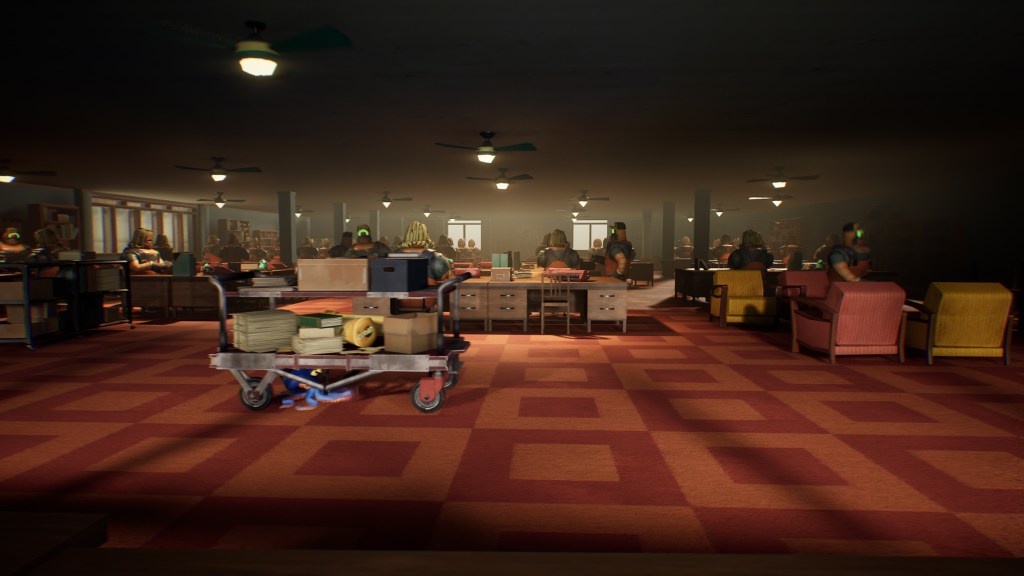
Darwin’s Paradox’s more fundamental problem, though, lies with how passive it is. Getting through an area often just relies on waiting, a shortcoming most painfully felt during the many rudimentary stealth segments. These “puzzles” almost always involve squishing forward a few feet at a time when the guards turn their backs and camouflaging when they come back around (an annoying process further plagued by nebulous vision cones). Waiting like this isn’t clever or engaging and only wastes time, especially when done so frequently with little in the way to change things up. It’s understandable that a platformer like this wouldn’t have a suite of complex sneaking mechanics, but great stealth turns downtime into planning time and there is none of that in Darwin’s Paradox. It wants to borrow language from the stealth genre but not its nuances.
Darwin’s Paradox caps off with an underwhelming chase followed by a wonderfully animated cutscene and out-of-place cliffhanger ending. This uneven sequence of events summarizes the game’s many flaws and comparatively miniscule worthy qualities in such a short amount of time. It’s unfortunate that its mechanical side can’t match up to its presentation.
It’s a surprising disconnect, one that evokes the game’s very title. Darwin’s Paradox’s name is derived from biologist Charles Darwin’s observation that coral reefs thrive in water without many nutrients. How can something so lively sustain itself in a barren environment? While unintended, Darwin’s Paradox offers up a similar conundrum: How can something so lively and pretty be so boring and bland on the inside?
A PS5 copy of Darwin’s Paradox was provided by the publisher for the purpose of this review.
What do you think? Leave a comment below and join the conversation now in the ComicBook Forum!
Most Viewed
-

Courtesy of Sony Pictures Animation / McDonalds -

©Tsuyoshi Takaki/Shueisha, Project BLACK TORCH -

Image Courtesy of Studio Pierrot