There’s a unique kind of excitement that comes from seeing a beloved series evolve. Octopath Traveler 0 is an ambitious project that seeks to combine the mainline games that came before it with the mobile game. This brings innovative changes and additions while maintaining the core aspects of the series. However, sometimes you don’t fix what isn’t broken. While taking a bold swing can pay off in big ways, Octopath Traveler 0 may have been better off sticking to what already worked for Octopath Traveler and Octopath Traveler 2.
Videos by ComicBook.com
Octopath Traveler 0 raises the bar visually, brings the best combat yet, and its main narrative is gripping from the beginning, but the execution of new ideas didn’t hit the same high bar. This results in a push-and-pull between stunning presentation and choices that disrupt the pacing, narrative engagement, and core identity fans have come to expect. It’s a fascinating example of how innovation, when not carefully aligned with a series’ strengths, can unexpectedly become a burden and detract from the experience.
Rating: 3.5/5
| Pros | Cons |
| The art is the series’ best. | The pacing is still the series’ worst aspect. |
| Combat reaches new strategic heights. | City-building is fun but feels under-implemented. |
| The main narrative is strong and feels cohesive. | Side stories and characters need more depth. |
| I’d have preferred a defined protagonist. |
Octopath Traveler 0 Makes Innovative, but Unnecessary Additions
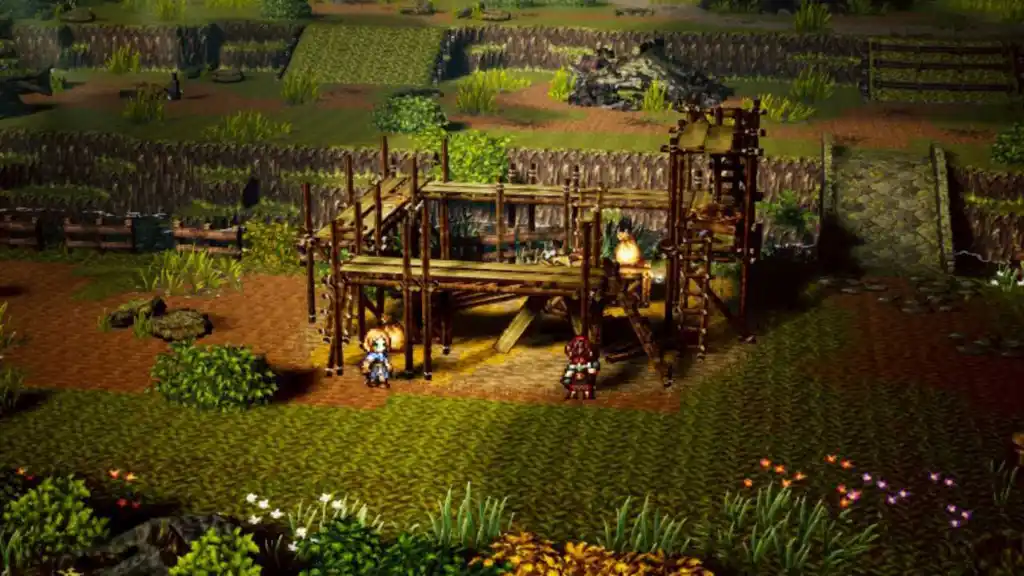
I’ve loved the Octopath Traveler series ever since the first trailer, when I saw the beautiful art style. The sequel continued this trend, and now, Octopath Traveler 0 is the most beautiful game yet. But Square Enix didn’t just pour its talent into the HD-2D art direction; it has implemented many new ideas that drastically change how the series plays. Part of this is likely due to a new developer, DokiDoki Groove Works, rather than Acquire, which developed both the mainline games and the mobile game, which Octopath Traveler 0 is an adaptation of. And while I appreciate the effort to shake things up, many of the new additions felt unnecessary and ultimately hurt the game.
The protagonist is now customizable, which is something I love, but it fell flat here. Whereas before you’d get eight protagonists that have rich stories and expressive characters, Octopath Traveler 0 uses a silent avatar that feels out of place in this narrative JRPG. I enjoyed the story, especially as the game goes on, but the protagonist lifting a hand and issuing speaking lines ruined the immersion for me. Nearly every character already has voice acting, and we even pick a voice for the protagonist, so it is a shame we don’t get to hear our protagonist actually speak and react with emotion to this gripping tale.

Then there is the building and recruiting characters to come live in Wishvale. Overall, I enjoyed this aspect, but didn’t feel like it added enough to gameplay to focus on. As a side mini-game, it was satisfying, but as a core component to the narrative, it felt like little more than a side activity. The bonuses from most characters felt minor, as did the rewards, and both placement and building types felt restrictive. With the game taking between 80 and 100 hours, I was first excited about this, but it soon became a chore to manage the town, the residents, and try to maximize the return. At this point, I just wanted to get through it so I could continue the narrative and enjoy the combat.
Octopath Traveler 0 Has the Worst Pacing Yet
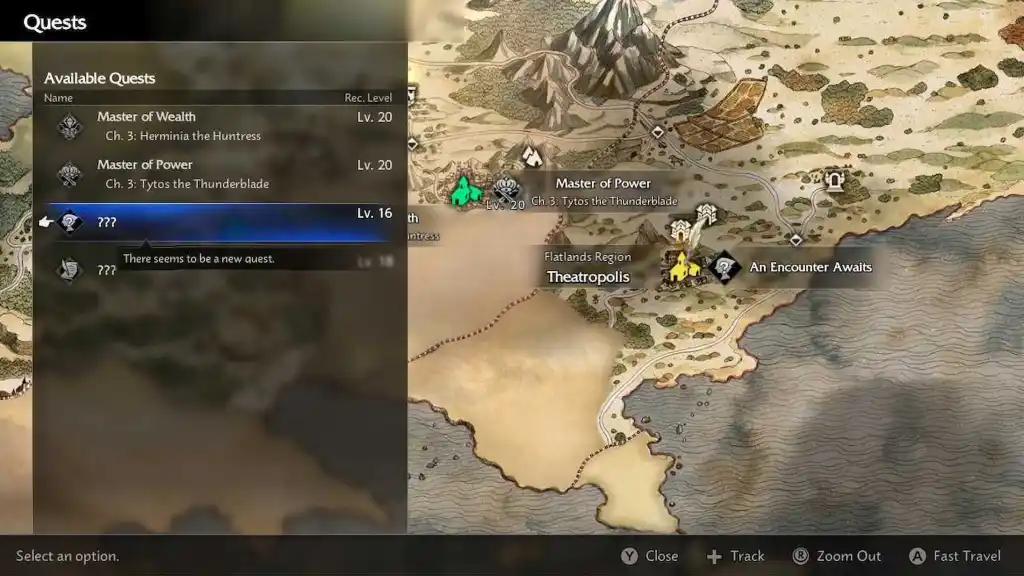
Somehow, after two mainline games, Octopath Traveler 0 still has the same pacing issues, if not worse, that have been an issue with the series. The game gives the freedom of choice, much like Pokemon Scarlet & Violet’s open world did, by offering three paths: Fame, Power, and Wealth. Each takes players down a different path and has a recommended level, something I easily overtook without having to grind. This led to me being overleveled and seldom challenged, even by bosses. Don’t get me wrong, some fights definitely had me nearly wiping my party, but this was easily remedied when I changed my protagonist’s job to Cleric, and thus gained access to powerful healing magic. Some fights, like optional or late game bosses, still had me on the edge of my seat, but I typically found myself mashing A on my Nintendo Switch, half-paying attention except to know when to drop a heal or switch a character to the backline.
Pacing is an issue outside of combat, too. Since I was constantly juggling three narratives, I’d get invested in a storyline, only to have to run across the continent to continue another, sometimes one that I wasn’t as invested in. Not only this, but Octopath Traveler 0 is cutscene-heavy, which is normally fine, but so many of the game’s “cinematic” moments didn’t need to be. Short conversations were turned into dramatic moments without adding anything to the narrative. And the narrative repeatedly went from 0 to 100 before coming to a halt again. The opening builds up encounters with Tytos, Auguste, and Herminia, only for you to be around them early on in the three paths, even defeating them rather easily. This isn’t the end of the three paths, but it felt jarring, though I was glad to be done dealing with Auguste and his drama.
Exploration also suffers. The setpieces are beautiful, but I grew tired of returning to the same locales over and over again, something the game’s beginning was horrible for. There was also very little need to explore, as the routes were pretty linear and most hidden or collectible items were displayed on the mini-map. It quickly became a routine of sprinting through unexplored regions while fast-traveling to the same areas multiple times. With how gorgeous the art and world are, I wanted to explore them and discover everything they had. But the actual process became monotonous and left me wanting more.
Sometimes More Is Less
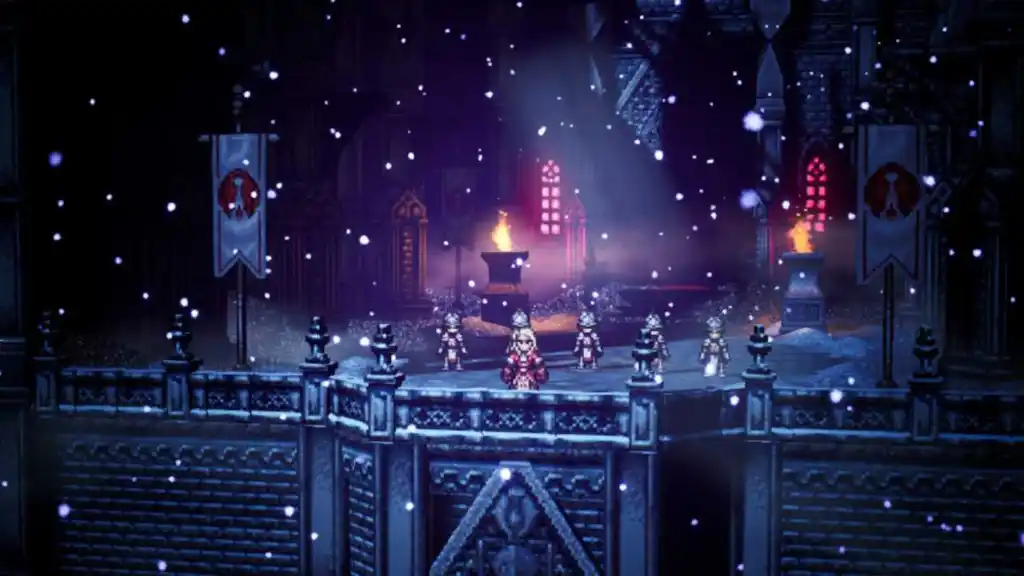
I think the main issue with Octopath Traveler 0 is that it tried to do too much when the previous games had already established a strong foundation and formula. This is best seen in the characters. With at least 30 characters, the game has lost the intimacy that I loved. Each of the characters seems interesting, but lacks the depth that the series has established with eight defined characters. The name certainly doesn’t make sense, but that pales in comparison to the lack of depth each character’s story brings to the game. Sometimes you recruit a character out of nowhere when it doesn’t make sense narratively to pull away from the main plot, whereas in previous games, it felt like each companion would contribute to the other’s goals.
Where this change thrives, however, is in combat. Octopath Traveler 0 has the most layered and strategic combat yet. I often found myself managing my position to take advantage of the Boost and Break system, especially against the fights that actually felt challenging. Some characters had the same class, but because they offered different abilities, especially elemental magic, it felt like a puzzle game of choosing who was the best to use at any moment. So while I wish we got more story from the huge roster, the game makes up for it with the depth this change adds to battle. One negative of this, though, is managing gear and trying to make sure each character has the optimal equipment.
Octopath Traveler 0 is a fine JRPG that has a weird mix of capitalizing on the series’ strengths while also deviating from them. It finds reasons to pull you out of the narrative, even if it drops a hooking moment, and combat rarely feels challenging. But when the story and combat grip you, you become completely invested. Square Enix and DokiDoki have certainly created an expansive game, but dialing in on what made the series so beloved could have delivered the perfect conclusion to one of the best JRPG series in recent years.
Octopath Traveler 0 releases on December 4th for PlayStation 5, Xbox Series X/S, Nintendo Switch, Nintendo Switch 2, and PC. A Nintendo Switch code was provided by the publisher for the purpose of this review.
Most Viewed
-

Image Courtesy of Studio Bones -
Image Courtesy of Science SARU -

Image Courtesy of Image Comics