If you’re reading this, there’s a decent chance your eyes are already tired. Between gaming sessions that stretch well past midnight, doomscrolling on your phone, binge-watching whatever just dropped on Netflix, and then sitting in front of a work monitor for eight-plus hours the next day, your eyes are putting in serious overtime. Blue-light blocking glasses have been around long enough to feel like a real solution (not just a wellness gimmick), and GUNNAR has been one of the most trusted names in that space for years.
Want more like this? Get the latest drops, ratings, reviews, and more with the ComicBook Gear Review newsletter — straight to your inbox.
Videos by ComicBook.com
Their latest release, the Trace Collection, introduces three new frames — the Davis, Barton, and Hayward — each priced at $110. But what makes this collection feel different from previous frames is that these actually look like glasses you’d want to wear. After spending time with them (and doing most of my testing with the Davis), here’s how they perform.
The Trace Collection at a Glance
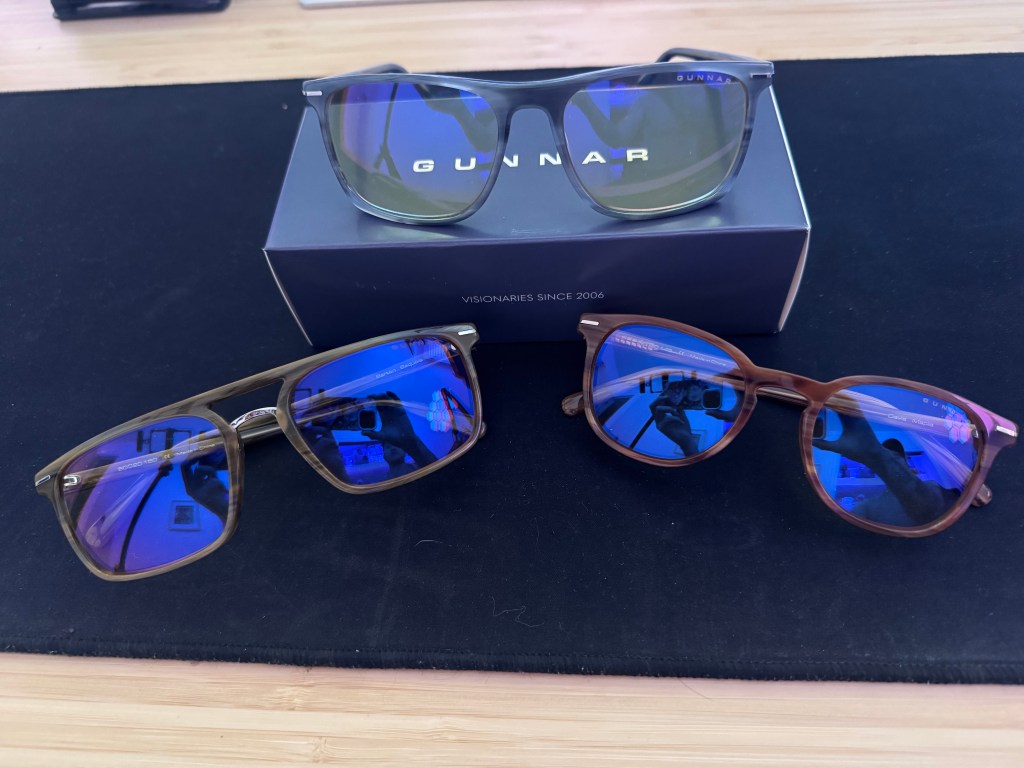
All three frames share the features you’d expect from GUNNAR. You’re getting premium acetate construction, a saddle bridge with a minimalist metal inlay, and GUNNAR’s blue-light-blocking lenses with G-Shield anti-reflective and smudge-resistant coating. There’s also a +0.2 diopter focusing power built in (a small, but thoughtful touch that eases the strain of staring at close-up screens), plus a wraparound lens design that helps cut down on the dry-eye feeling you get when ambient air keeps hitting your eyeballs mid-session. Each pair comes with a hard case, a soft pouch, a cleaning cloth, and a 12-to-24-month warranty (depending on the frame).
As for the three styles themselves:
- Davis: Modern round frames with a retro personality, available in Onyx and Maple
- Barton: Clean, classic rectangular frames in Onyx and Sequoia
- Hayward: A rectangular style with flexible spring hinges, available in Onyx and Teak (I call these the “Tony Stark” frames)
All three have their merits, but the Davis is the one that kept finding its way onto my face.
Design & Style: More Everyday, Less “Gamer”
A lot of gaming eyewear has historically looked like something you’d pick up at a convention booth and immediately feel self-conscious about wearing out in public (that’s how it is for me, at least). Bright yellow lenses, aggressive wraparound shapes, frames that all but shout, “I own a gaming chair.” That aesthetic works for some people, but it’s not exactly fashion-forward.
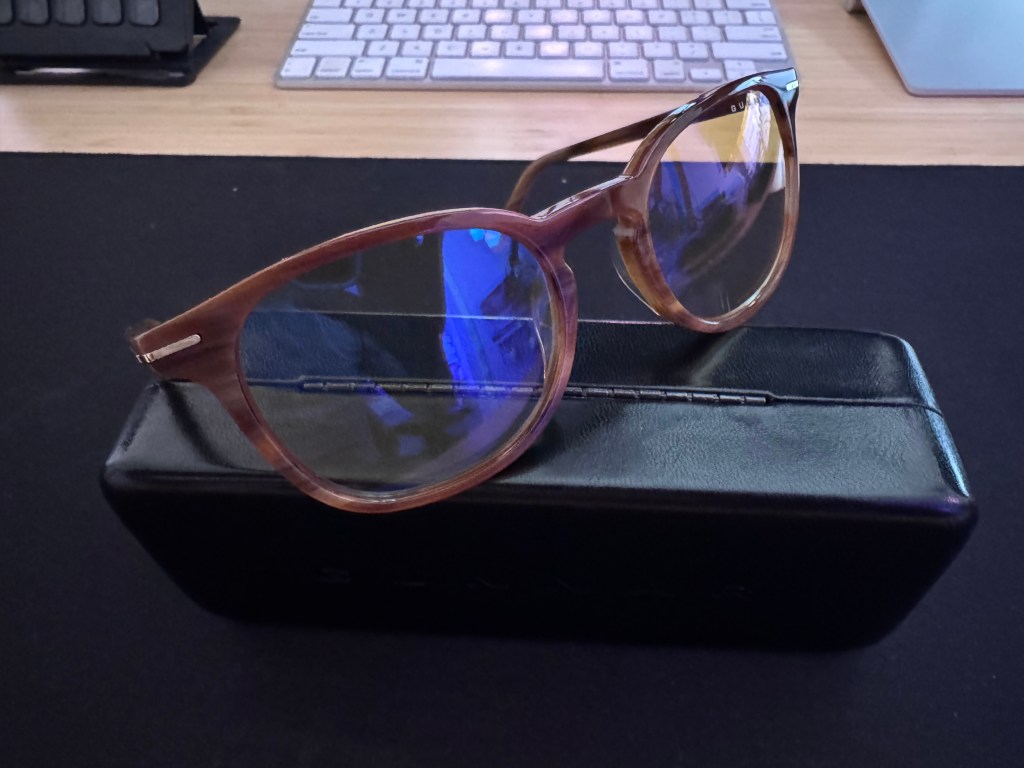
The Trace Collection changes that conversation, but for me, the Davis really nails exactly what it’s trying to achieve. The round frame shape brings a modern, slightly retro energy more along the lines of a stylish coffee shop regular rather than an RGB enthusiast, and the premium acetate build gives it a weight and finish that feels like actual glasses frames. The narrow width profile keeps it from looking oversized or costume-y, and in the Maple colorway especially, it presents as much more fashionable. You could wear these to the office, on a flight, or out to grab lunch, and nobody would immediately clock them as “gaming glasses.” And for me, that’s a good thing.
The Barton leans into a cleaner rectangular aesthetic that’ll appeal to anyone who prefers a more traditional, professional-leaning frame. I refer to them as the “Tony Stark” glasses because they remind me of the ones Robert Downey Jr. wears in Spider-Man: Far From Home. The Hayward splits the difference with a modern rectangle shape and the added benefit of flexible spring hinges, which makes it a strong pick if you’ve ever had glasses that felt like they were slowly squeezing your skull by hour three.
Comfort & Long-Term Wear: The Real Test

Style is easy to evaluate in thirty seconds. Comfort takes more time. So, I wore the Davis through back-to-back gaming sessions and then into full workdays in front of multiple monitors… which is just my life now.
These are genuinely comfortable glasses. The Davis weighs in at 1.06 ounces without packaging, which is light enough that after a while, you kind of forget you’re wearing them. The saddle bridge distributes weight evenly across the nose without creating annoying pressure points that show up after a couple of hours with cheaper frames. I’ve worn other GUNNAR models that leaned more toward the traditional gaming-accessory aesthetic, and while they got the job done, the Trace Collection feels like a step up in terms of everyday wearability. And in fact, I’m wearing them while writing this review.
If you have a wider face or prefer a roomier fit, the Barton is worth a look. And if you’ve had issues with frames that feel tight at the temples, the Hayward’s flexible spring hinges are worth the consideration. It’s admittedly a feature I wasn’t familiar with, but it’s clearly beneficial after a four-hour screen session without glasses slowly clamping down on your head.
Eye Strain & Blue-Light Performance: The Honest Take

It’s hard to isolate exactly what’s doing what when it comes to eye strain. I was sleeping a little better during this testing period. I was also taking more breaks. So can I tell you with certainty that the Davis cured my screen fatigue? No. I don’t think that’d be entirely fair.
What I can tell you is that the lenses add a warm tint to your screen that feels immediately gentler, the +0.2 magnification takes a tiny bit of the effort out of focusing and general blurriness, and the wraparound lens design does seem to reduce that dry, uncomfortable feeling that usually kicks in after extended sessions. Nothing hurt. Nothing felt worse. And during longer stretches, my eyes felt notably less cooked than usual. Take from that what you will. Whether that’s the glasses, the sleep, or some combination (honestly, it’s probably the latter) the Trace Collection at minimum isn’t getting in the way, and at best, it’s likely helping.
Build Quality & Value: Is $110 Worth It?
At $110, you’re not in impulse-buy territory, but you’re also not being asked to spend fashion-eyewear money for what amounts to a tinted lens. The premium acetate frames feel durable and well-finished, the included accessories are thoughtful (that hard case alone earns some goodwill), and the warranty coverage is solid — 12 months standard, bumped to 24 months on the Hayward.
If you’re someone who’s already spending money on your gaming setup, your desk, your chair, your headset, $110 for eyewear that you’ll wear every single day, that protects your eyes and looks good doing it, feels like a reasonable ask.
Just keep your expectations honest. These aren’t magic glasses, and your screen habits still matter. But as far as blue-light eyewear goes, the Trace Collection proves that gaming glasses can finally look like something you’d choose to wear even when you’re not gaming. And that’s the whole point.
Most Viewed
-

Sony Pictures -
Image Courtesy of Marvel Comics -

Image Courtesy of HIDIVE -

Image courtesy of The Pokemon Company -

Image Courtesy of Netflix -

Image courtesy of Bandai Namco -

Image Courtesy of Marvel Studios