
Michael Rooker has made a career out of playing memorable heels and surprising heroes. Whether that be Merle from The Walking Dead, Yondu from Guardians of the Galaxy, or any other number of roles he’s played since making his cinematic debut in 1986’s Henry: Portrait of a Serial Killer, Rooker can always be counted on to find the gruff humanity in both heroic and villainous characters. That extends to Slither, one of the actor’s many performances in the works of James Gunn.
Videos by ComicBook.com
Rooker played Grant Grant in the film, the small-town local who ends up patient zero in an alien infestation on Earth. Rooker keeps Grant’s humanity front and center even as he’s been possessed by an extraterrestrial parasite and is morphing into a giant monstrosity, speaking to one of his great talents as an actor. Though the film does have some unique elements that still stand out about the cult classic horror film.
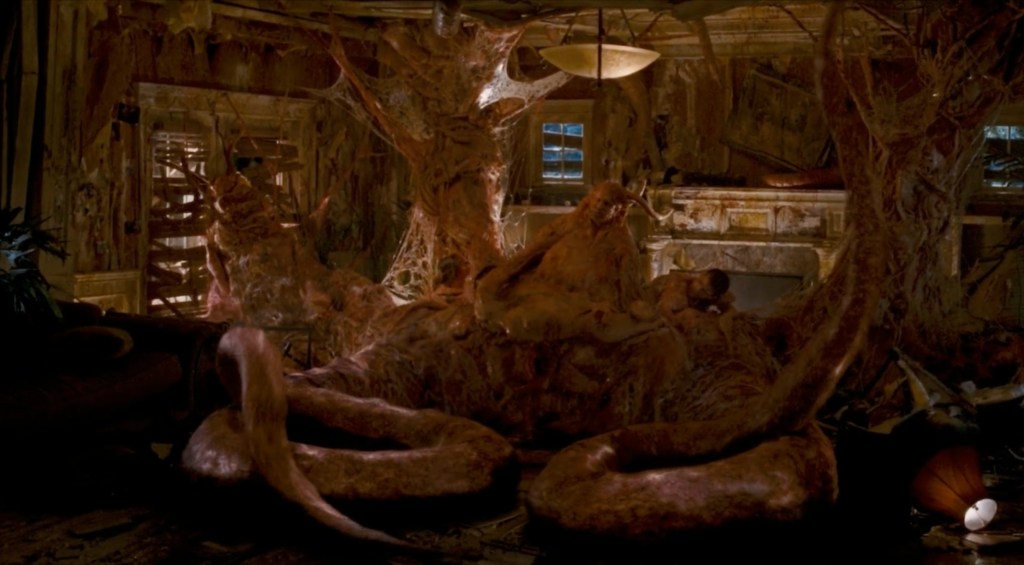
CB: What do you consider the defining memory of Slither?
Michael Rooker: I got to play the guy, and then there’s the creature that’s going to take over the earth, right? So, I got to play kind of two roles. I got to play the human and also the alien. The makeup job for the house monster took about seven and a half hours.
Was that the most intense makeup you’ve ever had on for a character?
Yeah. A lot of times, I forget I even have makeup on. Once we get started, it’s just acting. That one was difficult to do, though, because the makeup was so painful. It was very uncomfortable. The antennae would turn with puppeteering and hurt my neck right away. Then after that, we didn’t do it. They ended up doing it digitally; if you see the antennae turning in the movie, other than maybe one time, it’s digital.
There were other issues with the makeup. When I was the house monster, there were other people in makeup, and they would go to sleep sometimes. When they went to sleep, [because we were connected], they would pull the makeup, and it would cut into my neck on this side. Then somebody would go to sleep on the other side, and it was horrible, because I was in the center of the makeup. If anybody pulled on either end or wherever, it would put pressure on my body, on my neck. It was not a fun makeup to do [Laughter].
The rest of our interview with Michael Rooker continues below, including why he does his best not to learn his co-star’s dialogue and what he looks for in a character, regardless of genre or tone.
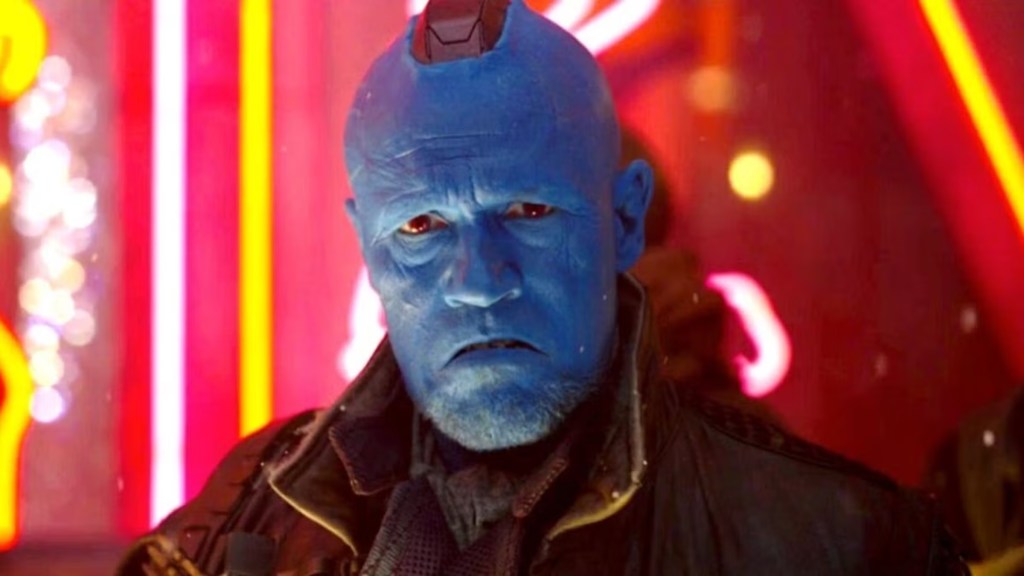
Even beyond Slither, you’ve played a lot of characters who are defined somewhat by their unique aesthetic. Is it tricky to keep a character grounded when you’re pained head-to-toe blue, like with Yondu?
It’s not tricky at all. That usually happens before any makeup. You know that happens when you’re reading the script. That’s all when you’re getting ready. The makeup, whatever you have to end up doing, is just the icing on the cake.
How do you define your approach to characters?
I try not to know as much as possible. It’s nicer for me. I like not knowing. Not knowing keeps it real, keeps it fresh. You’ve got to know some stuff, but you don’t have to know it all. It’s fun and rewarding to discover things as you go along. I don’t want to know how you’re going to say your line. I don’t want to know your comeback to me. I really try my best. A lot of people don’t understand this. I try very hard not to know the lines, because I’m the character; they would not know the lines.
I try to keep it as fresh and new and honest as possible. That’s kind of hard to do because you have to know the material to a certain degree. But I try hard to know what I have to know, but I don’t want to know what [the other actors] know. I want all that stuff to be new to me. It’s very difficult to read a script and not start learning, and the other people’s shit. [Laughter]. I don’t want to know your stuff! I want to be surprised.
Are there any characters that really surprised you?
I’m not usually surprised, not in life and not in the scripts either. You can be a little bit intrigued by how the scene comes out. You could maybe be surprised by how your line comes out, because I don’t try to keep my lines the same. I don’t try to change them, but if they grow or change, it just happens.
I don’t try to make that happen. It’s not just learning lines and spitting them out. I don’t even like talking to [press] about this shit. It should always be new and fresh. If you study too much, then you’re like, ‘Oh my God. It’s already dull.’ It’s interesting stuff, acting, and I’m still intrigued by it after all these years. That’s what makes stay fresh.
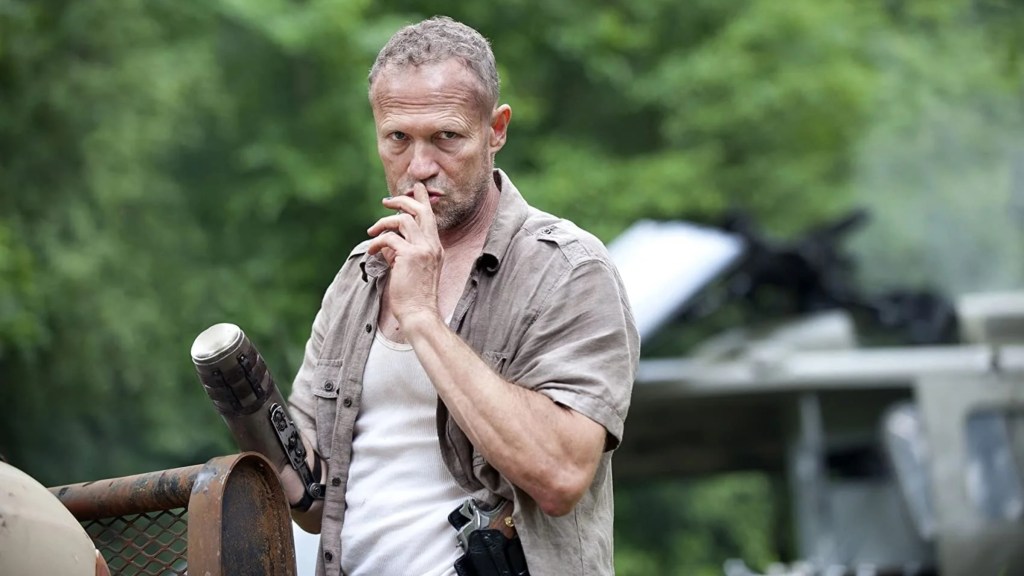
When you jump into adaptations like The Walking Dead or a franchise like the DC Universe, how much do you brush up on the source material?
I don’t. [With The Walking Dead,] I didn’t look at the comics. I didn’t need to. Everything is right there already. The other actors are there, the extras who are playing the zombies. Actors are very good at using their imaginations. That’s what we end up doing and that’s what we usually end up using more than anything else.
Are there any characters you wish you could revisit?
I don’t tend to have a desire to revisit. I like just laying it all out there. It’s done, it’s over, and then I move on. I also don’t watch movies if I’m working on something. I hardly listen to music. If there’s a certain type of music that the character would listen to, yeah. But if that’s not some sort of driving force, if it isn’t in the scene, I don’t tend to use music as a tool like that to get into a mood. That’s something I know some people do. I don’t.
When reading a script for the first time, is there ever a specific kind of spark you look for in a character?
Hopefully, I find something, and that happens when you’re reading the script. Something will click. It could be a word, it could be a phrase, it could be a situation. Then you build on that. It’s sort of kind of like a spiral; you’ve got this something, and then it just kind of spirals out until you have pretty much a full character. It always develops that way, usually from the inside. Something triggers something inside. It’s usually not a visual; it’s usually not an external thing. For me, it’s almost always, almost always starting from somewhere inside. Each film will have that kind of moment, something that triggers you, that causes it to grow and develop.
More Interviews
-
![Spider-Man Costume Designer Reveals the Change Tom Holland Most Wanted (And the Villain That Was Totally Redesigned) [EXCLUSIVE]](https://comicbook.com/wp-content/uploads/sites/4/2026/08/spider-man-costume-exclusive.jpg?w=300)
Tom Holland as Peter Parker working on his Spider-Man suit in Spider-Man: Brand New Day


![With Onslaught, Adria Arjona Learned the Hard Way About Doing Stunts With One Eye [EXCLUSIVE]](https://comicbook.com/wp-content/uploads/sites/4/2026/08/onsalught-adria.jpg?w=300)
![How The Whisper Man Director Uses Robert De Niro’s History With Crime Movies to Surprise You [EXCLUSIVE]](https://comicbook.com/wp-content/uploads/sites/4/2026/08/whisper-man-deniro.jpg?w=300)
![Dan Stevens Breaks Silence on RoboCop Casting And What He Wants to Preserve From Original Movie [EXCLUSIVE]](https://comicbook.com/wp-content/uploads/sites/4/2026/08/dan-stevens-robocop.jpg?w=300)
![Time of Death Stars Detail the Reality of Filming in a “Haunted” Prison for 91% RT Thriller [EXCLUSIVE]](https://comicbook.com/wp-content/uploads/sites/4/2026/08/time-of-death-movie-exclusive-1.jpg?w=300)
![Night of the Living Dead Star Details George A. Romero’s Original And Optimistic Ending [EXCLUSIVE]](https://comicbook.com/wp-content/uploads/sites/4/2026/08/night-of-the-living-dead-judith-odea.jpg?w=300)
