How many productions have you seen built around the idea of the Chosen One? For years, sci-fi has sold this kind of story as something automatically heroic and almost comforting: a special character shows up, discovers their destiny, defeats evil, and restores balance, while the audience leaves satisfied without really thinking about the consequences, right? The problem is that, over time, this model has grown lazy. Very few stories have been willing to ask the most obvious question of all: what happens next? What happens when an entire galaxy blindly follows one man? When faith, politics, and violence become tangled under the banner of salvation? That’s the moment when the genre stops being simple entertainment and starts making you reflect.
Videos by ComicBook.com
We know a lot about the story of Anakin Skywalker (Hayden Christensen) in Star Wars, for example, where he is the Chosen One meant to bring balance to the Force. It’s always been an interesting idea on paper, but the truth is that there always seemed to be a fear of exploring it in a satisfying or consistent way within the main saga. His arc ultimately becomes more about a personal fall and emotional redemption than a deep exploration of a prophecy or a complex messianic conflict. And this is exactly the kind of territory that one of the most anticipated films of the year is aiming to tackle in a more direct and mature way.
Dune: Part Three Will Deliver the Most Mature Take on the Chosen One Story
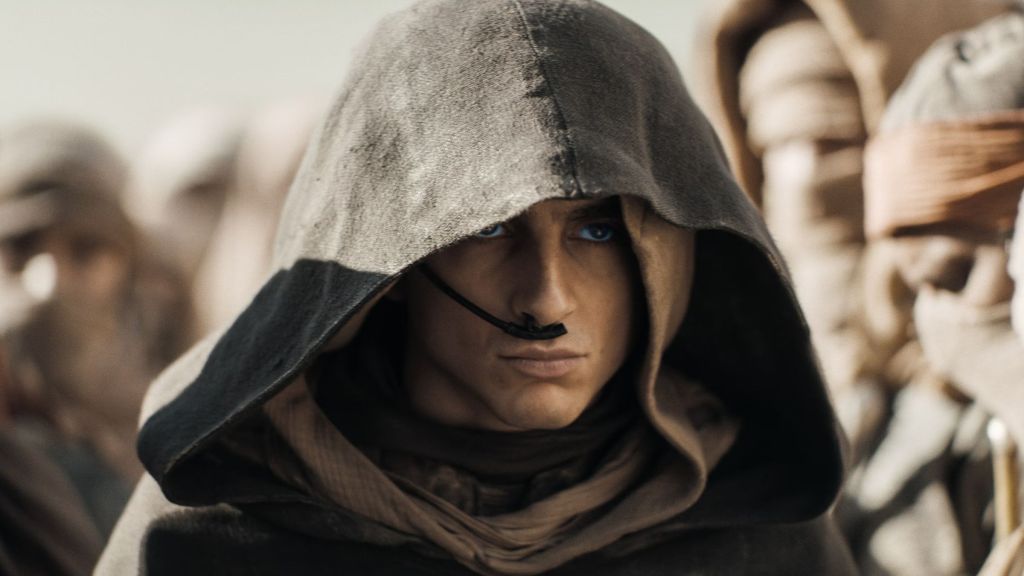
After the success of Dune and the massive box office performance of Dune: Part Two, 2026 marks the arrival of the third chapter in Denis Villeneuve’s film saga. The film stands as a clear turning point, closing out what will be a trilogy while adapting Frank Herbert’s Dune Messiah. This time, the story makes explicit something that much of the audience had been overlooking or barely debating: Paul Atreides (Timothée Chalamet) was never a traditional hero. Set years after the events of the second movie, the story finds Paul firmly established as emperor and as the central religious figure behind a jihad spreading across the galaxy. Billions have died in his name, and the new film won’t be interested in treating that as a minor inconvenience, but rather as the core conflict driving the entire narrative.
The big hook here is that the focus isn’t on wars or new conquests, but on the erosion of a leader who really understands the monster he helped create. Paul isn’t naive, nor is he a passive victim of fate. He knows his image was artificially constructed, shaped by centuries of religious manipulation, and he still chose to use it to survive and win. Now, trapped in the role he can’t escape, he begins to realize that there’s no clean way to rule an empire built on fanaticism. Every choice comes down to cold math: how many die, not what’s right or wrong. Dune: Part Two laid this groundwork effectively, especially through Paul’s grand, unforgettable speech to the Fremen and scenes where he acknowledges his lineage and warns his mother about what lies ahead.

And these moments are crucial because it marks the definitive turning point for the character in the eyes of the audience as well. From that point on, it’s no longer about whether Paul believes in his destiny, but about the fact that he fully understands the symbolic power he holds — and chooses to push forward and exploit it. The story makes it clear that the violence to come won’t be the result of outside manipulation or youthful innocence, but of conscious choices made in the name of stability and control. In doing so, the story sets the stage for a sequel that doesn’t need to explain the protagonist’s fall, only to deal with its consequences.
Why Star Wars Never Quite Pulls Off the Same Approach

This makes the comparison to Star Wars inevitable, but not in a flattering way for George Lucas’ saga. It comes up because it’s arguably the most famous example of this kind of narrative. Anakin was also the Chosen One, also carried a prophecy, and also caused destruction on a galactic scale. The key difference is that Star Wars consistently frames his fall as a personal tragedy, softening the political and social impact of his actions. His individual suffering ends up functioning as a mitigating factor for everything he did, especially once the plot rushes toward granting him redemption. In Dune, there is no redemption waiting at the end.
In Herbert’s continuation of the saga, there’s no hurry to absolve Paul of his sins. He doesn’t get an easy emotional exit or a heroic death meant to fix everything. The weight of the jihad remains, shaping the universe around him regardless of his internal struggles. The story isn’t interested in asking whether Paul is good or evil, but whether the system that placed him in power could have produced any other outcome. It’s a direct critique of how charismatic leaders are often treated as magical solutions (an idea that also feels especially relevant well beyond the boundaries of sci-fi).

Another aspect that strengthens this comparison is how the characters around Paul function as ideological counterpoints, not just emotional ones. Chani (Zendaya) stops being a simple love interest and instead represents the fracture between the man Paul once was and the symbol he has become. Irulan (Florence Pugh), who we see become the protagonist’s fiancée at the end of the previous movie, embodies pure politics: maintaining the empire at all costs while knowingly standing beside a religious façade. None of this is romanticized. The relationships are genuinely tense, uncomfortable, and often transactional, reinforcing the idea that power inevitably corrodes even personal bonds. Where Star Wars leans on love and loyalty as emotional lifelines, Dune treats relationships as casualties of power, not remedies for it.
And even though the film hasn’t been released yet, this approach is already easy to anticipate — not only because of what the book lays out, but because Dune: Part Two clearly signaled that it has no intention of softening the blow. The last movie already showed a sharp but logical transformation of its protagonist, who can no longer even be classified as an anti-hero. By that point, Paul was being framed as dangerous because he understood the game better than everyone else around him. That choice pushes the story closer to a political drama than a traditional space fantasy, setting Dune apart from almost every major franchise currently in circulation — and helping explain why audiences connected so strongly with it and why the third chapter has become one of the most anticipated releases of the year.

While Star Wars built its legacy on hope, redemption, and the idea of a final balance, Dune: Part Three is interested in dismantling those concepts entirely. Balance here is just another word for violent stagnation. Faith isn’t comfort; it’s a tool of control. And the Chosen One isn’t a solution, but a symptom of a society desperate to believe in something. That level of honesty with both the story and the audience is what could turn the saga into something memorable, rather than just another impressive trilogy finale. And more than that, it’s fair to say this approach points toward a new standard for sci-fi storytelling.
Dune: Part Three has everything it needs to make history once again (only on an even larger scale). It shows that it’s possible to be accessible without being shallow, epic without being condescending, and popular without sacrificing complexity, which is what genuinely resonates with audiences. More than anything, it may prove that the classic Chosen One narrative only works when it abandons cliché and is willing to confront the damage left in its wake — something many franchises and films have attempted, but very few have had the courage to really see through to the end.
Dune: Part Three hits theaters on December 18.
What do you think? Leave a comment below and join the conversation now in the ComicBook Forum!
Most Viewed
-
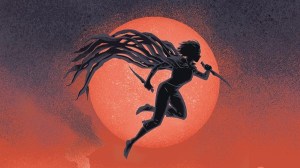
Image courtesy of Tor Books/Macmillan -

Official art by Bastien Lecouffe-Deharme