Avatar: Fire and Ash officially makes James Cameron’s epic sci-fi adventure a trilogy that has been around for more than a decade and a half. Given where the sequel film, Avatar: The Way of Water, left things, Fire and Ash had some major dangling plot threads to tie off, as well as an obligation to bring some major overarching themes and franchise arcs to a close.
Videos by ComicBook.com
For the most part, director James Cameron and his team rise to the challenge. Avatar 3 is the most visually stunning installment of the franchise yet, and delivers a fitting finale to the journey that so many moviegoers have embarked on. That said, Avatar: Fire and Ash is also a deeply problematic movie – especially when it comes to the ending that Cameron chose for the film, and the thematic implications it creates.
Avatar: Fire and Ash Overplays The Franchise’s “White Savior” Theme

The Avatar franchise has been the subject of debate from the moment the first film was released in 2009. Comparing Cameron’s so-called “original story” to previous films like Dances With Wolves, Pochahantas, or even Fern Gully was the surface-level reaction from a lot of film fans; the deeper discourse, however, came from cultural critics, who pointed out that Cameron was stradling a tricky line between celebrating indigenous people and their cultural views and practices, and immersing himself (figruatively and literally, in 3D) in a “white savior” fantasy tailored for the 21st century.
(SPOILERS FOLLOW) Avatar: Fire and Ash erases all debate and doubt about which side of the line Cameron’s trilogy lands on: the wrong side. By the end of Fire and Ash, the count of white saviors has jumped from one (Jake Sully) in the first film to three (Jake, Kiri, and Spider) in the third film. The final battle for Pandora has Jake choose to step back into his role as “Toruk Makto” to lead the Na’vi in battle as the warrior of prophecy; Kiri becomes the spiritual avatar of Eywa, the god of Pandora, and summons the beasts of the planet to defend their world.
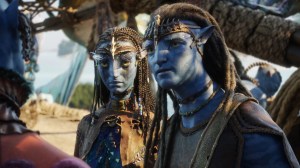
The biggest problem, however, is Spider’s (Jack Champion) story in Fire and Ash. Miles Quaritch’s son gets saved by Kiri when he runs out of breaking masks. She infuses Spider’s body with mycellia, which transform his human physiology into one that can survive Pandora’s atmosphere – and even allow humans to grow a neural link, bonding with Pandora’s creatures and plants just like the Na’vi. In the second act of the film, it’s revealed that Spider’s physical adaptations can be reverse-engineered and applied to all humans, all but guaranteeing the RDA’s invasion will succeed. Jake (Sam Worthington) and Neytiri (Zoe Saldana) almost make the hard choice of killing Spider to protect the planet, but abstain when they sense that it is not Eywa’s will (basically, the biblical story of Abraham). At the end of the film, Spider fights for Pandora and is rewarded by getting to bond with the Tree of Souls, where spirits of the dead Na’vi (and Grace Augustine) welcome him with open arms.
Avatar: Fire and Ash Takes Cultural Tourism to the Next Level

The ending of Avatar: Fire and Ash has rightfully generated debate amongst filmgoers – especially those whose cultures have been touched by colonization, assimilation, or displacement. As I had to ask my own brother in the theater: “Did James Cameron just invite himself to the cookout?”
That colloquialism touches on a real concern, though. Spider is not the main character of Avatar, nor are any of his actions so heroic, or his character so impeccable, that he should be considered an honorary Na’vi. Jake Sully had to literally walk in another skin to gain his expanded cultural awareness; Spider was a cultural tourist who arguably lacked self-awareness and came off looking more comical than interesting in The Way of Water; imagine the surprise of seeing that character and arc given such prominence and reverence in Fire and Ash. It’s made even worse by the fact that the film writes off the Ash people as generic nihilistic villains, instead of a deeper exploration into how a sector of the Na’vi that lost their religion deals with being stuck between an invading force (humans) and their own people and planet (those faithful to Eywa).
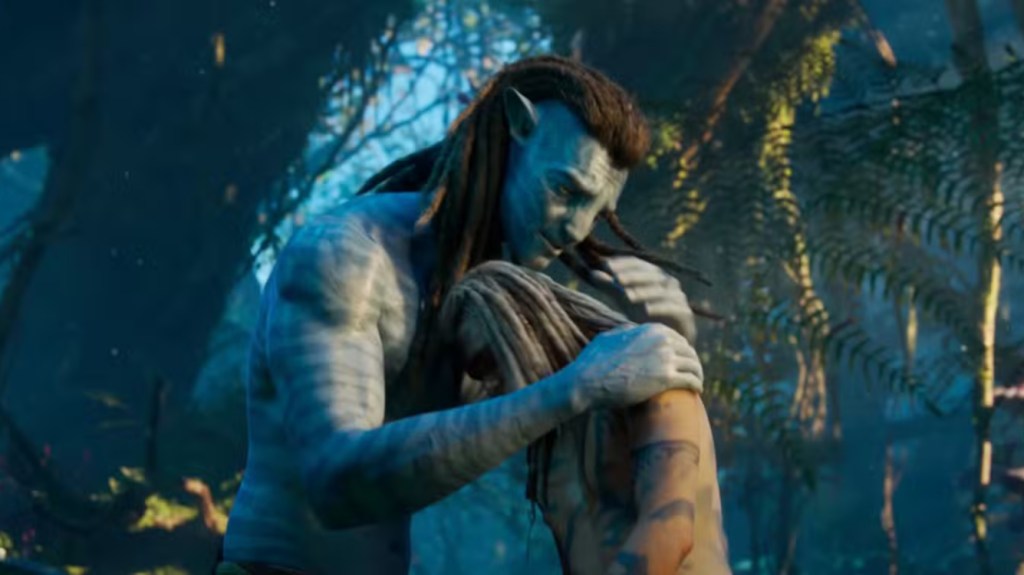
The fact that Pandora can only be saved by Jake and Kiri’s influence is bad enough; Spider’s story arc makes it seem like James Cameron is giving the character (and by extension, himself) a cultural access card he has no right to issue, wherein someone of a different race can become more culturally “authentic” than actual members of that culture.
That’s such a slippery metaphorical slope to plant the Avatar franchise on, going forward (if it goes forward). Cameron needs to remember that making movies about Pandora for 16 years doesn’t qualify one for sharper cultural insight or sensitivity: It just means you’ve been playing in cultural fantasy for a very long time. And after Avatar: Fire and Ash, it shows.
Avatar: Fire and Ash is playing in theaters and IMAX. Let us know your thoughts on the film over on the ComicBook Forum!
Most Viewed
-

Image courtesy of Warner Bros. Pictures -

Image Courtesy of Netflix