
In the final years of the 20th century, war movies went through a major shift in language, leaving behind a cleaner and more predictable style in favor of an approach that aimed to place audiences right in the middle of the chaos of combat. But this transition wasn’t just about reinventing the genre visually; it was also about exploring war in a rawer, more honest way rather than focusing exclusively on heroic perspectives. While war is an incredibly delicate subject, and it makes sense that some films would portray it with a degree of optimism, reality is much harsher. And it was difficult to truly feel the weight of that experience when the goal was almost always to romanticize it.
Videos by ComicBook.com
That entire shift can be traced back to one very specific movie — a film that changed the legacy of war cinema and remains the gold standard to this day. If modern war movies feel immersive and emotionally impactful, it’s because this particular feature showed what the genre could be when it stopped holding the audience’s hand. And years later, its influence helped transform TV as well.
Saving Private Ryan Made History in Cinema
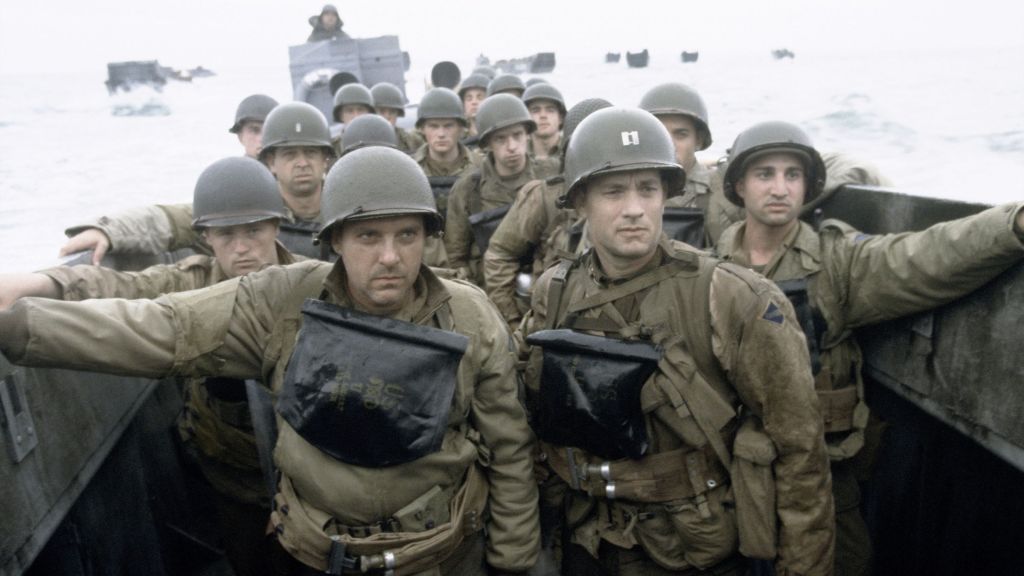
If you’re a fan of war productions, you’ve almost certainly seen Saving Private Ryan. Released in 1998 and directed by Steven Spielberg, the story follows a group of American soldiers tasked with crossing the chaos of World War II to find and bring home a single paratrooper whose brothers have already been killed in combat. But in order to tell that story in the most authentic way possible, the movie became a study of survival, leadership, and psychological exhaustion on the battlefield. Spielberg’s direction often feels almost documentary-like, especially during the iconic D-Day opening sequence on Omaha Beach, which throws viewers directly into the action without any visual or narrative safety net. You start the movie and are immediately dropped into the middle of the horror.
But why take that approach? Why choose to stay so close to reality? The answer is actually pretty simple: dissatisfaction. Throughout the ’40s and ’50s, war movies often focused on glorifying battlefield bravery. That isn’t inherently a bad thing, but it created an idealized version of war that wasn’t entirely truthful. Spielberg has always been a filmmaker interested in creating deeply emotional experiences for audiences. Some of his greatest works, including Jurassic Park, Schindler’s List, E.T. the Extra-Terrestrial, and Close Encounters of the Third Kind, are built around emotional connection and powerful audience engagement. So his goal with Saving Private Ryan was to confront viewers with the true disorder of war and help them understand what soldiers actually endure in those situations.

Spielberg himself explained that, creatively speaking, Saving Private Ryan was never meant to be just a historical reconstruction — it was designed to be a sensory experience in fact. You can see that in the handheld camerawork, the blown-out lighting, and the almost documentary texture of the visuals. The goal was to make audiences feel as if they were inside the conflict rather than observing it from a safe distance. That’s exactly why the film remains so brutal, unforgettable, and historically significant.
And a few years later, it essentially led to the creation of a TV series that managed to stand shoulder-to-shoulder with it.
How Saving Private Ryan Led to Band of Brothers

In 2001, TV underwent its own transformation when Band of Brothers arrived with a remarkably similar approach. The miniseries follows a company of American paratroopers from training camp through the end of the war in Europe. Created by Spielberg and Tom Hanks (who starred in Saving Private Ryan), the project doesn’t just share the same DNA as the film — it expands its entire scope, exploring war as an ongoing experience rather than a collection of isolated events. But what makes it especially fascinating is that the movie wasn’t simply a success; it became the bridge that led directly to a more ambitious exploration of the subject. There’s a reason Band of Brothers is one of TV’s most celebrated classics.
But how exactly did one influence the other? One of the most direct connections comes from the production itself. Much of Saving Private Ryan was filmed outside France, particularly in the United Kingdom and Ireland. The famous D-Day sequence was shot at Curracloe Beach in Ireland, standing in for Omaha Beach for logistical and ethical reasons. Other portions of the movie were filmed in locations such as Thame Park and Hertfordshire in England, where the fictional village of Ramelle was also constructed. This same strategy of building large-scale controlled environments would later be reused on an even bigger scale for Band of Brothers, which transformed British airfields and countryside locations into multiple European war zones.
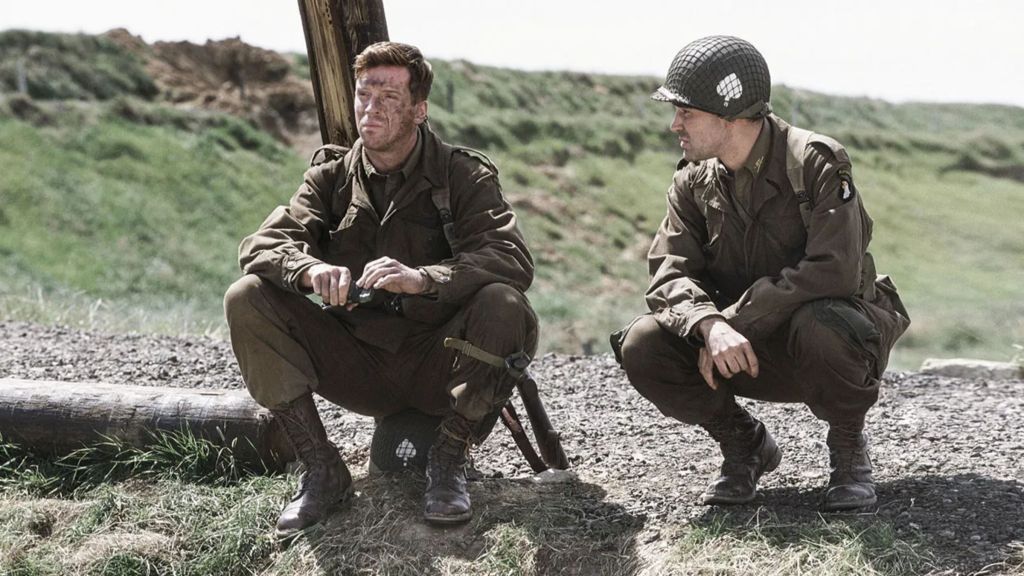
The series also directly inherited many of the film’s filmmaking innovations. If you compare the two, you’ll immediately notice the same camerawork, the intense proximity to the soldiers, and the emphasis on the sensory chaos of combat. The difference is that the show had the time to develop those ideas more gradually, exploring the daily routines of soldiers and the progression of the war across several episodes. That’s something a feature film simply doesn’t have the runtime to accomplish. So in many ways, Band of Brothers feels like a refinement of everything Saving Private Ryan introduced. The goal was for the series to feel like a natural extension of the same war viewed through the same creative lens.
And one of the smartest decisions behind Band of Brothers was how it deepened Spielberg’s commitment to authenticity. Both productions were built on extensive historical research and firsthand veteran accounts, but the show took that commitment even further by incorporating interviews and direct testimony from members of Easy Company. So what’s interesting is that without Saving Private Ryan proving how powerful that level of realism could be (and without the critical acclaim that followed), the TV industry likely wouldn’t have been willing to invest so heavily in such an expensive and cinematic project.
Besides, it’s hard to ignore the fact that the miniseries arrived at a time when episodic storytelling was not yet commonly viewed as a platform for productions with movie-level budgets and cinematic ambition. Today, that standard exists across virtually every genre, but Band of Brothers helped pave the way. More importantly, it solidified a style of war storytelling that prioritizes the lived experiences of soldiers rather than just focusing on major historical events — and that distinction matters.

There’s nothing inherently wrong with romanticizing war stories or focusing entirely on action, but authenticity and a deeper focus on the human experience ultimately carries more weight in this context. Film and TV are forms of entertainment, but they’re also powerful tools for communication. Great storytelling should have substance; it should encourage reflection. And creating a deeply immersive experience helps accomplish exactly that.
Saving Private Ryan established the language, and Band of Brothers expanded it. What makes the relationship between the two so remarkable is how successfully that creative vision crossed from one medium to another without losing its impact or identity. And that may be the biggest reason both remain essential points of reference whenever discussions about war stories arise. Their legacy isn’t just tied to their individual quality, but to the way they transformed how these stories are told, regardless of the screen. Put simply: they revolutionized the modern war genre, and decades later, that influence is legendary.
Saving Private Ryan is available to stream on Paramount+, while Band of Brothers is available on HBO Max.
What do you think? Leave a comment below and join the conversation now in the ComicBook Forum!
