The Marvel Cinematic Universe (MCU) has been setting the stage for one of Marvel Comics’ most iconic characters, Doctor Victor Von Doom (played by Robert Downey Jr.). As the ruler of Latveria and one of The Fantastic Four’s classic enemies, Doom’s post-credit tease in Fantastic Four: First Steps was an unexpected treat for longtime MCU fans and Marvel Comics fans alike, with massive implications for the Multiverse Saga. The stakes for Doom’s success as the next “big bad” are higher than ever, and not only due to the highly anticipated return of Downey Jr. Originally, Kang the Conquerer (Jonathan Majors) was slated to act as the main antagonist for the Multiverse Saga. In fact, Kang’s introduction was already in motion on the small screen in the Disney+ series, Loki. However, after Majors’ departure and Marvel’s commitment to embracing Doom for the next phase of what’s to come, Doom is much more than just Reed Richards’ rival; he is now set up as the “grand final villain “final boss” of the entire saga, headlining Avengers: Doomsday (2026) and Avengers: Secret Wars (2027).
Videos by ComicBook.com
This massive shift has naturally fueled tons of theories across the fandom, with one standing out among the rest: the Doom first teased in the post-credits of First Steps might not be the one true Victor. Instead, he could be a lesser variant and a deceptive opening move designed to throw the heroes—and the audience—off the scent, turning this highly anticipated debut into a calculated lie.
The Magnitude of the Multiverse Calls For a More Dramatic Introduction For an Iconic Villain

The foundation of this theory rests on theories regarding the plot of Avengers: Doomsday. With Kang out of the picture, rumors suggest that Marvel is repurposing one of his key concepts for Doctor Doom: instead of the Council of Kangs, we could see a Council of Dooms. This twist would involve multiple variants of Victor Von Doom converging from across the multiverse as a united (or perhaps splintered) front against Earth-616 and the Avengers. Considering First Steps is the first canonical MCU set outside of Earth-616 (Earth-828), this theory has some support behind it. Could the Doom shown with a young Franklin Richards also be from Earth-828? If so, does that mean that Earth-616 has its own variant of Doom with his own agendas? Or is the man we see at the end of First Steps from a completely different corner of the Multiverse altogether?
The implications of this theory mean that Doctor Doom’s role is elevated from that of a European dictator to a cosmic, timeline-spanning threat, requiring him to take up the mantle of the Multiverse Saga’s ultimate boss. Lending more credence to this theory is that over the twenty years of the MCU/Earth-616, Latveria has never once been mentioned. Though this could easily be retconned in the way Avengers: Age of Ultron brought the previously unmentioned Eastern European nation of Sokovia into the fold and Captain America: Civil War introduced Wakanda, Latveria is arguably more of a divisive nation in Marvel lore. With Doom’s iron fist over his people and advanced tech on par with Tony Stark’s inventions, it would be slightly less believable that Latveria, and by extension, Victor himself, would not have been on the Avengers’ radar.

This is where the Multiverse comes into play, as the leap in scope well outside Earth-616 is precisely what casts suspicion on his First Steps debut. Historically, the MCU has treated its overarching saga villains with a slow, meticulous build-up. Thanos was teased for years before he arrived in Avengers: Infinity War. If the Doom introduced in First Steps is a simple, straightforward adaptation of his comic counterpart—a Latverian dictator battling Reed Richards for control over the fate of their singular timeline—it risks defining a grand villain way too narrowly. How can that character seamlessly transition into the leader of a multiversal Council capable of replacing the threat Kang posed to the Sacred Timeline and TVA established in Loki?
The solution is rather easy: the MCU still hasn’t introduced the real Doctor Doom (the one destined to rule the Council or Earth-616) first. This take wouldn’t lessen the shock factor in First Steps’ post-credit scene, as it means there is still a singular, powerful, and “one true” Victor Von Doom. The Doom we see in First Steps could be a variant who failed in his quest for power, from a timeline close to collapse, or even a benevolent version who actually works alongside Reed in scientific pursuits as equals. His existence as a variant with any of these backgrounds would give the Fantastic Four a strong, satisfying entry into the larger Multiversal fray, perhaps making it harder for them to fight someone who is an ally on their Earth or an sympathetic refugee from across the cosmos. This approach would complicate the circumstances surrounding the threat level and emotional complications of the main Doctor Doom, who is slated to destroy the Avengers and the entire Multiverse.
A Doom Variant Creates More Mystique Around the Real Victor
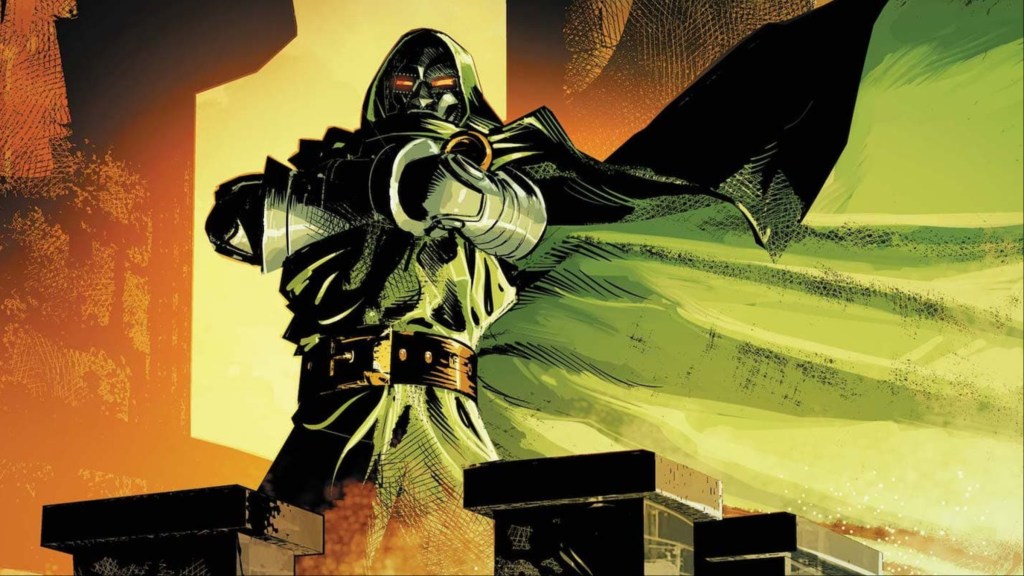
The beauty of this theory of Doom variants lies in their strategic potential. The entire Multiverse Saga hinges on the existence of variants—copies of familiar and beloved heroes and feared villains who take different paths and destinies. Applying this concept to Doom is not just convenient; it is necessary to maintain the entire story arc’s cohesion and logic.
If First Steps featured a classic, powerful, yet ultimately defeatable (or even friendly) Doom, it establishes a precedent for the Council of Dooms. When the Avengers finally meet the true Council filled with multiple variants of the tyrant, they, and the audience, will have a frame of reference. The threat is immediately escalated because they are fighting not just a singular Doom, but potentially hundreds of Dooms, including one that might look suspiciously like the one they already defeated. And even worse, one that looks like their deceased leader, Tony Stark.
Moreover, the decision to use variants maintains the mystique of the one true Doom who matters to the Avengers’ core reality in the grand scheme of things. Perhaps the leader of the Council is the one with Tony Stark’s face, or perhaps the real antagonist is a far more sinister, all-powerful variant (a future or even past, younger version of Doom) who has engineered the downfall of the other variants to claim superiority and dominance. By having a variant debut first, the MCU avoids burning out the true ultimate villain too early in the saga.
What do you think? Leave a comment below and join the conversation now in the ComicBook Forum!
Most Viewed
-

Image courtesy of Wizards of the Coast -
Image courtesy of Daybreak Game Company -
Screenshots from Samurai Showdown, Mortal Kombat II, and Marvel vs. Capcom: Clash of Super Heroes.