One of the biggest and most successful book-to-screen franchises of the past few decades is The Hunger Games. After four films, one prequel, and another on the way, it’s still widely discussed and continues to connect with audiences in different ways. However, it was never just about people fighting to the death inside an arena. This is a dystopia that has always been trying to say something, using its characters to explore power, control, trauma, and how authoritarian systems manage to stay standing. Naturally, some characters grew, others broke, and some helped shape Panem itself. Because of that, it’s fair to say they’re all complex and memorable — but some stand out more than others because they know how to move the story forward.
Videos by ComicBook.com
With that in mind, here are the 10 best characters in The Hunger Games franchise, ranked from worst to best so far. This list goes beyond simple favoritism and looks at characters with consistent arcs, real agency, and a tangible impact on the overall narrative.
10) Sejanus Plinth

Sejanus Plinth is one of the most unfairly overlooked characters in the franchise simply because he can’t stomach Panem the way it is, and The Hunger Games: The Ballad of Songbirds & Snakes makes that painfully clear. While everyone around him tries to normalize the Games as tradition or political necessity, Sejanus looks at the arena and sees it for what it really is: televised murder. That alone sets him apart, especially considering this mindset comes from someone on the “right” side of the system — wealthy, protected, and with a secure future in the Capitol.
The problem is that Sejanus doesn’t know how to play the game. He believes moral outrage is enough, and that’s exactly why he lands in last place here — not because he’s wrong, but because he genuinely thinks the world will reward people for doing the right thing. In The Hunger Games, that almost never happens. Sejanus gets people thinking, but he never shifts the plot. His story can’t carry the narrative on its own, and his importance ultimately lies in how much he helps shape and clarify Snow’s arc.
9) Effie Trinket

As soon as Effie Trinket shows up for the first time, she comes across as a character who exists purely for comic relief. Her over-the-top outfits, obsession with proper manners, and complete lack of awareness about what the Games actually mean all reinforce that impression. Little by little, though, she proves that there’s more going on beneath the surface. The Hunger Games gradually reveals that Effie isn’t just a product of the Capitol, but someone learning slowly and uncomfortably to see beyond the bubble she was raised in.
By the end of the main trilogy, her arc is surprisingly satisfying: she starts out completely alienated and ends up emotionally invested. Effie never becomes a rebel or takes up arms, but she does form genuine bonds with Katniss and Peeta and begins to question the system she once defended without a second thought. Still, when compared to characters who directly shape major events, her role remains secondary. She reacts to the world as it changes, but she rarely plays a part in causing those changes.

8) Lucy Gray Baird
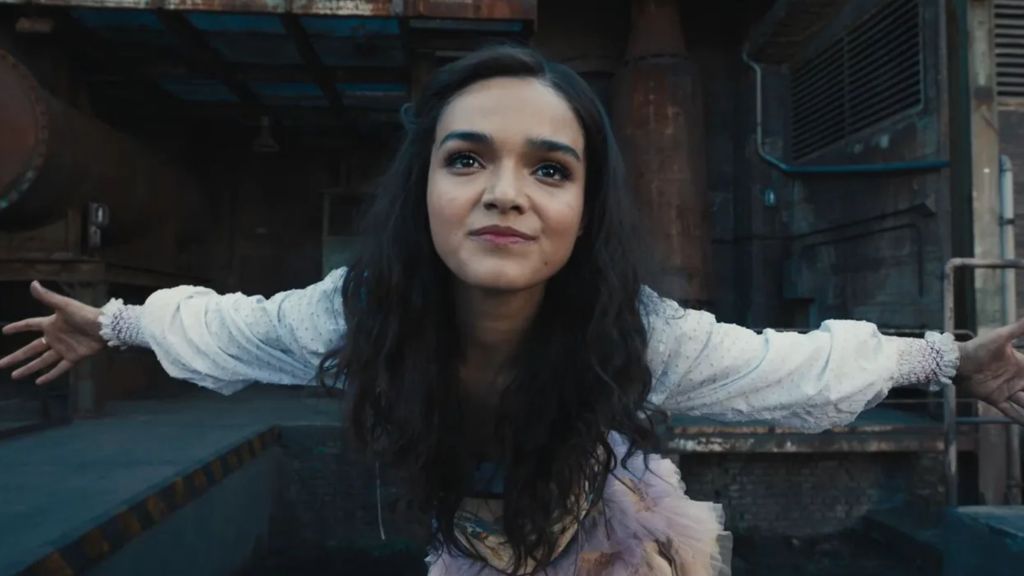
Here’s a character who disrupts everything exactly because she doesn’t fit. Lucy Gray Baird doesn’t win through brute force, doesn’t dominate the arena in any traditional sense, and never tries to be someone she isn’t. Instead, she survives by telling stories, singing, and understanding better than almost anyone that the Games are also a spectacle, and that controlling the narrative is a real advantage. Unlike Sejanus, though, Lucy Gray is smart about it. As a result, her impact stretches far beyond her own story.
She is one of the key pieces for understanding who Snow eventually becomes, exposing his insecurities, contradictions, and, most importantly, his moral limits. That alone makes her essential to the core of The Hunger Games. Still, that’s also where her role stops. Limited by the narrative point of view, she becomes a kind of unresolved ghost — a character without true closure. Lucy Gray matters deeply to everything that follows, but she remains just an open wound in Panem’s past.
7) Johanna Mason

In a universe where most people simply accept things as they are, Johanna Mason goes in the opposite direction by having zero patience for it — and the franchise is better because of that. From her very first appearance, it’s clear she has no interest in pleasing the Capitol or maintaining the illusion that winning the Games is some kind of noble achievement. Johanna has already been through the worst, lost everything she cared about, and decided she’s done pretending that any of it is fine.
Within the main trilogy, she’s one of the first characters (if not the first) to earn audience empathy purely through that raw honesty. Her anger feels earned. She doesn’t romanticize survival, doesn’t want to be a symbol, and doesn’t soften her pain to make others comfortable. Johanna has a sharp personality, some of the most memorable lines in the franchise, and a very specific narrative purpose: exposing the real, unfiltered trauma of the victors. She completely steals the scene whenever she’s on screen. Still, she can’t climb higher in the ranking because her role is more episodic, and she has little direct influence over the central decisions that shape the revolution.
6) Finnick Odair

This is a fan favorite — and for good reason. Finnick Odair enters The Hunger Games as just another Capitol darling, but that image doesn’t last long. As the franchise moves forward, the confident, charming, pretty boy is exposed as someone who’s been wearing armor the entire time (and trapped inside it, too). He was shaped to please, turned into entertainment, and exploited in ways the Capitol never dares to acknowledge publicly. Still, Finnick stands out as a genuinely sharp character, often acting as someone who nudges Katniss in the right direction when it matters.
But what makes his arc especially compelling is that when everything hidden finally comes to light, he’s never reduced to just another victim: he’s loyal, charismatic, strategic, and willing to put himself on the line for the people he loves. On the other hand, when it comes to ranking, Finnick isn’t as fully developed as he could have been (which is also why fans have long asked for a book centered on his story). Much of his suffering is told rather than explored, and that ultimately caps his overall impact.
5) Cinna
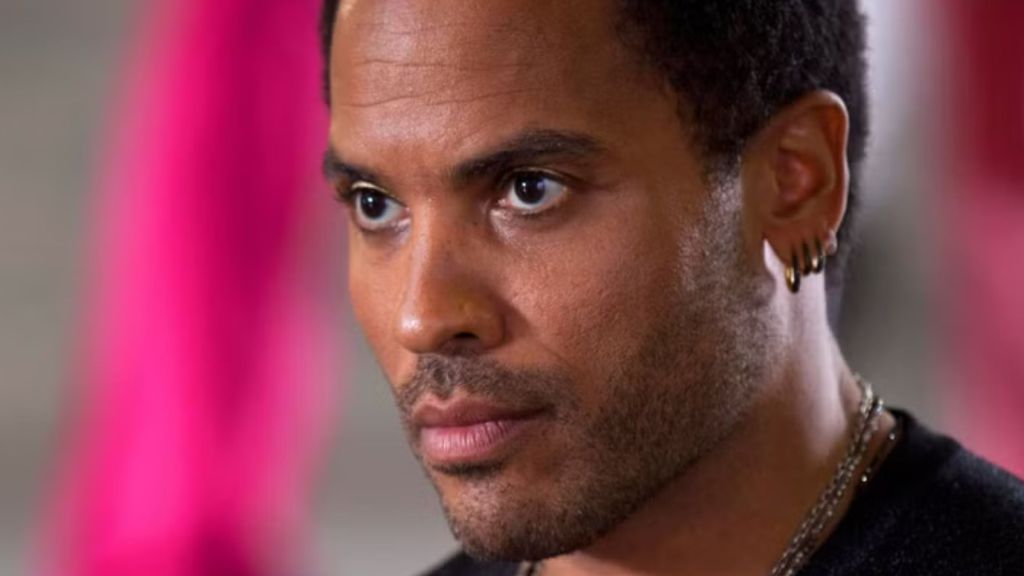
A lot of people might not care that much about Cinna, especially since he shows up and exits the franchise fairly quickly. Still, his boldness and quiet wisdom in challenging the regime without ever picking up a weapon become Katniss’ first real push forward. Without him, the Mockingjay wouldn’t exist in the form we know. While other characters fight in the arena or operate behind the scenes politically, Cinna understands something essential: in Panem, image is power. Every outfit he designs isn’t just a stylish look, but a statement, a provocation, and eventually, an act of resistance.
And what actually makes Cinna stand out, though, is that he never treats Katniss as just a symbol. He’s the first person who genuinely cares about her as a human being, respecting her limits and recognizing the emotional weight she carries. Almost everyone wants to use her for some greater purpose, and he is one of the few who actively tries to protect her from the role the world keeps forcing onto her — and that’s a radical, meaningful choice. He’s the moral compass of the franchise, the one asking “How far is too far?” while everyone else is focused solely on winning. Unfortunately, his presence is far too brief.
4) Haymitch Abernathy

Soon enough, audiences will get a deeper look at Haymitch Abernathy’s past in The Hunger Games: Sunrise on the Reaping, but even now, the franchise has already made his importance crystal clear: he’s the most straightforward proof that winning the Games doesn’t mean getting out unscathed. He’s bitter, alcoholic, and hard to deal with, but the story makes it clear that none of that comes out of nowhere. Haymitch learned very early how the Capitol punishes victors who win the “wrong” way, and he figured out that surviving after the arena requires a completely different kind of intelligence.
Behind the cynicism, he’s one of the most strategic characters in the entire franchise (and for that reason, one of its most interesting figures). Haymitch understands the system, knows how to play it, and does everything he can to keep Katniss and Peeta alive, even when that means making unpopular choices that no one immediately agrees with. At the end of the day, he’s a survivor trying to stop others from breaking the same way he did. Still, as sharp as he is, Haymitch is a supporting character by definition, and that’s what ultimately keeps him from ranking any higher.
3) Katniss Everdeen
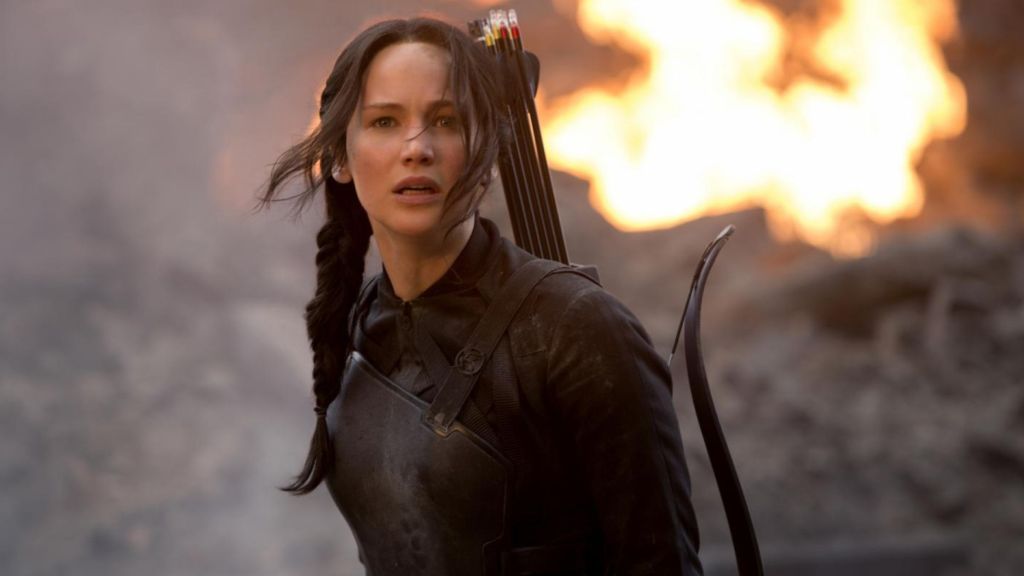
From the very beginning, Katniss Everdeen’s choices are reactive, driven by protection and instinct rather than ideology. She doesn’t enter the Games to change the world; she does it to save her sister, and everything else comes as a consequence. So what makes her such an effective character? Her resistance to becoming a symbol. Even after she turns into the Mockingjay, she’s deeply uncomfortable being the face of a revolution. Katniss makes mistakes, shuts people out, acts on impulse, and constantly questions who’s actually in control. Instead of a flawless leader, she’s an exhausted protagonist — but that’s what keeps her relatable.
Her arc provides the human backbone that stops the franchise from becoming just a political spectacle. But there’s a reason she lands in third place: the protagonist isn’t especially proactive. That’s not a flaw, but it does matter for the ranking. Almost everything she does is a response to something that’s already happened: she reacts in order to survive or protect someone else. Many of the most important decisions are made around her, not because of her. She’s essential, grounded, and emotionally compelling, but rarely sets the larger narrative in motion herself.
2) Peeta Mellark

At first glance, putting Peeta Mellark in the top two might seem like a stretch. But once you really break it down, it makes sense: his arc is one of the most consistent and carefully developed in the entire franchise. Peeta stands out because he refuses to lose who he is, which is something rare in Panem — and that’s incredibly powerful. Even inside the arena, he’s more concerned with not becoming part of the game than with winning at any cost. He starts with clear values and is pushed through extreme tests without completely losing his core, and it’s precisely his brainwashing in The Hunger Games: Mockingjay – Part 1 that pushes him into far more complex territory than most characters ever reach. He loses total control over himself and still fights to reclaim his identity.
On top of that, Peeta consistently puts other people’s needs ahead of his own. His influence is rooted in empathy, emotional intelligence, and moral resistance rather than strategy or power. That’s why he doesn’t take the top spot. His impact is deeply emotional rather than structural — and yes, that matters a lot to the story. But it doesn’t outweigh the legacy of the one character whose choices shape Panem for decades.
1) Coriolanus Snow

Coriolanus Snow is the kind of villain everyone instinctively recoils from, but it’s impossible not to rank him as the best character in The Hunger Games franchise. By far, he’s the most complete and thematically central figure in the entire story. He connects Panem’s past, present, and future, and without him, the Games as we know them wouldn’t exist (nor would the revolution unfold the way it does). It’s the discomfort he brings, combined with his backstory in The Ballad of Songbirds & Snakes, that cements him as the single most essential piece of the narrative.
Snow understands Panem better than anyone from a very young age, and he learns how fear, spectacle, and punishment keep a system standing, and uses that knowledge without remorse. Besides, unlike many fictional villains, he isn’t shallow; he operates with clear logic and internal consistency. Snow doesn’t react to the world — he shapes it. And within this franchise, that’s the ultimate criterion. More than that, he embodies the very idea the story criticizes most: the belief that stability matters more than human lives. Katniss is often highlighted as the central figure because she’s the hero, but the truth is that there is no The Hunger Games without Snow. He’s the reason the story exists in the first place.
What do you think? Leave a comment below and join the conversation now in the ComicBook Forum!
Most Viewed
-

Official art by Bastien Lecouffe-Deharme -
Image courtesy of Tor Books/Macmillan -

A photo of the Retrovolt Arcade taken in 2017, showing several classic arcade cabinets and stools. -

Courtesy of Saber Interactive -

Courtesy of TOHO Animation