Science fiction serves as a playground for the “what if” scenarios of human progress, often grounding its most ambitious narratives in existing technological trajectories. This connection to reality is a core tenet of the genre, as it allows audiences to contemplate the ethical and social implications of advancements that feel just within reach. Whether it is the expansion of artificial intelligence or the colonization of nearby celestial bodies, the genre prioritizes a sense of scientific plausibility to heighten the stakes of its storytelling. Furthermore, by adhering to the laws of physics or biological constraints, sci-fi filmmakers can create a tether between the fantastical and the familiar, ensuring that the challenges faced by characters resonate with our own understanding of the natural world.
Videos by ComicBook.com
Despite sci-fi’s dedication to the truth, the sheer vastness of the cosmos often forces creative licenses to maintain narrative momentum. Space remains a largely unexplored frontier, a vacuum of unknowns where our current data is often insufficient to paint a complete picture of reality. This is especially evident when cinema attempts to depict extraterrestrial life, as the lack of a biological blueprint requires designers to craft entire ecosystems and anatomies from pure speculation. However, a select group of productions chooses to embrace the restrictive nature of the universe, limiting their technology to what hard science can validate.
4) Europa Report

Sebastian Cordero’s Europa Report utilizes a found-footage format to deliver a grounded look at the first private mission to Jupiter’s fourth moon. The production consulted extensively with the Jet Propulsion Laboratory to ensure that the journey of the crew, including Rosa Dasque (Anamaria Marinca) and James Corrigan (Sharlto Copley), reflected the actual logistical hurdles of deep-space travel. For instance, the film accurately identifies that a journey to the Jovian system would take approximately 22 months with current propulsion technology, resisting the urge to utilize fictional warp drives for the sake of pacing.
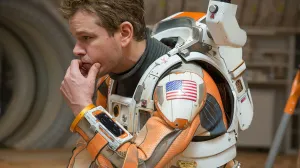
Furthermore, Europa Report‘s visual depiction of Europa’s icy surface was mapped using real data from NASA’s Galileo mission, providing a level of geological authenticity that is rarely seen in lower-budget offerings. While the narrative eventually ventures into speculative territory regarding what might lurk beneath the moon’s frozen crust, the mechanics of the ship’s environment remain remarkably sound. The film also avoids the trope of artificial gravity, depicting the physical toll of weightlessness and the psychological erosion caused by absolute isolation with clinical precision.
3) Interstellar
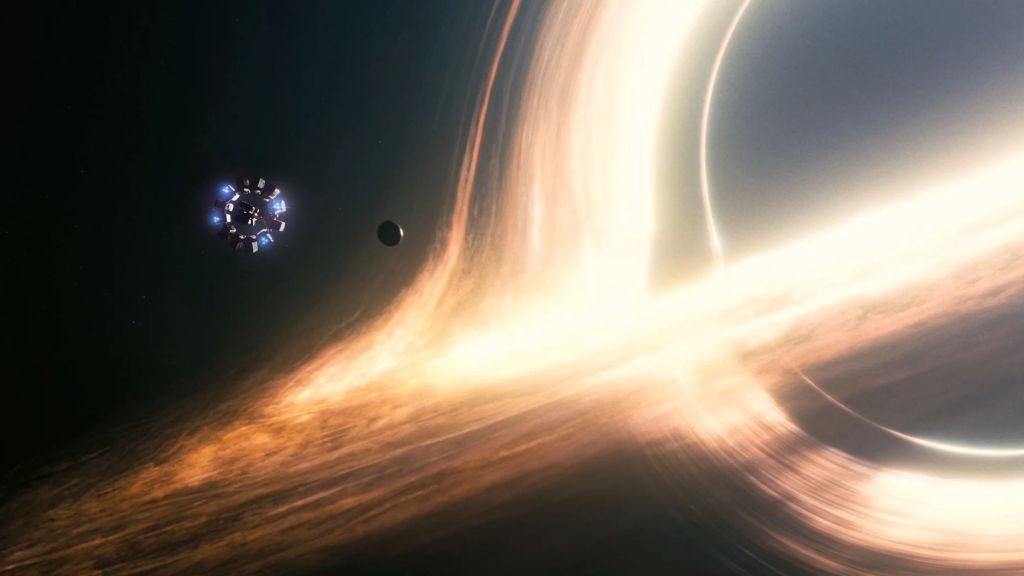
Directed by Christopher Nolan, Interstellar is perhaps most famous for its groundbreaking visualization of Gargantua, a massive spinning black hole. To achieve this, the production collaborated with Nobel Prize-winning physicist Kip Thorne, who provided the complex mathematical equations necessary to simulate the warping of light around a gravitational singularity. This collaboration resulted in the first scientifically accurate model of a black hole ever rendered for cinema, predating the first real-world photograph of a black hole by several years.
The narrative of Interstellar follows Joseph Cooper (Matthew McConaughey) as he navigates the extreme time dilation of Miller’s Planet, where the proximity to Gargantua causes an hour on the surface to equate to seven years back on Earth. This mechanic is a direct application of Einstein’s theory of general relativity, and Nolan’s refusal to simplify these physics adds existential dread to the mission. While the director did make minor aesthetic adjustments, such as muting the Doppler effect to ensure the black hole remained visually symmetrical and recognizable to audiences, the underlying framework remains a landmark achievement in sci-fi cinema.
2) The Martian
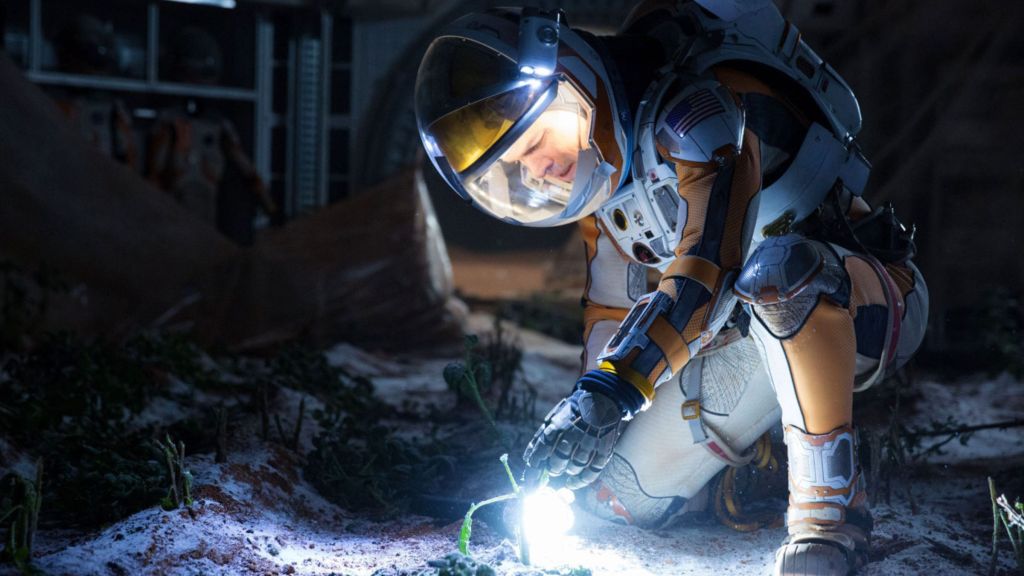
Based on the novel by Andy Weir, The Martian provides a meticulous examination of human survival through the lens of chemistry and botany. After being stranded on the Red Planet, Mark Watney (Matt Damon) must utilize his expertise to maintain a habitable environment while waiting for a rescue mission. The film’s depiction of Martian agriculture is notably accurate, as scientists have confirmed that the mineral content of the soil could indeed support vegetation, provided the toxic perchlorates are properly managed.
For The Martian, Ridley Scott’s production team worked closely with NASA to design realistic habitats and rovers, ensuring that the technology used by Watney felt like a logical evolution of current aerospace engineering. However, the film is also famous for a deliberate creative license: the massive dust storm that triggers the plot. In reality, the Martian atmosphere is approximately one percent as dense as Earth’s, meaning even a 100-mile-per-hour wind would exert the force of a light breeze, incapable of toppling the heavy equipment shown on screen. Despite this narrative’s catalyst, the rest of Watney’s struggle remains a remarkably faithful tribute to the scientific method.
1) 2001: A Space Odyssey
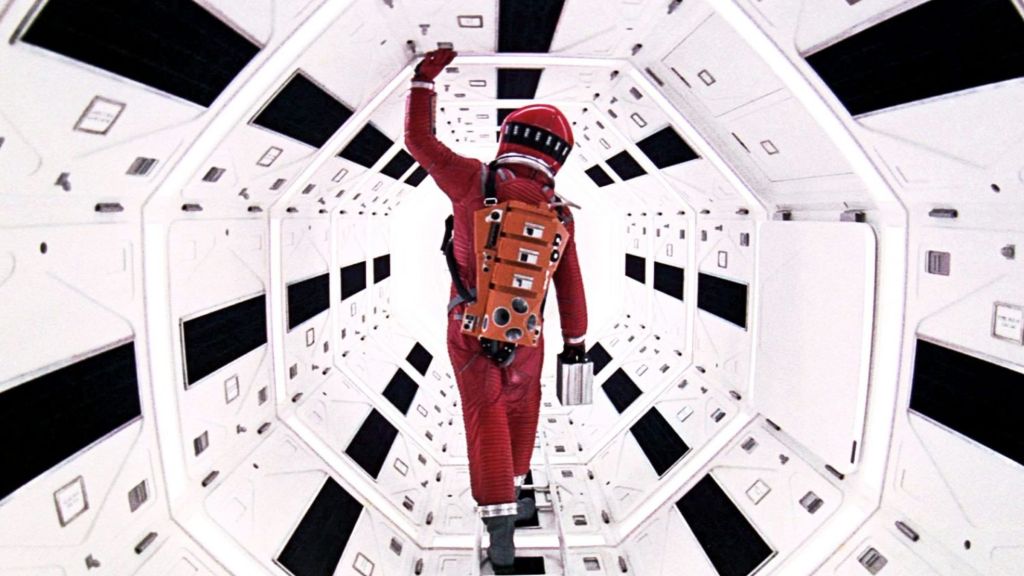
Over five decades after its release, 2001: A Space Odyssey remains the definitive standard for scientific realism in science fiction. That’s because Stanley Kubrick and co-writer Arthur C. Clarke were obsessed with ensuring that every mechanical detail reflected a plausible future for space exploration. This commitment is most evident in the film’s handling of sound, as the production correctly portrays the vacuum of space as a silent void, utilizing only the astronauts’ breathing to create tension. In addition, the Discovery One vessel, managed by Dr. David Bowman (Keir Dullea) and Frank Poole (Gary Lockwood), utilizes a rotating centrifuge to create artificial gravity through centrifugal force, a concept that remains the most viable solution for long-term space travel.
Beyond the physics of flight, 2001: A Space Odyssey was eerily prescient in its technological predictions, showing characters using flat-screen tablets and engaging in video calls long before such devices entered the consumer market. While the latter half of the film moves into metaphysical abstraction, the foundational depiction of the solar system and the logistics of life amongst the stars established a benchmark for accuracy that modern filmmakers still struggle to surpass.
Which scientifically accurate sci-fi movie do you think best represents the cosmos? Leave a comment below and join the conversation now in the ComicBook Forum!
Most Viewed
-

Image courtesy of Sony