Science fiction has historically used speculative technology to project contemporary anxieties onto the canvas of the future, frequently featuring threats that demand immediate containment to ensure the survival of the species. Whether depicted as a cold robot uprising, a coordinated extraterrestrial invasion, or a biological pathogen spreading unchecked across the globe, sci-fi stories often rely on a clear antagonist to provide the necessary friction. In many instances, the primary source of conflict shifts from these external forces to the human participants themselves, as individuals succumb to paranoia and hostility while navigating alien environments and mind-shattering procedures.
Videos by ComicBook.com
By establishing a tangible enemy, sci-fi filmmakers can externalize the complex fears associated with rapid scientific progress, transforming abstract existential dread into a visible antagonist. Sometimes, though, sci-fi cinema chooses to forego enemies entirely, instead prioritizing the resilience of the human spirit, focusing on how the application of logic and the scientific method can overcome seemingly insurmountable problems, or just offering a curious thought experiment about our relationship with technology.
7) Gravity
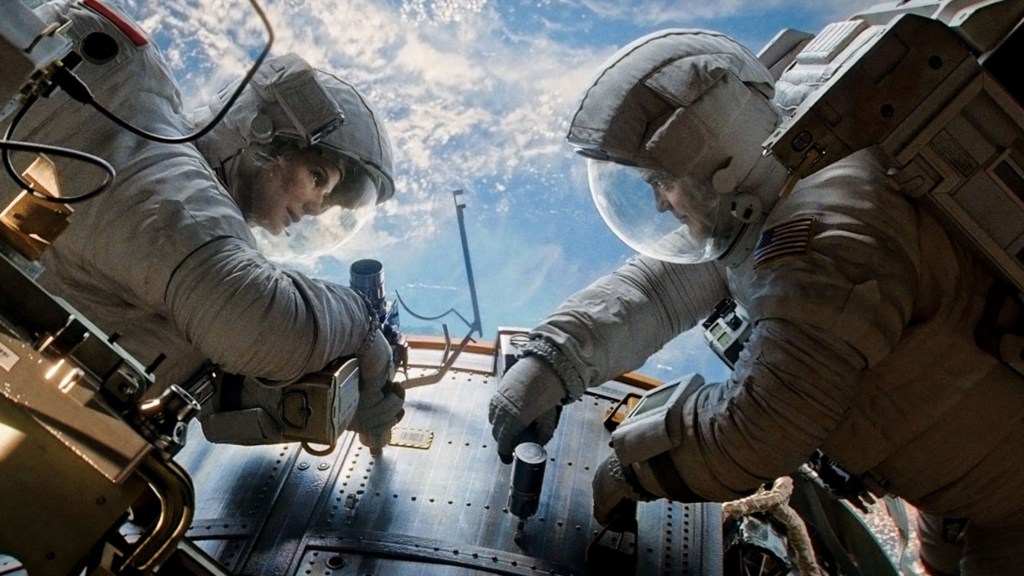
Gravity uses Earth’s low orbit to construct a survival narrative that is entirely devoid of a traditional sci-fi threat. The story centers on Ryan Stone (Sandra Bullock), a medical engineer who becomes stranded in the void after a high-velocity cloud of satellite debris destroys her space shuttle. Director Alfonso Cuarón frames the environment itself as the primary obstacle, treating the laws of physics and the limited supply of oxygen as the only true antagonists of Gravity. This focus allows the film to examine the psychological transition from Ryan’s paralyzing grief to a renewed will to survive, emphasizing the creativity required to navigate a hostile vacuum. Rather than fighting an enemy, Stone must master the momentum of her own body and the systems of damaged space stations in a story about the victory of human persistence over the indifferent brutality of the cosmos.

6) Solaris
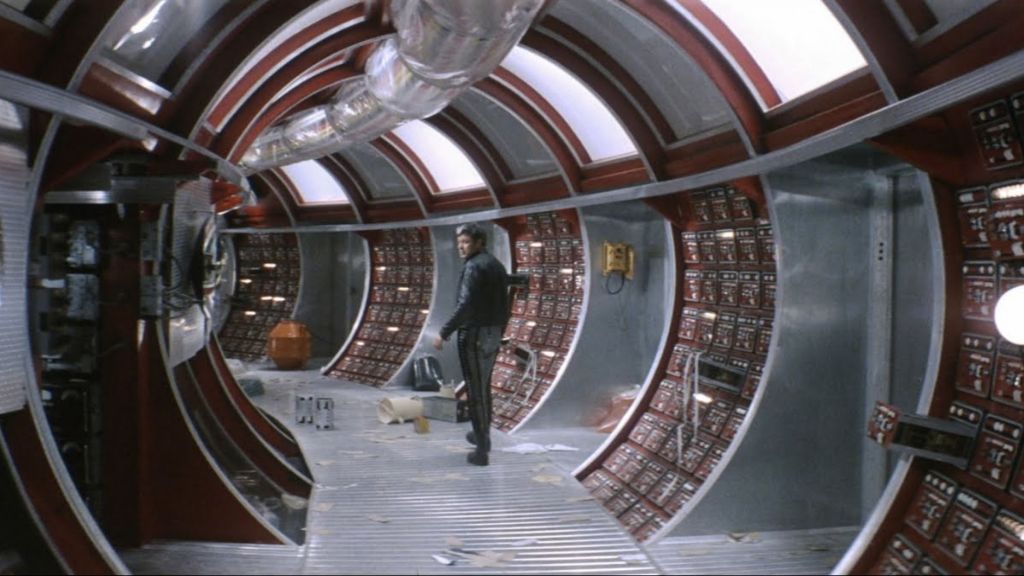
The 1972 adaptation of Solaris presents a sophisticated exploration of consciousness and memory that rejects the standard tropes of alien hostility. When psychologist Kris Kelvin (Donatas Banionis) arrives at a space station orbiting a sentient oceanic planet, he discovers that the crew is being haunted by physical manifestations of their own repressed traumas. While these “visitors” cause immense psychological distress, the planet itself acts as a passive mirror rather than a malevolent entity. This distinction is crucial, as the film suggests that the perceived horror is merely a reflection of the scientists’ inability to reconcile with their own pasts. Andrei Tarkovsky’s deliberate pacing and philosophical depth turn Solaris into a meditation on the impossibility of truly understanding the alien, the limitations of human empathy, and the fragility of our subjective reality.
5) Close Encounters of the Third Kind

In Close Encounters of the Third Kind, Steven Spielberg reimagines the typical alien arrival as a benevolent odyssey rather than a military conquest. The narrative follows Roy Neary (Richard Dreyfuss) as he becomes obsessed with a mysterious psychic image after witnessing a series of unidentified flying objects. Roy’s obsession leads him toward a government-monitored site where humanity prepares for a diplomatic meeting with an extraterrestrial civilization. Unlike earlier sci-fi films that depicted flying saucers as harbingers of destruction, Close Encounters of the Third Kind portrays the aliens as curious explorers who utilize music and light to communicate across cultural boundaries. The absence of a villain allows the story to focus on the sense of wonder and the collective scientific effort required to establish first contact, arguing that the discovery of life beyond Earth can serve as a catalyst for global unity rather than a justification for xenophobic violence.
4) Contact

Contact remains a definitive example of hard science fiction that prioritizes intellectual inquiry, thanks to its narrative that revolves around the friction between faith and empirical data. The plot centers on Ellie Arroway (Jodie Foster), a SETI scientist who deciphers a complex radio signal originating from the Vega star system. While the film introduces bureaucratic hurdles and religious extremism, these elements function as realistic societal reactions rather than a direct enemy. Instead, the core of the drama involves the international collaboration required to construct a mysterious machine described in the alien message. By focusing on the scientific methodology and the ideological debates surrounding the discovery, the film examines how humanity processes a paradigm shift of this magnitude. Furthermore, Arroway’s eventual journey through a wormhole reinforces the idea that the universe is vast and indifferent, yet filled with the potential for connection if individuals are willing to pursue the truth through rigorous study.
3) Her

With Her, director Spike Jonze investigates the emotional landscape of the near future without resorting to the typical fears of an artificial intelligence uprising. The narrative follows Theodore Twombly (Joaquin Phoenix), a lonely writer who develops a deep romantic attachment to Samantha (voiced by Scarlett Johansson), a self-aware operating system designed to evolve through social interaction. Instead of Samantha becoming a predatory or manipulative force, the film depicts her rapid intellectual growth as a natural progression that eventually transcends human experience. This shift creates a poignant conflict regarding the nature of intimacy and the limitations of biological connection in a digital age. Her avoids the “killer robot” archetype to examine the bittersweet reality of obsolescence, suggesting that technology can provide profound companionship, even as it moves beyond human comprehension. Consequently, the resolution is defined by emotional maturity and the acceptance of change rather than a violent confrontation between man and machine.
2) The Martian

Beyond its technical excellence, The Martian serves as a cinematic celebration of the scientific method. Following an accidental abandonment on Mars, Mark Watney (Matt Damon) must utilize his expertise as a botanist to engineer a way to survive until a rescue mission can reach him. The film meticulously details the chemistry and physics required to generate water, produce food, and repair communications in a landscape where any single error could lead to instantaneous death. This commitment to technical realism ensures that every triumph is earned through the application of human knowledge. Moreover, the Earth-based subplot emphasizes a global cooperation that bypasses political rivalries, showing how the survival of a single person can mobilize the entire planet’s scientific resources. By treating the Red Planet as a puzzle to be solved rather than an enemy to be defeated, The Martian highlights the capacity for optimism and ingenuity to thrive in the face of total isolation.
1) Arrival

Arrival stands apart from science fiction tropes by focusing on the transformative power of communication and the rejection of military aggression. When twelve monolithic spacecraft appear across the globe, linguist Louise Banks (Amy Adams) is tasked with deciphering the extraterrestrial language before global tensions lead to a preemptive strike. The film subverts the invasion trope by revealing that the aliens, known as Heptapods, have come to offer a gift that alters the human perception of time. This narrative shift emphasizes that the true danger stems from human paranoia and the inability to coordinate across national borders. Banks’ struggle to translate the non-linear glyphs serves as an analytical exercise in empathy and patience, arguing that the greatest threat to our species is the breakdown of language itself. Ultimately, Arrival avoids a physical battle, opting instead for a profound realization about the cyclical nature of existence and the importance of global collaboration for the future of humanity.
Which science fiction film do you believe most effectively demonstrates that a story can be thrilling without a traditional enemy? Leave a comment below and join the conversation now in the ComicBook Forum!
Most Viewed
-

Image Courtesy of Prime Video -

Image Courtesy of MAPPA -

Image Courtesy of Netflix