Without a farewell campaign and without the recognition it deserved at the time, more than a decade ago, a remarkable series came to an end. For much of the audience, it was just another cancellation among the many that TV has produced over the years. For those who were genuinely following the show, however, it marked the unexpected conclusion of one of the most unsettling ideas the sci-fi genre had ever attempted. What makes it especially interesting is that, despite ending far too soon, the show managed something incredibly rare: it embraced its cancellation and built a proper ending around it. So no, the final episode doesn’t feel rushed in an attempt to tie up loose ends, nor is it frustrating. Instead, it closes the narrative with such brutal clarity that, in hindsight, it’s hard to imagine a different ending.
Videos by ComicBook.com
Dollhouse, created by Joss Whedon and aired between 2009 and 2010, had a premise that made it clear from the start this wouldn’t be a comfortable watch. The concept revolved around people known as “actives,” who have their memories wiped and their personalities replaced on demand, allowing them to live entirely different lives from one mission to the next. Some are hired for seemingly harmless assignments, while others are placed in situations that are morally questionable or outright violent. At the center of the story is Echo (Eliza Dushku), who slowly begins to show cracks in the process: fragments of consciousness, lingering emotions, and an identity that refuses to disappear no matter how many times it’s erased.

But even with such an intriguing premise, Dollhouse made a lot of viewers uneasy from the very beginning. The series only lasted two seasons, and the episodic structure of the first made it feel like the story was running in place, repeating the same formula without meaningful progression. While that criticism isn’t unreasonable, it misses a crucial point: the repetition was the point. The predictable routines of the dolls, the illusion of safety, and the total absence of choice were all part of the show’s commentary on control and exploitation. Dollhouse wasn’t trying to be pure entertainment or immediately efficient in its storytelling. It was meant to provoke discomfort, especially for audiences in the late 2000s. The problem is that it aired on network television, which has rarely been willing to reward that kind of approach.
As expected, Fox didn’t take long to lose patience. The ratings were never strong enough to justify long-term confidence in such a challenging premise, and the series was canceled during its second season. In most cases, that would lead to a rushed ending or unresolved cliffhangers, but Dollhouse went in the opposite direction. Knowing time was running out, the creative team chose to fast-forward directly to the ultimate consequences of everything the series had been building toward, without softening anything for viewers who were still watching out of habit. And that decision is exactly what turned the show into a genuine masterpiece.
Dollhouse Knew How to End Itself Properly After Being Canceled
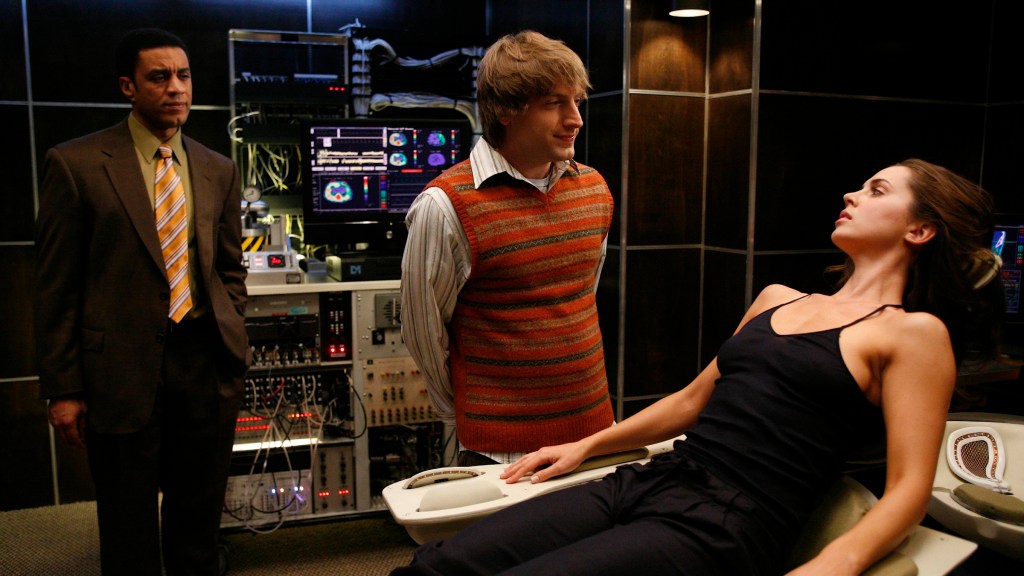
The result of that process was “Epitaph Two: Return,” a finale that abandons any attempt at maintaining the status quo and drops the audience into a deeply chaotic future. The imprinting technology that was once tightly controlled by specific corporations has spread uncontrollably and collapsed society. Identities are swapped like corrupted files, cities operate through improvisation, and the very concept of a stable self becomes unreliable. Anyone expecting the series to lean into stylized sci-fi at this point would be mistaken. Instead, the world presented is functionally horrifying, exactly how a technological collapse would likely look in real life. That’s where Dollhouse truly nailed it — and where many viewers at the time completely missed the point.
The finale has no interest in absolving anyone. Echo doesn’t become a traditional hero, but rather an imperfect symbol of resistance. Topher (Fran Kranz), the brilliant mind behind the technology, isn’t emotionally forgiven; he’s simply given the chance to acknowledge the damage he helped unleash. Every character arc closes in direct alignment with the choices made throughout the series, and there are no twists or convenient redemptions designed to wrap everything up neatly. Dollhouse trusts its audience to understand that the ending isn’t bleak for the sake of being bleak — it’s honest. This is real sci-fi, but the kind that probably fits better among shows that were ahead of their time.
Themes like consent, the commodification of the human body, erased identities, and technology directly interfering with the mind are far more common in today’s media landscape. In 2009, they felt excessive or “too weird” for network television. Today, they feel almost obvious. Was Dollhouse extreme? Absolutely, but that was never its flaw. If it failed anywhere, it was by existing in a time and place that wasn’t ready to engage with moral and narrative extremes. That’s why it was overlooked, gradually forgotten, remains severely underrated, and it feels tailor-made for a reboot in the current TV era.

What’s most impressive is that, with only two seasons, the series managed to resolve its central arc more effectively than many shows that ran far longer (you can see that with Stranger Things, which leaned heavily into sci-fi, but still stumbled in a few key areas by the end). The finale doesn’t leave you thinking “this could’ve gone further,” but rather “this ended exactly where it needed to.” That’s incredibly rare, and especially for canceled productions. Instead of fighting the inevitable, the show embraced its ending and folded it directly into its message.
Dollhouse remains a dense, unsettling, and remarkably coherent sci-fi series. Its ending doesn’t just conclude the story — it validates everything that came before it. And sixteen years later, it’s clear that time hasn’t been cruel to the show. What was actually cruel was failing to take it seriously while it was still on the air.
Have you ever watched the show? Leave a comment below and join the conversation now in the ComicBook Forum!
More TV Shows
-

Courtesy of Hulu