Doctor Who‘s new spinoff, The War Between the Land and the Sea, has come to a shocking conclusion. When Russell T. Davies returned as showrunner of Doctor Who, now with the backing of Disney+ money, hopes were high. The Disney+ era is over now, though, because the partnership between the BBC and Disney has come to an end. This latest spinoff, The War Between the Land and the Sea, is the last installment – and it’s been the best Doctor Who we’ve seen in years.
Videos by ComicBook.com
At first glance, The War Between the Land and the Sea is a cosmic Romeo and Juliet tale in which the human race and Homo Aqua – the sentient race who evolved on Earth long before humanity – collide in spectacular fashion. Human pollution is devastating Homo Aqua’s environment, and humanity’s predecessors emerge from the seas to force diplomatic talks. But, it turns out, there’s a sense in which this show isn’t really about the ambassadors (Russell Tovey’s Barclay Pierre-Dupont and Gugu Mbatha-Raw’s “Salt”) at all; it’s about the breaking of a classic 30-year-old character, setting them up as a villain.
The War Between the Land and the Sea is All About Kate Lethbridge-Stewart
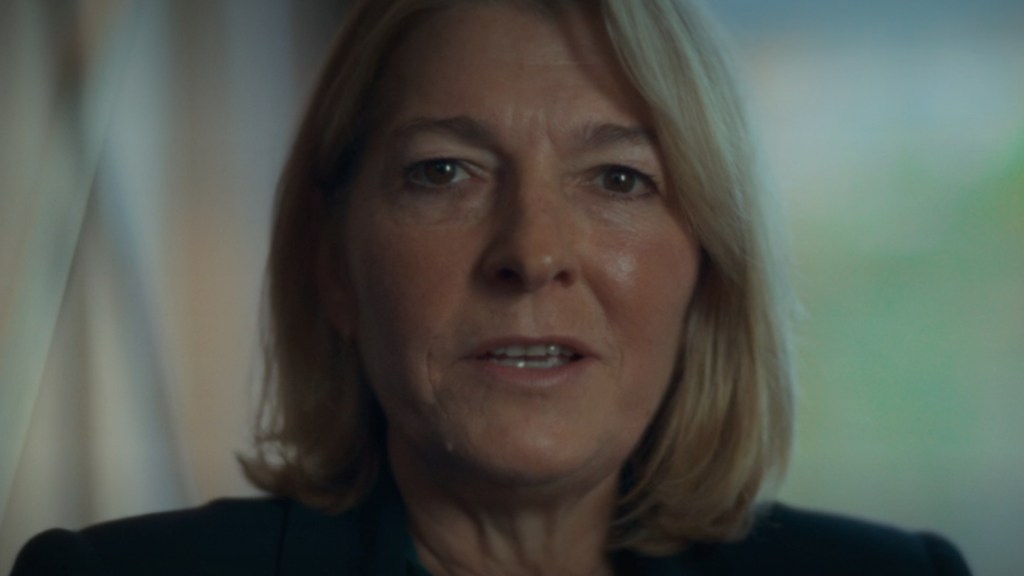
Played by Nicholas Courtney, Brigadier Lethbridge-Stewart was an ally of the Doctor’s who appeared from the Patrick Troughton era through to the show’s cancellation in 1989. A direct-to-video spinoff, “Downtime,” revealed the Brigadier had a daughter named Kate; the character became part of the main show in 2012, now played by Jemma Redgrave. She’d stepped up as the Brigadier’s successor, taking charge of an organization named UNIT who work to protect the human race from extraterrestrial threats. Though Kate is often stood on the sidelines in The War Between the Land and the Sea, this is really her story.
The War Between the Land and the Sea shows UNIT as a formidable force, one that operates outside the normal constraints of human law. Although civilians are required to act as overseers of UNIT missions, the organization no longer reports to any prime minister or president, and they expect to be able to overrule democratically elected leaders in any crisis situation. It’s a remarkable shift, because the original UNIT was the “United Nations Intelligence Taskforce,” reporting to the UN, whereas this “Unified Intelligence Taskforce” sits outside geopolitics.
This naturally means there’s a tension between UNIT on the one hand, and elected officials and corporate interests on the other. These come to a head in The War Between the Land and the Sea, with an attempted assassination of Kate that instead results in the death of her lover, Christofer Ibrahim. Matters only escalate in the finale, because political and corporate interests are working behind UNIT’s backs to find a deadly solution to the Homo Aqua crisis: an act of genocide through a virus engineered to leave only one in ten of them alive.
Kate Loses Hope in the Human Race

In truth, neither the human race nor Homo Aqua approached the negotiations with good intent. Homo Aqua considered them simply a way of keeping humans busy while they melted the ice caps, flooding the Earth and releasing the carbon dioxide trapped within them, making the planet uninhabitable for us. Humanity’s approach, though, is so much more brutal and efficient; an engineered virus, with an offer for the survivors to live in a protected ocean trench, while human corporations daydream of acquiring Sea Devil technology. The bioweapon is called “Severance,” and it breaks Kate’s hope in the human race.
Doctor Who‘s spinoff is all the more tragic because the Homo Aqua ambassador, Salt, had just offered another alternative: Accord, an ancient treaty whose mere invocation would have demanded a union between the two races. Barclay and Salt become a symbol of what Accord would have been, as she initiates a genetic transformation in her lover, turning him into an amphibian who can live underwater and enjoy his life with her. Kate watches the two swim into the distance, witnessing the joyful future that humanity has rejected.
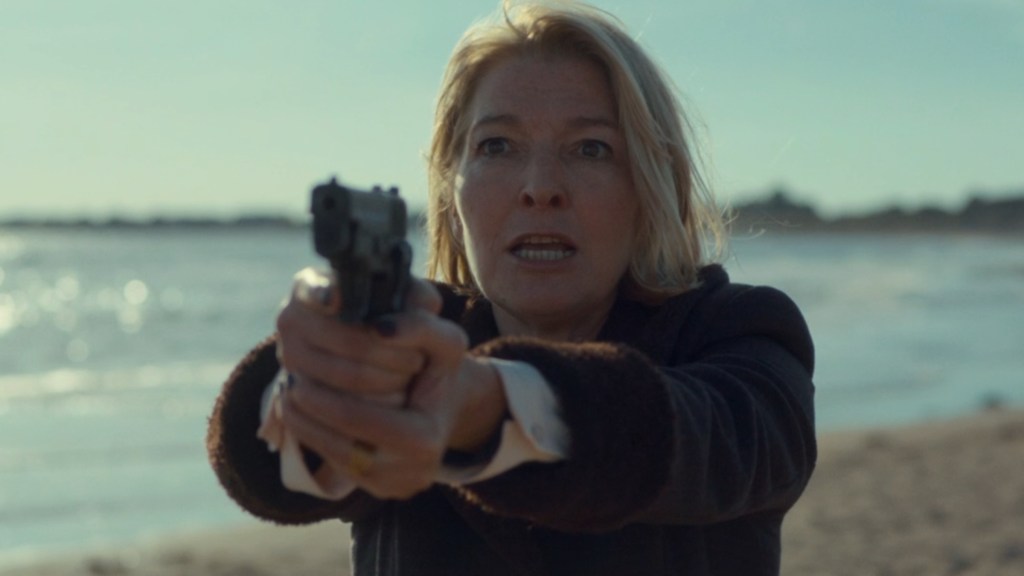
Kate’s breaking ends in a shocking post-credits scene that simply can’t be reversed. Walking down the beach after seeing Salt and Barclay swim away, she sees a jogger drop a plastic bottle on the sand. The contrast between the two visions of humanity is so jarring, so shocking, and Kate draws her gun on the jogger while yelling at him to pick up his litter. Kate’s motives are clear, but it’s certainly one of the most bizarre scenes in Doctor Who history, as she repeatedly tells the jogger to “pick it up” before the screen fades to black.
Kate Lethbridge-Stewart Shows the Doctor’s Hypocrisy
In an earlier scene, UNIT staff reflect on the sad truth that all this happened while the Doctor was away – when they could have really used his help. According to them, the Doctor once said that he is simply the one who saves humanity, not the one who shapes them, which they see as an explanation of his absence on this grim day. Kate’s example proves he is wrong, because she’s trying to be the Doctor in his absence. She’s trying to be the one who stands apart from her race, unaccountable and disinterested in politics, enforcing her will on the great tides of events.
No human being can do this. The Doctor stands apart from the human race precisely because he is not human, and he meddles out of compassion. There have been many times when he too saw the dark side of humanity – including in Kate’s own father, who often pursued military solutions against races like Homo Aqua. But the Doctor remembers the good with the bad, giving him a wider perspective that helps him stay grounded when he would otherwise despair. Lacking this perspective, Kate has broken.
There is no accountability for Kate Lethbridge-Stewart. The War Between the Land and the Sea includes a scene in which she speaks with her counselor, only to blackmail her when she is told she is unfit for duty. Standing before the prime minister of Great Britain, Kate first offers him help if he’s out of his depth, before warning him she will still be here when his career is over, and there will be a “reckoning” with her. It’s absurdly grandiose, as ridiculous as anything the Doctor himself said when he succumbed to his arrogance in the “Time Lord Victorious” era.
The War Between the Land and the Sea hasn’t been perfect, and the post-credits scene is certainly surreal. But it has still been one of the best Doctor Who stories in years, in that it has become an exploration of what it really looks like when a human being tries to imitate the Doctor a little too much. Now, it’s surely set the show up for an epic return in the 2026 Christmas Special, when Russell T. Davies will wrap up the story he’s been telling for the last few years – albeit now without a Disney budget.
What do you think of this new game? Leave a comment below and join the conversation now in the ComicBook Forum!
Most Viewed
-

Image Courtesy of HBO Max -
A screenshot from Fatal Fury: King of Fighters, showing a match. -
©Yukinobu Tatsu/SHUEISHA, DANDADAN Production Committee