
This past May, the third and final installment of beloved Modern-Fantasy-Meets-Religious-Satire-Meets-Romantic-Comedy series Good Omens ended on a note that can be described as somewhere between bittersweet and bleakly tragic. Despite the best efforts of the angel Aziraphale and the demon Crowley to prevent Biblical Armageddon, things ended up going at least roughly as they were laid out in the Book of Revelations— Christ briefly returning to Earth, only for Reality Itself to be brought to a swift and fiery end and for a new, better universe be reborn from the literal ashes of the old. It seems, when it comes down to it, as though Good Omens really only managed to arrive at the same apocalyptic destination by a slightly different route, and this fact has struck a sour chord with many fans, leading to blame for the ending being cast variously on God, the Metatron, the Archangel Michael, Crowley, and even (on a meta level) the show’s writers themselves and the broader flaws in real-life Christian-apocalyptic worldviews. However, in all their seeking to explain how a show about preventing Armageddon ended up carrying it out anyways, the fandom might have overlooked someone quite important.
Videos by ComicBook.com
Those less familiar with the Abrahamic religious lore that Good Omens is based in may be surprised to learn that, if said lore is assumed to be even roughly canon in the series, one of Revelations‘ most powerful, ominous, and frightening entities may have been hiding in plain sight since Good Omens‘ second season. This foreboding figure moved unrecognized through the events of the shows’ second and third installments, quietly setting up the dominoes that needed to fall to ensure the universe’s destruction… and yet, if you ask the fans or the characters, they’re the most innocent and pure figure in the whole story.
The angel Muriel appears in only one story, and it’s one of Apocrypha’s darker moments
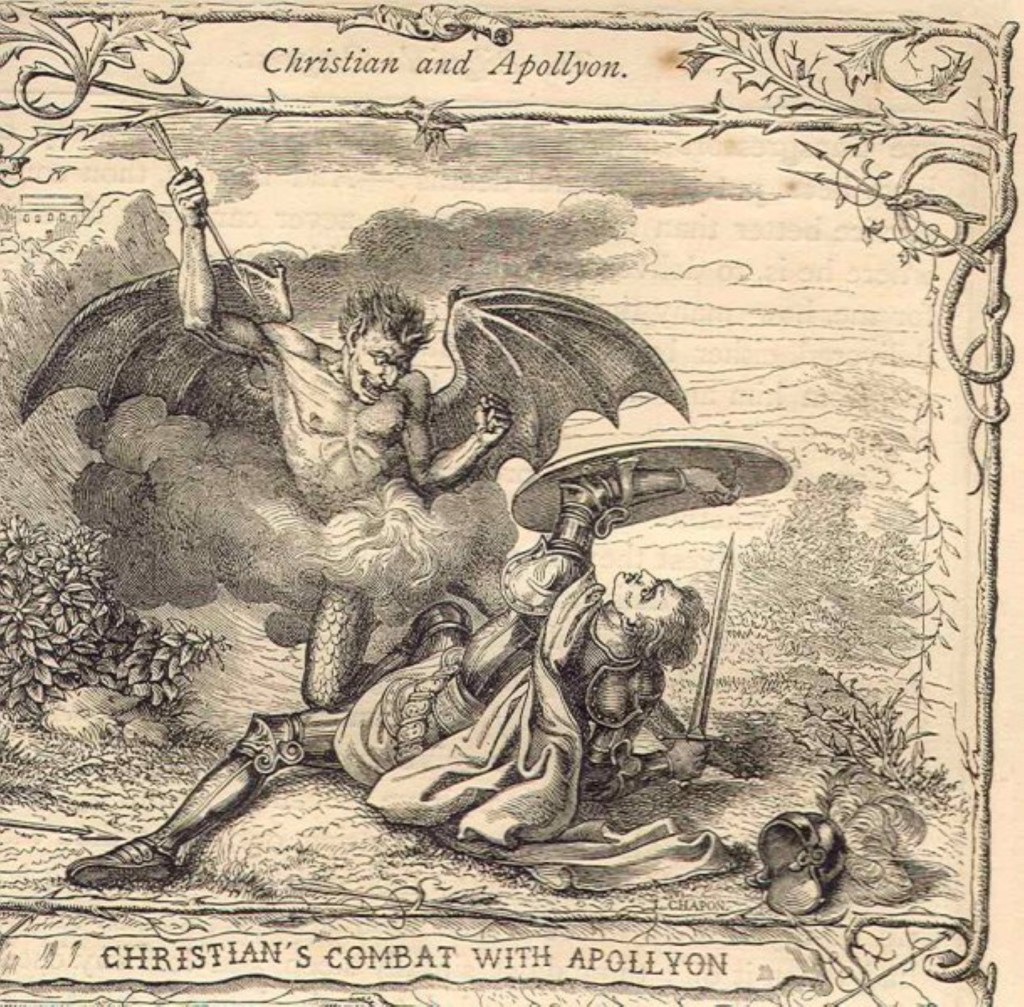
In Abrahamic religion, the term “Apocrypha” refers to texts that, while they deal with the core figures, concepts, and questions of the religion and can even be written contemporarily to the religion’s core texts, are not considered “canon”, or true, by believers. In Christianity, Apocryphal texts are often the source of names and ideas that would later—despite not being part of any canon— are still found scattered throughout popular and folk belief, and it is within one such text that we find the single place, outside of much later documents compiling lists of angel names, that Muriel appears.
In the New Testament Apocryphal text The Investiture of Abbaton, Angel Of Death (c. ~600-981 ce), Muriel is introduced after another angel, having been sent by God to gather clay to make Adam, returns empty-handed, the clay itself having loudly protested its being gathered and warned the angel of Adam’s inevitable fate. Muriel is the next angel that God sends to collect the clay, and despite facing similar alarming statements from the sentient earth, Muriel is undeterred from their mission, collecting the clay over its protests and bringing it to God.
It is this substantial role in Adam’s creation that leads God, after Adam and Eve are expelled from the garden and humanity is rendered mortal, to give Muriel power over all of humankind— renamed as Abbaton (spelled as Abaddon or Apollyon in most other appearances of this figure), the Angel of Death, they are given a terrifying and monstrous form that gives them authority over both mankind’s souls and other angels through sheer force of terror (though, at Abbaton’s request, God also allows them to appear in a kind and reassuring form at the deathbeds of those who specifically pray to and honor the Angel of Death).
Abaddon, of course, is a powerful and ominous figure in the Book of Revelations, where they are identified as the king of a vast and smoky abyss that opens in the earth during the end times, as well as the ruler of the gigantic, monstrous locusts who live there. Abaddon also became widely understood in popular, folk and pop-culture Christianity as a malevolent force linked to death and apocalypse, often being interpreted as a demon in later understandings rather than an angel given a frightening form and morbid purpose by God.
Muriel’s future as Abaddon was foreshadowed at the end of Season 2
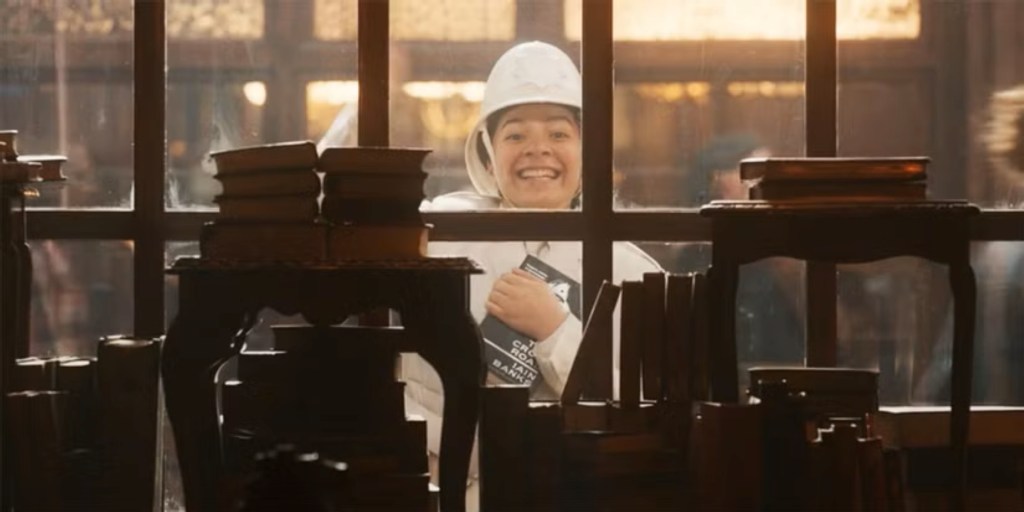
While at first glance the frightening nature and cosmically significant role given to Muriel/Abaddon seems at total odds with the unfailingly cheerful, pastel-clad, low-level angel Muriel (played with a true sense of innocence, charm and infectious positivity by actress and CONTROL: Resonant VA Quelin Sepulveda) that exists in Good Omens canon, their planned role as an apocalyptic figure and bringer of death may have been indicated as early as Good Omens’ second season. As the tense and heart-wrenching events of Good Omens season 2’s final 15 minutes draw to a close, the Metatron approaches Muriel, who he has ordered to remain on Earth in Aziraphale’s place, and finds her reading the book that Crowley had given her- an action which the Metatron heartily approves of. This book, which is repeatedly made conspicuously visible to the audience, is The Crow Road by Ian Banks, a book that, while a mystery novel in the structural sense, deals heavily with the nature of the human experience around death and grieving.
The Metatron’s actions during his abrupt appearance at the tail end of Good Omens season 2 make it clear that he is hard at work getting everything lined up where it needs to be for the end of the world, and that could easily include making sure that Muriel was getting the influences and information that they would need to take on the title of Abaddon. Notably, within this same sequence of scenes, the Metatron refers to Muriel as “The Dim One”— marking a drastic departure Apocrypha’s treatment of Abaddon, with the Metatron seeing Muriel as a tool be manipulated rather than a frightening force in themselves. This change points at the way in which Good Omens seems to reimagine and subvert Muriel’s dual role as Abaddon, an interpretation which truly finds its stride in the show’s third season.
While never named out loud, Muriel’s role as Abaddon has tragic echoes in her Good Omens 3 arc
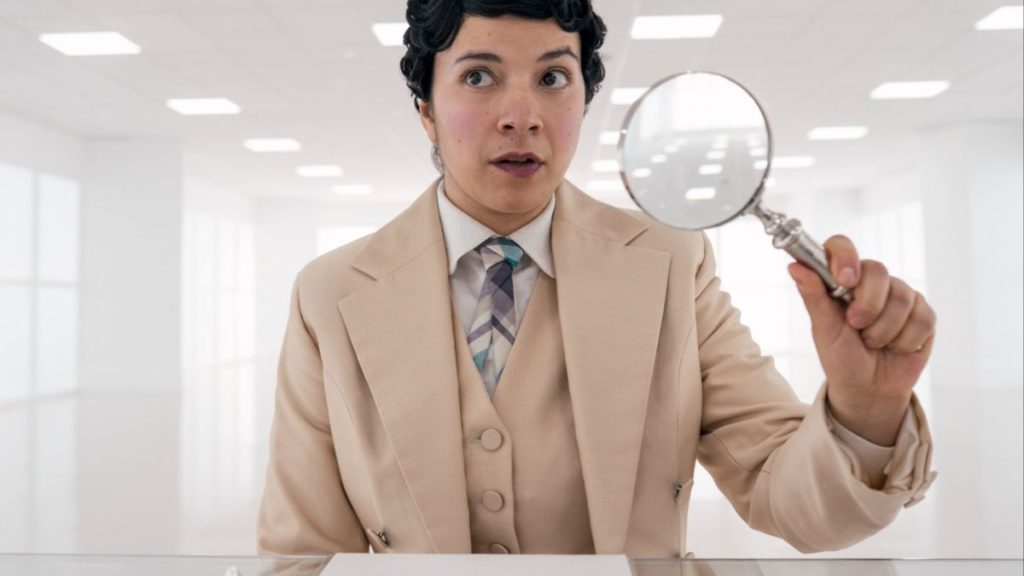
From the start of Good Omens‘ 3rd installment, Muriel is, as Aziraphale’s second-in-command during his organizing of the Second Coming of Christ, playing a role that is blatantly apocalyptic (while Aziraphale is insistent that the Second Coming will be a joyful event that leads directly to paradise on earth without any of the messy apocalypse-ing, the other angels seem unconvinced by his optimism). This position is also one that Muriel is selected for because of her unquestioningly and unerringly positive nature— Aziraphale recalled her from her position managing his bookshop on earth because he wanted to work with someone “nice”.
While this situation already creates some parallels to the apocrypha, these connections strengthen, and take on darker meaning, throughout the course of Good Omens 3. Following Aziraphale as he tries to track down the stolen Book of Life (a book with the ability to control reality itself as the pages were altered), Muriel, having clearly picked up some things from their and Aziraphale’s shared interest in detective stories, wastes invaluable time dusting for fingerprints and checking for footprints with a magnifying glass, conducting dramatic questioning sessions with the other angels, and even accompanying Aziraphale in creating ridiculous demon disguises (sadly the closest audiences will likely ever get to seeing Muriel’s Abaddon form in Good Omens) and popping down to Hell to vaguely ask if anyone knows anything about the missing book.
By the time they figure out the identity of the thief, it is far too late— while Muriel did their genuine best at being a detective, the Archangel Michael, who had stolen the Book of Life and gone fully mad to boot, had begun to tear out and destroy pages, and soon escalated to wiping huge swaths of reality out of existence at once. Muriel’s realization of this is all for nothing, as Aziraphale and Crowley had realized the same thing moments before. Returning to Heaven, Muriel learns that other angels have also deduced the truth, and spends the moments before their own annihilation alongside the rest of Heaven coming to the realization that the role they played in these events was not that of the detective, but that of the “Useful Idiot”.
Muriel’s role in the end of Good Omens‘ reality serves as a cautionary tale about the slippery slope between loyalty and unknowing complicity
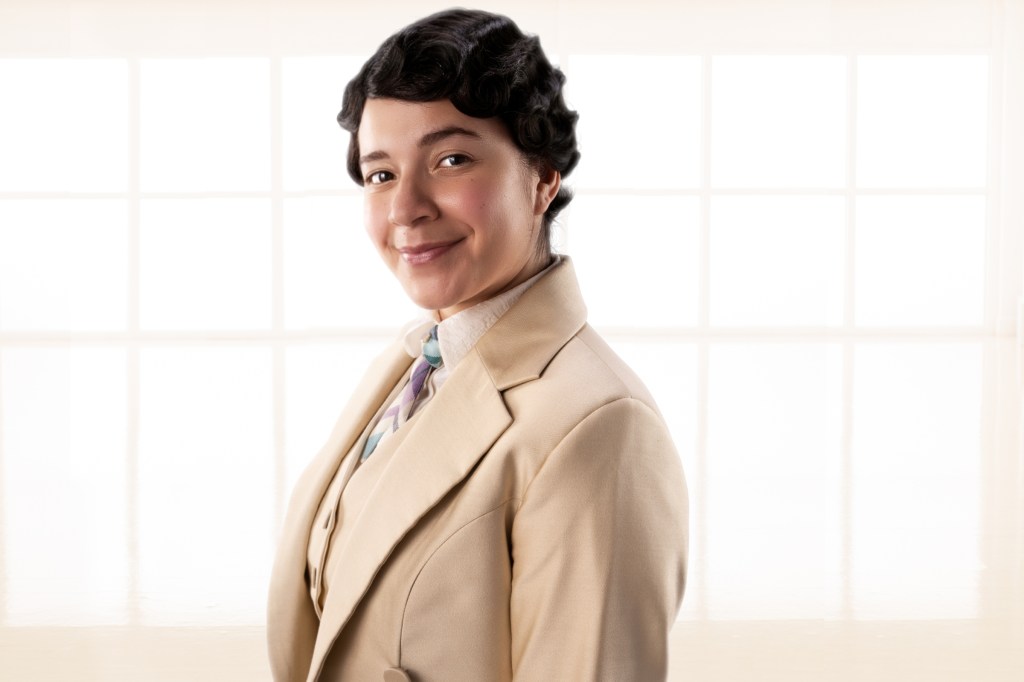
The idea of the “Useful Idiot”, a phrase commonly used in politics to refer to a person whose lack of intelligence makes them easy to manipulate into serving causes and setting in motion events that they do not truly understand, seems to be the crux of how Good Omens utilizes Muriel’s character to reimagine the events, and the message, of Abaddon’s apocryphal origin (if, of course, the writers meant to include Muriel’s apocryphal associations at all— though if that were not the attempt, it is hard to explain why such an obscure and surface-level non-angelic name as Muriel was chosen for the character).
Good Omens 3 cleverly reframes the narrative of The Investiture of Abbaton to highlight Muriel’s total, unwavering, undauntable, cheerful loyalty to Heaven and to their superiors as the trait that leads to them becoming an instrument of the Apocalypse. Rather than be given conscious control and rulership over the deaths of humanity spanning thousands of years (as in the apocrypha) or reduced to a demon or other dark spirit (as in later cultural understandings of Abaddon), Muriel speeds the end of all things on their merry way simply by remaining unerringly loyal, relentlessly perky, and doing everything asked of them exactly by the book, and that’s just as effective at leaving the earth in ashes as any conscious role as an Angel Of Death. The line between “Loyal and Eager to Please” and “The Useful Idiot Who Helps End The World” is, Muriel (or are they Abaddon?) seems to tell the audience, perhaps thinner than you think.
How do you feel about this view on the character of Muriel? Do you think the writers intended this connection to the apocrypha, or was it a case of incredibly— perhaps even ineffably— well-placed coincidence? Does knowing about Abaddon change how you see Good Omens‘ ending? Let me know in the comments.
More TV Shows
-

Bass X Machina S1. Brian Tyree Henry as Bass Reeves in Bass X Machina S1. Cr. Courtesy of Netflix © 2026 -

Courtesy of Netflix -

Courtesy of Paramount+

![MCU Fans Can’t Believe VisionQuest Just Killed [SPOILER] in the First Two Episodes](https://comicbook.com/wp-content/uploads/sites/4/2026/09/visionquest.jpg?w=300)
