I don’t know about you, but after everything I’ve seen based on George R. R. Martin on TV, I don’t really set my expectations that high anymore. Game of Thrones was obviously a landmark, but after its ending, confidence in whatever came next started to drop. When House of the Dragon premiered, it felt promising at first, but the truth is that, so far, even though it’s a solid show and hasn’t completely fallen apart, it still comes with some noticeable missteps (Season 2, in particular, was widely criticized for feeling like pure filler). So when A Knight of the Seven Kingdoms was announced, I’ll admit I was skeptical. Would a smaller story, focused on just two characters, really work in a massive world like Westeros?
Videos by ComicBook.com
But right from the first episode, you could tell they were doing the exact opposite of trying to impress. There are no dragons flying, no looming battles, and no epic atmosphere built around entire cities. The series is about Dunk and Egg, characters most viewers probably didn’t know unless they had read Martin’s novellas, dealing with problems that seem small in scale but hit hard emotionally. And honestly, this more intimate approach hooked me faster than Game of Thrones did back in 2011. It’s almost like the show is saying that big Westeros stories can also exist on a much smaller level.
Why A Knight of the Seven Kingdoms May Be the Best Adaptation of George R. R. Martin’s Stories

A Knight of the Seven Kingdoms is where everything changes for Martin’s TV universe. The show follows Ser Duncan the Tall, a knight more concerned with doing the right thing than becoming famous, and his squire Egg, who is later revealed to be part of the Targaryen family. And the show’s first big win is how it turns this seemingly simple journey into something you really want to follow. I was surprised by how natural the storytelling feels, because it doesn’t try to force drama or tension right away. The series doesn’t build toward some massive payoff meant to rival the other Westeros series — instead, it actively subverts expectations. Everything flows because the focus stays firmly on the main characters, making us care about them almost immediately.
And speaking of characters, the chemistry between Dunk and Egg is pure gold. How many times have we seen shows desperately try to manufacture emotional bonds, only for them to fall flat? Here, it works — and it works really well. You feel trust, humor, and even irritation between them, like they’re actual people instead of fictional creations. Their interactions had me laughing during scenes that could have felt trivial, and reflecting during quieter moments spent talking around a campfire, for instance. The end of Episode 2 marks their first truly heartfelt connection, and it’s both touching and light, making you want to see more of them together. That mix of warmth and tension (such as moments like the jousts) shows just how well the series understands Martin’s core strength: human characters dealing with real choices.

Another thing that really impressed me was the pacing, especially compared to the other shows. Game of Thrones often operated in “all or nothing” mode, spending several episodes building tension just to unload everything in a massive war. House of the Dragon, on the other hand, frequently stretches emotional conflicts for too long, with episodes that sometimes feel like they’re going in circles before finally moving forward. A Knight of the Seven Kingdoms hits that sweet spot in between. The episodes have room to breathe, but they never feel slow. The series knows exactly when to push forward and when to ease off, and that makes a huge difference.
I also felt that the script understands there’s no need to artificially raise the stakes, even without dragons or clashing armies. Sure, budget plays a role (showrunner Ira Parker has mentioned that this production had far fewer resources than the others), but the writing feels confident. It doesn’t rely on gimmicks to seem complex or ambitious. Sometimes the strongest moments come from an unresolved conversation, an awkward silence, or a small decision that completely shifts a character dynamic. The show is always proving it trusts its audience instead of trying to impress them.

And I can’t ignore the biggest differences: Dunk’s point of view and the show’s lighter comedic touch, which never feels forced as comic relief. It comes from dry cuts, subtle comments, and small ironies rooted in Dunk’s personality and Egg’s sharpness — a type of levity that simply doesn’t exist in the other series. Characters joke during bad moments, make mistakes, contradict themselves, and that makes everything feel more human. As for perspective, Westeros has almost always been shown through kings, queens, and heirs. Seeing it through a knight who barely has money for food and a kid trying to understand the world completely changes the experience. Everything feels more intimidating and more survival-based. It’s refreshing because it strips away the glamor and shows Westeros as something much closer to everyday reality.
And maybe most importantly, A Knight of the Seven Kingdoms works both for longtime Martin and Game of Thrones fans and for newcomers. No one feels lost. If you already know this world, you’ll catch references, important surnames, and subtle connections. But if you’ve never watched any of it before, the show still works, explaining its world naturally without dumping exposition in your lap.
The Show Has the Seal of Approval from the Author Himself

And if that wasn’t enough, there’s a huge bonus: Martin has openly praised the series — and that matters more than you might think.
On his blog, he made it clear that he watched the first six episodes before release and loved them. “I’ve seen all six episodes now (the last two in rough cuts, admittedly), and I loved them. Dunk and Egg have always been favorites of mine, and the actors we found to portray them are just incredible. The rest of the cast are terrific as well.” And he also highlighted how faithful the adaptation is to his original work. “It’s as faithful as adaptation as a reasonable man could hope for (and you all know how incredibly reasonable I am on that particular subject).” Indeed, anyone familiar with Martin knows he doesn’t hold back when something feels off, so hearing him say they captured Dunk and Egg’s spirit goes a long way.
And that approval also gives reassurance to more demanding viewers, since watching the show no longer feels like a guessing game about whether they’ll mess things up. You can just enjoy the episodes and let the story unfold. For me, that puts A Knight of the Seven Kingdoms on another level. It’s intimate, fun, explores a different formula than we’re used to (even structurally, not just narratively), and it keeps proving how honest it is to Martin’s creation — something you can never take for granted in Westeros. And that shows a maturity neither Game of Thrones nor House of the Dragon ever fully reached.

A Knight of the Seven Kingdoms invites you in, asks you to sit down, and simply follow two characters trying to survive in a complicated world. That alone was enough to keep me hooked from Episode 1.
So yes, I genuinely think this spin-off is the best adaptation of Martin’s books so far because it’s about people, not thrones, wars, or dragons. It’s a solid story with a clear beginning, middle, and end, centered on protagonists you follow because you want to, not because you have to. It’s also the first time a Westeros project feels very much comfortable with what it’s showing — and comfortable with simplicity. It respects the essence of the original stories, has the author’s blessing, and still manages to be accessible to everyone. For me, it’s not just a well-made spin-off, but a series that understands the root of Martin’s world better than anything that came before it.
What do you think? Leave a comment below and join the conversation now in the ComicBook Forum!
Most Viewed
-
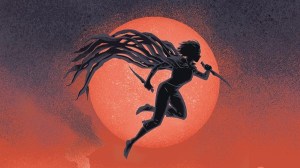
Image courtesy of Tor Books/Macmillan -

Official art by Bastien Lecouffe-Deharme