By the late 1980s, Doctor Who was already an iconic institution that had endured through cast and format changes, budget fluctuations, and stretches of critical hostility. Yet, in 1989, after 26 seasons on air, the BBC stopped making it. The next few years were full of uncertainty, and a slew of rumors were circulated by heartbroken fans trying to understand what went wrong. The final story, “Survival,” aired on December 6, 1989, and concluded with Sylvester McCoy’s Seventh Doctor monologuing on the importance of “continuing the journey.”
Videos by ComicBook.com
It wasn’t announced as a finale, but producer John Nathan-Turner shaped it as a closing chapter, knowing full well that the BBC might not commission another season. Behind the scenes, Doctor Who had lost support within the BBC, having been weakened by years of deliberate production sabotage by key decision-makers. Its eventual return in 2005 came because showrunning Russell T Davies finally had the influence to relaunch the series.
The Deliberate Disruption of Doctor Who
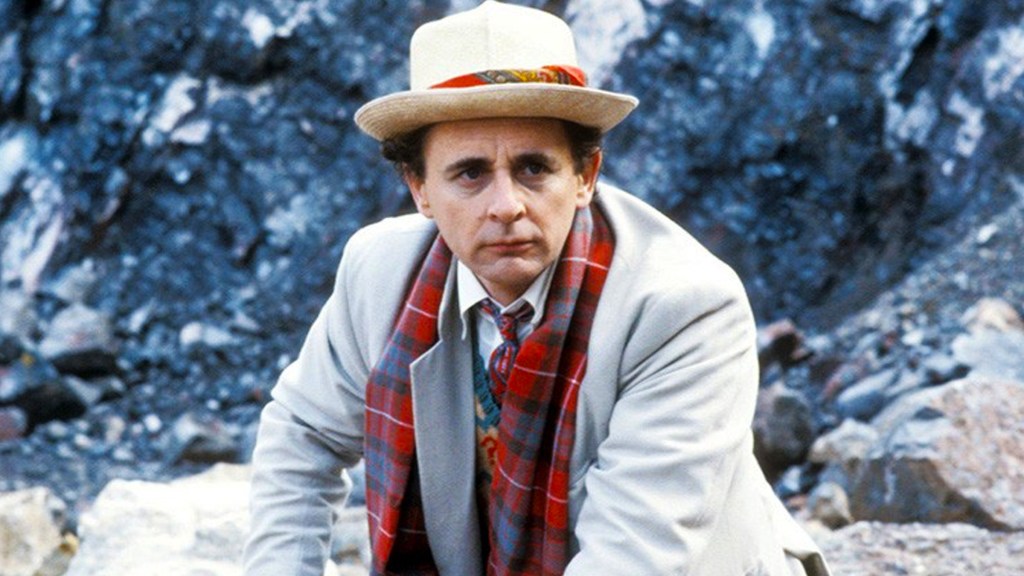
When Doctor Who concluded its original run, no new episodes were planned or commissioned, and the production team was disbanded. Michael Grade, who became Controller of BBC One in 1984, played a major role in destabilizing Doctor Who, though contrary to popular belief, he did not personally cancel it in 1989. In 1985, Grade put the series on an 18-month hiatus, arguing to the Evening Standard that the show’s science fiction was “rubbish,” too violent, and a poor use of the license fee. Openly hostile to the series, Grade thought the show’s science fiction was outdated and inferior to contemporary cinema like Star Wars and E.T. Although fan backlash forced Doctor Who back on air, it never fully recovered.
During his tenure, Grade also sought to remove Colin Baker from the role of the Sixth Doctor, which contributed to tensions behind the scenes and left the show without a clear champion at the BBC. While the hiatus sparked fan campaigns urging the BBC to bring the series back, the disruption (plus combined with scheduling conflicts with other high-rated programming and shady budget cuts) set Doctor Who on a trajectory that ultimately ended the classic era in 1989.
By that point, Grade had already left the BBC in 1987 after failing to secure the role of Director-General and had moved on to Channel 4, but his plan had worked nonetheless. The final cancellation decision was made under Jonathan Powell, who succeeded Grade as Controller, and Peter Cregeen, the BBC’s Head of Series. Cregeen ultimately decided not to commission a 27th season.
The Wilderness Years

After going off the air, Doctor Who as a franchise was floating in limbo. Books, audio dramas, and fan conventions kept the spirit alive, but there was no ongoing TV show. The first sign of life came nearly seven years after the series went dark, with Doctor Who, a 1996 TV movie produced as a co-production between BBC Worldwide and Universal Studios. Airing first in Canada, the film was intended as a backdoor pilot for a new American series.
The movie introduced Paul McGann as the Eighth Doctor, featured Sylvester McCoy’s on-screen regeneration, and cast Eric Roberts as the Master, with Daphne Ashbrook as companion Grace Holloway. While the film performed so-so in the UK, its U.S. premiere drew only 5.6 million viewers. And without decent American ratings, Universal declined to move forward with a full series.
The movie also contained a few things the fans found controversial. Primarily, the revelation that the Doctor was “half human” and the romantic kiss between the Doctor and Grace. While McGann’s performance was praised, the film ultimately failed to revive the franchise as a whole.
Between the TV movie and the eventual revival, there was only one BBC-commissioned live-action Doctor Who production: The Curse of Fatal Death. Written by Steven Moffat for Comic Relief’s Red Nose Day in 1999, the short parody starred Rowan Atkinson, Richard E. Grant, Jim Broadbent, Hugh Grant, and Joanna Lumley as different incarnations of the Doctor, with Jonathan Pryce as the Master. Though comedic and non-canonical, the special was a significant turning point. It was proof that Doctor Who still had cultural cache after all this time. And it was proof to fans that the BBC was not entirely opposed to revisiting the property. Moffat later said he believed it would be his only opportunity to write Doctor Who.
Russell T Davies and the Recipe for a Revival
What finally brought Doctor Who back for real was one fan’s insider sway. Russell T Davies had been lobbying for a revival throughout the late 1990s, driven by a lifelong love for the show that apparently dated back to the First Doctor’s regeneration in 1966. But it wasn’t until Davies created Queer as Folk that he gained the industry credibility necessary to make it happen.
Queer as Folk was a major success for Channel 4, establishing Davies as a new tastemaker and reliable showrunner capable of delivering ratings and critical attention. With that success under his belt, Davies was finally in a position to revive Doctor Who on his own terms. The BBC approved the project with Davies as showrunner.
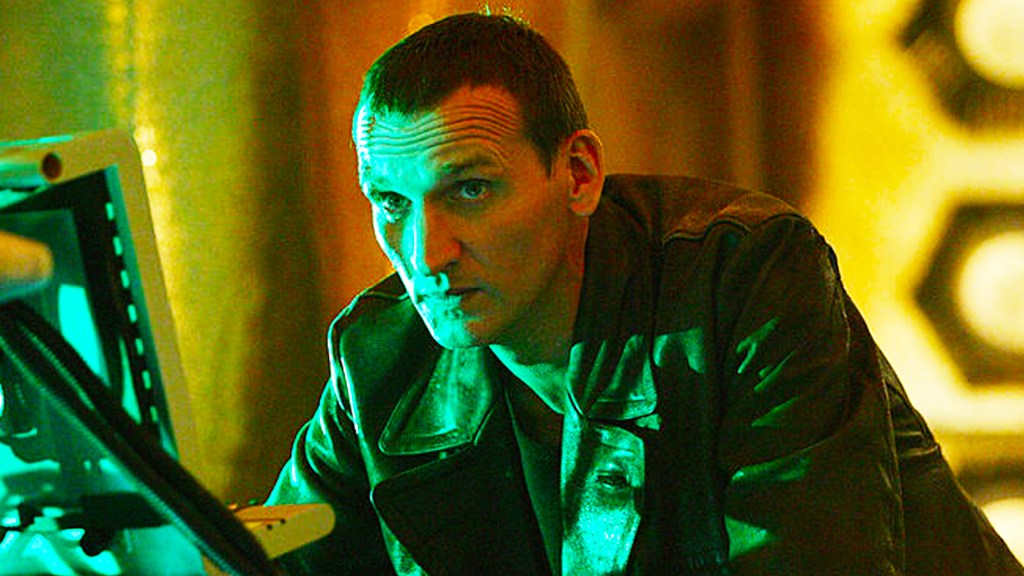
The new and improved Doctor Who premiered in March of 2005, with the episode “Rose.” Starring Christopher Eccleston as the Ninth Doctor and Billie Piper as Rose Tyler, the episode drew 10.8 million viewers and received excellent reviews. Fans and critics alike credited its success to a fresh approach. Rather than try to mimic the classic series for nostalgia’s sake, the creators updated its style and storytelling for modern TV audiences.
Davies’s dedication almost singlehandedly saved a beleaguered series that was dead in the water, and his approach reframed Doctor Who as both a family adventure series and a riveting serialized drama, allowing it to thrive in the changing media landscape of the new millennium. The reboot’s success proved the IP’s staying power once and for all. It also paved the way for future showrunners, including Steven Moffat, whose earlier prediction (that The Curse of Fatal Death would be the only Doctor Who he’d ever get to write) was proven spectacularly wrong. Fans today just hope that the current showrunners will avoid the mistakes of the past.
Do you prefer the original series or the 2005 revival? Leave a comment below and join the conversation now in the ComicBook Forum!
Most Viewed
-

Image Courtesy of Crunchyroll -

Image courtesy of Sony -
Image Courtesy of A-1 Pictures