While television today is a world of big budget prestige series that viewers frequently have to wait years in between seasons of and streaming offerings that you binge all at once but that also might not get more than one season, it didn’t used to be this way. There used to be a time when not only did network television run for 22-episode seasons, but some series that didn’t necessarily work out on a major network got a chance elsewhere — and some series never needed major networks to be successful at all. We’re talking about the 1980s (and, to an extent, the late 1970s), a time when broadcast syndication had a huge impact on the television landscape. There were legal reasons for this — complicated rule changes with the FCC shifted how networks operated a bit — but the result was ultimately some very memorable television shows, including some you can still find airing today.
Videos by ComicBook.com
Here are 10 of the greatest syndicated television shows that pretty much every 1980s kid will remember. These are series that either were first-run syndication series meaning that they were created entirely for syndication, or series that may have started on network television and, after cancellation, moved over to syndication where they found major success. We’re keeping the list to shows that ran largely from the late 1970s to the end of the 1980s, which means a few notable series like Forever Knight, Baywatch, and Xena: Warrior Princess don’t make the cut because they were shows from the 1990s (another great decade, at least early on, for syndication.)
10) He-Man and the Masters of the Universe
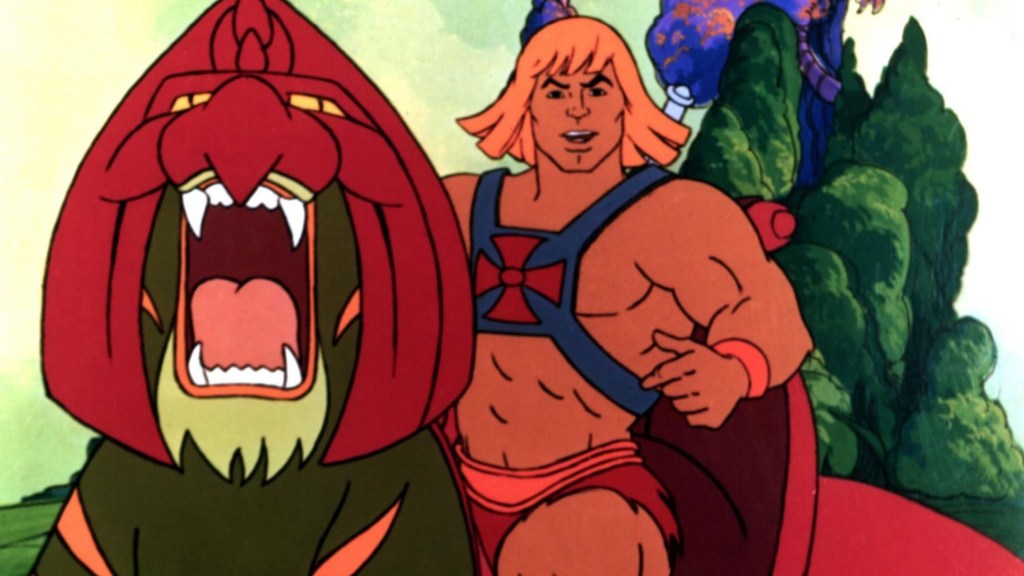
It would be wrong to start this list with anything but He-Man and the Masters of the Universe (and, by extension, it’s spinoff series She-Ra: Princess of Power.) Debuting in September 1983, He-Man was a first-run syndication series produced by Filmation and based on Mattel’s Masters of the Universe toy line. There really is no exaggeration when we say it was one of the most popular animated series of the 1980s. The overall franchise is still very popular and has been adapted and rebooted several times — and a new movie is even headed to theaters this summer.
Set on the planet of magic, myth, and fantasy — Eternia — the series follows Prince Adam who turns into He-Man, who is blessed with “fabulous secret powers” anytime he holds up the Sword of Power and makes a specific proclamation. Using his powers as he-Man, he teams up with Battle Cat, The Sorceress, Teela, Man-At-Arms, and Orko to defend Eternia from the evil Skeletor. The original series had just two seasons, but those seasons comprised of 130 episodes. There’s also a Christmas special (also syndicated) and a 1985 feature film.
9) Silver Spoons

Silver Spoons is an example of a series that started on network television and then made its way to syndication, though instead of it being a case where it had only one season before heading to syndication, Silver Spoons actually ran for four seasons on NBC before it was cancelled and got one more season in syndication.
The series followed the wealthy Edward Stratton III and his young son, Ricky, who he was unaware he even had until Ricky comes to live with him at the start of the series. As Edward is pretty much the textbook example of the wealthy playboy overgrown child, suddenly being responsible for a kid is a big shift — and it doesn’t help that Ricky is very serious and responsible. The series starred Ricky Schroeder as Ricky, Joel Higgins as Edward, and also featured Alfonso Ribeiro as Ricky’s best friend Alfonso in seasons three through five — the best friend role of Derek Taylor was played by Jason Bateman in the first two seasons. It’s a charming little family sitcom, one that sticks in the memory of a lot of ‘80s kids because of the life-size toys in the Stratton house since Edward Stratton owned a toy business — the ridable scale model freight train is particularly memorable.
8) The Facts of Life

Debuting in 1979, The Facts of Life is an example of a series that never actually was produced for syndication directly but was popular and was also aired in syndication, specifically on daytime schedules. A spin-off of Diff’rent Strokes, the nine-season sitcom originated on NBC and followed Charlotte Rae’s Mrs. Edna Garrett as she went to work as a house mother for the fictional all-girls Eastland School, a boarding school in Peekskill, New York. The series’ cast was initially pretty large but settled into a main ensemble Lisa Welchel’s Blair Warner, Kim Fields’ Tootie Ramsey, Mindy Cohn’s Natalie Green, and Nancy McKeon’s Jo Polniaczek.
What was pretty interesting about The Facts of Life and was probably a major contributing factor to its longevity as well as its popularity in syndication was that the show had a dynamic and shifting premise. As the characters (and actors) grew and changed, so did the setting and the overall plot of the story. At one point, the series leaves the boarding school behind to see the characters operating a bakery and, later, a gift shop. The series also notably added George Clooney to the cast in one of his earlier acting roles.
7) Star Trek: The Next Generation
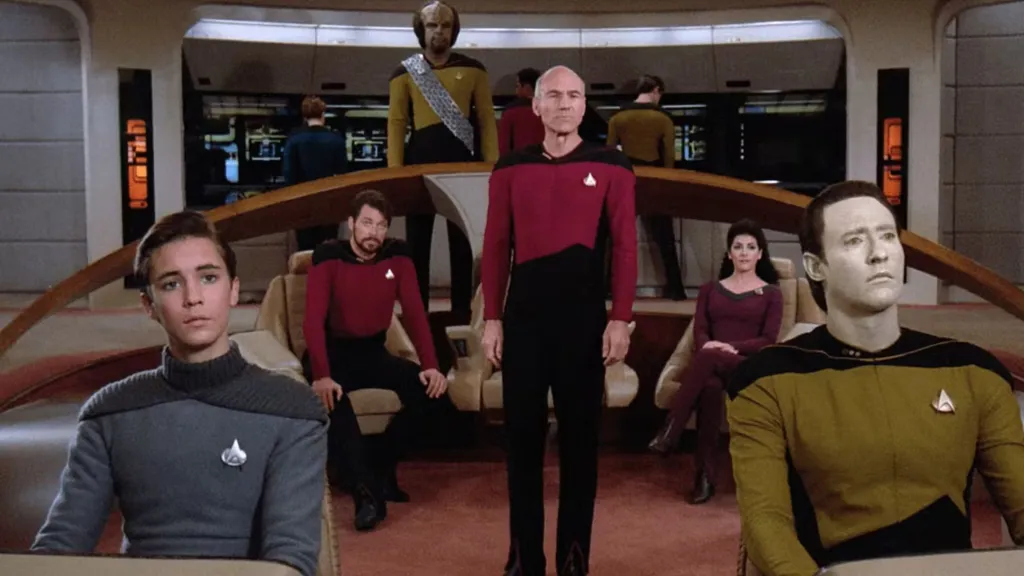
If you think about Star Trek now, you probably think about Paramount+ since that is the streaming platform that is the exclusive streaming home for the franchise these days, but that wasn’t always the case and arguably the best series in the entire Star Trek franchise was made (by Paramount Television) for syndication. Debuting in 1987 and running for seven seasons, Star Trek: The Next Generation is the third series in the Star Trek franchise, set in the latter third of 24th century. The series follows the USS Enterprise as it explores the Alpha quadrant and the Beta quadrant in the Milky Way.
Star Trek: The Next Generation was hugely popular. The series’ fifth season hit around 12 million viewers and the series finale hit 30 million. The success of the series led to more Star Trek, specifically Star Trek: Deep Space Nine, which debuted in 1993, and gave us four films where Next Generation characters showed up. While Star Trek continues to grow and expand and is honestly more popular than it’s ever been, it really does owe a lot to this iconic syndicated series (and of course, Captain Jean-Luc Picard.)
6) Charles in Charge

Charles in Charge started out on CBS in 1984 as part of the network’s Wednesday night lineup that season, but it didn’t fare well — CBS wasn’t exactly crushing it in the sitcom category at the time save for its Monday night shows. While CBS allowed the series to finish production on its 22-episode first season and did air them all (albeit after a hiatus), the series was cancelled after its first season in 1985. But that wasn’t the end of Charles in Charge. Almost two years later, on January 3, 1987, the series returned in syndication where it ultimately ran for a total of four seasons.
The first season saw college student in need of housing Charles (Scott Baio) go to work as a live-in housekeeper and caretaker for the children of an affluent couple, the Pembrokes. Shenanigans ensue, including those with his best friend Buddy and Charles’ ongoing crush on a fellow student, Gwendolyn. With only Baio and Willie Aames (who plays Buddy) returning for syndication, the series changed to see Charles return from summer break to find that the Pembrokes had moved to Seattle. Fortunately, the new family living there, the Powells’ sublet of the house includes keeping Charles on for his live-in babysitting services.
5) Small Wonder
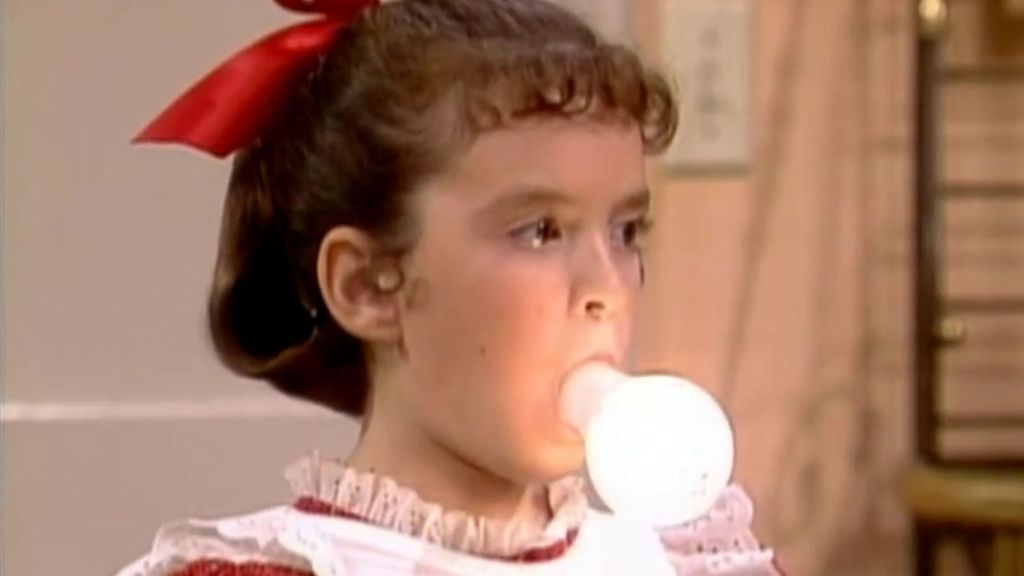
In retrospect, Small Wonder might not be so charming now but when it first debuted in 1985, the idea of a family trying to pass off a robot as their adopted daughter was pretty funny. In Small Wonder, robotics engineer Ted Lawson creates the Voice Input Child Identicat, aka V.I.C.I. or “Vicki”. Designed to help children with disabilities, Ted takes the robot home so it can mature and adapt in a family environment. The Lawsons try to pass Vicki off as an orphaned family member they adopted, but disguising what Vicki really is the source of much humor and many hijinks as Vicki has some unusual attributes — and the Lawson’s have nosy neighbors.
The show is more than a little ridiculous — and a bit creepy when you look back on it from the age of AI. Seasons three and four even featured an evil robot, Vanessa, that looked just like Vicki. The series is also pretty low budget and is considered to be one of the worst sitcoms and shows ever, but it was weirdly popular and continues to have a special place in the hearts of ‘80s kids.
4) Superboy

While this one came in at the end of the 1980s, we can’t leave out Superboy. The four-season series ran entirely in Syndication with John Haymes Newton starring as the titular hero in season one before being replaced by Gerard Christopher for the remainder of the series. The series also changed names in season three, becoming The Adventures of Superboy at that time.
The series was born out of the failure of the 1984 Supergirl film, with producers Alexander and Ilya Salkind deciding to sort of do-over with Superboy. The series was centered around the Clark Kent version of Superboy — meaning a young version of Superman. The series ultimately ended in 1992 after DC started to move towards a more “modern” Superman and cancelled the Salkinds’ license on the character. What’s interesting about Superboy — outside of it being something of a proto-Smallville sort of thing — is that not only did it get a comic book tie in, but it also featured George Lazenby, the actor who notoriously only played James Bond once, as Jor-El.
3) Tales From the Darkside

George A. Romero’s horror anthology series is so iconic, you may have forgotten that it was syndicated. The series broadcast its pilot episode on October 29, 1983, and was picked up officially after that with its first season premiering on September 30th of the following year. It ultimately ran for four seasons before being cancelled in 1988.
Tales from the Darkside was horror, but it encompassed a number of other genres as well, including fantasy, sci-fi, and even comedy and that’s what made it good. By blending genres, Tales from the Darkside was surprisingly accessible when compared to most horror offerings. It also featured very high-quality writing and high-quality source material and while the practical effects were decidedly low budget, it gave things a particular charm that has never been matched since. The show feels very much like a time capsule of the 1980s today, but it’s still great.
2) Out of This World
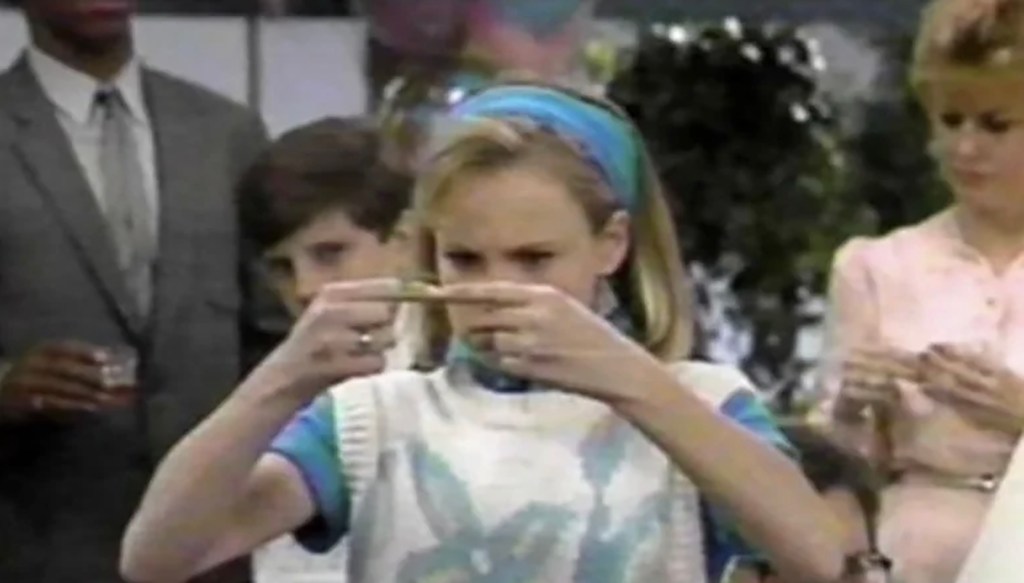
If you remember this late 1980s fantasy sitcom (and can sing the whole theme song), we should be best friends immediately. Out of This World was a syndication series that debuted on September 17, 1987, and ran for four seasons, though it started as part of NBC’s Prime Time Begins at 7:30 campaign for its first season as sort of counter programming where NBC owned stations aired first-run sitcoms as counter programming to other stations that were running reruns and game shows. Kind of innovative, if you ask me.
Out of This World is a kind of insane show. It follows a teenage girl, Evie, who is half alien and half human and as such, has supernatural powers. The most frequently used power is her ability to freeze time, something she can do by touching her index fingertips together, though she gains more powers throughout the series. She also communicates with her absent alien father Troy via a special device called “the cube”. Troy can also, for some reason, control various aspects of life on Earth, including the weather, from his home on Antareus. The show is widely considered to be bad — some will say it’s the worst sitcom ever made. That said, it was surprisingly popular and the best part? Burt Reynolds stars as the voice of Troy.
1) Mama’s Family

A spin-off of The Carol Burnett Show, Carol Burnett & Company, and Eunice — or, more accurately, comedy sketches called “The Family” that featured in all of those — Mama’s Family might just be the greatest of the syndicated series on this list. The show started with a two-season run on NBC between 1982 and 1984. However, NBC kept airing reruns for another year and those did well in the ratings which led to Mama’s Family getting a revival thanks to syndication. It proved to be a hit and four more seasons came from it.
Set in the Kansas City suburb of Raytown, the series follows Thelma Harper, aka Mama (Vicki Lawrence), an elderly, quick-tempered widow who ends up opening her home to various family members who have no other place to live, much to her consternation and chagrin. The comedy centers around Mama’s sarcasm and competence while the rest of her family is decidedly… not. Like many series that went from network to syndication, the first two seasons and the latter seasons are different to an extent. Mama lived with her spinster sister Fran (Rue McClanahan) when her son Vinton comes to live with him along with his kids Sonja and Buzz after they’ve been evicted. Vinton ends up quickly marrying the next-door neighbor Naomi, who Mama dislikes and, well, chaos ensues. We also get appearances from Mama’s daughters snobby Ellen (Betty White) and cranky Eunice (Carol Burnett). Later seasons write out most of the extended family, leaving just Vinton and Naomi, but adds Mama’s neighbor Iola and Eunice’s son, Bubba, who moves in when his parents move away.
Mama’s Family is a classic. It’s charming and down to earth, and riotously funny. It actually won an Emmy Award for costume design in 1984 and continues to be popular, having shown up as free to stream on services such as Pluto TV.
What do you think? Leave a comment below and join the conversation now in the ComicBook Forum!
Most Viewed
-

Image courtesy of Amazon MGM Studios -

Image Courtesy of MAPPA -

Image courtesy of Tor Books/Macmillan