No DC character has proven as commercially indestructible as Batman. Since Bob Kane and Bill Finger introduced Bruce Wayne in Detective Comics #27 in May 1939, the Dark Knight has become the most extensively adapted superhero in history, anchoring live-action series, billion-dollar films, acclaimed video game franchises, and more animated productions than any other DC hero. That dominance shows no signs of weakening, as The Batman Part II, starring Robert Pattinson, is currently in production for an October 2027 release, while James Gunn’s DCU is simultaneously developing The Brave and the Bold as a separate cinematic Batman for a 2028 premiere or later.
Videos by ComicBook.com
The sheer volume of Batman adaptations means that animators have been spinning out new versions of the character for over fifty years, and inevitably, not every entry in that catalog looked or behaved like the grim detective of the comics. Strange doesn’t mean bad, though, as some odd entries in the Dark Knight mythology still charmed fans despite their quirks.
5) The Batman

Following the monumental success of the 1990s animated universe, Warner Bros. Animation launched The Batman in 2004 with a mandate to drastically overhaul the visual identity of Gotham City. To execute the order, designer Jeff Matsuda, best known for Jackie Chan Adventures, completely redesigned the classic rogue’s gallery. For example, The Joker (voiced by Kevin Michael Richardson) abandoned his tailored suits in favor of a straitjacket and wild dreadlocks. Similarly, the Riddler (voiced by Robert Englund) adopted a Marilyn Manson-inspired aesthetic, while Mr. Freeze (voiced by Clancy Brown) used a hulking containment suit.
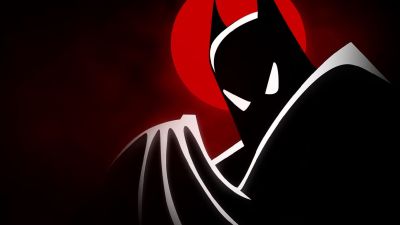
The five-season Kids’ WB series, which ran until 2008, also decided to initially exclude Commissioner Gordon entirely, replacing him with two original GCPD characters, and withheld canonical figures like Scarecrow and Two-Face for seasons to come, all while depicting a younger Bruce Wayne still figuring out what being Batman meant. As a result, The Batman was a series that looked, sounded, and moved like nothing in the character’s animated history, which pushed purists away but still managed to deliver a great Elseworlds experiment.
4) Batman: The Brave and the Bold
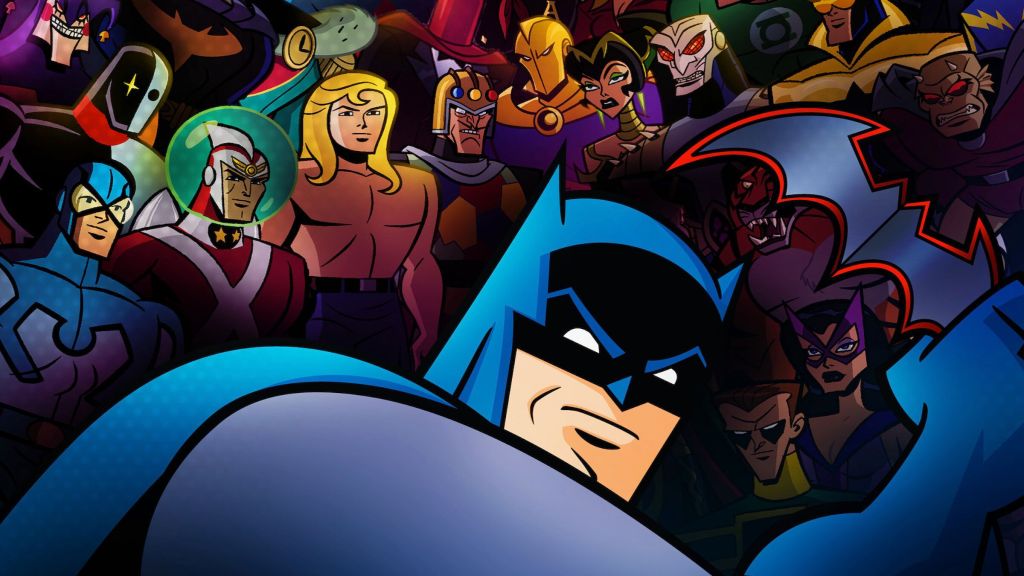
Embracing the absurdities of the Silver Age of comic books, Batman: The Brave and the Bold completely rejected the brooding cynicism of Christopher Nolan’s iteration of the Dark Knight. The 2008 series structured itself around a team-up format, matching a brightly colored Batman (voiced by Diedrich Bader) with a rotating roster of obscure DC heroes for wildly eccentric adventures. The writers infused the episodes with musical numbers, fourth-wall-breaking commentary from the interdimensional imp Bat-Mite (voiced by Paul Reubens), and scenarios where the Caped Crusader transformed into a vampire or fought intelligent gorillas.
Instead of prioritizing psychological trauma, Batman: The Brave and the Bold focused on enthusiastic heroics and campy dialogue. The deliberate tonal shift also allowed the production to execute bizarre concepts, such as an entire episode dedicated to the singing villain Music Meister (voiced by Neil Patrick Harris), without breaking the internal logic of the universe. This cheerful approach provides a weird but delightful contrast to the grim cinematic blockbusters of the era.
3) The New Adventures of Batman
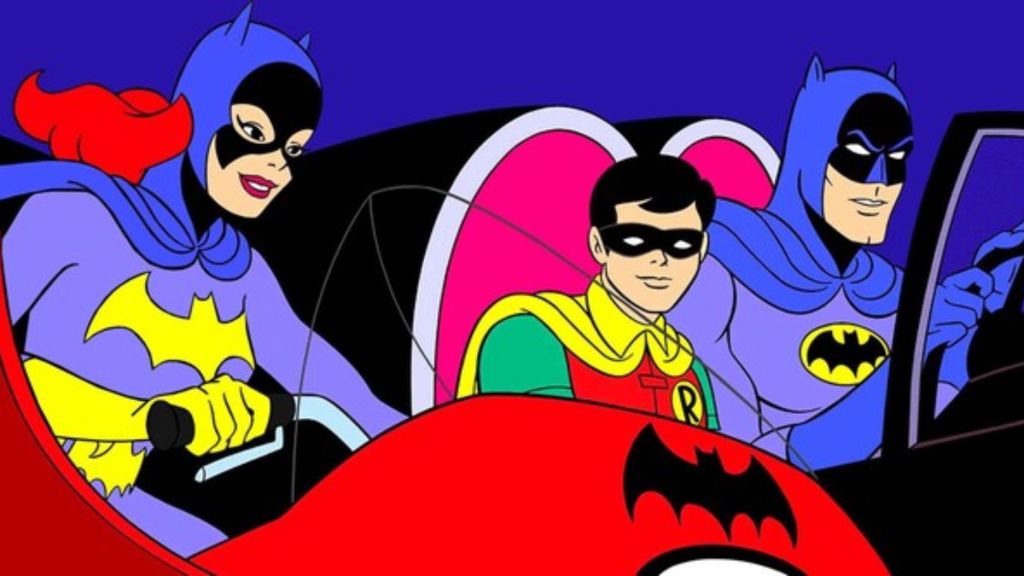
Attempting to capitalize on the lingering cultural impact of the 1960s Batman live-action television series, Filmation produced The New Adventures of Batman in 1977 with a highly unusual Saturday morning cartoon approach. The studio successfully recruited the original stars to reprise their legendary roles, featuring Adam West as Batman and Burt Ward as Robin. However, the production faced severe restrictions regarding animated violence, forcing the writers to replace physical combat. To fill the action void, Filmation introduced Bat-Mite (voiced by Lennie Weinrib), an extradimensional magical imp who constantly hovered around the heroes, creating nonsensical problems with his reality-warping powers.
Adding a high-pitched magical stalker as a series regular would already make The New Adventures of Batman decidedly weirder than the average animated show, but the 16 episodes also conspicuously excluded Alfred, making this the only Batman animated series in which the butler does not appear in any form. Simultaneously, the series was also prevented from using figures such as Scarecrow and Riddler because Hanna-Barbera held their rights for Challenge of the Super Friends. Finally, each episode of The New Adventures of Batman concluded with a “Bat Message” delivering a moral to the audience, in the Filmation tradition.
2) Batwheels
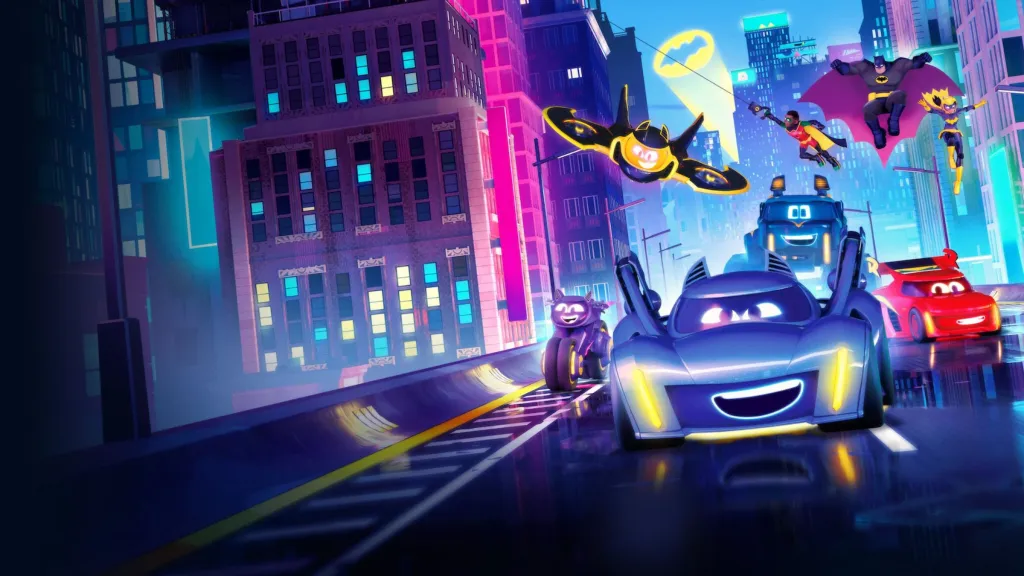
Targeting a preschool demographic, Batwheels completely shifts the narrative focus away from human vigilantes and onto sentient vehicles housed inside the Batcave. In the series, the Batcomputer, feeling that Batman needs more allies, brings his fleet of vehicles to sentient life, and the resulting team of talking cars defends Gotham City alongside their creator. The Batmobile is named Bam (voiced by Jacob Bertrand), the Batgirl Cycle is Bibi (voiced by Madigan Kacmar), Robin’s sports car is Redbird (voiced by Jordan Reed), and the Bat Truck is Buff (voiced by Noah Bentley). These anthropomorphic vehicles operate independently from Batman (voiced by Ethan Hawke), driving themselves around a vibrantly animated Gotham City to battle the evil cars driven by the Dark Knight’s classic rogues’ gallery.
The concept of the Joker driving a giggling van or the Riddler piloting a helicopter that asks puzzles introduces a level of absurdity rarely associated with the Dark Knight’s mythology. Plus, Batwheels often feels like a superhero riff on PAW Patrol and the Cars franchise aimed squarely at preschoolers. However, by reducing the brooding superhero to a supportive secondary character, the show successfully creates a bizarre spin-off universe for toddlers. In fact, the show was nominated for Best Animated Television Production for Preschool Children at the 51st Annie Awards in 2024, and it has accumulated over 100 episodes and shorts across its run.
1) Bat-Fam
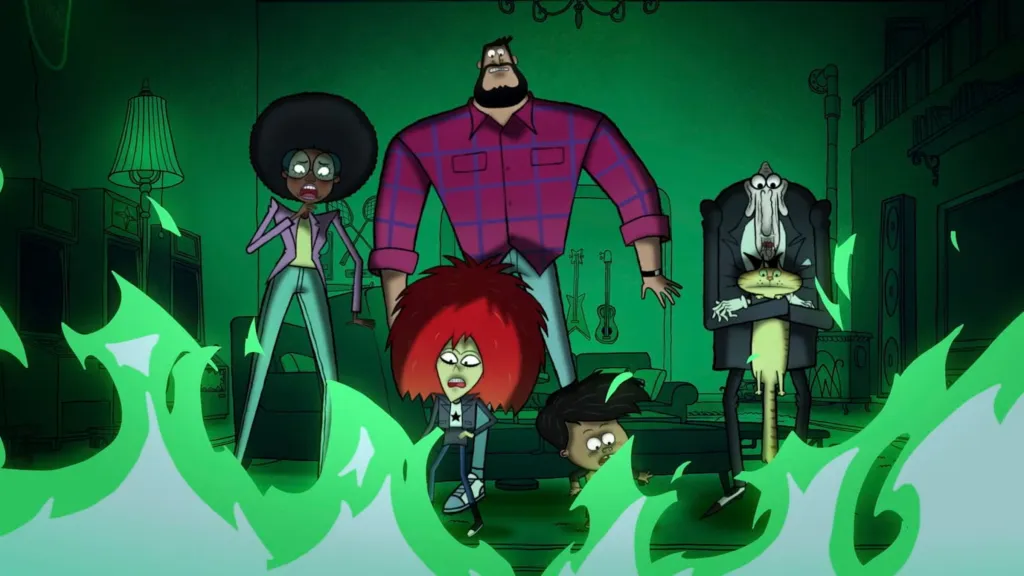
Serving as a direct spin-off to the holiday film Merry Little Batman, the Prime Video original series Bat-Fam operates as a family-friendly reimagined Wayne Manor. Released in November 2025, the show follows a childlike Damian Wayne (voiced by Yonas Kibreab) operating under the moniker Little Batman alongside his father Bruce Wayne (voiced by Luke Wilson) in a Gotham that has already eradicated crime. The premise forces the brooding billionaire to manage an incredibly strange roster of housemates, transforming Wayne Manor estate into a bizarre domestic comedy setting.
The creative team of Bat-Fam packed the belfry with a video-game-obsessed Man-Bat (voiced by Bobby Moynihan) and turned the fearsome assassin Ra’s al Ghul (voiced by Michael Benyaer) into an eccentric grandfather figure. The most unusual narrative swing involves the villain Volcana (voiced by Haley Tju), who abandons her criminal past to live among the heroes, effectively becoming Damian’s superpowered foster sister. Stripping away the inherent darkness of the source material to focus on domestic disputes and wacky roommate dynamics makes Bat-Fam the absolute weirdest entry in Batman’s animated legacy.
Which Batman animated series is the weirdest in your opinion? Leave a comment below and join the conversation now in the ComicBook Forum!
More TV Shows
-

Image Courtesy of Marvel -
Image Courtesy of HBO Max