On TV, new shows are always being created and crowned favorites across every genre. But what about comedy? That’s where sitcoms come in. A classic format built around a tight 30-minute runtime, big laughs, and instantly relatable characters. If there’s one production model that reliably delivers comfort and easy entertainment, it’s this one. Still, if you take a step back and look at the full history of the genre, you start to realize that some series didn’t just succeed — they revolutionized what a sitcom means. When it comes to legacy, these shows didn’t just make noise; they changed the game and became true comedy masterpieces.
Videos by ComicBook.com
Out of countless contenders, here are the 7 most iconic sitcoms of all time, ranked from the least historically impactful to the most influential. The goal isn’t to decide which one is the best, but to highlight the shows that broke paradigms, set new standards, and are still reference points whenever a new TV idea is developed.
7) The Office
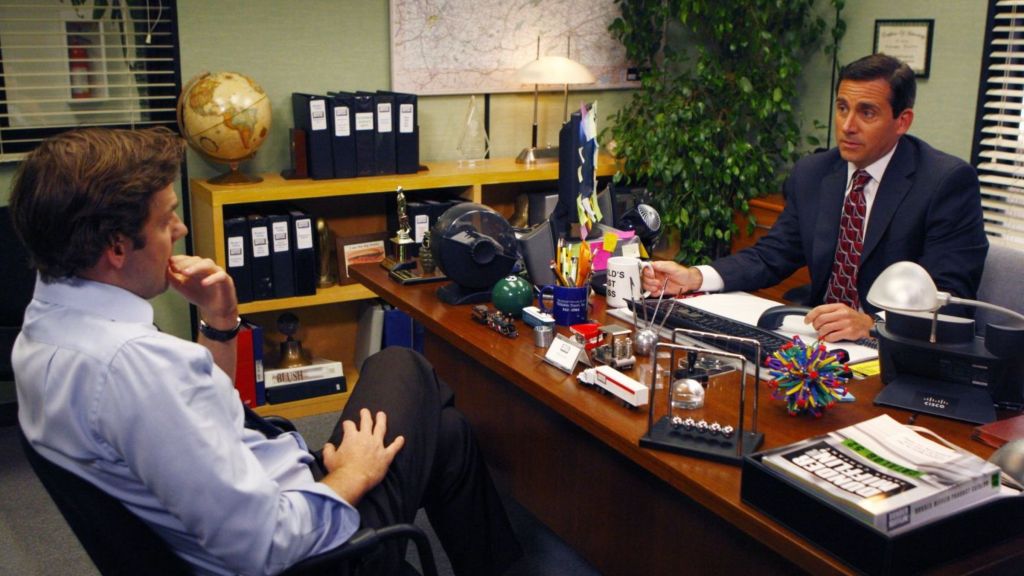
Of course, The Office left a mark on TV. But placing it last on this ranking isn’t about calling it the least important — it’s about recognizing that, when the criteria is historical legacy, it was built on groundwork laid by others. The series follows the employees of Dunder Mifflin, a paper company in Pennsylvania, led by the awkward and completely clueless Michael Scott (Steve Carell), all presented through a mockumentary lens. The comedy thrives on discomfort, lingering silences, absurd line deliveries, and the painfully accurate micro-dynamics of office life that any working adult can recognize. That’s why it connected so strongly with audiences and became a defining comedy of the 2000s.
Still, The Office‘s impact is more behavioral than structural. What does that mean? It helped cement the mockumentary format as a mainstream comedy staple and later turned into a streaming-era juggernaut fueled by memes and endless rewatches. But unlike the other sitcoms on this list, it didn’t transform what a sitcom could be. Its legacy is strong because it refined and popularized an existing approach. But foundational? Not quite.
6) Friends
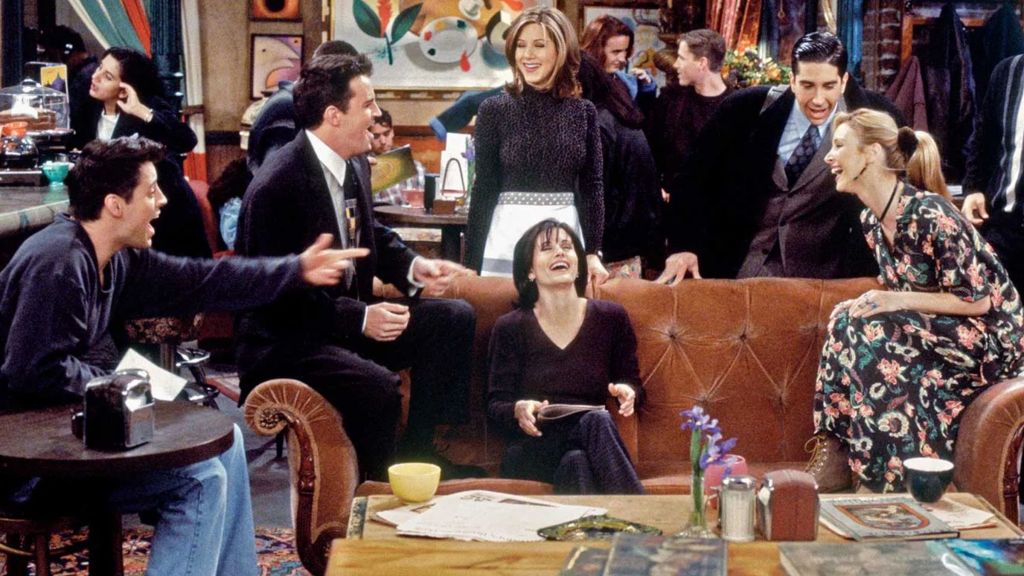
Who doesn’t know Friends? You don’t even have to watch a single episode to understand just how far its reach extends and how long it has lasted. Very few shows have been consumed, rewatched, quoted, and referenced as much as this one. The premise was always simple but incredibly effective: six friends living in New York, dealing with their careers, relationships, and the existential crises of their twenties. So why did it become such a massive hit? The cast’s chemistry is the obvious engine, but the writing also knew exactly when to land a punchline and when to slow down for emotional beats that actually mattered.
The key point is that Friends perfected an existing formula instead of reinventing it — but it did so at such a high level that it became a full-blown cultural phenomenon. It shaped the “found family” dynamic that dominated ensemble comedies for years and even influenced how sitcom casts negotiated contracts behind the scenes. It didn’t rewrite the rulebook, but it mastered it better than almost anyone else.

5) Cheers
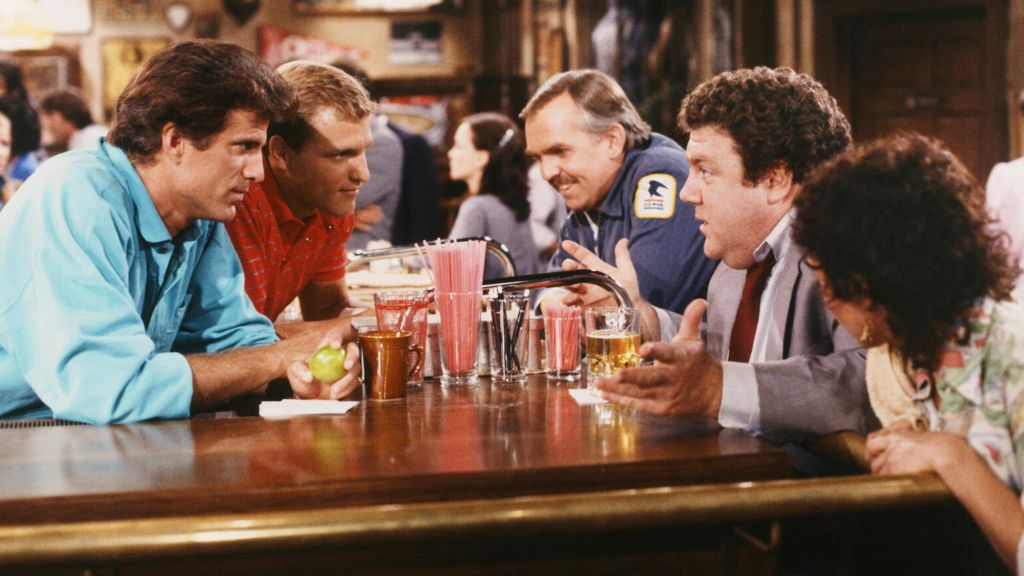
A true classic, Cheers is a sitcom set in a Boston bar built around the familiar idea where everybody knows your name. The premise is simple (almost deceptively so), and that’s exactly what makes it work. It follows former baseball player Sam Malone (Ted Danson) and the bar’s regulars as they face relationships, personal frustrations, and long-running romances that unfold over the years. And almost everything happens in that one limited setting, but it never feels restrictive because the real strength of the show is its characters. They carry the story entirely, making sure the series never loses momentum.
Today, it’s rare to see a sitcom lean into something this straightforward without relying on gimmicks, twists, or high-concept hooks to keep you engaged. Cheers didn’t need any of that. Its legacy endures because of its structure. It solidified the power of the ensemble cast and proved that good dialogue alone can sustain a long-running hit. In many ways, it’s the blueprint for longevity within a contained format. It sits in this position only because other shows on this list pushed the medium even further when it came to making TV history.
4) Seinfeld
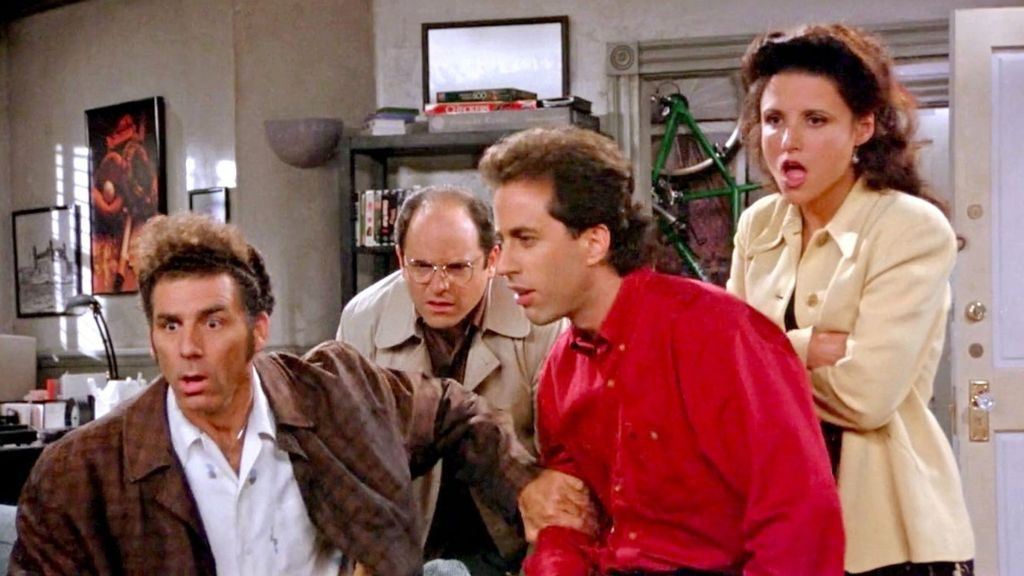
Seinfeld looked at everything TV storytelling was supposed to be and basically said, “We don’t need that.” The series follows Jerry (Jerry Seinfeld) and his selfish, petty friends as they deal with everyday trivialities like waiting for a table, arguing over social etiquette, and inventing ridiculous excuses, and somehow turn them into major events. What the show really did was subvert the genre’s core expectations: there are no heartfelt lessons and no emotional evolution designed to make anyone better. And at the time, that was genuinely revolutionary.
In practical terms, Seinfeld changed how sitcoms are written. The humor is observational: watching what these characters are capable of doing, without ever rewarding them with growth. And its structure, with many small storylines unfolding separately and colliding at the end, became a reference point for an entire generation of writers. The thing is that its revolution was primarily creative and structural on the page, not industrial in terms of production models, which is why it lands here rather than higher on the list.
3) M*A*S*H

A sitcom is supposed to make you laugh, right? But what happens when it uses that setup to do more than just land jokes? M*A*S*H took that risk by setting its story inside a mobile army surgical hospital during the Korean War. The series follows doctors and nurses who rely on humor as a coping mechanism in the middle of the chaos of war. On paper, it sounds heavy — and it is. However, the comedy is still there, but the drama stands on equal ground. The goal wasn’t just balance for the sake of tone; it was commentary. And at the time, that kind of mix was almost unheard of for a network sitcom.
Its importance is obvious: M*A*S*H proved that comedy and political commentary don’t cancel each other out — they can actually strengthen each other. Shows like Veep and Brooklyn Nine-Nine operate in that same space today because that door was opened decades earlier. Ultimately, it expanded what comedy could talk about and helped establish what we now call the dramedy model. Before it, sitcom only meant light entertainment. After it, it could also mean reflection.
2) All in the Family

If M*A*S*H expanded the tone of the sitcom, All in the Family blew up its content. The series centers on Archie Bunker (Carroll O’Connor), a conservative patriarch whose openly racist and reactionary views always clash with his family. The setup is domestic, but the conversations are political, social, and cultural at their core. It’s the kind of approach that would feel incredibly relevant today, given how closely it mirrors real life. But now imagine that airing in primetime in the ’70s. It wasn’t just bold — it was radical.
So what’s the legacy of All in the Family? It changed what could be said out loud in a sitcom. It may not be as widely discussed among younger audiences today, but its impact is undeniable. The show brought racism, war, feminism, and inequality directly into people’s living rooms, and it didn’t hide behind subtlety. There was no subtext, but open confrontation. It unquestionably made TV history, losing the top spot only to the show that essentially invented the mechanics of the sitcom itself.
1) I Love Lucy
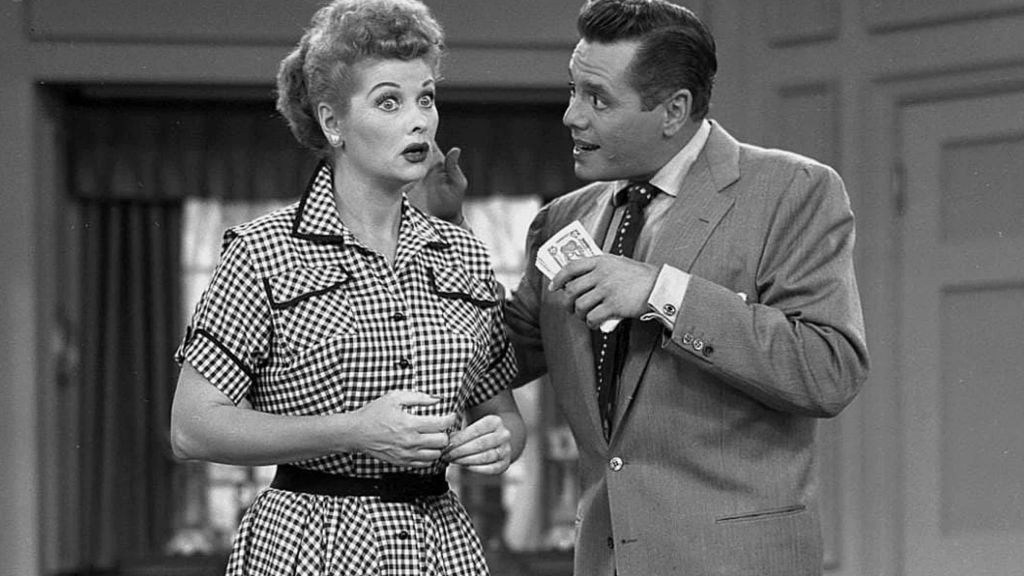
If you’re truly a fan of the genre, then you definitely know I Love Lucy, because this is the pioneer. We’re talking about a show that basically wrote the manual for how to produce a modern sitcom. The story follows Lucy Ricardo (Lucille Ball) as she schemes her way into show business, usually creating chaos in the life of her husband, Ricky (Desi Arnaz). The structure is classic: physical comedy, misunderstandings, and tightly built scenarios. But the real impact wasn’t just on screen — it was behind the scenes. The series standardized the multi-camera format filmed in front of a live audience, and it established the rerun model that would become a cornerstone of how TV makes money.
I Love Lucy turned the sitcom into a replicable industrial product. Without it, the format as we know it simply wouldn’t exist in the same way (if at all). Every other production, including the ones on this list, operates within a framework that this show helped build back in the ’50s. So when the conversation is about legacy and importance, this isn’t just another entry; it’s the starting point.
Are you a fan of any of these sitcoms? Leave a comment below and join the conversation now in the ComicBook Forum!
Most Viewed
-

Image Courtesy of Studio Pierrot -

Image Courtesy of Studio Bones