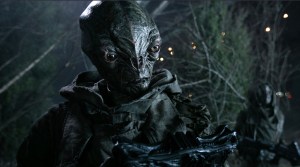
The creatures and forces that have spilled out of the Upside Down into Hawkins, Indiana, have always been named by the “Party”—Mike, Will, Dustin, and Lucas—in Stranger Things. The boys, with their love for Dungeons & Dragons and being active players, typically name the otherworldly villains they face from the actual TTRPG (tabletop roleplaying game). This consistent way they name the creatures is more than a nostalgic detail; it usually hints at the “real life” monsters’ abilities, weaknesses, and hierarchy. As the climactic final 2 parts of Season 5 rapidly approach, a deeper look into the official Dungeons & Dragons 5th Edition rules and statistics for the very monsters that threaten to end the world offers fascinating clues for what’s to come for Hawkins.
Videos by ComicBook.com
By comparing the on-screen action and rules that apply to the monsters to their pen-and-paper power levels and immunities, it’s possible to anticipate the finale outcome, the power levels of the heroes like Will the Wise (now Will the Sorcerer), and the type of critical hit required to finally close the gate on the horrors of the Upside Down forever.
6) Vecna
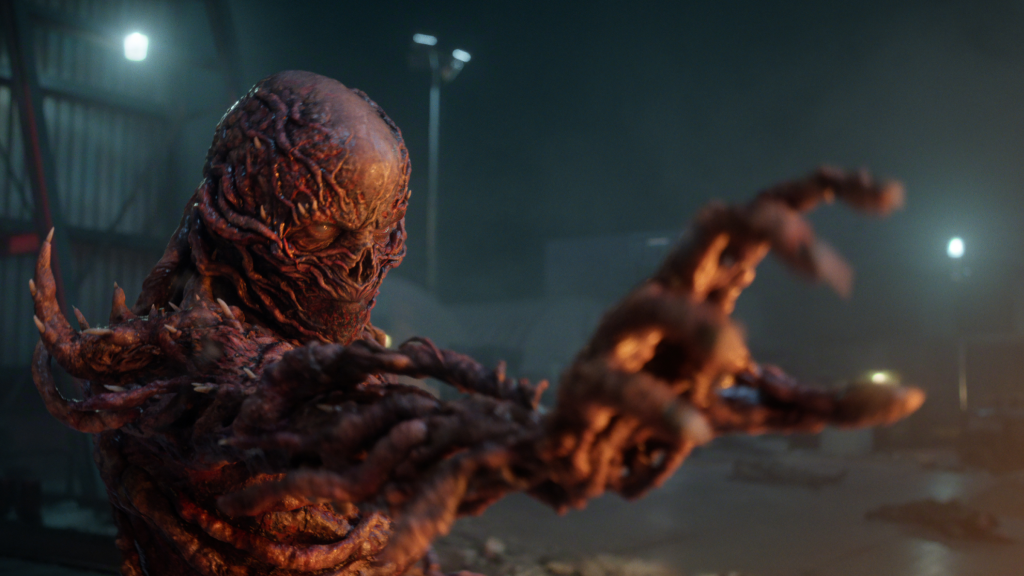
Vecna, the powerful former human and (seemingly) the true antagonist, is the ultimate psychic evil, capable of manipulating and murdering his victims from the Upside Down by preying on their trauma. As Dustin deduces, Vecna serves as the Mind Flayer’s General commanding the Upside Down’s forces, controlling them through a hive mind connection. Venca’s goal is to tear open the barriers between dimensions, making him the ultimate threat to all of Hawkins and the world as a whole. The final confrontation will likely require the heroes to find a way to destroy his body and his connection to the hive mind.
The D&D 5E version of Vecna is a legendary lich and a demigod of secrets, far more powerful than the Demogorgon or Mind Flayer, boasting an impressive challenge rating (CR) of 26. He has Legendary Actions and Resistances, giving him the ability to shrug off any magical and physical attacks that would one-hit any other villain. Crucially, a lich like Vecna is near-immortal, as his soul is stored in a hidden object called a phylactery (think Horcruxes from Harry Potter). This D&D rule, if applied to the rules in Stranger Things (which appear to follow the actual stats in D&D), strongly suggests that simply killing Vecna’s body will not be enough; the heroes may have to find and destroy his hidden phylactery (or, as many theories suggest, the Mind Flayer) to defeat Vecna permanently.
5) The Mind Flayer
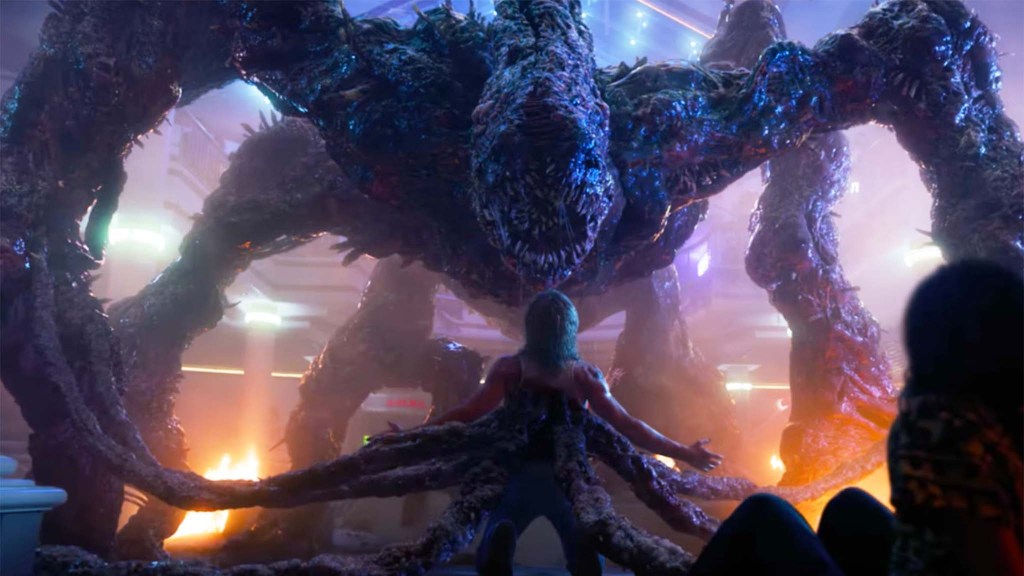
The Mind Flayer is the massive entity that originally looked like shadows and particles until Henry Creel/Vecna used his powers to change its form to something more akin to a spider. It is the ultimate intelligence and hive mind behind the invasions and even Vecna himself. The Mind Flayer does have a true physical form in the real world, instead using powerful “Flayed” hosts—like Billy Hargrove—to do its bidding. This creature’s sole power is domination and control, utilizing psychic links to command the Demogorgons and attempt to possess Will Byers, making it the core threat behind everything.
In D&D 5E, a Mind Flayer (also known as an Illithid) is an octopus-headed humanoid with high Intelligence that seeks to harvest other humanoids’ brains. While its CR 7 is relatively low for what can be considered an end boss, depending on the campaign, its terrifying “Extract Brain” attack can instantly kill a grappled, stunned target, and its Mind Blast ability stuns all creatures/players in a 60-foot cone. The show’s version aligns with the concept of a powerful psychic hive mind and its Elder Brain, suggesting the sheer mental force required to defeat it will be up to Eleven and Will (and possibly Kali).
4) Thessalhydra
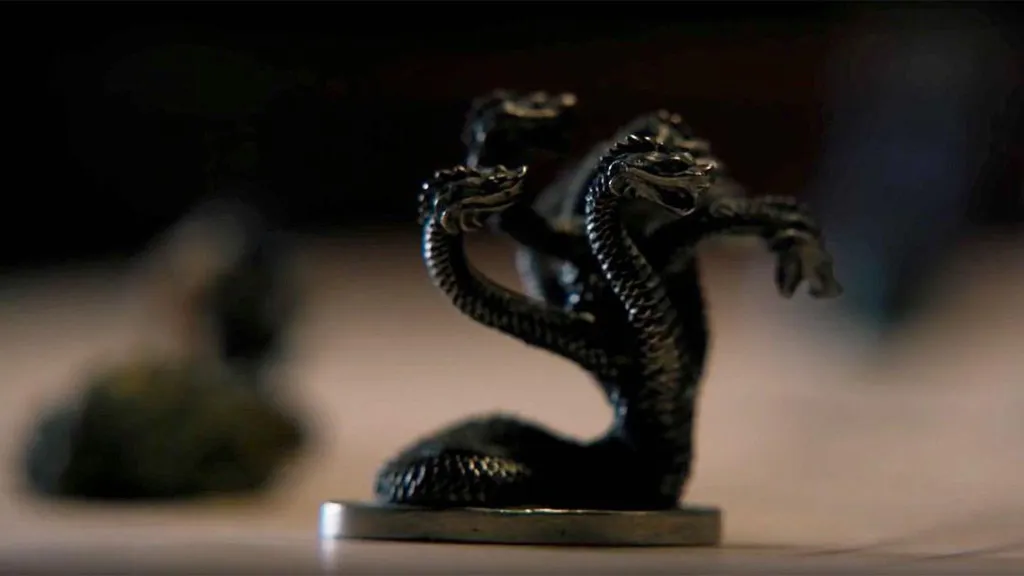
The Thessalhydra has not yet been seen as a physically manifested creature in Stranger Things, but it was the final monster that the boys defeated at the end of their campaign in the first season’s final scene. Since then, many fans have theorized that the Thessalhydra will be important in the final parts of the series, as it is the only monster from the boys’ campaigns that has not appeared in the flesh. It is a massive, multi-headed reptilian creature with a venomous tail. With Mind Flayer and Vecna in the mix, it implies the Thessalhydra is below them in the Upside Down hierarchy, but its appearance in their game’s climax could foreshadow a major role as a powerful, climactic, and unexpected threat.
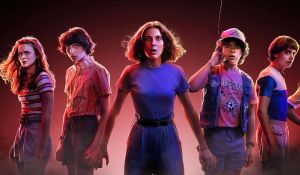
The D&D 5E Thessalhydra is typically a “Huge Monstrosity” with a pincer tail and multiple serpent heads clustered around a central, dangerous mouth—almost identical to the monster in the boys’ campaign. Its CR can vary, but even a version with a CR of 4 (as seen in some comparisons to the show) is a terrible foe, while others are rated even higher with a CR of 12 or 18. The Thessalhydra’s key stats include immunity to acid and the ability to unleash multiple attacks, including a Flurry of Bites and an Acid Saliva attack. Its multiple heads grant it advantage on saving throws against being stunned or charmed, suggesting that Will’s newfound powers alone may not be enough to stop it.
3) The Flayed
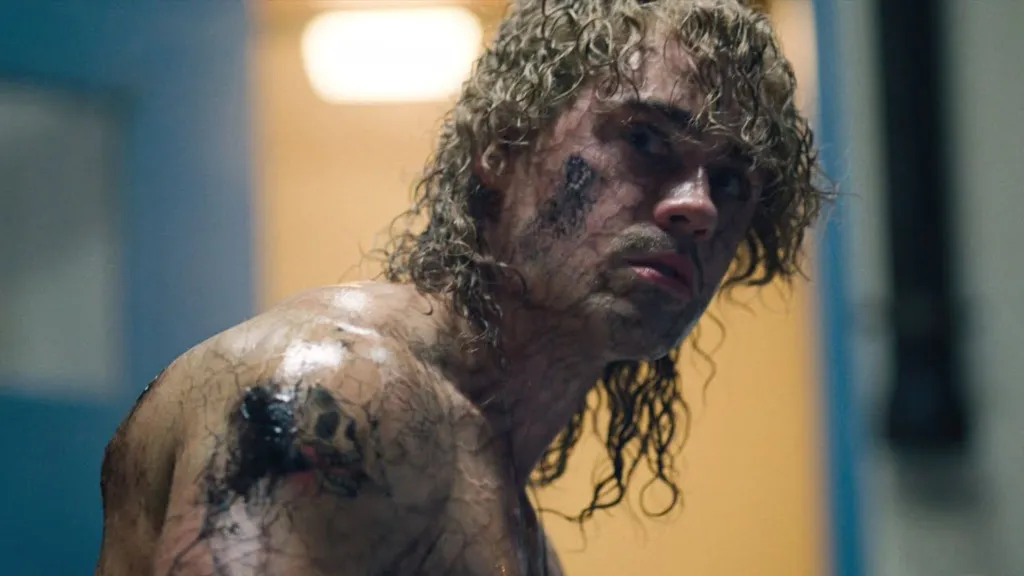
The Flayed are the victims, mostly human, who are possessed and controlled by the Mind Flayer after being infected by one of its tentacle-like spores. Will Byers and Billy Hargrove are the most notable of the victims. Once possessed, they become agents and soldiers of the hive mind with no agency of their own, carrying out tasks like kidnapping and murder for the Mind Flayer before they dissolve into a puddle of disgusting acid-like liquid to contribute to its physical form. The Flayed retain some of their human intelligence deep down, but are completely at the monster’s mercy, making them one of the most tragic and sympathetic antagonists that the heroes are reluctant to fight due to the humanity still inside.
The closest D&D 5E counterpart is a Mind Flayer Thrall or, more accurately, a Zombie under the control of another powerful creature. Official monsters like the Slaad Host or Ghouls/Ghasts controlled by a mastermind also line up with the Flayed, as they are once-living creatures twisted into loyal but unwilling servants/fighters. The key takeaway is the loss of free will and the creation of a hive mind, which in D&D requires powerful enchantment magic or a creature like an Elder Brain (an advanced Mind Flayer leader) to maintain absolute control.
2) The Demogorgon
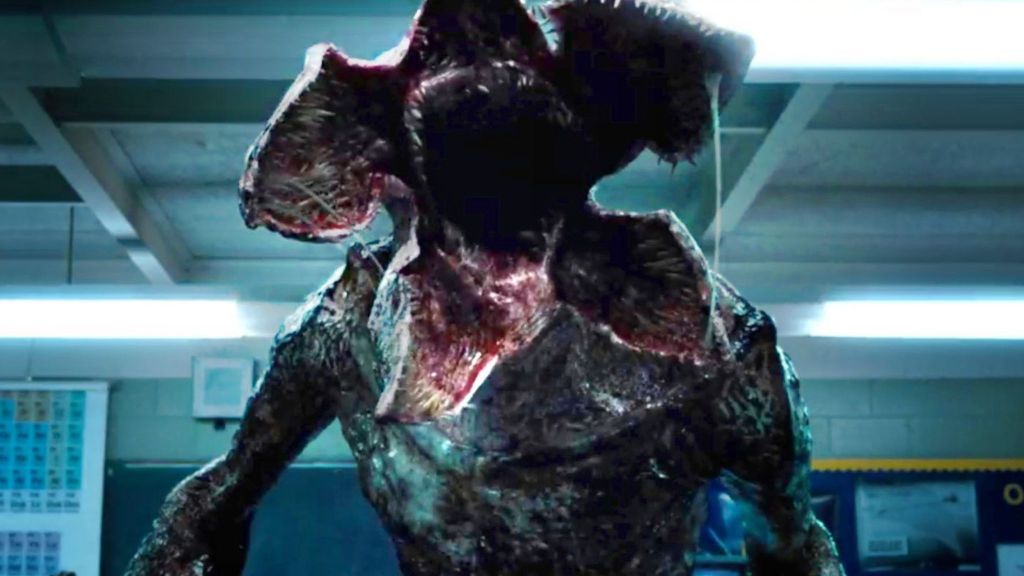
The Demogorgon is perhaps the most iconic and recognizable monster in Stranger Things. Appearing in the very first season, it is a carnivore that stalks prey in the Upside Down, can open temporary gates between dimensions to drag prey back to the Upside Down, and has a terrifying, flower-like face of teeth. It is a primal predator with massive strength and a basic, almost animalistic intelligence. The Demogorgon is the shock trooper of the Upside Down, controlled by the Mind Flayer and later Vecna, often appearing in groups, known on the show as Demodogs (young Demogorgons) and Demobats.
In D&D 5E, the Demogorgon is one of the most powerful demon lords, with a CR 26 that matches Vecna’s power level. It is described as a two-headed reptile-like creature and a master of chaos and telepathy. While the show’s version is visually different and has not exhibited any telepathic ability, the D&D version’s high-level Magic Resistance (advantage on all spell saves) is an important detail. Applying D&D rules (which the show seems to do with all of the main creatures), the magic resistance explains why Eleven’s psychic attacks and other forms of “magic” sometimes fail to destroy the full-grown Demogorgons outright, but Will’s newfound powers can cause not only physical damage, but nearly instant death.
1) Stirges (Demobats)
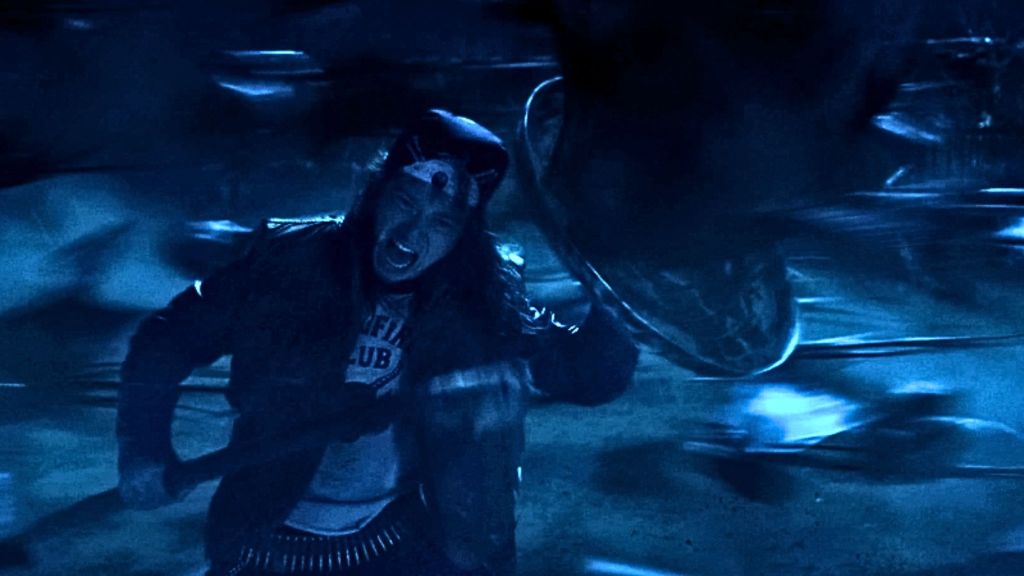
The Demobats are the flying, aggressive, bat-like creatures that appear in massive swarms in the Upside Down in Season 4, where they attack violently and cause deep bleeding wounds. Though they are clearly controlled by Vecna and the hive mind, their attack strategy is strategically focused on overwhelming and draining their victims, much like a swarm of insects or parasites, making them a serious threat that led to Eddie Munson’s heroic death.
The D&D monster that most closely mirrors the Demobats is the Stirge. A Stirge is a Tiny monstrosity that resembles a large bat with a mosquito’s face. While its CR is a mere 1/8, it attacks in swarms just like Demobats. Its signature move is the Blood Drain attack, where it attaches to a target and, on subsequent turns, automatically deals blood loss damage. This perfectly matches the draining, unrelenting nature of the Demobats’ swarm attacks.
What do you think? Leave a comment below and join the conversation now in the ComicBook Forum!
Most Viewed
-

Image Courtesy of Netflix -
Image courtesy of HBO -
Image courtesy of Virgin Films -

Pierrot Films / Viz Media