The fifth and final season of Stranger Things officially concluded its historic run on Netflix last year. The series finale dominated the global holiday season through a strategic three-volume release schedule that began on Thanksgiving and ended with the two-hour series finale, “The Rightside Up,” on New Year’s Eve. This release strategy proved incredibly successful, propelling the show to the top of Netflix’s most-watched charts. Once the final episode was available, Stranger Things also provided an emotional farewell to the Hawkins crew, culminating in a bittersweet 18-month epilogue that showed characters like Dustin (Gaten Matarazzo) and Mike Wheeler (Finn Wolfhard) attempting to navigate a world finally liberated from the shadow of the Abyss.
Videos by ComicBook.com
Despite the high production values and record-breaking statistics, the conclusion of Stranger Things left a significant portion of the audience in a state of confusion regarding the show’s internal logic. This friction gave rise to a viral conspiracy theory known as Conformity Gate, in which dedicated viewers argue that the idyllic ending was actually a reality-warping illusion created by a surviving Vecna (Jamie Campbell Bower). These theorists pointed to a series of perceived inconsistencies to suggest the final victory was a manufactured lie and the true Stranger Things finale is yet to come. While there is no secret ninth episode to resolve these complaints, the intensity of the debate highlights how the series failed to clarify fundamental aspects of its mythology. In particular, even after five seasons, the rules that govern the Upside Down are often contradictory.
5) What Exactly Created the Upside Down?
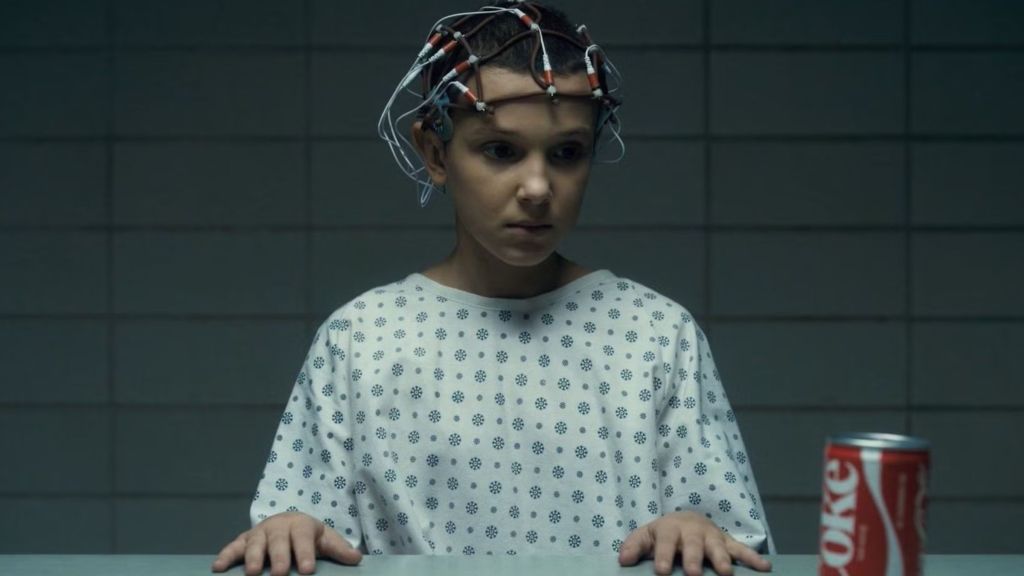
The final season of Stranger Things attempted to settle the debate regarding the origin of the dark dimension by revealing that the Upside Down is actually a bridge connecting Earth to a realm of pure chaos called the Abyss. According to the lore, Eleven (Millie Bobby Brown) unknowingly created this wormhole on November 6, 1983, when her psychic energy acted as a catalyst during her mental contact with a Demogorgon. However, this explanation remains inconsistent when compared to the experiences of other characters throughout the franchise.

The series previously established that Eleven banished Henry Creel (Jamie Campbell Bower) to the Abyss years earlier in 1979, yet that interaction did not result in a permanent physical gate. Furthermore, the show fails to explain why the prolonged contact between Will (Noah Schnapp) and the Mind Flayer—another Abyss inhabitant—did not generate a secondary wormhole like the Upside Down. The narrative relies on the idea that Eleven is the only catalyst capable of such a feat, yet it provides no reason why subsequent psychic connections between humans and the Abyss did not produce similar dimensional rifts.
4) How Does Exotic Matter Work?
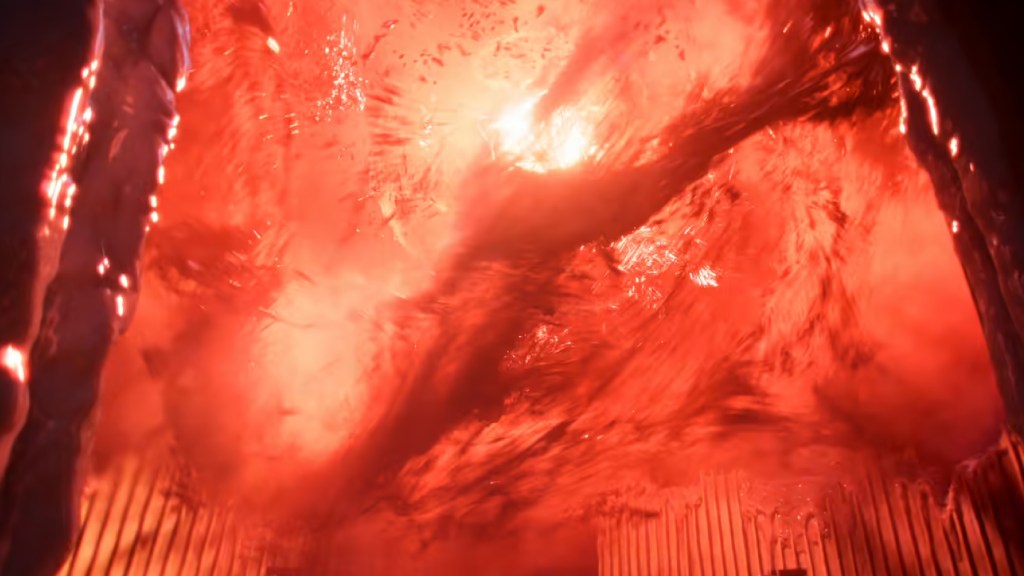
The final season of Stranger Things attempted to ground its supernatural elements in high-concept physics by introducing exotic matter. During the concluding chapters, the narrative reveals that Dr. Brenner (Matthew Modine) spent decades studying this substance to understand how to stabilize interdimensional bridges. While the term provides a scientific label for the Upside Down, Stranger Things fails to provide any details regarding the provenance or the actual characteristics of exotic matter. It remains entirely unspecified whether this is a natural element found within the Abyss, something that the scientists at Hawkins Lab engineered, or something created by Eleven’s psychic probing. The characters treat the substance as a physical binding agent that prevents the wormhole from collapsing, yet the audience is never told why it manifested in the first place.
3) How Could Will Communicate With Joyce Through Lights?

The communication between Will Byers (Noah Schnapp) and Joyce Byers (Winona Ryder) in the first season of Stranger Things is a prominent plot hole that the finale failed to resolve. The show established in the fourth season that the Upside Down is a physical snapshot of Hawkins frozen on November 6, 1983, meaning the version of the house in that dimension stopped updating on the day Will was taken. However, Joyce did not purchase the Christmas lights or paint the alphabet on her wall until several days after the disappearance of her son. Because these items were not part of the environment at the moment the snapshot occurred, the lights and letters should not exist in the version of the house where Will was hiding. In short, Will would have been standing in a dark room with no visual markers. Yet, he possessed the spatial awareness to spell out complex sentences for his mother. The final season of Stranger Things never addressed how Will could coordinate his messages without a physical alphabet in the Upside Down to reference.
2) Why Does the Upside Down Mirror Hawkins?

The final season of Stranger Things revealed that the Upside Down connects Earth to the Abyss, but it failed to provide a reasoned explanation for the physical transformation of the Hawkins snapshot. The series established in its fourth season that the dimension is a temporal copy of November 6, 1983, which makes sense considering that the Upside Down is a wormhole, basically a gateway in space-time. However, Stranger Things never addressed why this reflection of Hawkins is perpetually dark and blue-tinted instead of just being a frozen moment.
This logic gap is exacerbated by the appearance of the Abyss, the primordial realm where Henry Creel (Jamie Campbell Bower) was first exiled. The Abyss is a rocky landscape with a yellow atmosphere that bears no physical resemblance to the cold ruins of the mirrored town. If the Upside Down is merely a wormhole connecting these two disparate realities, there is no internal logic for it to manifest as a third, unique environment. The production prioritized a consistent horror aesthetic for five seasons without ever explaining why a bridge between worlds would physically degrade and darken the matter it captures.
1) Why Are There Vines in the Upside Down?
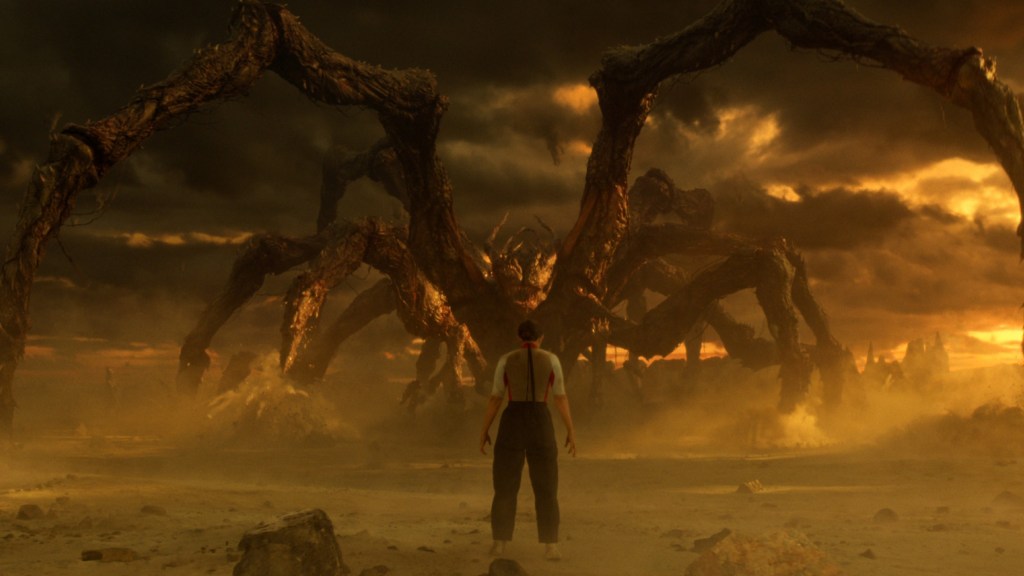
The serpentine vines have been a primary visual characteristic of the Upside Down since the beginning, but their existence is entirely incompatible with the final lore reveals regarding the Abyss. The first season of Stranger Things presents the vines as native flora of the Upside Down, which doesn’t fit the idea that the dimension is a wormhole and a snapshot of Hawkins. Season 2 introduced the concept of the hive mind, linking the vines to the Demogorgons as part of the same ecosystem. After Season 5, we know the Demogorgons and the Mind Flayer come from the Abyss, a wasteland devoid of any vegetation. So where exactly did the vines come from? After Season 5, the vines were a misplaced narrative asset that the production used for a horror aesthetic but never cared to address in the lore.
Stranger Things is available on Netflix.
Which unexplained mystery about the functioning of the Upside Down do you think was the most frustrating part of the Stranger Things finale? Leave a comment below and join the conversation now in the ComicBook Forum!
Most Viewed
-

Image Courtesy of Netflix -

Image Courtesy of WIT Studio -
Image Courtesy of Ufotable -
Image Courtesy of Netflix