Silo Season 3 is building to a head, with episode 9 taking a shocking new direction. Inspired by Graham Yost’s phenomenal novels, Silo delights in subverting our expectations. Season 3 has deliberately made quite a few book changes (or, in other cases, seemed to be setting them up), which means nobody quite knows what to expect as the epic Apple TV+ series continues. Silo 18 is on the brink of destruction, locked in what seems to be an almost perpetual state of uprising as the secrets of the silo are gradually revealed – both now and in the Before Times.
Videos by ComicBook.com
This season has deliberately teased the end of the world, and we’ve had tantalizing hints it may have been caused by an artificial intelligence using nanotechnology. The truth is so very different, though, with episode 9 showing nuclear explosions on the day the silos are opened. The episode strongly implies trillionaire Per Stenson, the man who constructed the silos, is actually the one who set off the bombs; he’s deliberately engineered a situation where almost all the people were inside the silos at the moment the bombs went off. But who – or what – is really responsible?
We’d Thought an Artificial Intelligence Was Responsible For Everything
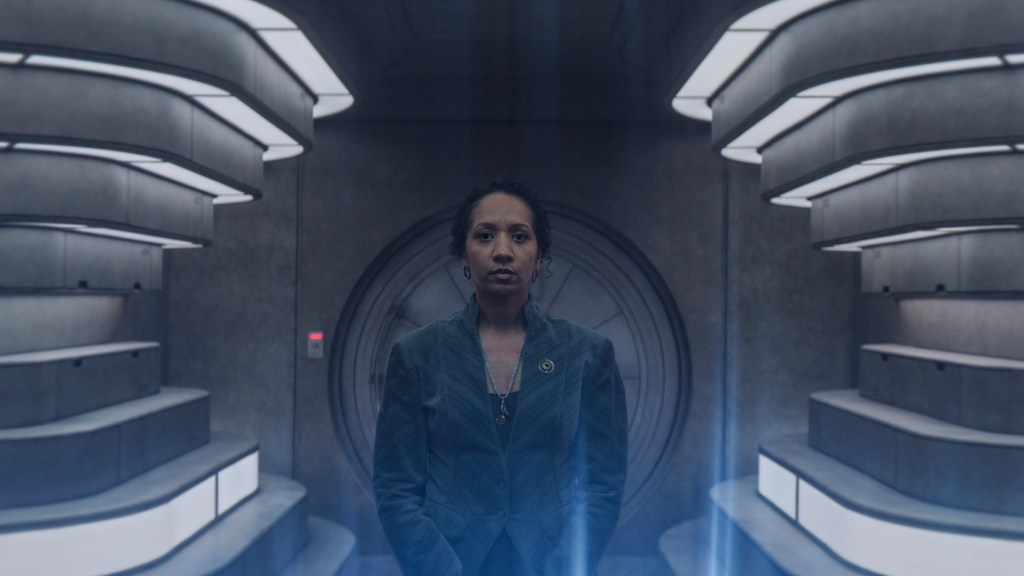
Previous seasons had gradually revealed the entire silo operation is run by a so-called “Algorithm.” Each silo is run by a Head of IT, who reports in to what appears to be an artificial intelligence; this runs a series of calculations, insisting it is doing things for the sake of the silo as a whole. If the Algorithm loses control of the silo, it initiates the Safeguard Protocol – a poison gas attack that kills all the inhabitants of a silo. Silo 18 is perilously close to a Safeguard scenario, and Camille is desperately trying to avert one being initiated.
Silo Season 3 has redeemed the former Head of IT, Bernard Holland, who has realized everything he worked for is a lie. Holland’s arc comes full-circle in episode 9, as he surrenders himself to Camille and confronts the Algorithm one last time. The confrontation is a powerful, emotional one; Holland offers himself up as a victim to blame for everything that’s happened at Silo 18, and the Algorithm agrees, deciding to send him out to clean. But that discussion is surprising because the emotions don’t just appear to be on Holland’s side. The Algorithm itself reacts emotionally.
Is the Algorithm Actually Being Run By People All Along?
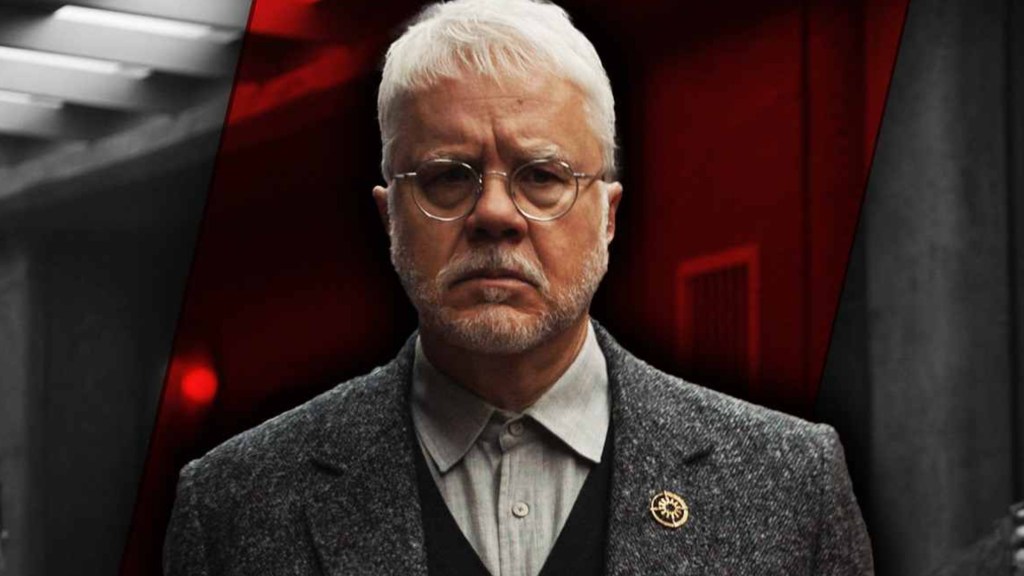
From the start, something seems odd about episode 9. Even the recap opens with a simple question: Why were the silos designed with the capacity to kill an entire silo’s population? It’s not enough to say that an AI has taken control; somebody constructed the silos with that idea in mind, and the only explanation is that it was the ultimately means of reinforcing control. The question rises again when Bernard confronts the Algorithm, pointing out that its calculations are clearly fallible. Every Safeguard event is a moment when the Algorithm has failed. Strikingly, the Algorithm’s reaction is – as Bernard later says – “rather un-machinelike.”
Bernard has figured out a shocking truth; the entire silo system is still run by humans. “The wizard is nothing more than a man behind the curtain,” he says, which gives him hope. An artificial intelligence is so much harder to beat than a person, because an AI runs variables more quickly and draws conclusions. Bernard guesses that the system incorporates controllers at Silo 1; there could be any number of people really communicating with the silos, changes in identity masked by technology. It’s an absolutely genius twist.
I suspect episode 9 foreshadowed the truth in the best possible way. The episode reveals the origin of the Pact, a document apparently written to guide human communities so they can survive 500 years underground without destroying one another. Apparently the Pact was written by AI, but edited by humans. I suspect everything that’s happening is the same; that an AI is analyzing variables and issuing recommendations, but that humans are still implementing the decisions and making choices. Far from dealing with a rogue AI, Silo is instead showing what happens when humans subordinate their judgment and morality to cold, clinical calculations. It’s a remarkably timely message.
More TV Shows
-

Courtesy of South Park Studios / Shueisha