When Daredevil: Born Again was first resurrected, there was some… fear that the “Man Without Fear” might lose his edge, but after a good but messy first season, Season 2 delivers both quality and a lot of violence. Fans welcomed the hero’s return, even if he felt slightly ill-fitted into his first three MCU appearances, but Season 2 was surely Marvel’s chance to let Charlie Cox’s hero find his feet again? The good news is that it works, with the caveat that there are still some issues. Happily they’re not ruinous.
Videos by ComicBook.com
Picking up in a New York City that feels suffocatingly relevant at times, the story picks up as Vincent D’Onofrio’s Wilson Fisk has fully traded his prison jumpsuit for the mayoral sash. Vigilantes are officially outlawed, and Fisk’s aggressive task force is currently hunting them – alongside any other “undesirables” and political enemies (a little less publicly, of course) – with a terrifying, state-sanctioned efficiency that might well be seen by some as activism, given the direction the real world is taking.
In the shadows of this new regime, Matt Murdock is in hiding, now a whispered symbol of hope and rebellion. But, intriguing, Fisk isn’t a cartoonish tyrant; he’s actually a populist icon, buoyed by familiar public rhetoric from a public willfully blinkered to the corruption on very thinly-veiled display. Against that backdrop, Daredevil: Born Again Season 2 is a battle for the hearts and minds of New York, as much as it’s an outright street fight.
Rating: 4 out of 5
| PROS | CONS |
|---|---|
| The central story is great, and well layered. | There are too many characters and some end up underserved. |
| The violence is top-tier, and more imaginative than ever. | Punisher leaves an illogical vacuum. |
| Bullseye is amazing. | Some might find the political leanings a bit over-zealous. |
| The ending sets up a great third season. |
Daredevil: Born Again Season 2 is… Provocative In its Message
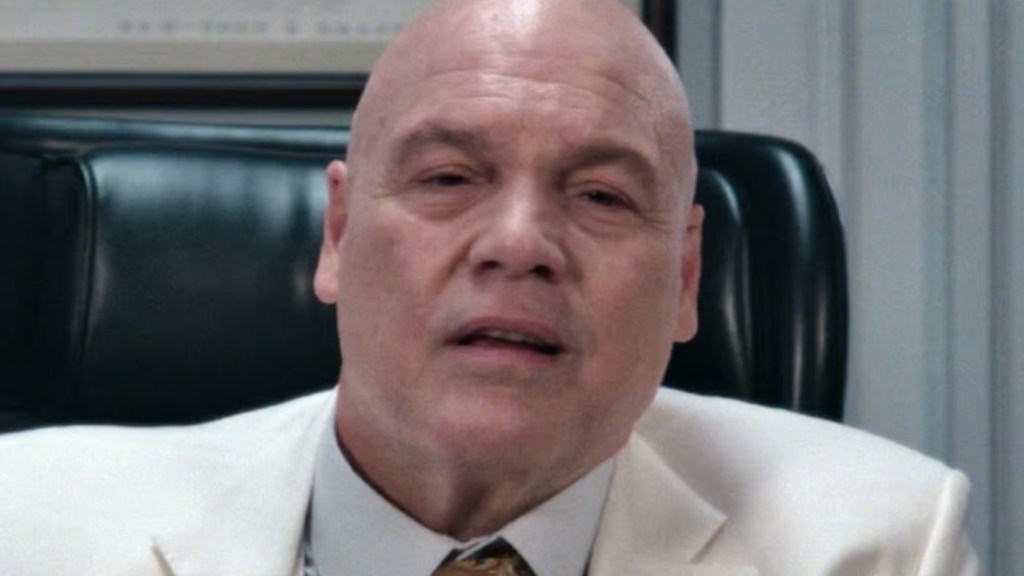
Make no mistake: this is the most overtly political any MCU release has ever been. The allegory of Fisk’s task force and its treatment of targets draws uncomfortable, chilling parallels to ICE with what feels like conscious intent. As a result, the stakes feel very immediate. Similarly, the Iran-Contra parallels of the newly introduced Mr. Charles’ clandestine operation feel discomfortingly relevant given modern world events, even if Matthew Lillard brings his usual mischievous energy to the role. In this iteration, Fisk’s system of power feels very much like a black mirror held up to the viewer, and honestly, it feels like a dangerous line for Disney to take, given the potential to alienate sections of the fanbase. Then again, there’s no denying that this boldness makes for compelling drama.
At the same time, Daredevil’s evolution into a symbol of rebellion sort of makes him New York’s answer to Batman. I certainly considered this several times as he reckons with his emotional wounds, and what he means to the city. And then this comparison is further cemented by his adoption of a new child sidekick – Angela Del Toro (Camila Rodriguez), the daughter of the slain White Tiger from the first season. Similarly bad decision making.
The season also offers a exploration of the nature of justice, treating it as a complex spectrum rather than a binary. Not groundbreaking stuff, admittedly, but it’s interesting to watch it play out. Murdock remains mostly morally good, but the return of Bullseye and the lingering spectre of Foggy’s death loom large, casting a long shadow of doubt on the righteousness of justice versus the emotion of revenge. At the same time, real legal cases play out as vigilantes – notably Tony Dalton’s Swordsman from Season 1 – are put on trial. Fisk’s political machine seeks to make them examples of “disorder,” while deeper in the background, Fisk’s own twisted idea of justice is tested as the loyalties of his inner circle are constantly picked at. He’s the hero in his own story, of course, but his idea of justice is very… liberal, let’s say.
Sadly, There Are Simply Too Many Characters
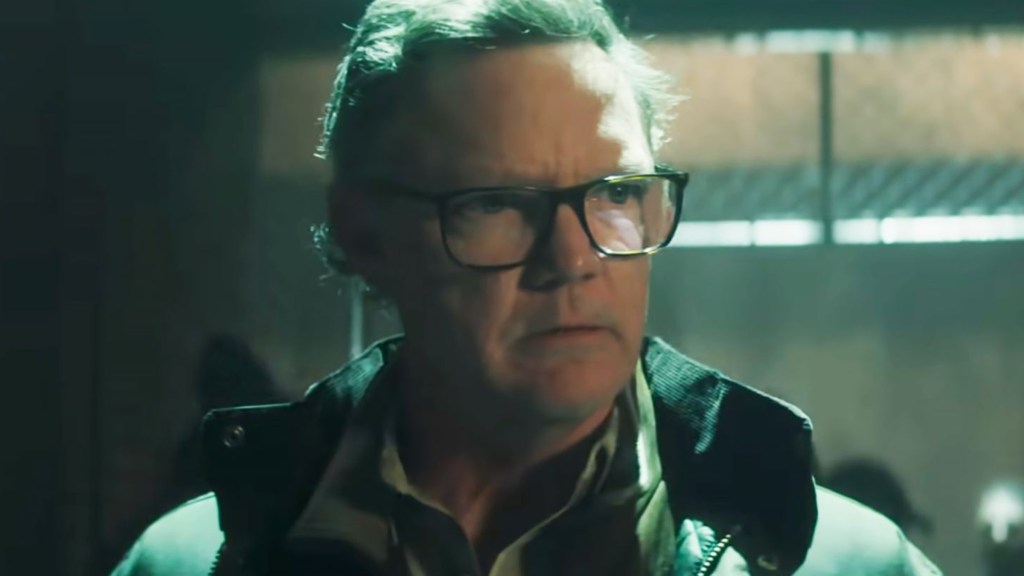
If there is one thing to really complain about, it’s that the Daredevil: Born Again cast is a bit too large, and the show struggles to balance this sprawling cast. Heather Glenn (Margarita Levieva) – the psychiatrist Matt was dating in Season 1 – is sidelined a little too much for my liking (albeit aside for the game-changing reveal in the finale). Michael Gandolfini’s plotline as Daniel Blake with BB Urich also feels like it could have been left out, sadly. Gandolfini is good, of course, but he’s just not quite as intriguing here as he was when he served as a walking commentary on sniveling, “White House Wormtongue” type figures last season.
Matthew Lillard is excellent as the slightly-too-casual Mr. Charles. He adopts an affected gimmick of eating in every single scene, but he sadly doesn’t get enough screen time to really leave the mark he deserves to. But then, it often feels like there are two full seasons of content here being forced into a mere eight episodes. I never thought I’d complain about brevity given how the old Netflix seasons would sag terribly in the middle, but here we are. Turns out sagging is sometimes better than the alternative.
Similarly, Karen Page (Deborah Ann Woll) feels like a passenger for most of the eight-episode run, despite playing a pivotal role in the endgame. Even the return of Krysten Ritter’s Jessica Jones, while obviously lovely to see, feels undercooked. Her inclusion is the only real nod to wider MCU affairs, and unfortunately the intent behind bringing her back feels more cynical and “fan-servicey” than the story actually required. Still, at least she’s back.
The standout alongside the obvious (career-best performances of Charlie Cox and Vincent D’Onofrio) is Wilson Bethel’s Bullseye who is an absolute delight and just about makes up for the absence of Jon Bernthal’s Punisher. He makes Episode 4 one of the best near-hours of Marvel television ever produced and I’m willing to stand by the fact that he deserves his own unhinged spinoff in the vein of The Punisher, even if that seems unlikely. There’s also strong support from Arty Froushan as Buck Cashman; he plays Kingpin’s lapdog with an irresistible high-tension and a very unsettling threat level that hints at an origin story that we don’t get to see much of. And then there’s Hamish Allan-Headley’s Officer Powell, the head of the ICE-like task force, who is an incredible study in being a deeply unlikeable, horribly compelling prick. I frequently wanted to reach into the TV to throttle him, which is exactly the reaction a villain like that should elicit.
It might sound like a contradiction here, given I’ve complained about the number of characters, but Punisher’s absence makes no narrative sense. It might, when The Punisher: One Last Kill comes out, but I spent too much of the time wondering why Frank would have disappeared when certain events unfold. The ending of Born Again Season 1 makes him not returning a complication that isn’t so much dealt with as completely ignored.
Daredevil: Born Again Delivers The Violence Again
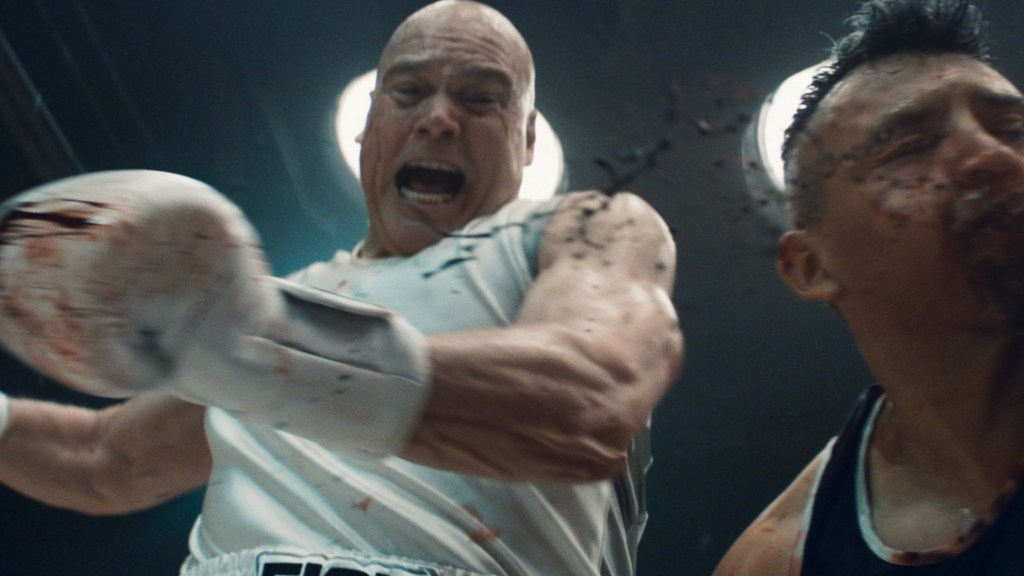
For those still worried that the Disney+ era would sanitize the action: your fears remain misplaced. “The Bullseye Episode,” as it will no doubt come to be known, is a glorious, inventive celebration of violence. It is imaginative, bloody, and – if I’m being picky – just a tiny bit too short. Hyper violence has rarely been this fun outside of a Takeshi Miike or Quentin Tarantino joint. In fact, the fight choreography across the season is top-tier, and the stakes feel very real. One of the best things about this show is you’re pretty quickly struck with the fact that no hero in the MCU gets as beat up as Matt Murdock. In an era where the franchise is increasingly populated by gods and invincible supers, seeing a man bleed for his convictions is a welcome – and necessary – change of pace.
The other bloody highlight is a double-headed corridor fight sequence that will be long remembered by fans of the original show’s oldest tradition. I won’t spoil any of it, but it’s almost balletic. And yet, for all the visceral brutality, there is a commendable amount of cerebral storytelling at play. Really, the balance between the two is just right, and that means the pacing is tight, even with too many characters. And crucially, there’s enough major set pieces to convince the audience that this is a city secretly at war and in danger of imploding at any second.
Final Thoughts on Daredevil: Born Again Season 2
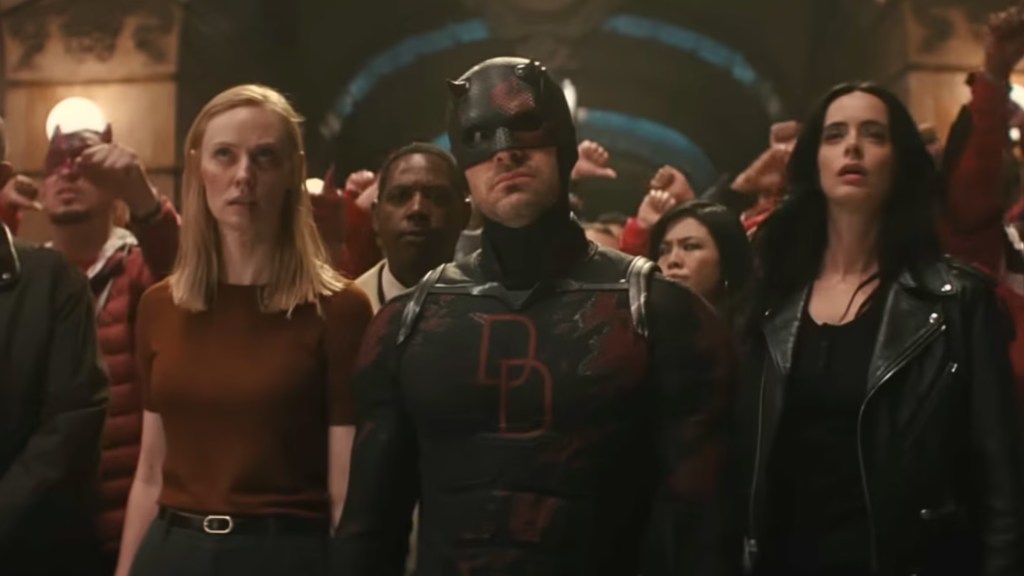
Overall, this is a stronger and more cohesive season than the first, which often felt like it was cobbled together from disparate parts. Because it was. The storylines are clearer, and the plot is genuinely gripping, even if the show occasionally trips over its own feet with too many side quests and underserved supporting characters. By the time the credits roll on the finale, the status quo has shifted in a way that sets up some fascinating ideas for Season 3. And there are a few nice surprises thrown in along the way too.
Daredevil: Born Again Season 2 releases new episodes every Tuesday, with two episodes on March 31 and the finale on May 5. Are you looking forward to watching? Leave a comment below and join the conversation now in the ComicBook Forum!
Most Viewed
-

Image Courtesy of Ufotable -

Image Courtesy of MAPPA/Bandai Namco Pictures