Despite a variety of tones, scopes, and starship captains, you can always count on a Star Trek series to play the hits. The warp core is probably five minutes from breach, the Prime Directive is likely to get thrown out the window, and without a doubt, you’ll be graced with a last-minute speech from the Captain about humanity’s potential. However, it turns out there’s another surprising pattern that we’ve spotted across every major era in the franchise.
Videos by ComicBook.com
Every major Star Trek show features at least one central character who dies and comes back to life, and the most recent series, Star Trek: Starfleet Academy, is no exception, thanks to a recent episode. These characters are typically resurrected in some absurd fashion, or even replaced entirely by an alternate version of themselves. From the modern streaming era all the way back to the 1960s, here’s every series that took full advantage of death’s negotiability in the Milky Way.
11) Starfleet Academy – SAM

Most recently, the torch has been passed to Star Trek: Starfleet Academy. In Episode 8, “The Life of the Stars,” Series Acclimation Mil (SAM), a holographic cadet and Kasqian emissary played by Kerrice Brooks, is dying in the aftermath of the USS Miyazaki attack. SAM undergoes repairs but continues to glitch, accumulating more trauma, and the damage causes her systems to fail. On her homeworld of Kasq, her Makers deactivate her when they realize her consciousness has surpassed their ability to repair it.
Yet with encouragement from Captain Nahla Ake, The Doctor chooses to become SAM’s guardian and essentially raises her again from infancy. Because time on Kasq moves differently, two weeks there are roughly equivalent to 17 Earth years; thus, SAM is reborn as a child and lives an entire second upbringing under The Doctor’s care before returning to Starfleet Academy, only days later from everyone else’s perspective.
10) Prodigy – The Protostar Crew
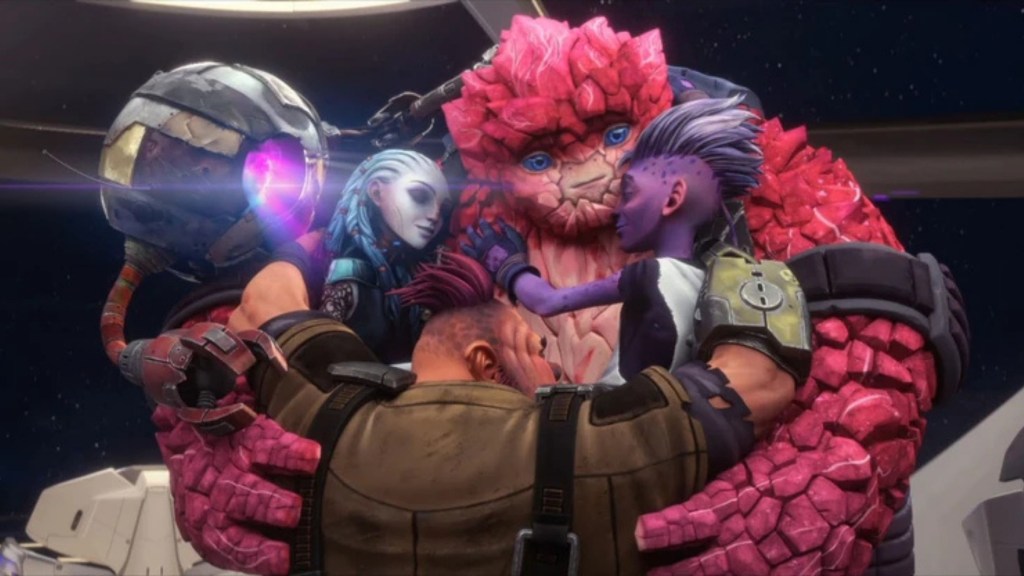
The Protostar is destroyed in Star Trek: Prodigy’s “Time Amok,” after the ship gets trapped in a temporal anomaly that fractures time differently for each crew member. The synchronization is unsuccessful, so the Protostar’s warp core destabilizes, ultimately exploding and killing everyone aboard. Rok-Tahk survives the longest due to her slow time rate. She then spends years alone trying to understand the engineering systems while knowing the crew has already died in the primary timeline.
Rok-Tahk eventually solves the crisis by calculating timing corrections that allow the crew to coordinate across fractured time streams. By transmitting instructions backward through the anomaly, she enables the earlier crew to stabilize the warp core. The explosion and the crew’s deaths are erased from the corrected timeline, but the characters retain partial emotional memory of the failed reality.
9) Strange New Worlds – Hemmer

Chief Engineer Hemmer (Bruce Horak) is killed in Star Trek: Strange New Worlds’ “All Those Who Wander,” after a Gorn infection implants parasitic hatchlings inside his body. The infection spreads rapidly, and Hemmer determines he will inevitably transform into a host that could endanger the Enterprise. While stranded on a frozen comet outpost, he deliberately separates himself from the crew and jumps from a cliff.
While generally not seen as official canon, Hemmer is brought back in the Star Trek: Very Short Treks animated short “Holiday Party” as a living character, acting as the initially hesitant emcee for a First Contact Day party on the Enterprise, who ultimately delegates his duty to Spock. Rather than reversing the original biological death, the franchise preserves Hemmer in a fun, non-canon way, with Horak returning to voice.
8) Lower Decks – Shaxs
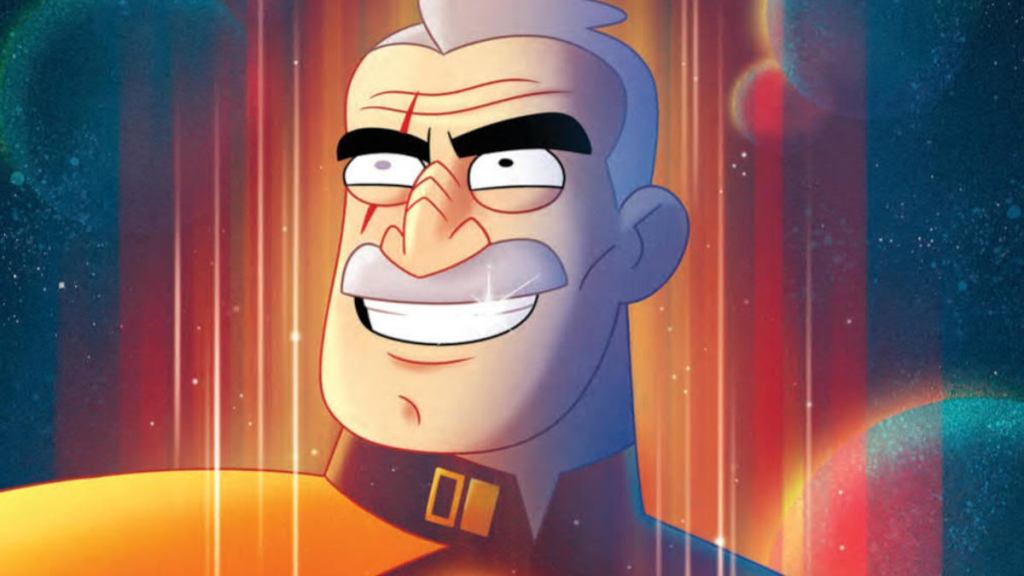
Lieutenant Shaxs sees the (temporary) end of the road in the Lower Decks Season 1 finale, “No Small Parts,” during a Pakled attack on the USS Cerritos. Shaxs manually carries a detonator into an enemy-controlled section of the ship and triggers an explosion that disables the Pakled threat, sacrificing himself in the process. His death is all but certifiably confirmed as permanent at the episode’s conclusion.
Season 2 then opens with Shaxs restored to duty without explanation, essentially in parody of the undying Star Trek trope we’re detailing on this list. In the running gag, character dialogue is repeatedly cut off whenever anyone attempts to describe how he survived, implying some convoluted off-screen resurrection, and ultimately highlighting the absurdity of the resurrection plot device.
7) Picard – Picard and Elnor

The initial season of Star Trek: Picard ends with Jean-Luc Picard facing death-by-Irumodic Syndrome, after he shuts down the synth beacon that almost triggers a galactic conflict. On La Sirena, Picard officially dies, and his medical scans confirm the irreversible brain damage. Later, in Season 2’s altered timeline, Elnor is killed during a Borg attack while protecting civilians, dying from fatal injuries sustained during the Confederation-era conflict.
Thankfully, Picard is resurrected when Altan Inigo Soong transfers his neural patterns into a synthetic golem body built to replicate normal human aging and limitations. Picard’s consciousness at the moment of death is essentially copy and pasted, allowing his memory and personality to continue on from that point. Elnor’s resurrection occurs when Q’s timeline alterations are undone; restoring the prime timeline reverses the circumstances of his death, returning him alive with events reset to their original historical path.

6) Discovery – Dr. Hugh Culber
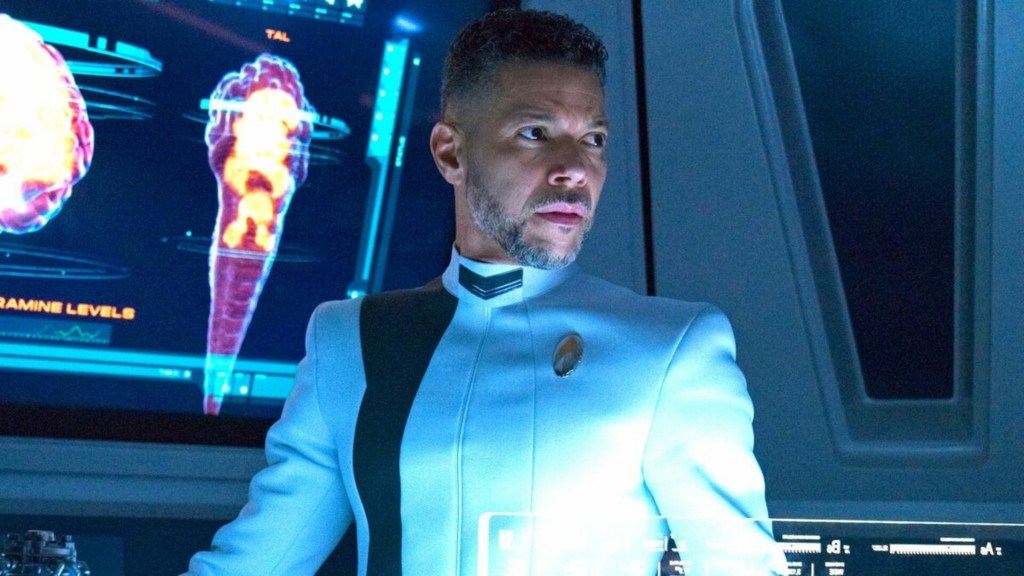
In Discovery Season 1’s “Despite Yourself,” Dr. Hugh Culber meets his demise when Ash Tyler (influenced by his suppressed Voq identity) suddenly snaps Culber’s neck aboard the Discovery. His death is obviously instant, and confirmed medically, with Culber’s body being disposed of and any possibility of conventional resuscitation removed.
Yet in Season 2, Stamets finds Culber’s consciousness preserved within the mycelial network (the extradimensional fungal ecosystem powering Discovery’s spore drive). Using spores and a reconstructed biological template, the crew physically regenerates Culber’s body and then reintegrates his consciousness into it. The resurrection restores him biologically, but sadly comes with unwanted psychological side effects as Culber reconciles with existing outside physical reality.
5) Enterprise – Daniels
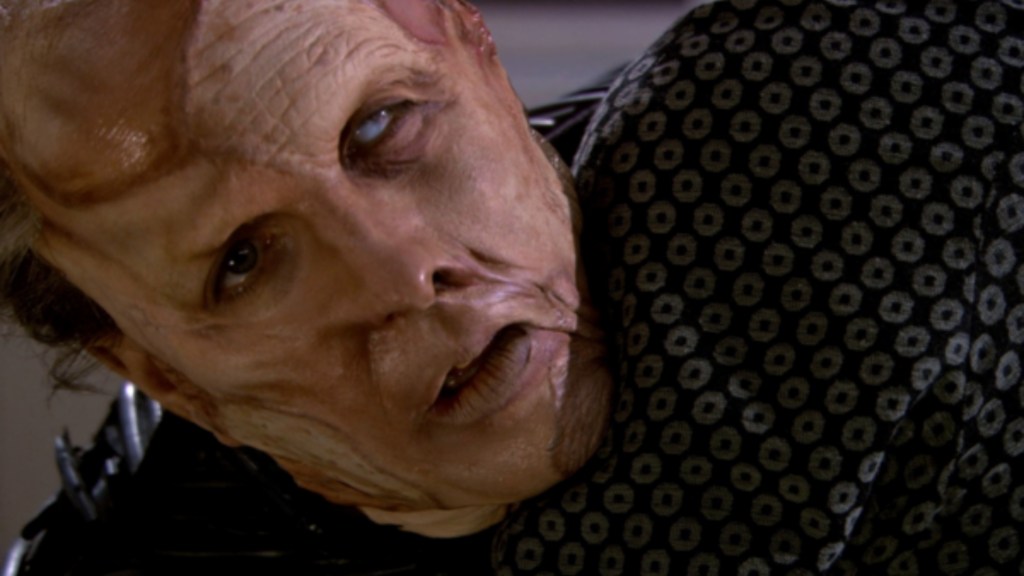
Star Trek: Enterprise kills Agent Daniels in Season 4’s “Storm Front.” After attempting to guide Captain Archer toward ending the Temporal Cold War, Daniels appears aboard the Enterprise in a catastrophic state with his body phased across multiple points in time, mutilated and unstable. Na’kuhl leader Vosk uses a temporal corridor to manipulate Earth’s past, launching attacks across different eras and reshaping the timeline, destabilizing Daniels and effectively killing him as the future he comes from stops existing.
Daniels’ resurrection occurs when Archer, the Enterprise crew, and Suliban agent Silik defeat Vosk and destroy the temporal corridor, removing Vosk from history and undoing the timeline corruption driving the war. Once the altered history collapses, Daniels is restored along with the corrected future. But unlike a simple reset, Daniels is aware of having died and of the timeline changes that erased him.
4) Voyager – Neelix, Harry Kim, and Torres
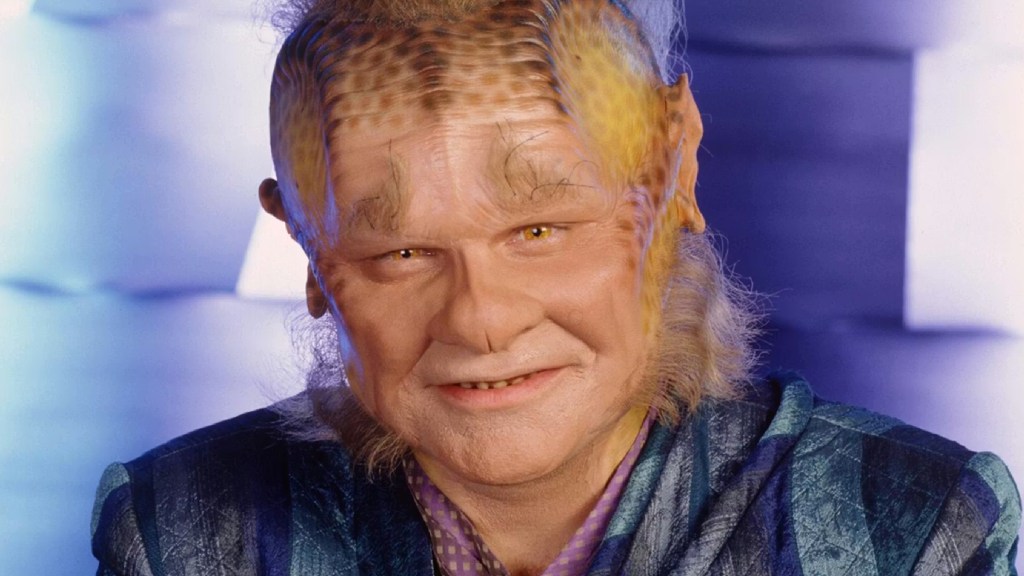
Star Trek: Voyager’s Neelix is killed off in “Mortal Coil” when he’s exposed to bioelectric discharge during a shuttle accident, and medical scans confirm his brain’s inactivity. Sound familiar? Earlier, “Deadlock” destroys one duplicate USS Voyager, killing that reality’s Harry Kim during a hull breach. In Season 6’s “Barge of the Dead,” B’Elanna Torres experiences a fatal near-death event that places her consciousness aboard the Klingon vessel carrying dishonored souls to Gre’thor.
In Neelix’s case, Seven of Nine resurrects him using Borg nanoprobes that repair cellular damage and restart neural function. Harry Kim’s return occurs when the surviving duplicate crosses universes and replaces the deceased original aboard the intact Voyager, leaving the crew with a counterpart rather than the same individual. Torres returns when medical intervention restores her body while her consciousness exits Gre’thor, reconnecting her physical and spiritual existence simultaneously.
3) Deep Space Nine – Chief O’Brien
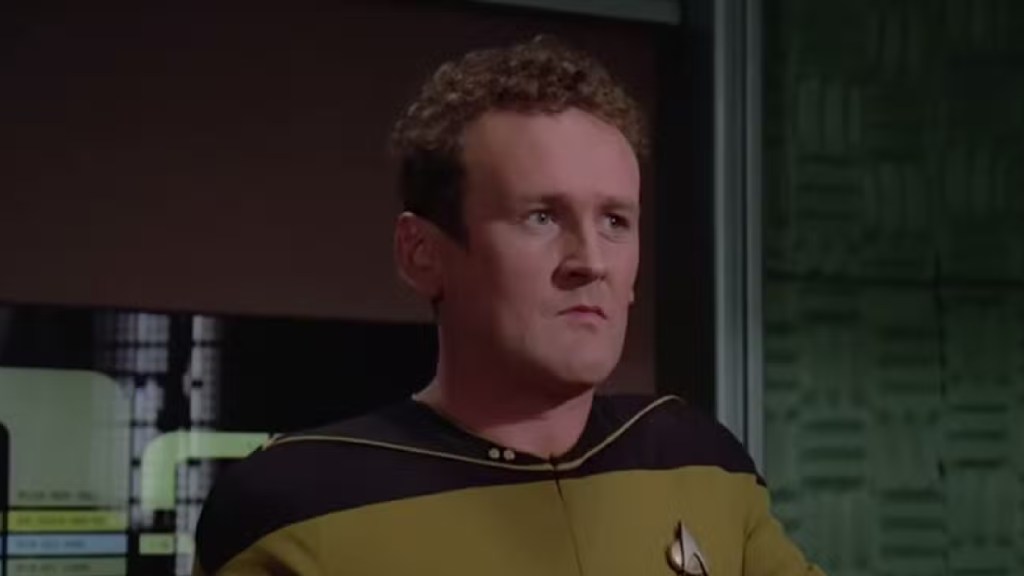
Miles O’Brien dies in Season 3 of Star Trek: Deep Space Nine in an episode called “Visionary,” after he is exposed to lethal radiation that causes involuntary time jumps several hours into the future. During one jump, O’Brien witnesses his own death while attempting to prevent a Romulan plot involving a cloaked bomb aboard Deep Space Nine.
Of course, the future version of O’Brien is able to travel back to the present, moments before the explosion, replacing his earlier self, who dies stopping the sabotage. The surviving O’Brien then remains permanently in the timeline, meaning the character we’re with from that point on is technically the future counterpart who escaped death by occupying his past self’s place.
2) The Next Generation – Data (Movies)
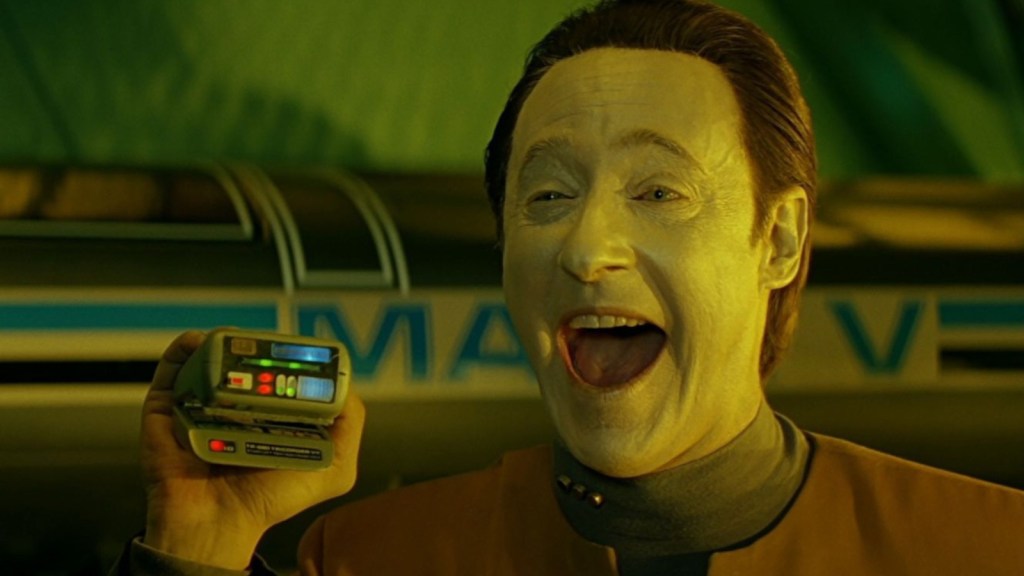
The Next Generation era kills Lieutenant Commander Data in Star Trek: Nemesis when he transports Captain Picard off Shinzon’s warship, the Scimitar, and remains behind to stop its thalaron weapon. Data detonates the vessel, destroying himself along with the ship to save the Enterprise E and its crew. The explosion leaves no recoverable physical remains, leaving only memories and fragments behind, while the prototype android B-4 (containing partial elements of Data’s memories) proves incapable of replacing him.
Star Trek: Picard reveals that Data’s neural engrams were preserved within a quantum simulation created from Dr. Soong’s research. Picard accesses the consciousness in a sim environment where Data’s existence continues as stored memory patterns. Data is then restored through interaction with Picard before choosing permanent termination when the simulation is shut down, granting him a dignified final death.
1)The Original Series – Spock (Movies), McCoy, and Scotty

Star Trek’s original era depicts Spock’s “death” in Star Trek II: The Wrath of Khan when he enters the radiation-flooded engineering room to repair the Enterprise’s warp core. Exposure proves fatal, and Spock dies after transferring command back to Kirk. He even gets a torpedo burial on the Genesis Planet.
Spock’s famous resurrection then occurs in Star Trek III: The Search for Spock, after it’s revealed that he’d transferred his katra (or living consciousness) into Dr. McCoy before dying. The Genesis Planet’s unstable regenerative matrix rapidly restores Spock’s body, and Vulcan priests complete the fal-tor-pan ritual to reunite his katra with that body, reviving him fully.
Meanwhile, earlier TOS episodes had already given Bones and Scotty the runaround. In Season 1’s “Shore Leave,” Dr. McCoy is impaled and killed by a medieval black knight on a mysterious pleasure planet that turns thoughts into reality. In Season 2’s “The Changeling,” the alien probe Nomad kills Scotty with an energy blast as he tries to protect Lieutenant Uhura.
They are both resurrected in the same episode in which they are killed. In “Shore Leave,” the planet’s unseen caretaker reconstructs Dr. McCoy’s body after confirming the crew posed no threat, reversing death as part of the world’s unknown technology. Scotty is revived in “The Changeling” when Captain Kirk convinces Nomad to “repair” the damage it caused, prompting the probe to reverse the fatal injuries it inflicted and restore Scotty to life through its advanced self-described repair functions.
Has Star Trek exhausted the resurrection trope? Leave a comment below and join the conversation now in the ComicBook Forum!
Most Viewed
-

Courtesy of Sony Pictures Animation / McDonalds -

Courtesy of Viz Media