
The X-Men have some of the most iconic villains in Marvel Comics, and they are constantly battling evil mutants who seek to take over the world. However, the X-Men’s strongest and most persistent non-mutant foes are the dreaded Sentinels. For decades, these killer robots have been created solely to wipe out mutantkind and are constantly upgrading themselves and coming up with new schemes to achieve that goal. And now, as part of the storyline “Who’s Been Sleeping in My Bed?” in Uncanny X-Men #27, the next generation of mutants and X-Men recruits, the teenage superhero team the Outliers, are forced to face off against the latest and most terrifying Sentinels ever seen.
Videos by ComicBook.com
One of the core struggles the X-Men face is humanity’s constant fear and hatred towards them. The X-Men are constantly fighting bigots who would gladly see mutantkind exterminated. Humans created the Sentinels to capture or eliminate mutants and these creations are unrelenting in their crusade. Many of the X-Men’s most impactful stories involve dark futures where the Sentinels succeed in wiping out most of mutantkind. And in Uncanny X-Men #27, the latest incarnation of the Sentinels is the pinnacle of the synthetic villains’ long history of twisting humanity into horrifying abominations.
The New Sentinels Are Pure Nightmare Fuel
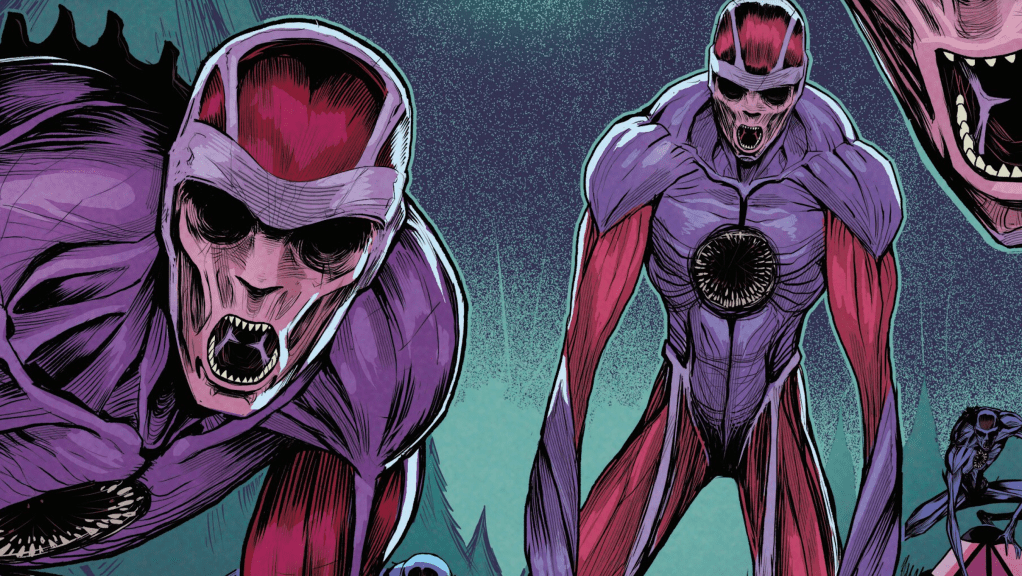
In Uncanny X-Men #27, as the teenage heroes Ransom, Calico, Jitter, Deathdream, and Mutina train to be new members of Marvel’s premier mutant superhero team, there’s an underlying sense that something’s very wrong with their surroundings. As the story goes on, more bizarre occurrences and characters appear. The long-lost X-Men ally Moria Mactaggert has seemingly returned; the villain Sauron, now called Professor S, is the leader of the X-Men; Magik and Colossus have swapped powers; Nightcrawler grew two additional arms; and the New Mutants are planning to kill the Avengers. However, easily the most terrifying development occurs when the X-Mansion is attacked by a new breed of Sentinels.
Instead of being robots or cyborgs, these new, vicious Sentinels are pure organic monstrosities. They possess elongated limbs, hollow eyes, and a skinless texture over their entire bodies. The creepiest aspect of their design is the gaping leech-like mouths full of razor-sharp teeth on their chests and hands. For these Sentinels don’t just kill mutants, they eat them. Although not as durable as their mechanical cousins, these mutant killers are nevertheless incredibly strong and agile. Nightcrawler explains that these abominations were once violent human convicts who were forcefully mutated into Sentinel-like creatures by Trask Industries. They are driven by overwhelming rage and the urge to feed on mutants, despite being in constant, agonizing pain and praying for death.
At first, the Sentinel’s superior forces threaten to overwhelm the Outliers and Nightcrawler. However, they’re soon saved by the arrival of Professor S and his X-Men, who defeat the genetic monstrosities off-panel. Although this new breed of Sentinel was taken care of very quickly, they are still one of the most grotesque and unnerving versions of these long persistent villains. Like Professor S and the evil New Mutants, the organic Sentinels may be a sign that the “Who’s Been Sleeping in My Bed?” storyline takes place in either an alternate universe or a shared nightmare. Nonetheless, whether they’re real or fake, these Sentinels are some of the creepiest foes the X-Men have ever faced and look like something straight out of DC’s Absolute Universe.

The Sentinels Have a Long History of Body Horror
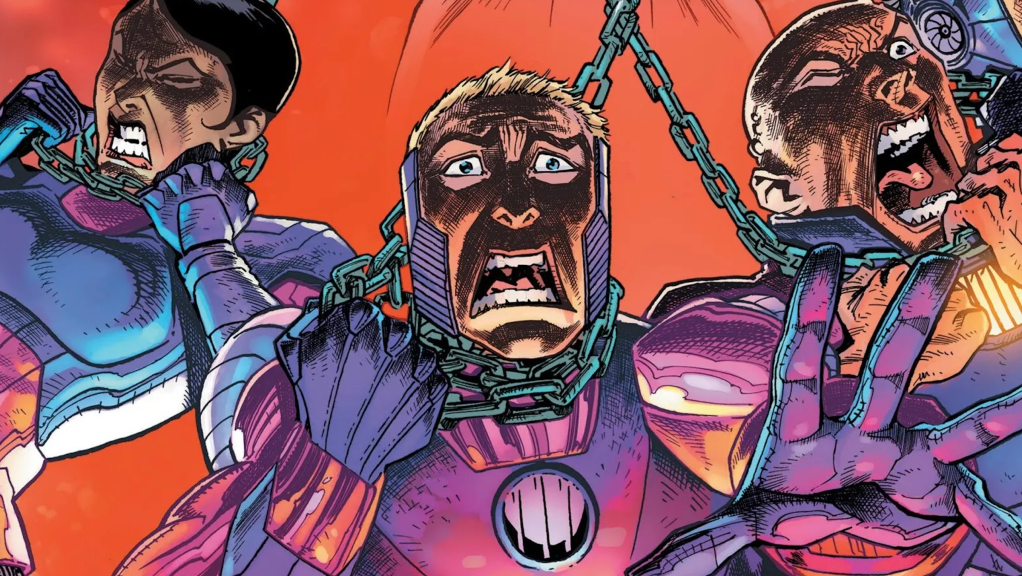
The idea of purely organic Sentinels that actively hunt and devour mutants has a lot of untapped potential for psychological horror. Additionally, these creatures are the culmination of the underlying body horror trend associated with Sentinels. Although Sentinels are generally viewed as killer robots, in truth, they are ever evolving synthetics constantly devising new ways not only to kill mutants but also to assimilate all of humanity into their ranks.
The biological Sentinels are the latest in a long line of humans who were forcibly turned into monsters hellbent on exterminating mutants. One of the earliest examples is in the “Days of Future Past” timeline, where the Sentinels turned Roderick Campbell, aka Ahab, into a killer cyborg. In the modern day, the terrifying X-Men villain Bastion is a human/Sentinel hybrid who once sought to turn more people into creatures like him. Using nanobots, Bastion transformed numerous innocent people into soulless Prime Sentinels whose bodies were replaced with cybernetics. There was also once a Bio-Sentinel made of human, mutant, and Brood corpses that attacked the X-Men before ultimately being destroyed. There’s even a Sentinels miniseries about soldiers who were augmented by cybernetics to become the next generation of mutant killers.
The new Sentinels are among the most egregious examples of body horror that these villains have ever produced, as they had their bodies twisted and mutated to the point that they’re in constant pain and have a ravenous hunger for mutants. However, such body horror is more than just shock value; it’s a metaphor for what hate turns people into. Despite being created to protect humans from mutants, Sentinels often turn against their creators, primarily because of their potential to sire mutant children. Even worse, sometimes humans turn other people into Sentinels because they don’t care how many innocents die as long as mutantkind is extinguished. People being turned into Sentinels shows how prejudice brings out the worst in humanity and makes hate take over their identities.
Even if all the events of this comic eventually turn out to be a twisted nightmare, hopefully, Marvel will find a way to continue using these horrifying biological Sentinels in the future, as their designs and cutting symbolism can be a source of great storytelling. The Sentinels have always been metaphors for hate and prejudice against marginalized groups. Created by twisted humans, they now distort humans into a new breed of monsters.
What do you think? Leave a Comment below and join the conversation in the ComicBook Forum!
More Comics
-
Image Courtesy of Marvel Comics -

Image Courtesy of Marvel Comics -

Image Courtesy of Marvel Comics




![Jason Pearson’s Body Bags Getting Definitive Omnibus Edition From 12-Gauge Comics (And You Can Check Out the Kickstarter Now) [EXCLUSIVE]](https://comicbook.com/wp-content/uploads/sites/4/2026/10/body-bags-kickstarter.jpg?w=300)
