
Watchmen has always been put forth as this exemplar of what comics can be. DC Comics‘ landmark 12-issue series is often considered the greatest comic of all time, but it didn’t just appear out of a vacuum. DC in the early ’80s was working on another level, with DC boss Jeanette Kahn doing everything in her power to make up for the company’s crash at the end of the ’70s. This involved bringing in ideas from across the pond, and the company began to employ British creators like Alan Moore, Dave Gibbons, and one Brian Bolland. Bolland was known for his work on 2000A.D.‘s Judge Dredd, and was about to draw the comic that would help make Watchmen possible.
Videos by ComicBook.com
Camelot 3000 is the first of DC’s amazing maxiseries, running for 12 issues between 1982 and 1985. Bolland worked with American writer Mike W. Barr, and while the book definitely took a while to come out, it was worth it. That period between 1982 and 1985 was one of DC’s most fruitful, and Camelot 3000 helped influence the direction the company would go in those years. Comics weren’t just for kids anymore, thanks to the direct market, and Camelot 3000 blazed a path at a time when Moore’s Swamp Thing, the book commonly given credit as the beginning of the maturation of comics, was just starting. It was truly on another level, and is still amazing all these years later.
Camelot 3000 Was Decades Ahead of Its Time
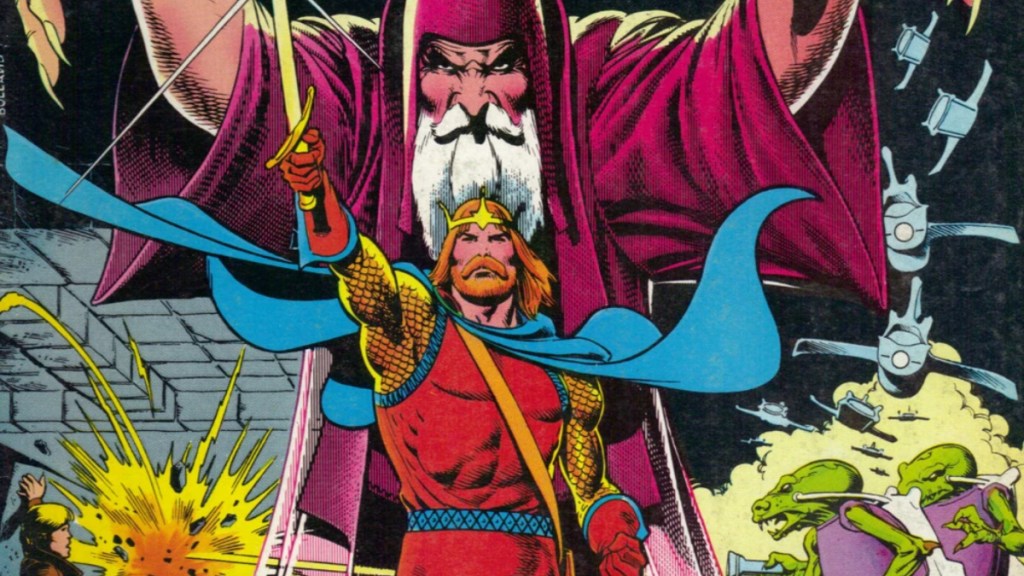
Camelot 3000, as far as it goes, is yet another version of the Arthurian myth. King Arthur was the legendary King of the Britons and after being killed by his son Mordred, it was prophesied that he would return one day to save the world and bring about a kingdom of eternal plenty. We all know the story, and many of us read novels like The Once and Future King in English class. Camelot 3000 takes that legend into the far-off future of the year 3000, with an alien invasion ravaging the Earth, secretly under the command of Arthur’s sister Morgana le Fey.
If none of this seems like Moore’s mindblowing Swamp Thing or Watchmen, and sounds more like a regular comic plot, you’re right. This is, if you go by the plot, a pretty standard sci-fi story. It takes a familiar trope we all understand, and puts it in a new place and goes to town with the idea. It’s swords and sorcery and lasers. However, Barr and Bolland were able to do magic with the setting and the characters, taking them further than they would have gone if this was a traditional American comic.
More mature storytelling had been bubbling through the American comic industry from 1980 to 1982, with comics like Uncanny X-Men and New Teen Titans taking the medium in some new directions. Barr took that and went even further with it. He treated the story as if his audience wasn’t kids or even teenagers, but adults who wanted good stories with well-written characters. This is a fantasy story, yes, but it’s also an adult fantasy story, with queer themes in the early ’80s, which makes all the difference. Medieval stories are not all fairy tales, and Barr doesn’t hide that.
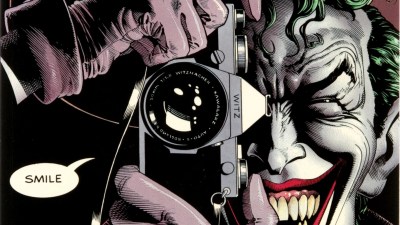
Bolland’s pencils help this along. Known as the artist of the legendary Batman story The Killing Joke, he had cut his teeth with work on the adult-oriented 2000A.D., so he was fine with drawing more realistic battles and other risque elements of the script that weren’t as prevalent in Big Two mainstream comics. His art always gives any project a certain gloss and realism that helps its perception, and you can see why he took so long to draw this book; the intricately detailed pages are a dream, presaging what we’d get out of Watchmen in 1986.
Camelot 3000 Is Unfairly Left Out of the GOAT Conversation
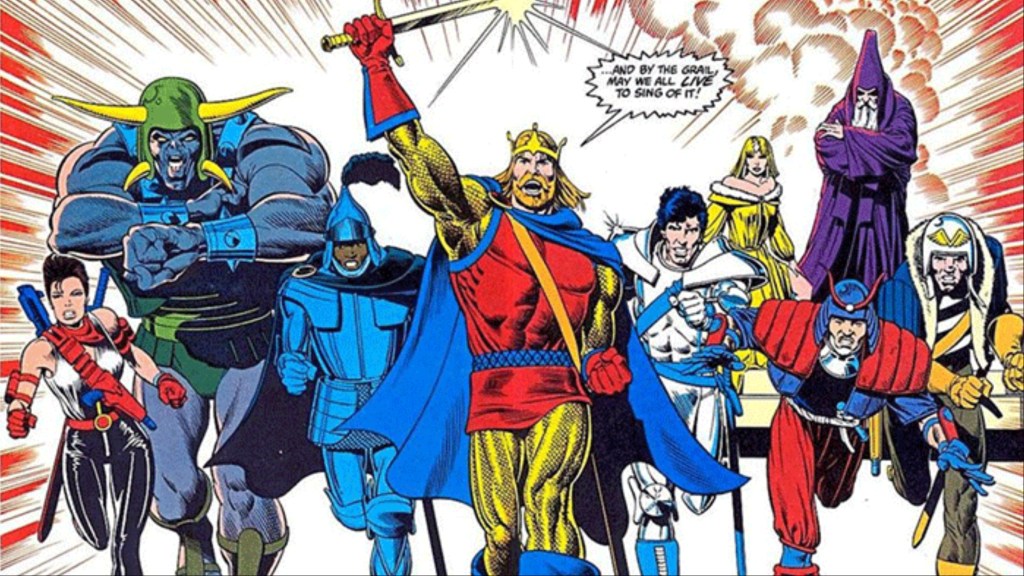
Camelot 3000 is one of those books that if you’ve been reading comics for a while, you probably know about it, but there’s a good chance you’ve never read it. DC hasn’t kept it continually in print like they have books like Watchmen or The Dark Knight Returns, so it’s a bit harder to find. However, it’s a book that definitely played a much bigger role in the evolution of comics than anyone gives it credit for.
It wasn’t the kind of groundbreaking thing that got the most attention. It was just an adult fantasy tale based on a myth. It was the kind of comic that you’d get in England in something like 2000A.D. or the short-lived Warrior or Heavy Metal. It was a major step forward for American mainstream comics and showed how well the 12-issue format worked for these kinds of stories. It’s a proto-Watchmen, a legendary book that has often ignored, when it deserved to be praised.
What do you think about Camelot 3000? Leave a comment in the comment section below and join the conversation on the ComicBook Forums!
More Comics
-

Image Courtesy of Marvel Comics -
Image Courtesy of Image Comics -
Image Courtesy of Marvel Comics -

Image Courtesy of Marvel Comics -
Image Courtesy of Marvel Comics -

Image Courtesy of Marvel Comics -

Image Courtesy of DC Comics -

Image Courtesy of Marvel Comics
