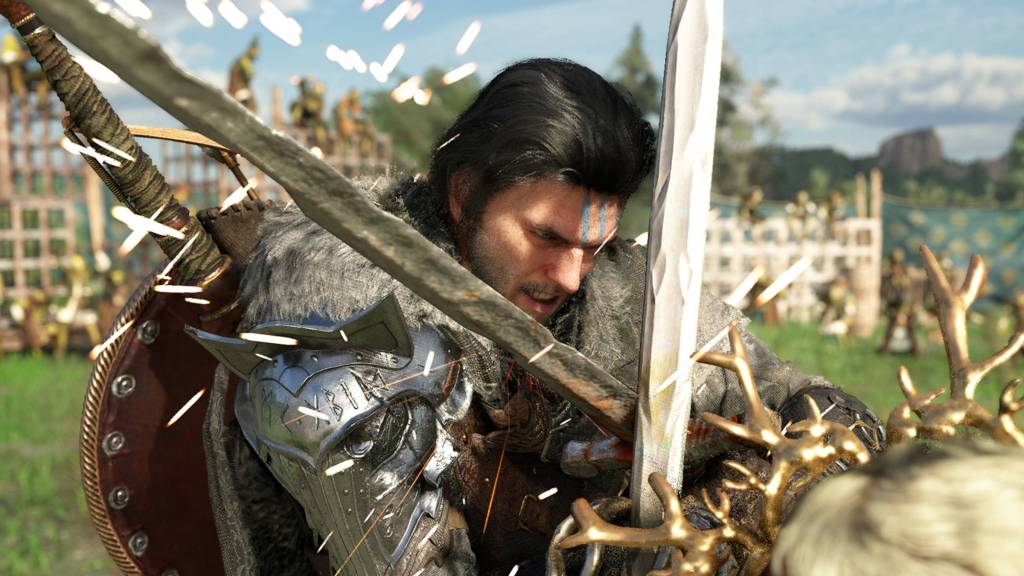
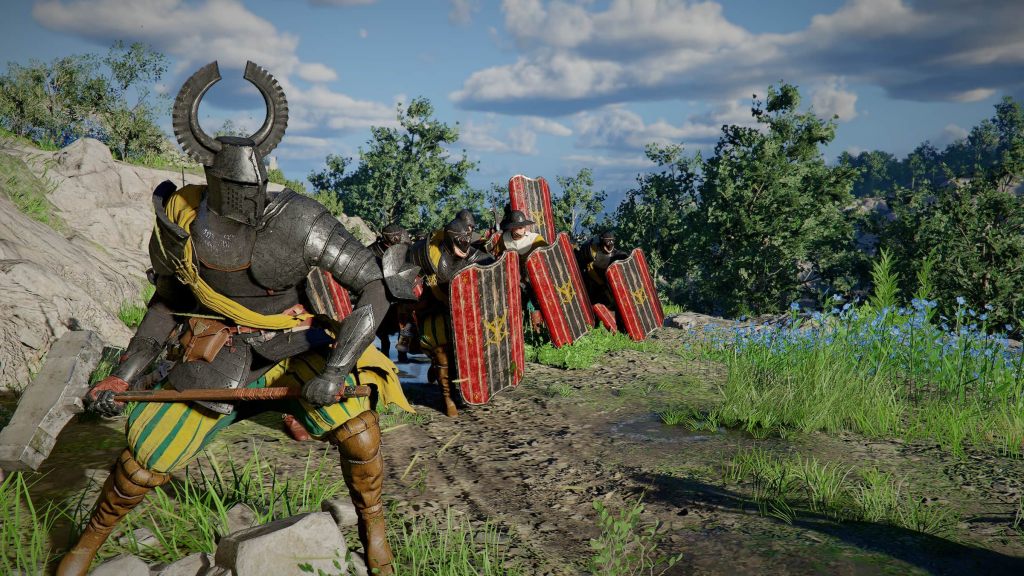
Launching in March, Crimson Desert has already proven to be a solid hit for Pearl Abyss. Originally set to be a prequel to 2015’s Black Desert Online, the fantasy adventure puts players into the role of Kliff, who sets out to reunite with his allies among the Greymanes. The open-ended action-adventure game is a truly vast enterprise, with hundreds of hours of content baked into the adventure. Despite a lengthy development cycle, the game has continuously received updates and patches to expand and enhance the experience.
Videos by ComicBook.com
The team at Pearl Abyss has no intention of slowing down, either. During an interview with ComicBook during Summer Game Fest 2026, Pearl Abyss’ director of marketing and public relations, Will Powers, sat down to discuss the success of Crimson Desert, the importance of player influence on the development team, and what the roadmap for the game’s future looks like.
CB: It’s a crowded field out there right now in online gaming — what does the roadmap for Crimson Desert look like going forward, and how does it differ from how other studios are approaching the concept?
Will Powers: I don’t think there’s any wrong answer to monetization. If it works for you and your company, as long as you’re respectful to your customer, it’s fine. I think the core approach from a company that operates in a service model — we’re all creating art that is being purchased. We’re at the service of our customers, the gamers who are consuming the content. Your model has to be reflective and respectful of their time, their money, and ideally both. If we’re asking $70 from you, we are going to be giving you hundreds of hours of content. We’re continuing to make that investment appreciate over time by adding more content. We haven’t discounted the game once. Not because we can’t. If we wanted to, we could get more players into it.
But we don’t want to spurn the fans that were there on day one by making them regret purchasing it then, when they could have saved money by waiting. Instead, we’re adding investment. It would be egotistical not to look around and see other models and reflect and learn from them. I think it’s important to take a bespoke approach with every individual title. What makes sense for this game? We don’t have a live-service model with microtransactions.
I’m not saying those are bad; I’m saying that we have a model that is independent of that need. We have this massive world that gets better with time. The onboarding has a learning curve, not because of the game but because of player expectations. That onboarding is how long it takes to get people to play this game and how long they play it. What does the day look like? How many hours can we make each quest? It has to do with the individual mindset of the player. How do you get them to stop playing this like a Souls-like or The Witcher or Skyrim?
How do you get them to play this like its own game? That timer varies from player to player. How do you reward them for playing? How do you retain them? How do you give them more because they’ve spent their hard-earned time and money on this product? It goes back to the monetization model. There are too many good games trying to appeal to everyone. How do you expand without neglecting your core? I think it’s very important to be respectful to the core and grow from that core decency. If you maintain a happy core, if you make an amazing product, if you serve them well, they’ll serve you well in return. This is a unique situation where you have hundreds of hours of content in a single game that can sustain itself for a long time.
This required seven and a half years of development time and hundreds of developers. Most companies wouldn’t greenlight a new IP like this. We’re not ignorant of that. We have announced we’re officially making DLC. Words are important, so I’m incredibly careful about the choice of words I use. All the content we’ve released up to this point, we’ve called updates or patches. They’ve been substantial. What we’re developing and calling DLC, whether it’s scale or scope or size, there’s a substantive difference between what we’ve released previously and what we’re calling DLC. You’ll all learn more about that later, but we’re using different terms to denote different things. DLC versus patches and updates — those are different things.
The rest of our discussion with Will Powers continues below, including the importance of taking criticism alongside accolades, what makes Crimson Desert unique in the gaming landscape, and the importance of the player community on the future of the title.
Looking at the success of Crimson Desert with players and critics alike, what has been the reaction internally from the team?
You’re really asking two questions there. What does it mean to get the feedback, and then what does it mean for you? I want to start a bit more general. This is a sophomore project for the studio. If you think that from an entertainment perspective, say you’re a band and had a hit album. Black Desert Online has 55 million registered users. It’s made over $1.7 billion. That’s a pretty good freshman venture. This is our sophomore album. How do you follow up your first one?. It’s a different modernization model. Instead of $10 and microtransactions, we’re doing premium.
We’re trying to match that scale. We’re trying to earn another $1.7 billion. If it has a $70 price tag, then we need to sell 30 million copies to equate the same level of success. That’s the landscape. We were like, okay, even on our best day, we probably won’t be as successful. Okay, challenge accepted. So instead of comparing ourselves to what you were, let’s invest in what this one is. I think once we pivoted there, it became okay. It became about creating Crimson Desert‘s own identity.
Once it stopped living in the shadow of Black Desert and became its own thing, that’s where we saw some resonance. The DNA of the game and the company is the community. If there’s no community, there’s no Black Desert. If there’s no Black Desert, there’s no Crimson Desert. Players in the community are incredibly important to not only the culture of the company but also the sustained success of the company, so being able to have the critical momentum and community feedback is at the forefront of what we do.
What have been the lessons from the rollout that the team is using to inform the rest of the roadmap?
I think it’s interesting… art is inherently subjective. If you’re writing, when are you done writing? When is it perfect? It’s inherently subjective. You need an editor to be able to tell you. Similarly, if you’re creating a game, when is it done? When there’s no demand for it. If there’s a community that’s continuing to be involved in the game, even if we’re not selling them new content, the game is growing. It’s every update, every patch that we’ve done since launch, with almost nearly weekly updates being free added content for players to continue to build and have a bigger experience within the world we’re creating for them. What I think is fascinating is that, going back to the subjectivity of art and the interpretation of art, I’m actually validating criticism, too. If a review says something, it’s not wrong. That is the lived experience with the game.
I think that that’s actually been inspirational to the development team. How can they lean into those criticisms and improve upon the product while acknowledging them? I’ve been in the industry for 20 years, and this is the first time I’ve seen a single-player game say that they’re doing story improvements post-launch. Not just DLC, not new content. We are improving the core story of the game. I want to be clear: we’re not changing the story.
Everything that we’ve done post-launch hasn’t been replacing or changing the experience. We want to reward the players who have been there since day one, but we want to create additional experience, additional content, and additional value for those continuing to live in this world. We can add more content, we can add better background on secondary and tertiary characters, or we can just add it without changing or taking anything away.
That’s been the approach, and I think that will continue through our approach to how our post-launch roadmap can be additive rather than divisive. The focus is on being additive rather than changing. Even in the control scheme, that was a big divisive thing because of the UI and because of the facade of the game in general. People expected it to play like other games, and it didn’t. So we have added the option of those control schemes. We haven’t changed the original format. We left that in but added the other option. Players can choose.
What can fans expect from the future of Crimson Desert?
If there’s a demand for something, there’s a world where we’re continuing to make content. There’s a type of marketing where the community does the marketing for you. Maintaining a high player count on Steam is worth marketing. It’s an approach that rewards the personal community by giving them more content so they stay in the experience longer and feel good about spending $70 on the game. I’d rather not buy ads, personally. It has to come from the perception and the DNA of the company.
The success of a live service game is rooted in that — if you’re a live service game, what are your daily players? It’s natural for them to focus on that. We are motivated to maintain a daily active user count, despite there being no monetary benefit to us. We’re not paying for servers, so there’s no detraction. It’s just about getting people to spend time in this world, enjoying the content, and rewarding them by continuing to interact with them.
It’s very disruptive towards the typical AAA single-player model, because there’s no direct throughline to profits. We’re a publicly traded company, and we have already made $110 million in profit. Not revenue, profit. That’s with seven and a half years of development time. And yet, there’s still more content. As a gamer, that’s refreshing. It’s not about how much we can squeeze out of this game; it’s about how much we can give. It goes back to that community-rooted mindset.
What has surprised you the most about how Crimson Desert has evolved and how the rollout has played out?
The humility of the creative people on the team. I think that if you are the core creative behind a project, and the project sells very well, and it makes a lot of money, there’s a natural inclination to get a bit of an ego. ‘I know what I’m doing; I have the right answer to it.’ Through all this success, the development team and the core creative leads at the company have maintained such humility about where ideas can come from. As an American, for lack of a better term, that’s very foreign to me. It’s also really refreshing.
I think that humility isn’t something we commonly associate with success. I think humility and success aren’t antitheses of each other. I think they’re just indirect correlations sometimes. Sometimes, humility begets success. We’re seeing that in our approach. How pre-launch, they listened to and worked with the community. Humility is what makes us stand out in the AAA landscape, and it’s what continues to make the game stand out.
Crimson Desert is now available for macOS, PlayStation 5, Windows, and Xbox Series X/S
More Gaming
-

Courtesy of Ubisoft