Many video game genres occupy a large share of the market, and MMORPGs are among the most significant. When most people hear the term, they likely picture something like World of Warcraft or another popular title, but WoW didn’t launch the concept. In fact, MMORPGs have been around for a long time, and while the genre has changed over the years, it’s one of the oldest types of video games around, owing its roots to the oft-forgotten concept of Multi-user dungeons, or MUDs. These were the early precursors to modern graphical MMORPGs, and they hold an important place in history.
Videos by ComicBook.com
Even MUDs owe their existence to earlier text-based games like Colossal Cave Adventure, Zork, and others. These text-based role-playing and adventure games showed that interactive play in the manner of Dungeons & Dragons and similar titles was possible on computers, even if players had to use their imaginations to picture them. Eventually, the concept evolved into MUDs, which started as text-based games similar to those that inspired them, but added a little something extra: online play. In fact, online gaming began with MUDs long before the dial-up days of games like Doom arriving in the 1990s.
Modern Gaming Owes Its Roots to MUDs
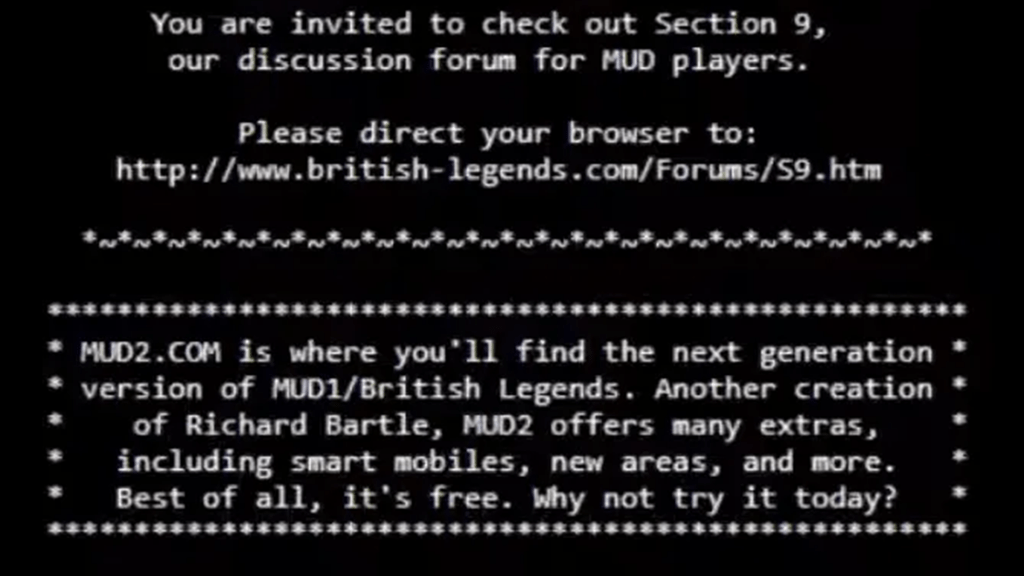
Even if you’ve never heard of a MUD before, if you play online games, you owe them a debt of gratitude. Back in 1978, as programmers were experimenting with the possibilities of several burgeoning programming languages, Roy Trubshaw, a student at the University of Essex, created a game he called Multi-User Dungeon, giving birth to the first MUD. He handed it over to fellow student Richard Bartle, and it continued to evolve. MUD became Essex MUD and MUD1, and it ran on the University’s network. While the Internet as we know it didn’t exist, there was a network for universities in Great Britain called JANET.
When MUD became available on JANET, players could connect to it on weekdays between 2:00 am and 8:00 am, when the systems weren’t otherwise in use. This made MUD the first online multiplayer RPG, cementing its place in video game history as the precursor to modern MMORPGs. The popularity of MUD bred new takes on the format, leading to the development of MUDs like AberMud, which was hosted at the University of Aberystwyth. Development continued throughout the 1980s, expanding the usability of MUDs worldwide until commercial networks increased accessibility.
As is often the case in any video game genre, what exists today looks nothing like what preceded it, and this is certainly true of the differences between MUDs and MMORPGs. The latter is a graphics-intensive user experience that utilizes exponentially more processing power than something like MUD. Still, one would not exist without the other, and as the 1990s brought about the commercialization of the World Wide Web, establishing the Internet as we know it, new MUDs incorporated graphics for online experiences, thrusting players into new worlds from across the Internet. It was from these humble beginnings that we ultimately got WoW and many other MMORPGs.
MUDs May Have Evolved, but They Haven’t Gone Anywhere
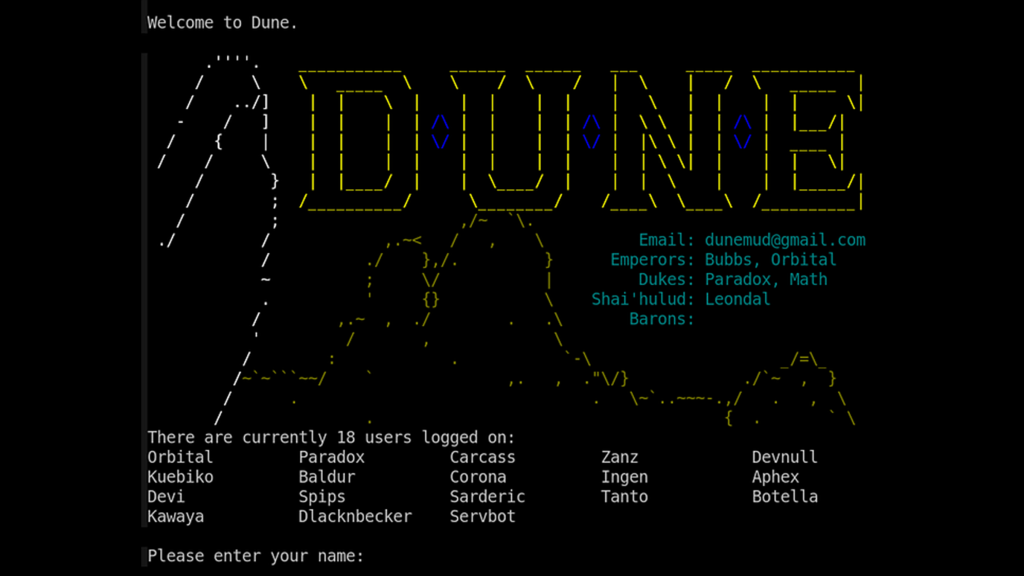
Ultimately, MUDs fell out of favor in the marketplace, as graphical alternatives replaced them. Despite this, several MUDs still exist that are both text-based and available (as of writing). Aardwolf launched in 1996, and it’s still around, as are Alter Aeon, Discworld MUD, Legends of the Jedi, BatMUD, Wheel of Time MUD, Dune MUD, and many others. In addition to older games that are still running, new games are being developed, including several launched in the 2010s. These games continue to utilize text input, and while they’re not as popular as the online multiplayer games that followed, they remain enjoyable to a niche of the gaming community.
Did you play any MUDs in the old days, or do you still? Leave a comment below and join the conversation now in the ComicBook Forum!
Most Viewed
-

Image Courtesy of Netflix -

Image courtesy of Marvel Studios -

Courtesy of SuperGiant Games -

Courtesy of Crunchyroll -

Courtesy of Eight-Bit