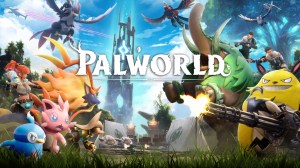
2025 was perhaps one of the biggest years for indie games, with Palworld continuing its popularity alongside hit releases like Hades 2, Hollow Knight: Silksong, and the Game of the Year winner Clair Obscur: Expedition 33. However, with new attention on AA or smaller titles, there’s one aspect to the development of these kind of games that is usually ignored by player audiences. Due to the comments of those connected to Palworld‘s creation, it’s easier to see why hit indie games are far more of a rarity than you would expect.
Videos by ComicBook.com
Pocketpair Publishing is the publishing group of Pocketpair, the main developers of Palworld. For several months, both arms of Pocketpair have been dealing with ongoing legal disputes with Nintendo, mainly regarding copyright and patents related to Palworld and Pokémon games. This dispute would be much harder for Pocketpair to deal with if not for Palworld‘s incredible success, which has not only led to more attention, but also helped shed light onto how indie games like it come to be in the first place.
Palworld Developers Have Made Revealing Comments Regarding Indie Game Publishing

In a recent article from GamesRadar, Pocketpair Publishing made comments regarding indie games in general, and how many studios struggle to get funding for them. Publishing head John Buckley stated that after Palworld took off, many indie groups reached out to Pocketpair desperately asking for support regarding their projects. This extended to beyond just asking for simple funding, but offers a more in-depth look in how publishing and development costs oftentimes clash in gaming spaces.
According to Buckley, he was shocked at the state of how many publishing companies demand lopsided revenue splits with development teams, oftentimes draining them of all their funds just to keep their projects going. Buckley states that “You’re meeting with these four or five-man teams who are looking for what is relatively not a lot of money. And they are very used to just giving up all of their revenue [to publishing groups] for one year. We just couldn’t believe it.”
With other statements like “what surprised us the most was the conditions that are normalized,” Buckley’s comments highlight the dire situations indie companies often have to be in just to continue their passion. Developers often struggle to survive a single sale, with recoup sometimes taking away from good launches that took years and years of hard work. In some cases, high costs to publishing groups through big revenue share agreements even sacrifices some creative control on indie games, reducing their overall vision developers tried to create.
Any Big Game Released Has To Pay Up Publishers Despite Any Success

Publishing agreements are unique depending on development groups and outside companies willing to fund their projects. For indie devs though, these deals can be a huge obstacle, sometimes derailing games that are wildly successful when released. This isn’t without some reason, though, as publishing groups often put in a lot of effort to market and spread good word of mouth surrounding their partnered titles. That being said, there are many cases of publishing being far more involved in a game’s creation than players expect.
Some companies will lock the revenue split behind a game through their recoup costs, taking a large sum of what a title makes in an attempt to recover how much it took to make it. This prevents some developers from fully reaping the rewards of their work at times, especially if the revenue split is in a publisher’s favor. This all too often becomes a case seen mostly in indie titles, as they are the ones who need publisher help far more than anything AAA.
Game Costs Have Increased Partially Due To The Demand For Larger Publishing
Part of the reason why Pocketpair Publishing’s comments are so revealing is how saturated the gaming industry feels, with increases in gaming prices getting higher. The “standard” costs of AAA now have jumped to around $70 in some cases, with premium editions and deluxe packages sometimes bolstering that price further to be over $100. While development certainly costs more too, larger publishing efforts to make a game stand out could also be behind this trend.
Larger companies have a much easier time overcoming the costs of this shift, but indie games are the ones who will struggle. Rising publishing costs and the continuation of bad revenue deals have shown to really impact some projects, as Pocketpair Publishing was made aware of. John Buckley’s group was overwhelmed with requests from indie devs almost begging to help with their pitches, showing just how much people are looking for deals that won’t exploit them.
The only reason Pocketpair Publishing exists is as a way to give back to other indie game developers, considering how unexpected Palworld‘s success ended up being. However, with the sheer volume of struggling indie games trying to get funded, the emphasis on publishing costs rising to almost ridiculous levels bodes poorly for smaller projects wanting to reach the same success as 2025’s biggest hits.
What do you think of the current state of indie games going into 2026? Leave a comment below or join the conversation in the ComicBook Forum!
Most Viewed
-
Image Courtesy of Netflix -

Courtesy of ENGI / Kadokawa / Sentai Filmworks