A former Bethesda developer has given his thoughts on why he believes Starfield didn’t resonate with players, and although it sounds odd initially, he’s totally right. Bethesda is one of the best developers when it comes to western RPGs. They have been able to immerse players in vast fantasy worlds and post-apocalyptic nightmares that still manage to have a degree of charm to them. For years, Bethesda alternated between these franchises, but decided to try something completely new after Fallout 4. Bethesda creative director Todd Howard had always wanted to make a space game and with new technology, his ambitions felt achievable.
Videos by ComicBook.com
Alas, Starfield was born. A game where you could travel to hundreds of planets, partake in space battles, and encounter all kinds of different threats and species across the galaxy. It was the kind of game sci-fi nerds have always dreamed of. With the financial backing of Microsoft, Starfield was poised to be the big-budget sci-fi space game that would massively innovate in the world of RPGs… however, that didn’t really happen.
Although the game received good reviews, the overall feeling toward Starfield from players was more mixed and players didn’t hang around as long as they have with Fallout 4 or Skyrim. One of the most anticipated games of the last decade sort of came and went with minimal staying power. So, why is that?
Starfield Developer Explains Why The Game Didn’t Click With Players
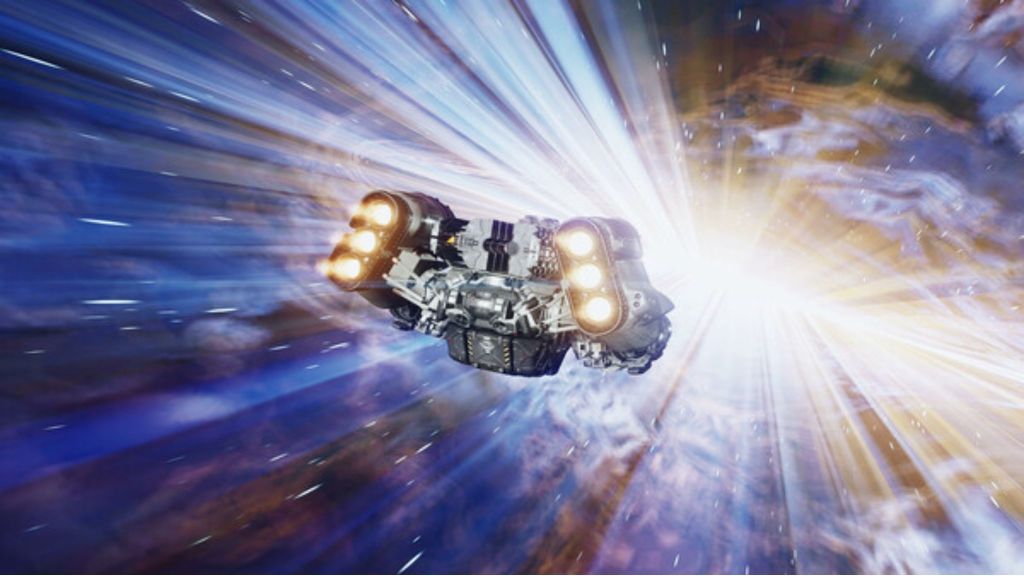
Starfield systems designer Bruce Nesmith spoke to FRVR and talked about why he thinks the game didn’t have the impact people expected it to. In part, he believes that while Starfield is good, it didn’t measure up to the caliber expected from the studio that brought us the last several Fallout games and Skyrim. It didn’t meet the standards that Bethesda had established with its fans, resulting in a lukewarm feeling. He even suggested that if another studio made it, the reception may have been completely different.
Nesmith went on to note that the game’s procedural generation really hurt it as well and described space as “inherently boring”, which is true on paper. Although games like No Man’s Sky successfully found a way to use procedural generation, it still needs a careful vision guiding it all.
“I’m an enormous space fan, I’m an amateur astronomer, I’m up on all that stuff, a lot of the work I did on Starfield was on the astronomical data,” he said, “but space is inherently boring. It’s literally described as nothingness. So moving throughout that isn’t where the excitement is, in my opinion.
“But when the planets start to feel very samey and you don’t start to feel the excitement on the planets, that’s to me where it falls apart. I was also disappointed when, pretty much, the only serious enemy you fought were people… there’s lots of cool alien creatures, but they’re like the wolves in Skyrim. They’re just there, they don’t contribute, you don’t have the variety of serious opponents that are story generators.”
Why This Starfield Developer Is Right

A lot of people have isolated this quote into Nesmith just saying he thought space is a boring setting for a game. Obviously, that’s not true. Nesmith even notes his own love for space. Star Wars, Halo, Mass Effect, Star Trek, and so many other incredible franchises have made tremendous use of space as a setting. However, you have to make it interesting. The planets have to jump out at you, the species have to feel unique and out of this world (literally), and it has to be transportive. It can’t just feel generic or like a slightly advanced version of what we know on Earth.
Bethesda is known for incredible hand-crafted worlds that are massively immersive. Fallout succeeds not because it is a post-apocalyptic universe, but because it’s a unique take on one. The retro future aesthetic, the use of bottle caps as a currency, the distinct factions and politics, and the expansive lore all separate Fallout from anything else in the post-apocalypse genre. Same with The Elder Scrolls, it’s not like Game of Thrones or The Lord of the Rings, it is carefully curated into something that reads as its own universe.
What makes Nesmith right is that space is inherently boring if you aren’t making it your own or really building upon it. Bethesda leaned on procedural generation for the bulk of its galaxy. While the core planets were designed by hand, they were largely unmemorable and lacking compared to other sci-fi media. This was emphasized further when all of the other planets in the game were basically randomly generated.
The terrain and biomes were uninteresting and the enemies you fought didn’t feel particularly different from anyone you’d encounter in something like Fallout. The aliens were either sort of generic monsters or human-esque, resulting in a lack of imagination and wonder.
It’s expected that Starfield will get a new expansion next year, so maybe some of these aspects will be fixed. If not, maybe a potential sequel can expand on the ideas and make this world a bit more engaging. Ultimately, Starfield just needs a more compelling and unique sci-fi world, because the one we have now just isn’t as awe-inspiring as one might hope.
Most Viewed
-

©Toshiaki Iwashiro,Shueisha/PSYREN Secret Society -

image courtesy of Warner Bros. -

Ian McKellan as Gandalf in The Lord of the Rings.