Starfield was always going to be a strange moment for Bethesda Game Studios. It arrived carrying years of expectation, technical ambition, and the weight of being the studio’s first new universe in decades. At launch, everyone was eager to explore its scale and to-good-to-be-true promise of freedom, even knowing Bethesda games tend to ship a little rough around the edges.
Videos by ComicBook.com
What has become increasingly clear, though, since release, is that many of Starfield’s rough edges are being sanded down by the community faster than by Bethesda itself. Mods are enhancing the experience in ways that Bethesda itself would never have considered doing. They are actively fixing problems and improving the quality of life at a pace official updates have struggled to match. For a growing number of players, Starfield does not feel complete without them.
Starfield’s Modders Have Become the Game’s Unofficial Support Team
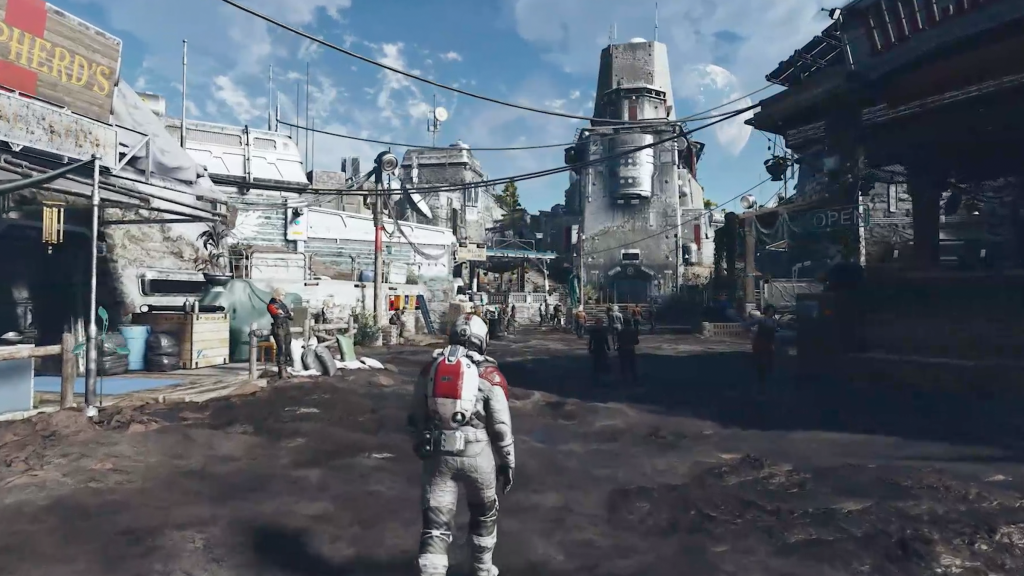
Almost immediately after launch, Starfield’s modding community began addressing issues players were running into. Performance tweaks, UI fixes, inventory improvements, and navigation adjustments appeared within weeks. Some mods tackled annoyances Bethesda had not acknowledged yet, while others offered workarounds long before official patches arrived. The speed of these fixes stood out, especially for players used to waiting months for meaningful improvements.
This has created an unusual dynamic where modders feel like the first line of support, which is really different compared to Bethesda’s other games. When players encounter a frustrating system or technical hiccup, the instinct is no longer to wait for Bethesda. It is to check mod pages or a potential solution. In many cases, there is already a solution available, often customizable and easy to install without much effort. That responsiveness has reshaped expectations around what support looks like in a Bethesda game.
The visibility of this work matters. Starfield’s issues are not hidden, and neither are the fixes. Mods that smooth out ship building, improve menus, or address persistent bugs quickly rise in popularity, and word of mouth gets to those who have never even used a mod before, but desire a fix or improvement. As those mods spread through word of mouth, they become part of the standard experience: the de facto way to play. For many players, the game they are actually playing is already a community-refined version of Starfield.
Why Starfield’s Mod Reliance Feels Different Than Skyrim or Fallout

Bethesda games have always relied on mods for all sorts of stuff, and have done so for decades at this point, but Starfield feels different in how quickly that reliance set in. Skyrim and Fallout 4 developed legendary mod scenes over time. Their early days were rough, but the idea of mods as essential fixes emerged gradually. With Starfield, that shift happened almost immediately. Players were installing mods not just for fun, but to make the game feel smoother and more intuitive.

Part of that comes down to Starfield’s systems. The game is dense and often unintuitive in small ways that add up. Menu navigation, inventory flow, and quality-of-life friction show up early and often as you pick up more loot and progress through the game. Modders have stepped in to streamline these areas, sometimes in ways that feel obvious in hindsight. That contrast makes official updates feel slower, even when Bethesda is actively patching and working on the game.
There is also a perception gap at play. Skyrim and Fallout 4 launched in eras where frequent updates were less expected. Starfield exists in a modern live-service-adjacent environment where players are used to rapid iteration, even for non-live-service games. When modders deliver fixes within days or weeks, it highlights how long the official pipelines take, and people take notice. That comparison makes Bethesda feel behind, even if the reality is more complicated.
What This Says About Bethesda’s Future Support

None of this means Bethesda is abandoning Starfield. Quite the contrary, actually. There have been many fairly recent rumors of a major overhaul coming to the game, courtesy of Bethesda. Patches have arrived, and more are clearly coming. The issue is that community fixes have set a tempo Bethesda struggles to match overall. When players know a mod can solve a problem immediately, patience for waiting on official updates shrinks and becomes unnecessary. That changes how every delay is perceived.
There is also the question of responsibility. Mods are optional, but they are increasingly treated as a necessity to enjoy the experience. That creates a strange situation where players expect the community to handle basic improvements. While Bethesda has historically embraced modding, relying on it this heavily risks shifting expectations in uncomfortable ways. Not every player wants to mod their game just to make it feel polished, something it should have been right at release.
Starfield’s mod scene is impressive and deeply invested in the game’s success. But its speed and visibility also expose the limits of Bethesda’s update cadence. Right now, the community is carrying a lot of the load, whether intentionally or not. As Starfield continues to evolve, the biggest question is not whether mods will improve it. That part feels obvious. The real question is whether Bethesda can keep up with the version of Starfield players are already crafting for themselves.
What do you think? Leave a comment below and join the conversation now in the ComicBook Forum!
Most Viewed
-

Image Courtesy of Marvel Comics -

Sony Pictures -

Image Courtesy of HIDIVE -

Image courtesy of Bandai Namco