It is no small secret that the gaming industry is in fairly dire straits right now. Extremely talented staff are being laid off, entire studios are being shut down, and all the while, budgets for AAA blockbuster releases are hitting the realm of $300 million, and game development is taking far longer than ever before. It feels as if the gaming industry will collapse in on itself should it continue at the rate it is going, as none of this is even remotely sustainable.
Videos by ComicBook.com
Fortunately, it isn’t all doom and gloom. A handful of studios are producing games in a manner that feels realistic, and others have been implementing solutions that could save them and their IP from extinction. Crucially, CD Projekt Red, the developer of Cyberpunk 2077 and The Witcher 3, some of the greatest open-world games ever made, has a pretty great solution that, while not a fix for every problem, certainly addresses some more immediate issues that need resolving. Should the industry follow in CD Projekt Red’s example and begin sharing out its IP to other studios, then it may just have a chance of avoiding utter collapse.
CD Projekt Red Sharing Its IP Is A Logical Fix
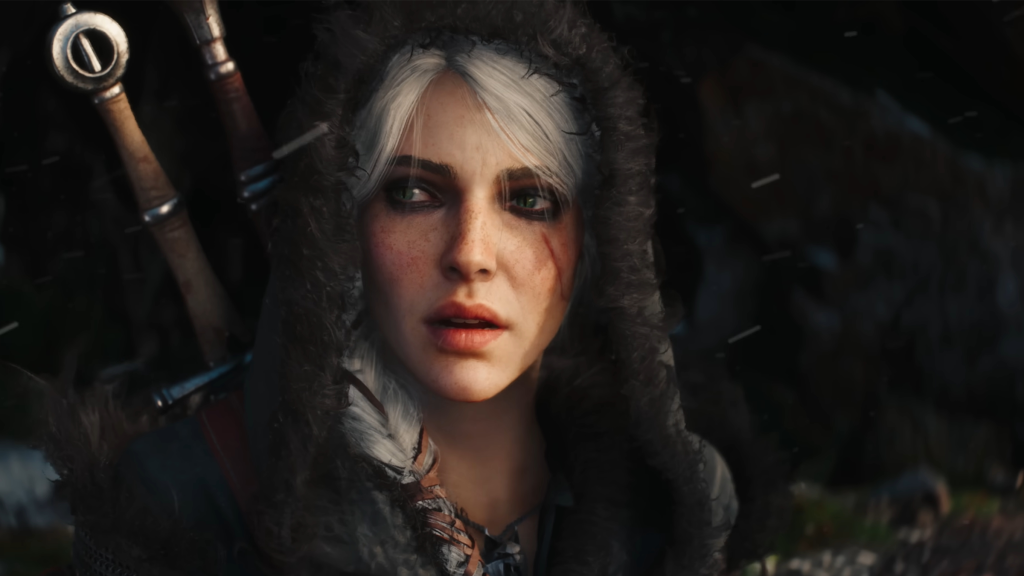
It feels as if there’s a stigma around sharing IP between developers. Of course, I understand that on a surface level, there’s little financial incentive to do so, especially if the original developer has the capacity to continue working on that IP. However, when a studio like CD Projekt Red commits to a six-year release schedule for the next Witcher trilogy while also sitting on its back catalogue of titles that could be remastered or remade, as well as the immensely popular Cyberpunk 2077 IP, surely it makes sense to diversify its assets a little, if only temporarily.
Well, that is exactly what it is doing, at least with The Witcher. Rather than take on the daunting task of remaking the original Witcher game while also trying to deliver a new trilogy that must meet the exceptionally high bar the third game set, it has handed it off to Fool’s Theory, a studio comprised mostly of former CD Projekt Red staff. This is an advantageous deal for both studios, as it allows CD Projekt Red to continue releasing games within The Witcher universe, thus keeping the IP active and users engaged, while also boosting Fool’s Theory’s recognition and generating revenue for it that it may otherwise not have been able to achieve, considering its small size.

This same studio is also, allegedly, developing DLC for The Witcher 3, which, again, is something CD Projekt Red may need to help bridge the gap between it and its sequel, but won’t have the time to produce. Of course, technically, this is unnecessary, as one could argue that CD Projekt Red could have simply gotten around to creating either of these projects, or indeed something set within the Cyberpunk 2077 series, eventually. However, studios, even of its size, can only do so much at any given time, and fans are endlessly eager and impatient to see more games released in their favorite franchises.
That was less of a problem when game development only took a few years at most. However, in today’s industry, when budgets are ballooning and development timelines are expanding, it is increasingly not an option. Project Orion, Cyberpunk’s sequel, only just began pre-production in 2025, meaning it’s a few years away, at least. It could end up being about a decade between titles, a concept that is no stranger to developers like Bethesda or Rockstar. It is simply not feasible anymore to invest so much time and money into a series with entries spread a decade or more apart. Which is why IPs need to become a little more fluid, and studios need to begin relinquishing them, to an extent.
Studios Need To Stop Hoarding IP

To be clear, I’m not advocating for Rockstar to allow a different studio to develop the next mainline GTA game. Rather, I wish for a return to the early 2000s, in which spin-offs and side projects set within popular universes were far more abundant. They were prevalent because developers either commissioned other studios to assist them or had the capacity to create them as a result of the much shorter turnarounds for games in general. Look at Fallout: New Vegas, the GTA Stories games, Persona, or Tales from the Borderlands to name just a few. All of these either helped continue a legacy or expand upon it, and often superseded the original series they spun off from.
Sony appears to be experimenting with this once again, especially after the release of the much-needed Sons of Sparta God of War spin-off game. It makes sense that it is, especially after Marvel’s Spider-Man 2 reportedly cost $315 million to create. Lower budget titles that utilize IP recognition to bolster sales while helping smaller studios become more established or simply earn money are a logical and ultimately profitable move that sustains the gaming industry. This was the model for quite a while, with studios built specifically to make spin-off titles. Dead Space’s creator, Visceral Games, made a career out of developing DLC and spin-off games for many of EA’s biggest franchises before it was unceremoniously shut down.
What baffles me is that companies like PlayStation and Xbox have multiple studios under their belt that they could have utilized to create such projects, but chose to shut them down instead. There seems to be a clear way out of this need for ridiculous budgets by simply entertaining fans with smaller and more frequent projects between the larger games, yet PlayStation and its ilk appear reticent to take it. Perhaps Sons of Sparta is the start of a shift in strategy, and I hope more developers look at CD Projekt Red as an example of how to handle IP that’s doing little more than collect dust. Something needs to change in the industry, and it wouldn’t hurt to look back at what used to work and attempt to replicate it.
Do you think smaller games from other studios will help save the industry? Leave a comment below and join the conversation now in the ComicBook Forum!
Most Viewed
-

Sony Pictures -

Image courtesy of The Pokemon Company -

Image Courtesy of Marvel Comics -

Image Courtesy of HIDIVE -

Image Courtesy of Netflix -

Image Courtesy of Marvel Studios