Battle royales have become one of the most popular game genres when it comes to multiplayer, though hero shooters and extraction shooters are gunning for it. Yet, even within this genre, games have shifting mechanics and offer different experiences. Or, they used to. Now, it seems like so many battle royale games are adopting the same premise and style. Fortnite, Apex Legends, Battlefield Redsec, and so many others see players dropping in, grabbing guns, and shooting at one another to be the last player standing.
Videos by ComicBook.com
But I remember a different battle royale that dared to be different. Spellbreak strayed from the status quo and offered a different experience. One that embraced fantasy and saw its players fighting with magic and powerful spells rather than firearms. And this wasn’t the only change it made to become one of the most interesting battle royales in the industry. These changes made the game incredibly successful, but despite this, developer Proletariat Inc. would shut it down three short years after launching.
A Battle Royale Built on Magic, Not Gunfire
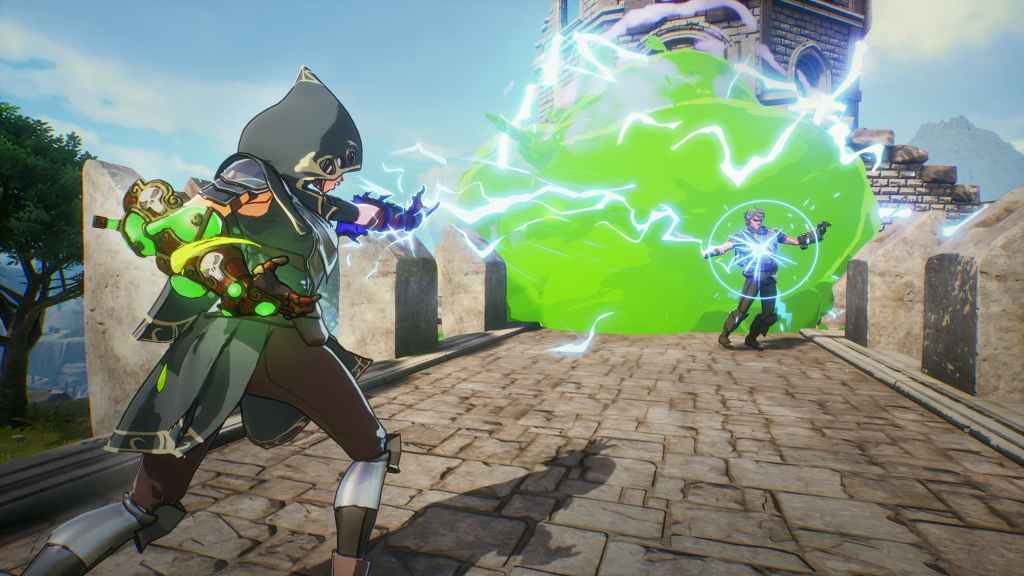
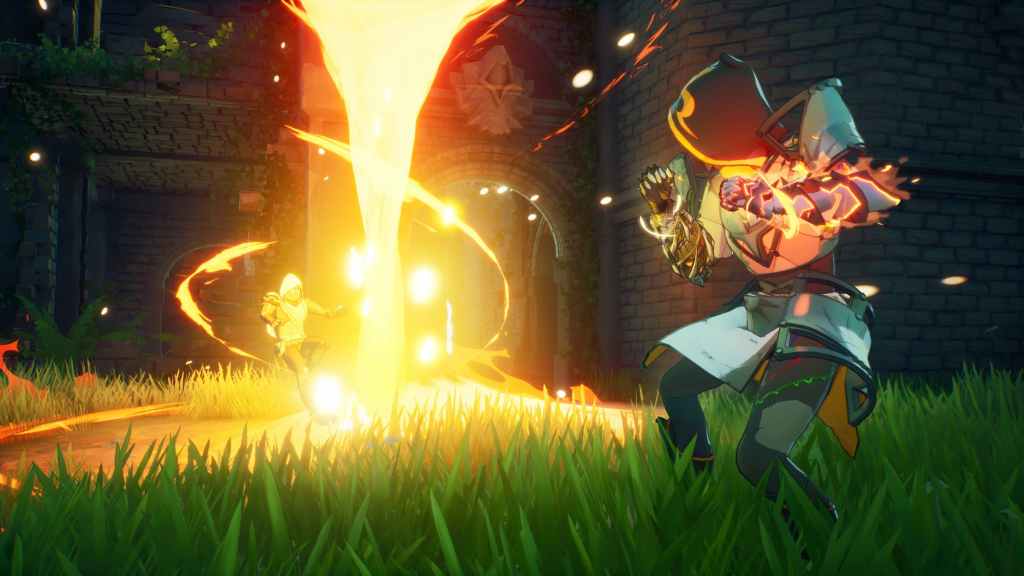
I first played Spellbreak after growing tired of Fortnite and Apex Legends, and the instant I booted it up, I knew I was playing something special. Instead of rifles and shotguns, I was slinging lightning bolts and hurling meteor-sized fireballs across floating ruins. Combat was not about landing a perfect headshot. It was about timing spell cooldowns, combining elemental gauntlets, and using movement as a weapon. The moment I realized I could throw a toxic cloud into a wind vortex to create a swirling storm of acid, I understood the game wanted me to experiment rather than simply react.
That sense of creativity defined every match. While players selected a class at the beginning of a match, they weren’t limited to that class’s elements. Every class felt distinct and could equip different magical gauntlets to get new spells. Every duel told a story, and no two fights looked alike because no two players approached magic the same way.
Fire left blazing trails that cut off escape routes. Frost spells created icy paths you could skate across at high speed. Stone fists launched shockwaves that shattered cover. I still remember the chaos of my first late-game encounter. Six players forced into a shrinking circle, spells being fired off in every direction, dodging explosions, and trying to survive. Even when I died, I never felt cheated. I felt like I had participated in a living fireworks show of elemental combat, and I’d never enjoyed a battle royale as much as that moment.
That was the magic of Spellbreak. It empowered you, gave every player the tools to create memorable moments, and encouraged experimentation. And out of all the battle royale games I have played over the years, very few have captured that sense of unrestrained creativity.
Spellbreak’s Closure Still Hurts
Despite the game’s passionate following and consistent updates, Spellbreak was shut down in January 2023. It was a difficult moment for fans, not because the writing had been unclear, but because the game still felt like it had a future. Every match I played near the end reminded me that there was a dedicated community still casting spells, still discovering new combos, still mastering the art of Spellbreak’s movement-based combat.
Proletariat Inc. was acquired by Blizzard, which led to Spellbreak’s shutdown. The development team was brought on to assist with World of Warcraft, which, in a way, I suppose was an upgrade for them. At the time, Blizzard was riding high before all the drama surrounding Diablo 4 and Overwatch 2. But still, I, and many others, couldn’t help but feel cheated that an incredible game was killed off. It wasn’t because the game failed, but because it was shelved for another game.
The closure also felt like a reminder of how difficult it is for unique ideas to survive in a market dominated by giants. Competing with Fortnite, Apex Legends, and Call of Duty Warzone is a challenge even for well-funded studios. For a title built on magic and movement rather than guns and realism, the hill was even steeper. And the prize for climbing this hill? Seeing your project swallowed by another larger game.
To this day, I can’t help but feel that the industry lost something irreplaceable. A game that dared to stand apart and refused to chase the trends without leaving its own mark on them. A game that believed players wanted experimentation as much as competition. If Spellbreak were still around today, I fully believe we would see more risks taken with battle royale games, and that loss still hurts.
Why Spellbreak’s Magic Still Stands Alone
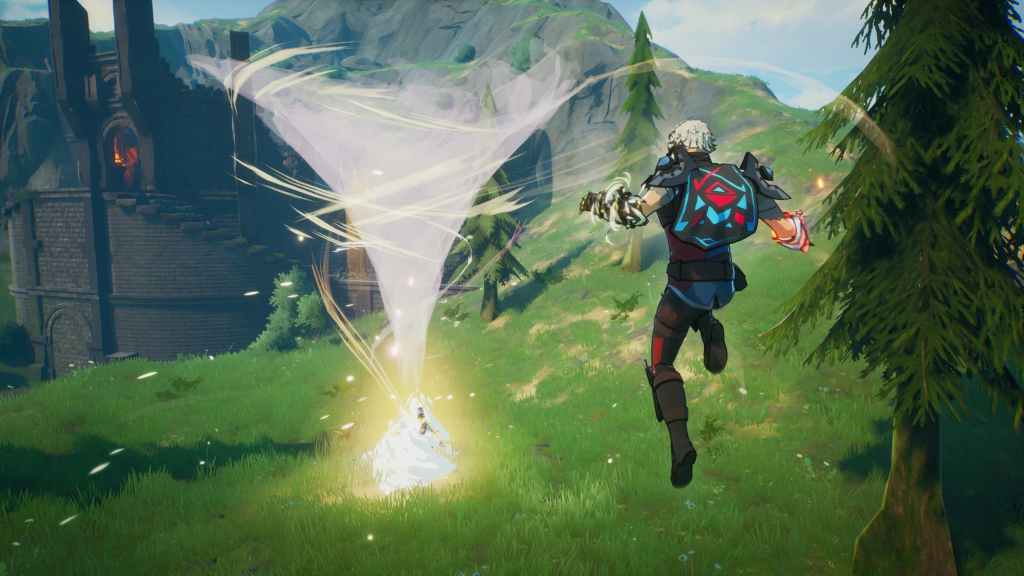
Looking back three years later, what strikes me is how few battle royale games have dared to break convention the way Spellbreak did. The genre has only grown more uniform. The biggest titles dominate because of their polish, their crossovers, their cosmetics, and their ongoing support, but they all share the same familiar loop. Drop in, gear up, shoot, survive. There are small differences, but the core idea exists across all of this.
That is why Spellbreak still feels like such an irreplaceable loss. It showed that a battle royale could be about something other than ballistics and weapon attachments. It proved you could build a competitive game around elemental combos, aerial mobility, and spell-slinging freedom without sacrificing depth. It offered a different kind of mastery, one built on creativity rather than recoil control. For someone like me who doesn’t have the best aim, having this creative freedom allowed me to succeed where I would fail in other battle royales.
Today’s battle royales could desperately use more of that spirit. Even as games like Fortnite evolve with movement updates and limited-time modes, and Apex Legends adds new legends every season, the underlying structure remains similar. The more the big three lean into escalation, the more I miss the quiet confidence of a game that used magic as its foundation rather than an accessory.
What made Spellbreak unique was not just its combat, but its design philosophy. It invited players to experiment, combine spells, and create wild metas. This expression was easily the best part, though I did love the fantasy setting and world it set up. In an era where every new battle royale seems to follow familiar patterns, its absence feels even heavier.
What do you think? Leave a comment below and join the conversation now in the ComicBook Forum!
Most Viewed
-

Image courtesy of Marvel Studios -

Image Courtesy of Netflix -
Courtesy of Kadokawa / Shosetsuka ni Naro