Warning: The following contains spoilers for Avatar Legends: The Fighting Game
Videos by ComicBook.com
Avatar Legends: The Fighting Game is in many ways a traditional 2D fighting game, with the primary focus being on delivering a tight and fast-paced brawler. For the most part, it succeeds — the fights run smoothly, and the animation recalls the source material in the best of ways. Where the game gets really experimental is in the single-player story mode. The campaign, which is divided across three “Books” in a shout-out to the original show’s formatting, could have taken a lot of different approaches.
The original story they chose, which was outlined by franchise co-creator Michael Dante DiMartino and written by series writer Tim Hedrick, is a wild concept that messes with the established characters in intriguing ways by tweaking the universe through the newly established “Riftbending.” Throughout the story mode, character tweaks and jumbled-up storylines result in some truly wild — and surprisingly emotional — changes to canon characters. Here are the biggest character changes in the story mode and how they reflect the source material in clever ways.
Riftbending Is A Major Addition To Avatar

The central mechanic of the story mode is quickly revealed to be “Riftbending,” a process by which the universe is shifted, and people can find themselves drawn out of time and space. This is the in-story explanation for why fighters from different eras can be facing off with one another or forging unexpected connections. It’s more than just a burst of time travel, though.
The act of Riftbending results in various potential versions of people merging into one being. While they are true to their core elements in this form, they lack many of their true memories. To regain them, someone must confront their spirit self, which can undo the memory-altering effects of the Riftbending. It’s an interesting idea that justifies the different dynamics in play during the story mode — and could become a crucial part of the lore if it ever is used outside of the game.
Korra Is Best Friends With Toph And Azula
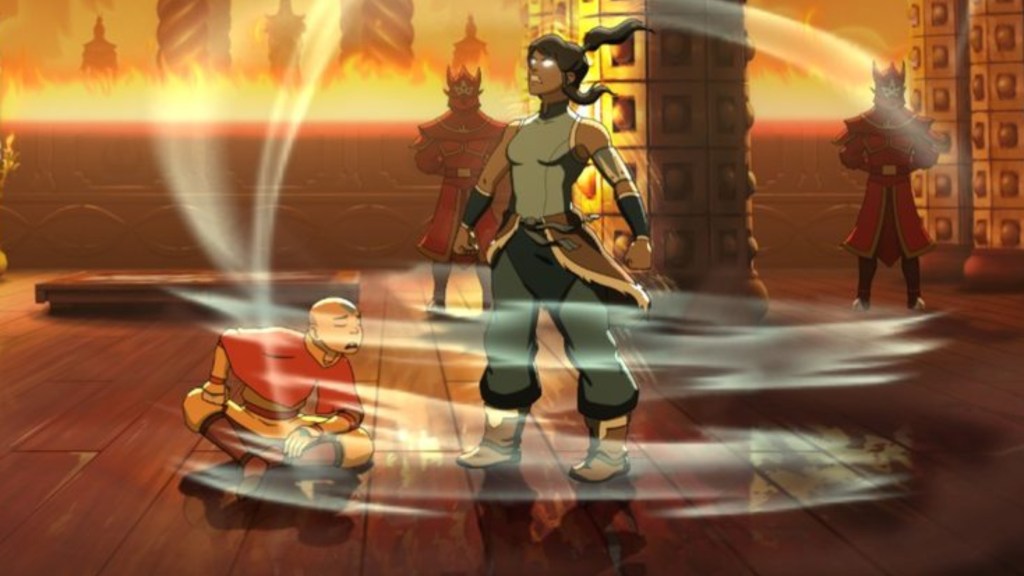
One of the best examples of how these new dynamics can work out can be found with Korra, whose aggressive nature is played up in her “Riftbended” form. This version of the Avatar is revealed to have developed close friendships with Toph and Azula off-screen. Toph and Korra are introduced as threats to Ba Sing Se and Republic City, causing strife across the cities and generally just being problems for the other benders.
Korra’s dynamic with Azula is a bit more intense. The two are shown to be very close, with Korra more or less replacing Mai and Ty Lee in Azula’s life. Azula is shown to be almost obsessed with her friend, openly arguing with her family about their bond and defending her even as Korra finds herself fighting them. It’s a surprising turn for Azula that is part of a larger shift for the firebending royals.
Ozai Loves His Family A Little Too Much

The dynamic between Ozai and his children is one of the more tragic elements of Avatar: The Last Airbender, with his dismissive and abusive actions playing a big part in Zuko’s self-loathing and Azula’s warped mindset. The changed Ozai is a far more caring figure, with his faith in his children and clear love for them being a real surprise for anyone familiar with the source material. That doesn’t mean he’s perfect, though.
In fact, the game does a clever thing with Ozai’s treatment of his children, altering the tone but maintaining the constant sense of control he puts over them. Ozai demands Azula not see Korra and does his best to protect his “delicate” daughter, regardless of her actual wants or desires. He’s also still power-hungry and a villainous figure in the narrative, though, prompting him to fight Zuko when he finds out he’s working with someone. It’s a clever subversion of Ozai that doesn’t change who he is.
Katara Is Kyoshi’s Sidekick
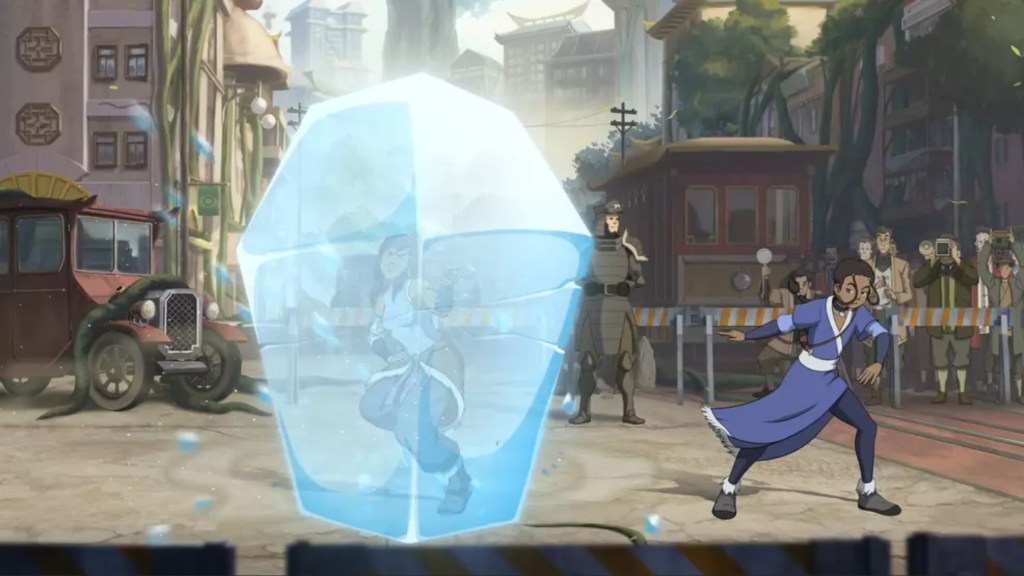
One of the first obvious signs in the campaign mode that the timelines have been messed with is the reveal that Katara is allied with Kyoshi. She effectively serves as that Avatar’s sidekick, fighting alongside her in multiple battles and doing her best to help protect Republic City from external forces. Their dynamic is also surprisingly sweet, with Kyoshi defending Katara and serving as something of a mentor.
When Katara is faced with her spirit form, this is revealed to be in part because of Katara’s innate desire to be helped. In the main timeline, she is forced to be someone’s sister, mentor, lover, and mother. She has to be relied on and not rely too much on someone else. That’s what drew Katara to Kyoshi, a woman who Katara could look up to and not need to protect. It’s an interesting read on Katara that’s a quietly effective analysis of her character.
Toph The Conqueror’s Motivations Are Illuminating
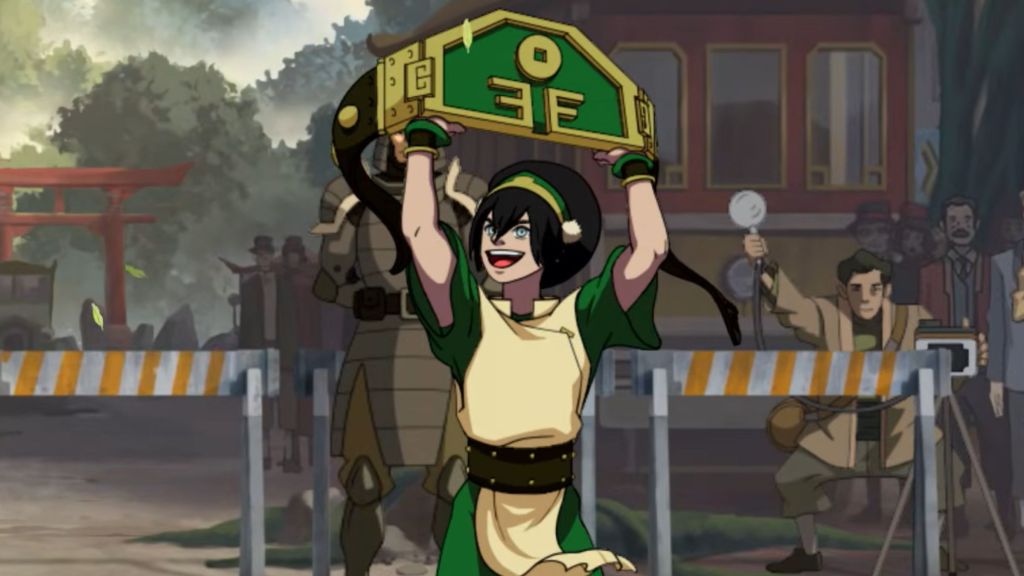
Toph is one of the characters who remains most firmly connected to her true form in Avatar Legends‘ story mode, even though she’s not introduced as a hero. In the story, she’s quickly established as a threat to Ba Sing Se and suggested to have repeatedly battled defenders like Korra and Kyoshi. However, while she revels in the battles, she’s not all that driven by ambition to take over the world.
Instead, the game implies that Toph is just looking for a good fight. Her spirit self says as much, telling her off for always just looking for action and that the morality of that battle isn’t as important to her as the thrill it gives her. The fact that Toph agrees with this assessment is an interesting reflection of the character and her place in the world, highlighting how her heroism was never as driven or noble as the rest of the Gaang.
Guru Sokka Is Spiritually Empowered (And Kyoshi’s Mentor)
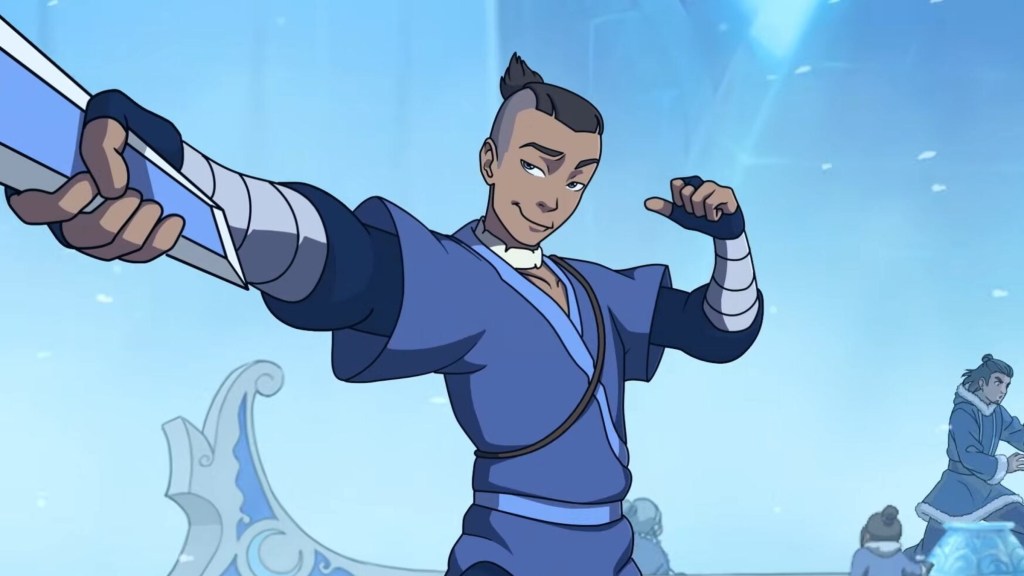
One of the goofiest turns in the story mode is the way the game reimagines Sokka as the spiritually attuned warrior, Guru Sokka. This version of the character is soft-spoken and enigmatic, offering the heroes strange advice and odd turns of phrase instead of specific ideas. This leaves some characters, like Katara, incredibly frustrated by the transformation. One character who is actually supportive of this version of Sokka is Kyoshi, who is revealed to have been trained by this Guru Sokka in this form and still sees him as a mentor.
It’s a wild transformation for Sokka that plays up his spiritual potential in a way that the core show never really did. However, it does also ensure that he remains the comic relief of the game, which is very fitting for the character and his typical dynamic in the cast. It does also allow him to briefly speak with Yue again due to his new spirit-enhanced form, giving his saddest story a little emotional coda.
Zaheer And The Red Lotus Are A Pro-Bending Team
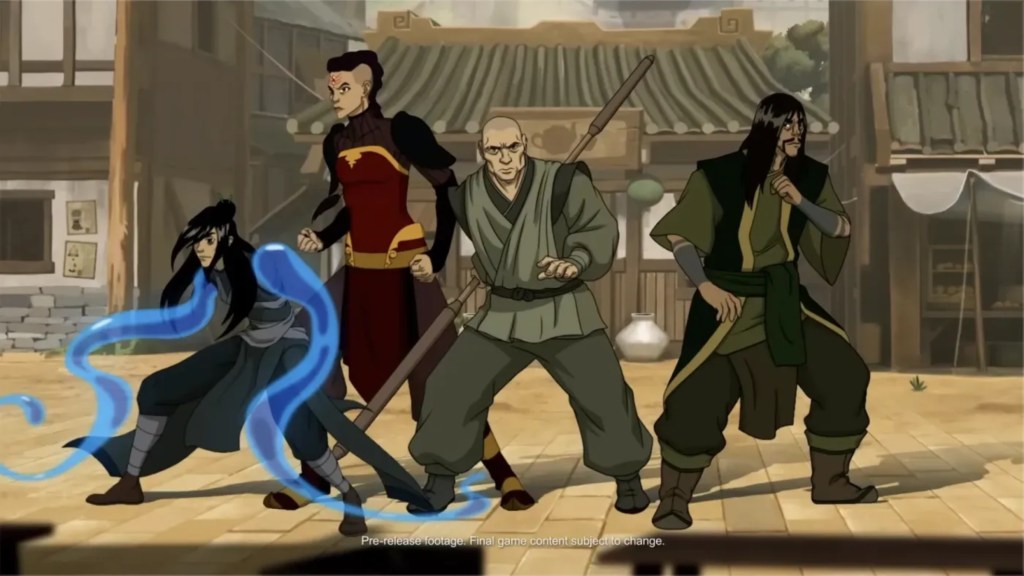
One of the goofiest reveals in the story mode for Avatar Legends is the reveal that Zaheer still has plans to change the world — but instead of leading the Red Lotus into battle as a terrorist operation, they are actually a pro-bending team. The in-universe sport was a major aspect of season 1 of The Legend of Korra but was gradually downplayed in future storylines, making its appearance in a Zaheer storyline all the funnier. However, there turns out to be an underlying motivation that is very true to the Korra villain.
As Zaheer explains to Aang during their meeting, he believes that the world is splintered too greatly by competing interests and combative nations. Zaheer believes that by showing the world the prowess of the united benders as part of one team, he can unite the world into something new. It’s a much more humane approach, but it’s still very similar in theory to Zaheer’s intentions to change the world with his terrorist group.
Aang And Korra Fight Because Of His Friendship With Zaheer
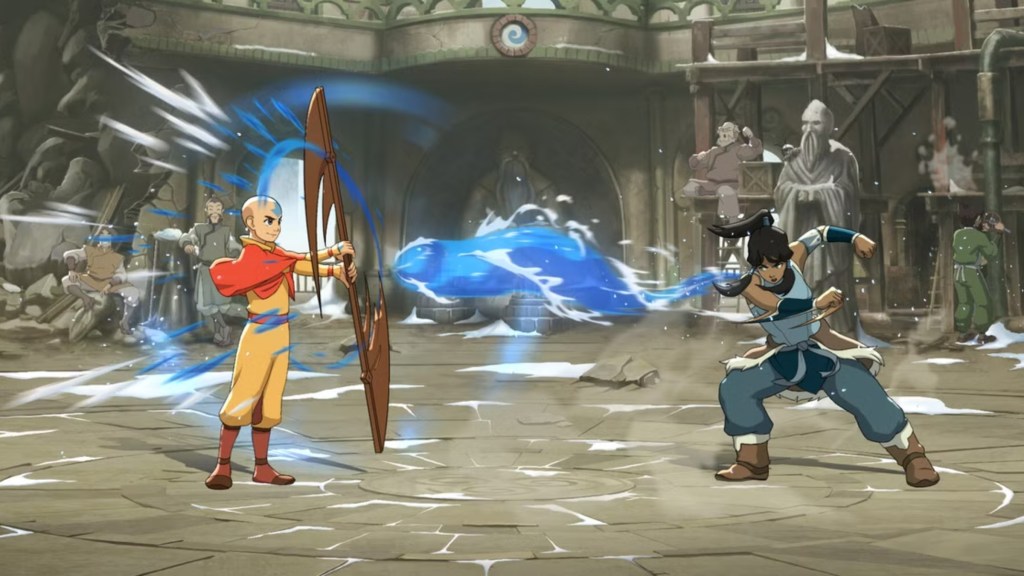
Zaheer and Aang’s dynamic is one of the more interesting and quietly sad stories in the campaign, as the two actually become surprisingly close. A visit to the Northern Air Temple together gives them a chance to know each other, where they discover they share a dream of a unified world where benders of all types can come together. They both even know the same Airbender proverbs, further connecting them.
For Aang, it’s a treasure to meet another Airbender. For Zaheer, it’s good to see that his intentions can be shared with someone as clearly kind as Aang. This makes their eventual situation all the more harrowing, as a restored Korra’s understandable doubt and anger towards Zaheer push her to pick fights with him. This in turn causes drama between her and Aang that ends with the latter hurt, as well as playing into what is the most somber aspect of the story.
Zaheer And Azula Don’t Want To Go Back To Normal
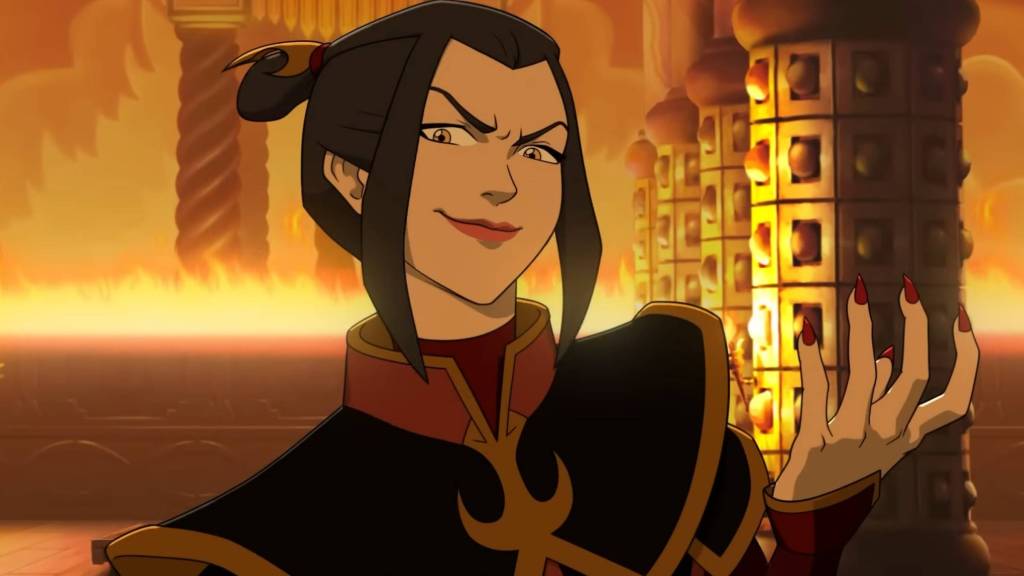
As the characters begin to regain their memories and restore their old dynamics, Avatar Legends uses this as an opportunity to make Zaheer and Azula even sadder — because they have no interest in rediscovering their true selves. Both of them resist being confronted by their spirit selves. Zaheer understands that Korra hates him and begs her not to bring that side out of him. Zaheer doesn’t want to lose his friendship with Aang or become the monster Korra knows him as.
Azula may be even sadder, as her transformation isn’t caused by external forces. It’s hinted that the true, manical Azula is always biting at the edges of this more restrained version, who resists the call to accept her true form. However, when confronted by her spirit form, Azula isn’t able to stop herself from being transformed back into her more damaged state. It’s a really sad state of affairs for Azula that puts emphasis on the tragedy of her circumstances and monstrous transformation.
The Big Bad Takes The Form Of The Cabbage Merchant
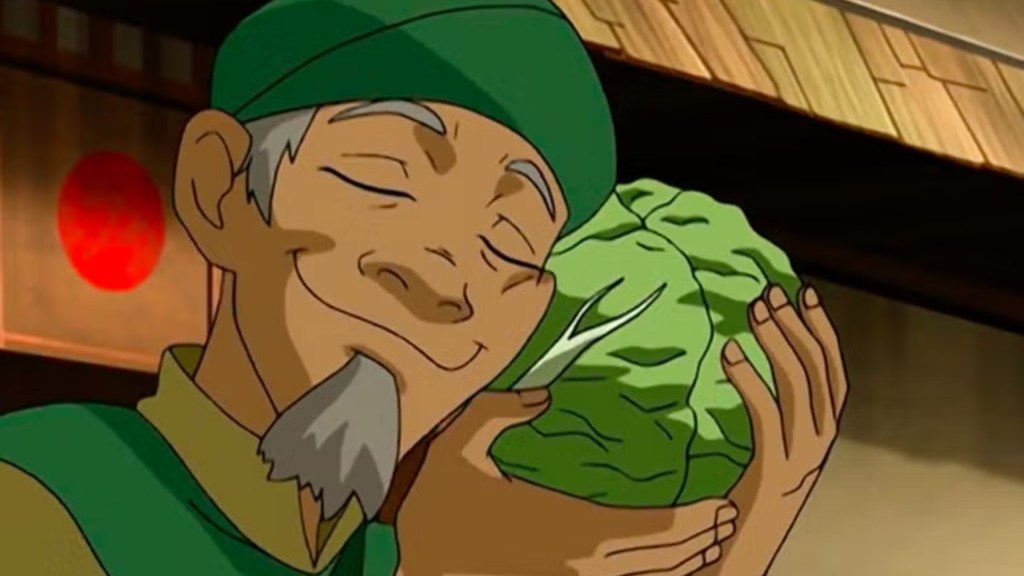
The Cabbage Merchant is a long-running joke in the Avatar franchise, with the mild-mannered vegetable salesman often finding himself at the whims of the heroes and villains of the story. Frequently in The Last Airbender, he loses his cart to the Avatar — prompting him to gradually develop a hatred for the hero and his allies. This animosity seems to be what drew the antagonistic forces of the narrative, making him their avatar in the material world.
It’s a wild choice, considering a big part of the gag is that the Cabbage Merchant has no way to get recourse for what the benders do to him. While he’s not truly the big bad of the game, he serves as a funny stand-in that allows the game to poke fun at one of the longest-running jokes in the entire franchise. It’s a good example of how Avatar Legends: The Fighting Game uses the canon to clever effect.
More Gaming
-
Image Courtesy of AdHoc Studio -

Courtesy of IllFonic