Racing games have been around for a long time, debuting in the early 1970s and continuing to this day with impressive arcade and console options. Like any genre, racing games have evolved over the years, so today’s games look nothing like their ancestors. We wanted to take a look at the games that brought forth significant innovations in the genre, driving it forward (pun intended) to become what it is today. The focus is on pivotal games that introduced mechanics, new graphics options, and intense gameplay. Each of these ten games fits that bill, though we’ve excluded Kart racing games, as it’s a sub-genre worthy of its own independent examination.
Videos by ComicBook.com
1) Wipeout (1972)
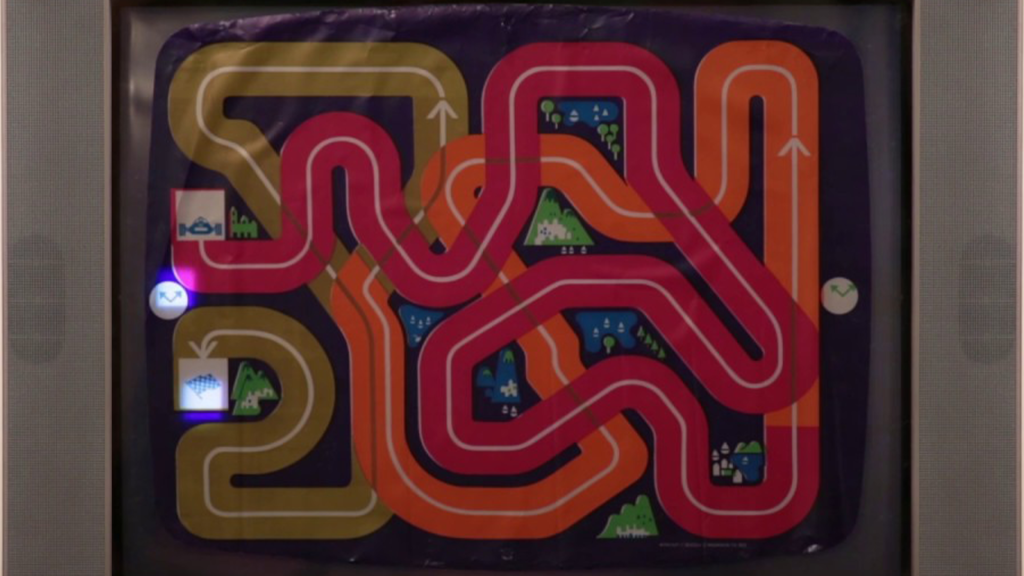
The first game that could be considered to be within a racing genre wasn’t an arcade title; it was on the Magnavox Odyssey. The system was the very first home gaming console, and it was rudimentary, displaying its images on television screens. It could display three square dots and a single line in monochrome black-and-white. To play the games, you had to put a plastic overlay on the screen to add visual elements, and some required an additional game board. Wipeout required a colorful overlay and a game board, where players could track their laps while another player’s dot kept the time. Everything about it was basic, but it was, in effect, a racing game.
2) Gran Trak 10 (1974)
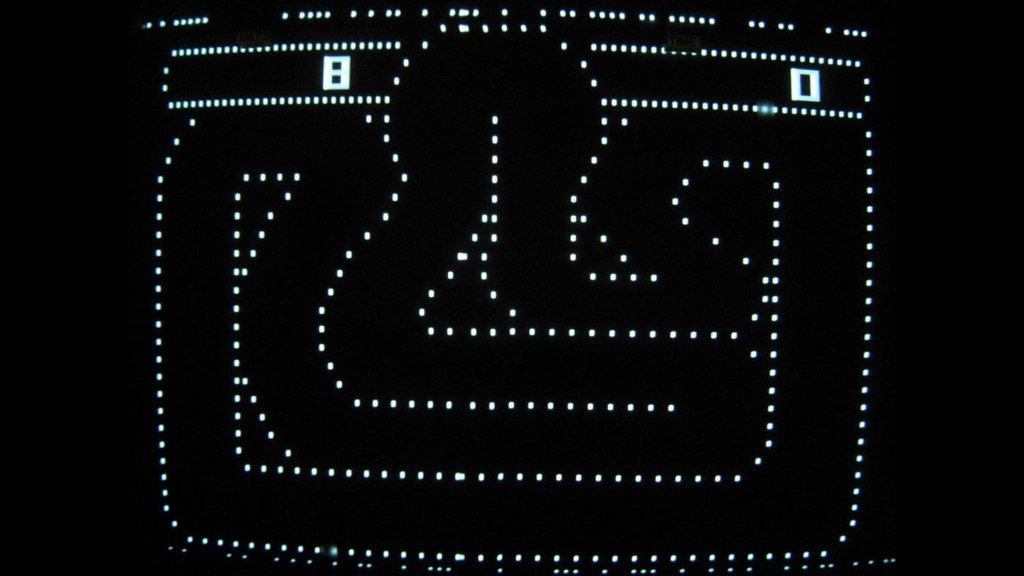
The first driving game released in arcades was Atari’s Gran Trak 10. The stand-up arcade cabinet featured a steering wheel, an accelerator and brake pedals, and a gear stick. These significantly enhanced gameplay, introducing common tropes of the genre as it developed. Gameplay was rather simple, as it depicts an overhead view of the track, where the player drives a car, passing checkpoints before time expires. Gran Trak 10 was a successful cabinet, leading to the development of various versions, including a two-player version called Gran Trak 20. The only competition some consider as the first arcade racing game was 1973’s Space Race, but it lacked the hardware elements established by Gran Trak 10.

3) Speed Race (1974)
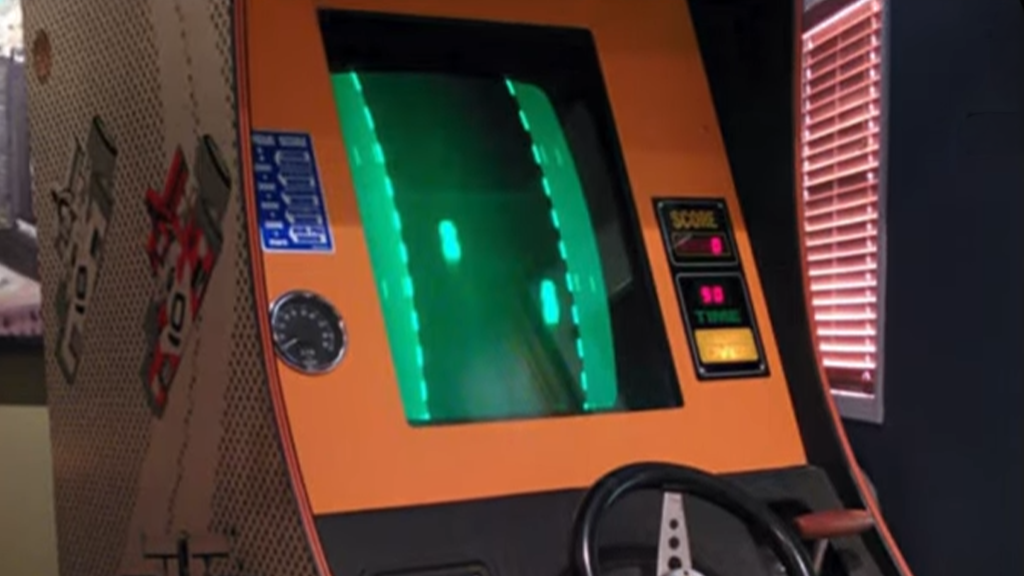
One of the more interesting developments in racing games came with 1974’s Speed Race, which eschewed overhead tracks in favor of vertical scrolling. The arcade cabinet was initially upright, but it was later redesigned as a sit-down cabinet, the preferred configuration for most racing games. Gameplay involved guiding the player’s car via the steering wheel along a fast-moving road. Players would have to avoid obstacles as they went, attempting to complete the race before the 90-second timer ran out. The game was designed using older electromechanical games as inspiration, and vertical scrolling became common in racing and shooters after Speed Race hit arcades in ‘74.
4) F-1 (1976)
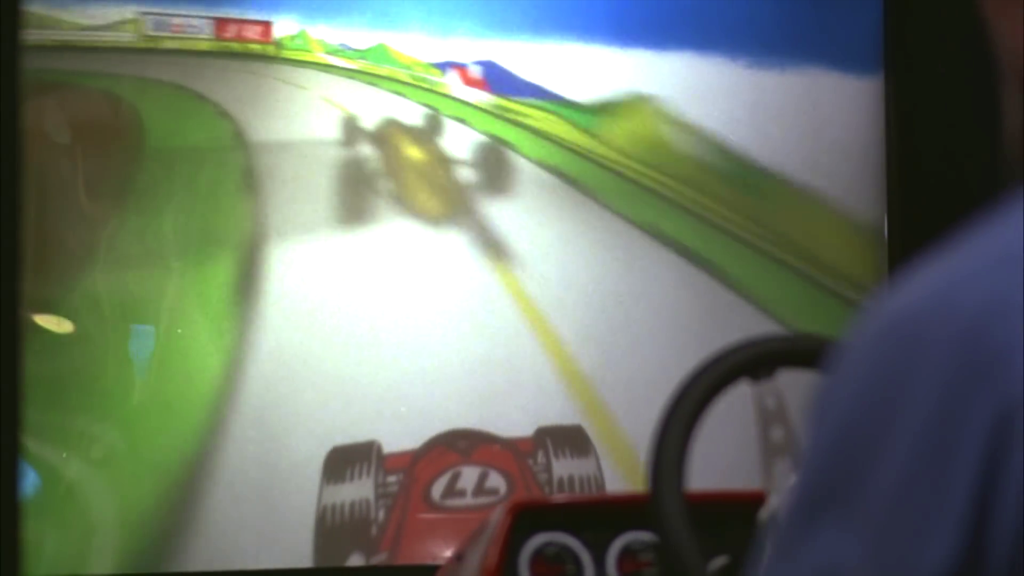
F-1 is the first Formula One racing game, which is a bit unusual because it’s an electromechanical game that looks and feels like a video game. Gameplay involves steering a small, plastic F-1 car along a race track while avoiding other drivers. It’s not a top-down racer; instead, it uses the driver’s perspective. The arcade cabinet featured a cockpit-like design, where the game was projected onto a large screen. This gives the look and feel of a video game, while not being one. It’s included here not because it’s an electromechanical game, but because of its popularity and innovative design, which inspired future developers to emulate its distinct characteristics.
5) Super Bug (1977)
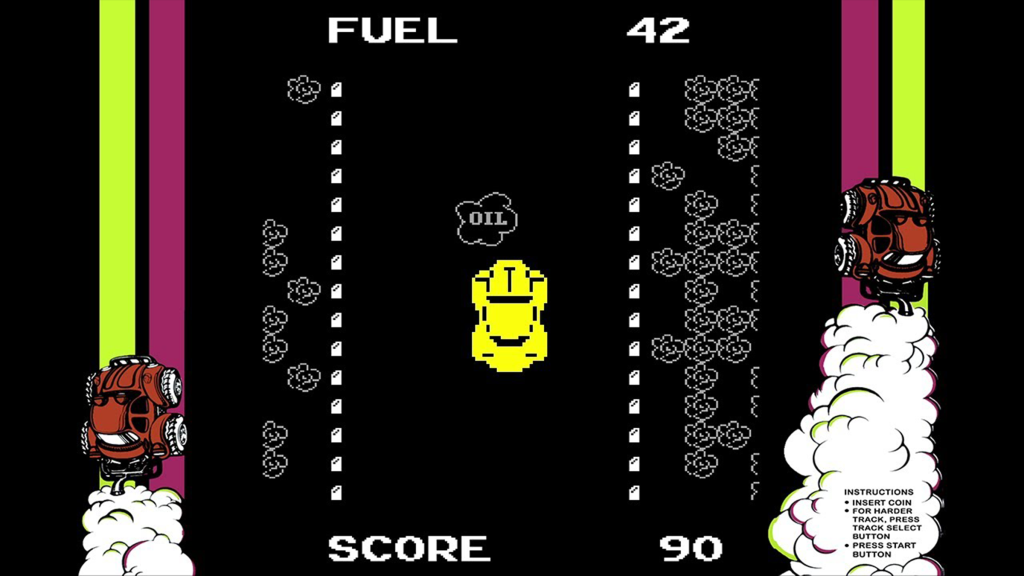
When Atari released Super Bug in 1977, it broke the racing game mold by being the first to incorporate a fully scrolling playfield that could move in multiple directions. Gameplay involved steering a Volkswagen Beetle along a scrolling track while avoiding obstacles. It included a steering wheel and a single pedal in a stand-up configuration. Super Bug was commercially successful, but its innovative approach to racing games changed how they were made from its release onward, making it a significant title in the genre’s history. The following year, Atari released Fire Truck, a spiritual sequel that used the same tech as Super Bug but with several improvements.
6) Rally-X (1980)
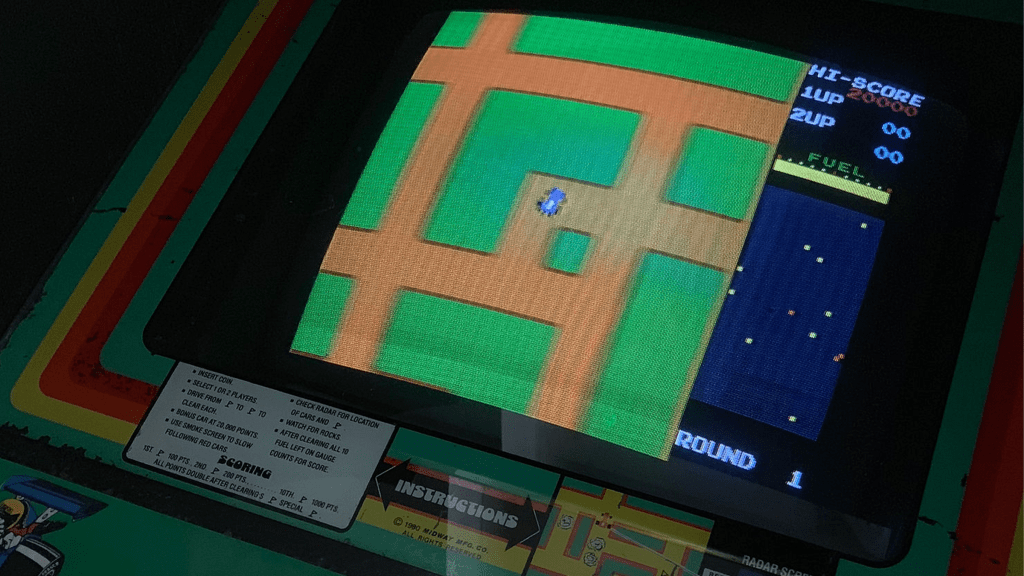
Rally-X is the kind of racing game that’s not entirely in the genre, as it’s more of a maze chase arcade game. Instead of racing on a track against a clock, players race Formula One cars through a multidirectional scrolling maze. They collect yellow flags as they go and avoid obstacles on the road while being pursued by enemy cars that attack by smashing into the player. The game was innovative in several ways, including being one of the first arcade games to feature bonus stages and background music. It’s hard to think of today, but background music wasn’t always a thing before games like Rally-X included it, and it’s now essentially required in racing games and other genres.
7) Pole Position (1982)
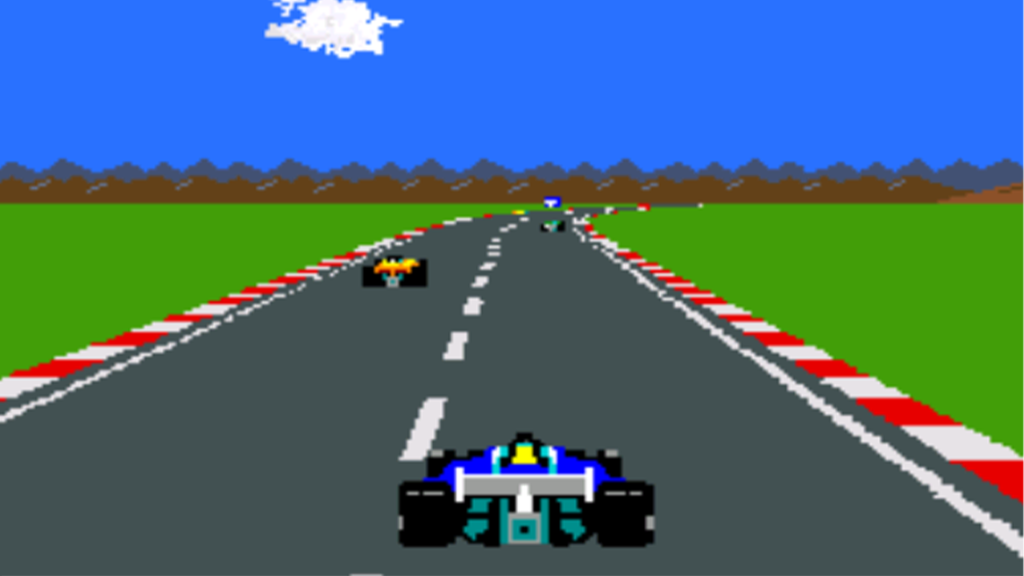
Of all the racing games that helped develop the genre, Pole Position is easily the most important and revolutionary. Namco released it in arcades in 1982 as an evolution of its earlier F-1 game, which was designed by one of the lead developers of Pole Position. It’s the first racing game to be based on a real circuit, and it was the first with a qualifying lap, which players must complete to qualify for the Grand Prix. The initial race begins with audio saying, “Prepare to qualify,” which was a huge innovation in the early ‘80s. The popularity and success of Pole Position impacted the genre tremendously, helping to establish it as not only viable and fun but also highly profitable as well.
8) Hang-On (1985)
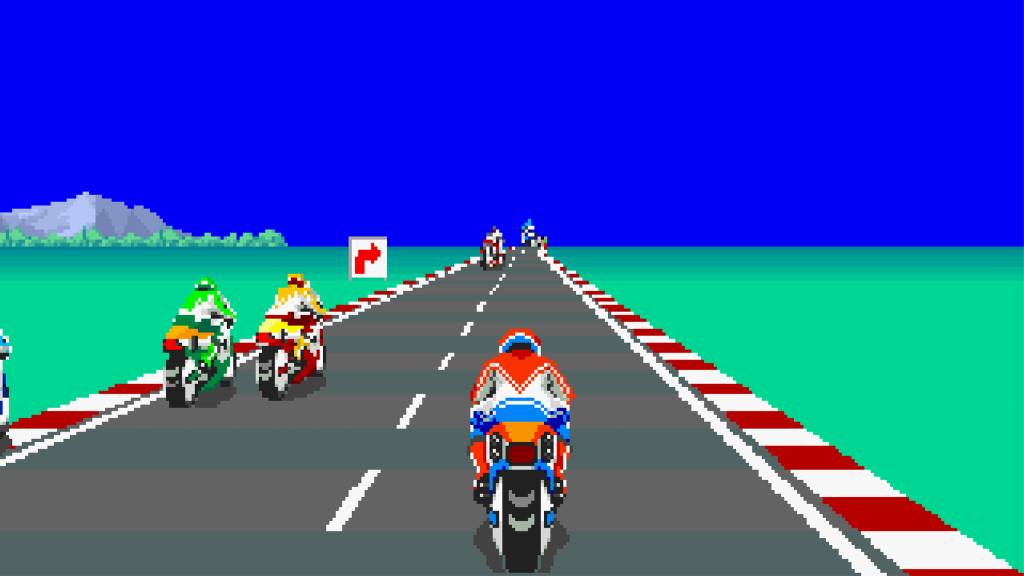
Hang-On is a motorcycle racing arcade game developed by Sega that introduced many innovations that influenced the industry. It’s one of the first 16-bit arcade games, and most importantly, the deluxe version of the arcade cabinet came with a large motorcycle you could sit on. Steering was accomplished by leaning the bike to the sides, making it one of the first true motion-controlled arcade games. It incorporated force feedback and leveraged Sega’s Super Scaler tech to achieve near-3D scaling without a reduction in frame rate. This made Hang-On a high-speed racer that heavily influenced the games that followed.
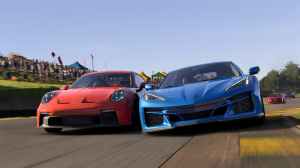
9) Out Run (1986)
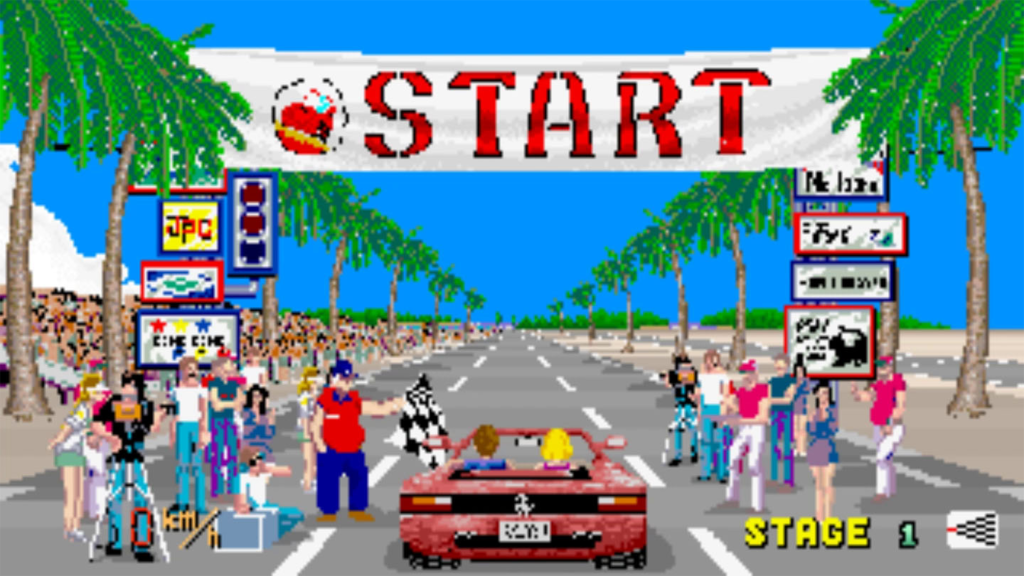
Sega continued to push its driving games in new directions, leveraging technological advancements to push the boundaries as far as possible. Out Run was one of the most successful of Sega’s driving games released in the ‘80s, and it launched a franchise. It included several new ways to play, including the ability to choose which track to race on without having to go through a succession of tracks to get there. It also allowed players to listen to their own soundtrack while driving, with songs represented as different radio stations. Outrun is also known for its multiple endings, depending on which routes the player takes.
10) Virtua Racing (1992)
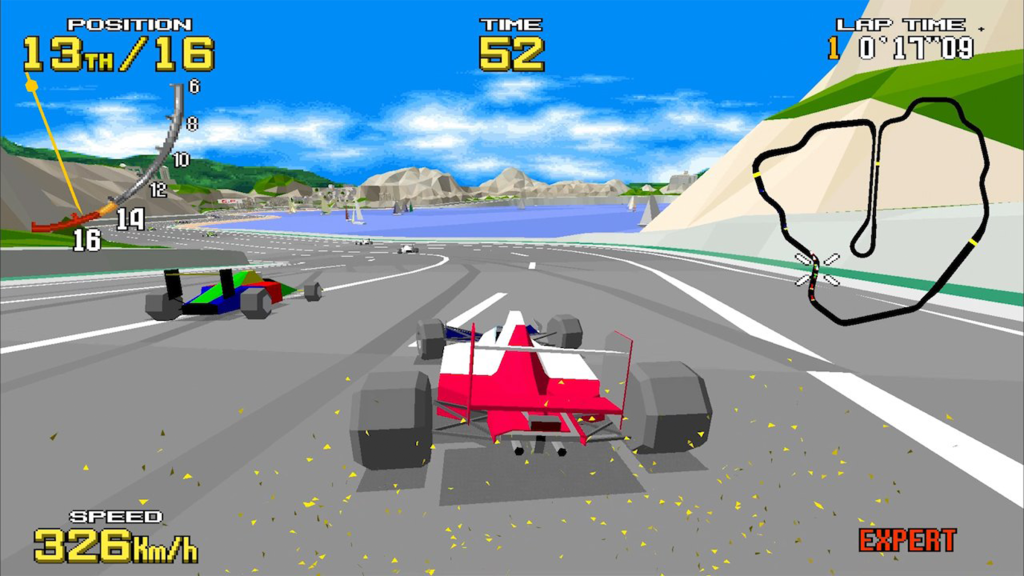
By 1992, the racing genre had advanced to the point that a myriad of excellent games dominated arcades. Virtua Racing wasn’t unique in its 3D graphics or gameplay. Still, it stood out for combining all the preexisting elements from games up to that point into a single, classic racer. It featured multiplayer linking, 3D graphics, and an impressive framerate. It’s one of the most influential racers of the decade, and its success eventually gave birth to series like Ridge Racer, Cruis’n USA, Gran Turismo, and many others. The ‘90s were also when Kart racing became popular, though racing games continue to stir up excitement in arcades worldwide.
Which innovation do you think was most important in the development of the racing genre? Leave a comment below and join the conversation now in the ComicBook Forum!
Most Viewed
-
Image Courtesy of Marvel Comics -

Sony Pictures -

Image Courtesy of HIDIVE -

Image courtesy of The Pokemon Company -

Image Courtesy of Netflix -

Image courtesy of Bandai Namco