It’s been an interesting year for tech so far, as memory shortages have impacted pricing and stock for many products. This includes challenges with keeping the Steam Deck OLED in stock and delays for a line of new Valve products announced last year. We still don’t have a firm release date or pricing information for the Steam Machine, the new Steam Controller, or the new VR headset. However, Valve continues to affirm that it plans to launch its new tech lineup in 2026. A new SteamOS update confirms they’re still laying the foundations to do just that.
Videos by ComicBook.com
Announced in late 2025, the Steam Machine was initially planned for “early 2026.” As we head into late March, “early” is becoming a bit of a stretch, but Valve continues to affirm that the lineup will be released in 2026. That “early” window seems to have fallen off from more recent communications, but Valve is definitely still preparing to launch its new PC/console hybrid. In fact, the latest preview for an upcoming SteamOS update includes language geared at the arrival of the Steam Machine, along with other improvements.
SteamOS 3.8.0 Preview Prepares for “Upcoming Steam Machine Hardware” & More
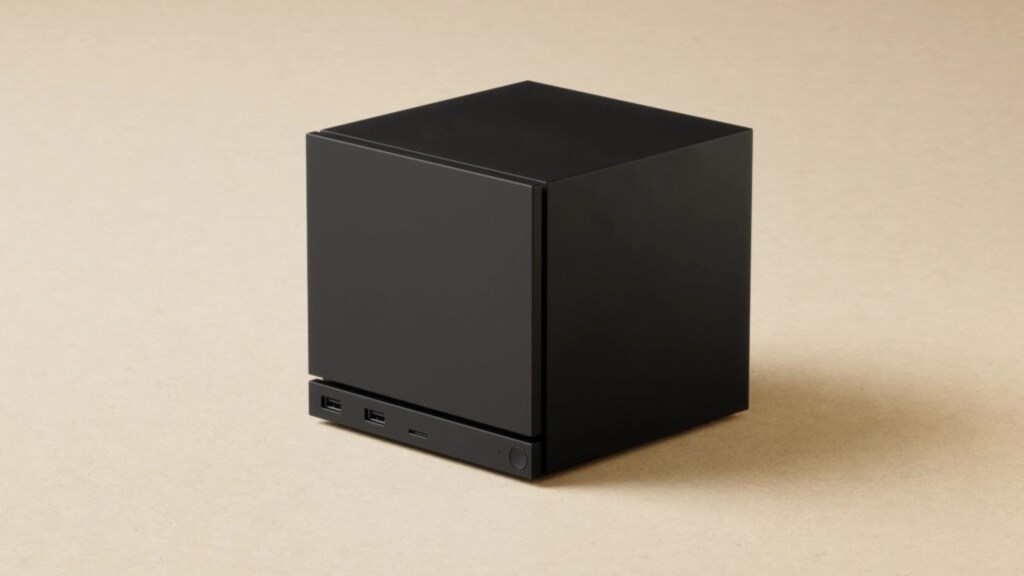
Late in the day on March 19th, Valve shared patch notes for the preview build of an upcoming SteamOS 3.8.0 update. This build is still undergoing testing, but Steam users can check it out by opting into the System Update Channel. This is a pretty sweeping update with plenty of general QoL improvements and fixes. But one detail caught my eye, and it’s the very first line of the patch notes. This update is set to bring “Initial support for upcoming Steam Machine hardware.” Upcoming is a pretty vague term, but it does affirm that Valve is getting its OS ready for the new platform. And that supports continued assurances that the new tech will release this year.
The update also brings in plenty of other improvements, even for those who won’t be excited about the Steam Machine until Valve gives us a price. The update also brings in an updated graphics driver and several bug fixes for specific games and general issues. It has some audio fixes and will re-enable Bluetooth Wake for the discontinued Steam Deck LCD. In addition, the Steam Deck LCD and OLED will get some security updates.

For the complete list of upcoming changes for SteamOS 3.8.0, you can check out the full patch notes from Valve below:
General
- Initial support for upcoming Steam Machine hardware
- Updated Arch system base
- Updated graphics driver with performance and stability fixes
- Fix a case where per-app performance settings would intermittently fail to apply when launching a game
- Improved support for the screencasts in Game Mode (e.g. OBS/Discord)
- Fixed dropdown menus not appearing in some games
- Improved VRR frame pacing
- Fixed FSR badge remaining off in the performance overlay, even if it was actually active
- Improved support for games that attempt to open PDF files in external viewers
- Fixed an issue affecting certain titles (such as “SpongeBob SquarePants: Titans of the Tide”) where the game window could have an incorrect position
- Fixed closing certain titles (such as “STAR WARS Jedi: Survivor™”) and Starfield resulting in a session crash
- Improved support for certain USB racing wheels and USB devices that boot in a non-standard mode
- Frequently these are devices that appear as USB storage devices with a driver installer, and must be switched to their normal mode by the OS
- Steam Deck controller firmware updates now display update progress on the splash screen
- Fixes issue on specific Steam Deck revisions where firmware updates could render the left controller inoperative for that session
- Numerous stability and security updates
Bluetooth
- Re-re-enable Bluetooth Wake for Steam Deck LCD
- Fix for more spurious wake issues that were present in earlier attempts
Audio
- Detect HDMI channel count and expose surround configuration if available
- Add a setting to allow using Bluetooth headset mics (Bluetooth playback quality will be worse while capture is active)
- Restore internal audio device on reboot if set to “Off” in desktop mode
- Increase suspend timeout for HDMI devices so initial audio isn’t cut off after a few seconds of inactivity
- Fixed a bug with switching input devices when a wired headset is plugged in
- Fixed an issue where audio underruns could be experienced after sleep/resume
Accessibility
- Added an option to force mono audio output
Desktop Mode
- KDE Plasma updated to version 6.4.3 from 6.2.5, and now uses wayland by default
- Fixes several cases of reduced performance in Desktop Mode compared to Game Mode
- Improved support for rotated displays
- Better scale factor out of the box on TVs
- Adds support for external HDR displays
- Adds support for VRR displays
- Adds support per-display scale factor
- For more information, see Plasma release announcements
- Keyboard layout and language are now obeying Game Mode settings
- Improved windowing behavior for games running in Proton
System Firmware
- Includes Steam Deck LCD BIOS v133
- Security updates
- Added “Memory Power Down” setup option
- Preliminary support for hibernation
- Includes Steam Deck OLED BIOS v114
- Security updates
- Charging LED now changes color when charge limit is reached, rather than only at 100%
Non-Deck
- Improved compatibility with recent Intel and AMD platforms
- Greatly improved video memory management with discrete GPU platforms
- Fixed a compatibility issue with the SteamOS chainloader that could cause a boot failure on some desktop systems with recent UEFI firmware
- Power button short and long presses now supported across a wide variety of devices
- Improved controller support for OneXPlayer F1 series, GPD Win 5, GPD Win Mini, Anbernic Win600, OrangePi NEO, and Lenovo Legion Go
- Added controller support for OneXPlayer X1 series and Lenovo Legion Go 2
- Added system and controller firmware update support for the Lenovo Legion Go 2
- Added preliminary charge limiting support for Legion Go, Legion Go S, and Legion Go 2 – currently only accessible in Desktop Mode
- Added controller RGB LED color settings for the Lenovo Legion Go 2
- Added controller, TDP control, and speaker audio support for the ASUS ROG Xbox Ally series
- Reduced handheld controller input latency from 5-8ms to 100-500us
- Night mode, color vibrance, and color temperature sliders in Steam now work on Z2E and later AMD APUs
- Seamless boot fixes for Z2E and later AMD APUs
- Automatically handle internally rotated display for some third-party handhelds
- Improved motion control support for handhelds with BMI260 IMUs
- SD card reliability improvements for some third-party handhelds, including ASUS ROG Xbox Ally, Legion Go 1, Legion Go S, Legion Go 2, and MSI Claw
- Fixed washed out colors for Zotac and OneXPlayer handhelds with OLED
- Fixed some GPU hangs on Phoenix APU devices (Tales of Arise, Octopath Traveler II)
- Fixed ASUS ROG Ally power consumption from fingerprint reader while shut down
Developer
- Desktop Mode now uses Wayland by default
- X11 support may still be selected via Steam developer settings, or via `steamosctl`
- Updated Linux kernel to 6.16
- Steam now uses steamos-manager to query available desktop sessions and trigger desktop session switching
- Added support for setting the desktop password in developer settings
- Initial support for running as a Virtual Machine guest (virtio guest drivers)
- Added support for third-party devices to trigger the SteamOS boot menu via EFI variable
- Added `custom-update` verb to `atomupd-manager` for easier testing of specific builds
- System reports now include more audio debug information
- Initial support for LAVD CPU scheduler via `steamosctl set-cpu-scheduler lavd`
Are you looking forward to the Steam Machine’s release? Leave a comment below and join the conversation now in the ComicBook Forum!
Most Viewed
-

Image courtesy of Wizards of the Coast -

Image courtesy of Daybreak Game Company -

Courtesy of Bones Film