Grime II is a terrifically designed side-scroller, with tight gameplay design bolstered by phenomenal art design. The sequel to 2021’s Grime, Grime II expands on the previous game’s sense of action and adventure by adding new abilities, expanding the world, and raising the challenge in some key ways. There’s enough variety here for players to feel like it’s their own adventure, especially as the combat becomes trickier over time.
Videos by ComicBook.com
The real draw of Grime II is the art design, with an absolutely gorgeous approach to potentially horrifying designs. The creatures and world are still unsettling, but have been built with enough color, beauty, and life to be gorgeous in their own right. Especially for fans of the Metroidvania genre, and even if they missed the previous game, Grime II is a must-play title that draws you in with good combat but keeps you entranced with artistic worldbuilding.
Review Score: 4.5/5
| Pros: | Cons: |
| Gorgeously realized world and top-notch art design create a stunning setting. | Occasional glitches can interrupt an otherwise well-designed action. |
| Improved combat mechanics — especially the “Mold” ability — deliver on memorable battles. | Distinctively strange and at times purposefully unsettling art style might not be for everyone. |
| Massive overworld and gorgeously realized boss battles deliver a great Metroidvania experience. |
The Quest Of The Formless
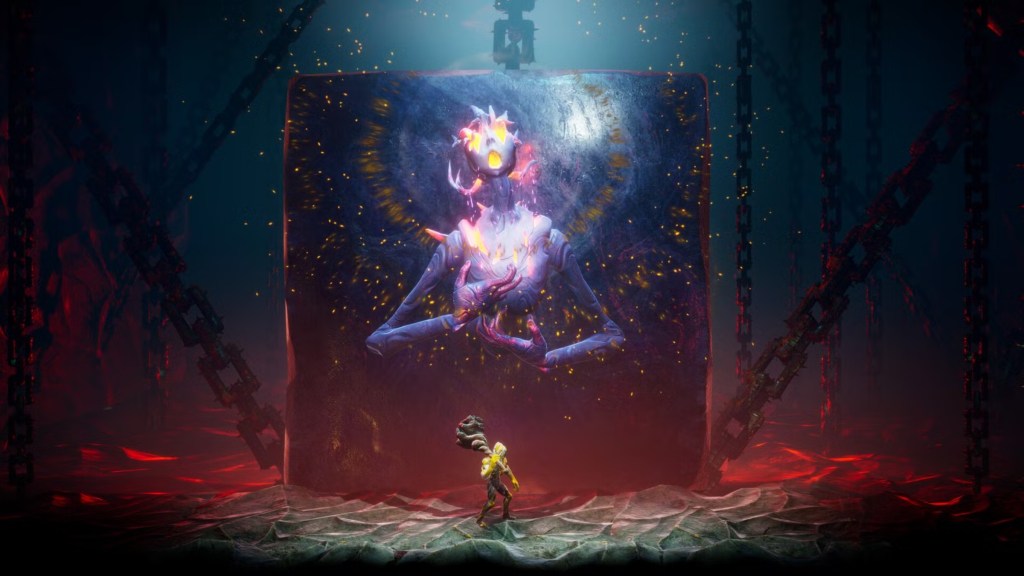
Developed by Clover Bite, Grime II places players into the role of the Formless, a mysterious entity born into a world of ruin. Traveling through the land sees the Formless encounter all sorts of monstrous entities, with the abstract force connected to the Formless telling them to explore the realm and absorb whatever it can find to become something bigger and better. This plays into the central game mechanic at the heart of Grime II, which puts emphasis on combat and exploration. As the player ventures deeper into the world, they collect plenty of weapons and abilities to help them overcome their enemies.
Players also gain the ability to turn enemies into “Molds,” which allows the player to absorb them and then deploy their unique attributes as a summon. It blends well with the overall storytelling of Grime II, which sees the Formless explore grotesquely beautiful settings and take in the artistry of natural (and unnatural) life. The purposefully unsettling elements blend well with the vivid color palette and the bizarre character creations, leading to a game world that feels elegantly twisted and strangely alluring — even while it remains deeply unsettling thanks to the specific art style.
The color scheme and conflation of mold and paint as concepts make for a naturally compelling setting and world. These visual elements bleed into the overall level design, which can be challenging but rarely feels frustrating. In the vein of the grim beauty that brought other memorable games like Elden Ring to life, Grime II‘s creature design and worldbuilding deliver a genuinely memorable experience.
How Grime II Plays With The Metroidvania Formula
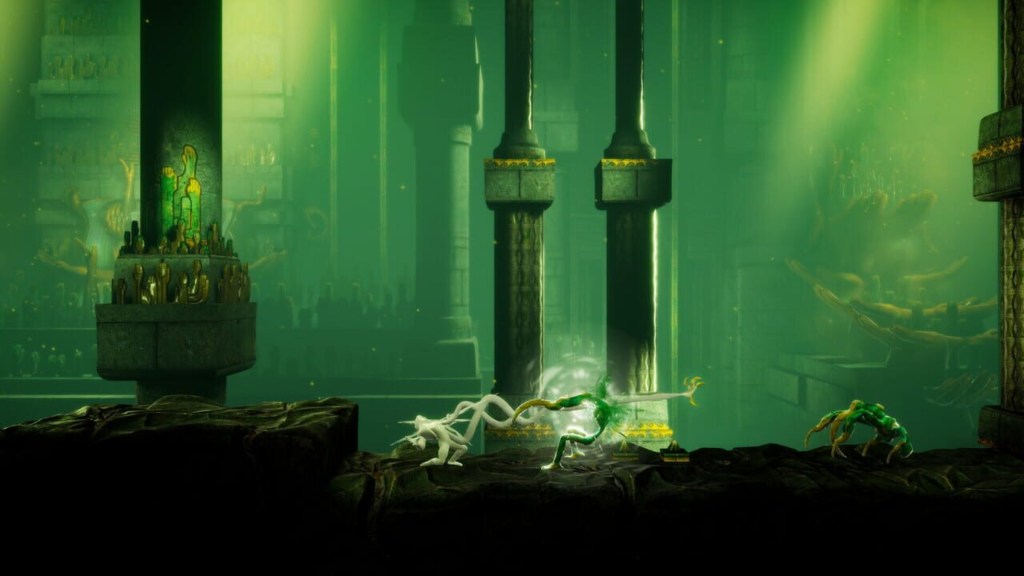
At the core of Grime II is a familiar gameplay loop, where the blend of side-scrolling combat and larger exploration comes together seamlessly in the vein of plenty of classic Metroidvania games of the past. There’s an innate variety to the weapon selection, skill choices, and capabilities of the “Mold” ability that allows the player to add their own personal touch to combat. The “Mold” in particular is a great little mechanic that helps Grime II naturally stand out from its peers, especially in how it changes combat. Collecting a “Mold” mid-battle and deploying it to get an advantage over the enemy is a great little tweak, especially how easy it is to add this ability into the larger string of attacks that players can blend together to form visually striking combos.
The focus on parrying attacks and dodging enemies as a central mechanic recalls Dark Souls and the various games that sought to replicate it, adding to the experience. This mechanic, as well as a health bar set-up that requires players to take down enemies to fuel health regen, invites some creative approaches to the visually striking and naturally engaging boss battles at the heart of the game. The platforming mechanics are somewhat basic at first, but they function with a well-constructed confidence. As the game progresses, more inventive, difficult, and memorable platforming puzzles add much-needed variety to the gameplay. The biggest problem with the game on a technical level is the occasional glitch or technical hiccup, which can undercut some of that seamless movement and the striking visuals. Still, it’s a minor stumble in an otherwise largely impressive title.
Don’t Just Rise Above the Grime, Become One With It
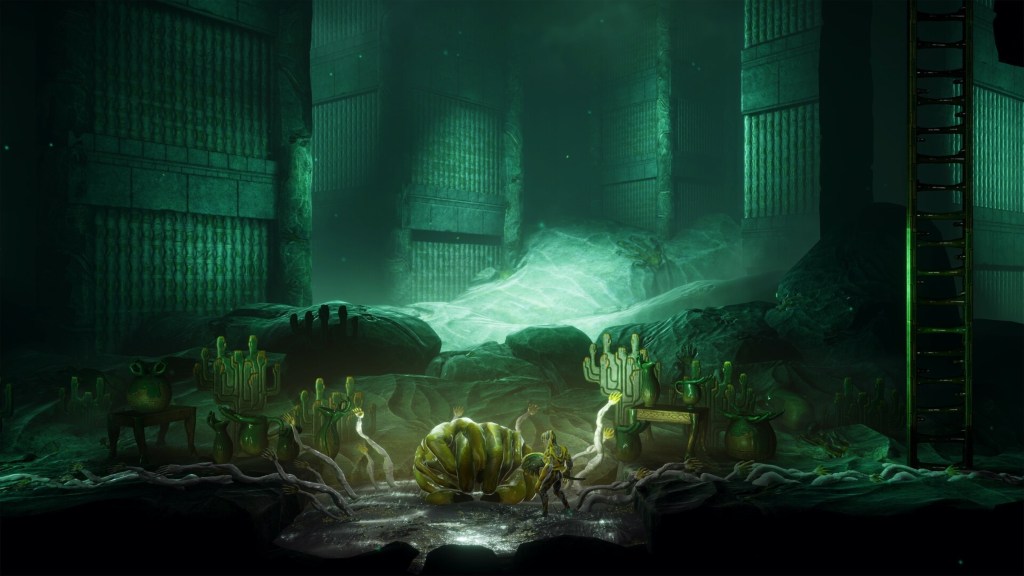
While it’s not a far cry from the original game in terms of gameplay — and gamers who didn’t connect with that title will likely be just as frustrated with this one — the sheer scale of Grime II makes it a must-play for Metroidvania fans. The improvements of the older title add to the depth of the expeirence in some very effective ways. The vastness of the world fits the story and the overall presentation, all while allowing players to explore at their own pace. The world of Grime II is strangely engrossing, drawing the player further in with its natural storytelling.
The central gameplay does a great job of keeping the momentum up and the excitement growing, even as it subtly delves into a surprisingly effective story about coming into one’s own. Grime II does the Metroidvania genre proud, with a terrific balance of worldbuilding and game design underscoring it all. While it may not be flawless, this gorgeously rendered adventure is a definite must-play for fans of the classic adventures that codified the Metroidvania genre in the first place.
Comicbook.com received a PS5 copy of Grimes II for the purposes of this review.
More Gaming
-

Image Courtesy of Sony Interactive Entertainment