In 1954, filmmaker Ishirō Honda and Toho debuted the first Godzilla film, a dark monster movie about Japan grappling with its post-war identity and the shadow of the nuclear attacks that ended World War II, all wrapped up in an impressive special effects display. The film not only perfected the monster movie formula for the next seven decades, but also created an icon in the form of its titular “King of the Monsters.” As a result of the success of the first film, though, Godzilla became a pop culture phenomenon, creating not only an entire subgenre of films but a full franchise of characters, storylines, and spinoffs.
Videos by ComicBook.com
Across more than 70 years, forty feature films, and countless appearances in cartoons, comics, and more, Godzilla has developed a robust franchise with dense and ever-changing lore. In addition, Guinness World Records has recognized Godzilla as the longest-running film franchise in history. Like any dense franchise that has decades of materials that all build on each other, though, Godzilla’s lore is more of a house of cards than a firm foundation, with details and elements that don’t fully add up when put under scrutiny. Even worse? It’s not going to suddenly get easy to answer.
5) How Does He Keep Coming Back to Life?
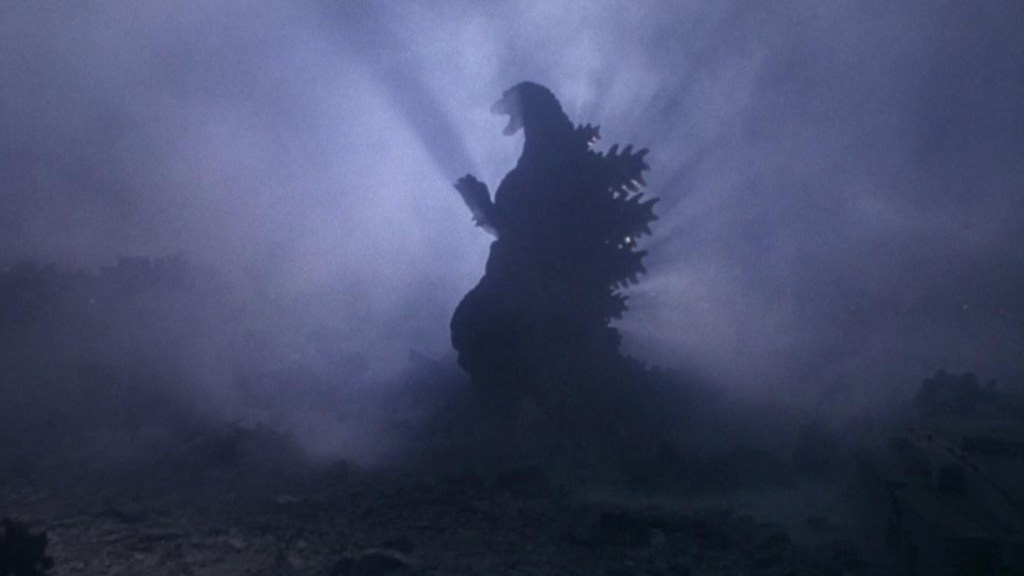
Quite famously at the end of the original Godzilla, the titular kaiju is killed, taken off the board by the “Oxygen Destroyer,” which renders the monster as nothing but a giant pile of bones on the bottom of the sea. When the sequel, Godzilla Raids Again, arrived just one year later, though, it immediately brought the king of the monsters back to life with the explanation that it was “just another one.”
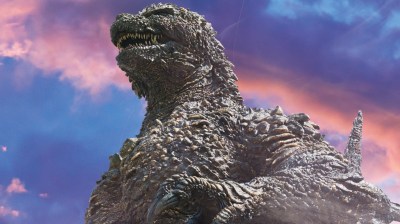
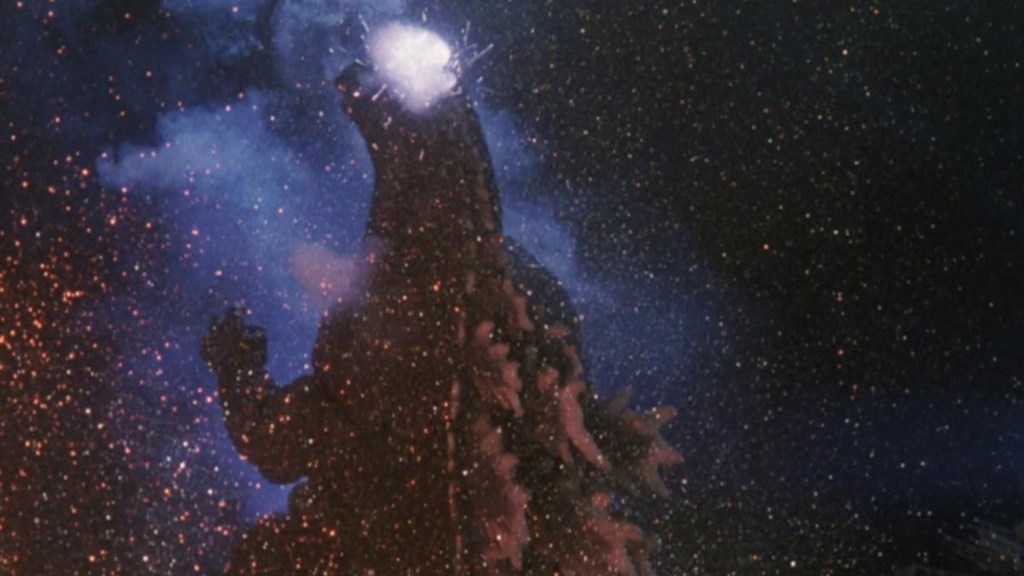
This is a key element that many Godzilla movies have failed to really grapple with, especially as the popularity of the character means sequels are expected by the audience. In truth, most of the films have taken the hand-waving approach to explaining the survivability of Godzilla from film to film. At least Godzilla Minus One ended with a tease of his survivability, making changes to the character for this year’s follow-up at least make sense. Perhaps the most baffling, though, comes from Godzilla vs. Destoroyah, where the kaiju spends the entire film on the verge of exploding due to the nuclear energy in his body. When this process completes, his offspring then absorbs it and transforms into the new Godzilla; more on that later.
4) How Does He Survive on Other Planets?
Though largely confined to Earth, and mostly the islands in and around Japan, there have been times when Godzilla has departed the planet entirely like in 1965’s Invasion of Astro-Monster. In that film, the inhabitants of Planet X “borrow” Godzilla and Rodan in order to have them fight King Ghidorah, as we know, it’s a ruse to bring the monsters under their control and use them to take over Earth entirely, but it presents a big question: How can Godzilla survive in space and on another planet?
The make-up of Planet X is never fully made clear, but we have to assume that Godzilla breathes oxygen in some way, either via lungs or gills, since the first film establishes his death by the Oxygen Destroyer. Furthermore, the film establishes that Planet X has 1/10th the atmospheric pressure of Earth and one-third the gravity, none of which seems to come into play when Godzilla fights Ghidorah on the planet at all. All this can seemingly be chalked up to 1960s sci-fi filmmaking not matching reality in any meaningful way, but to the point of not making sense in canon, it’s clearly why they never tried to take Godzilla to another planet again.
3) His On-Again, Off-Again Friendships
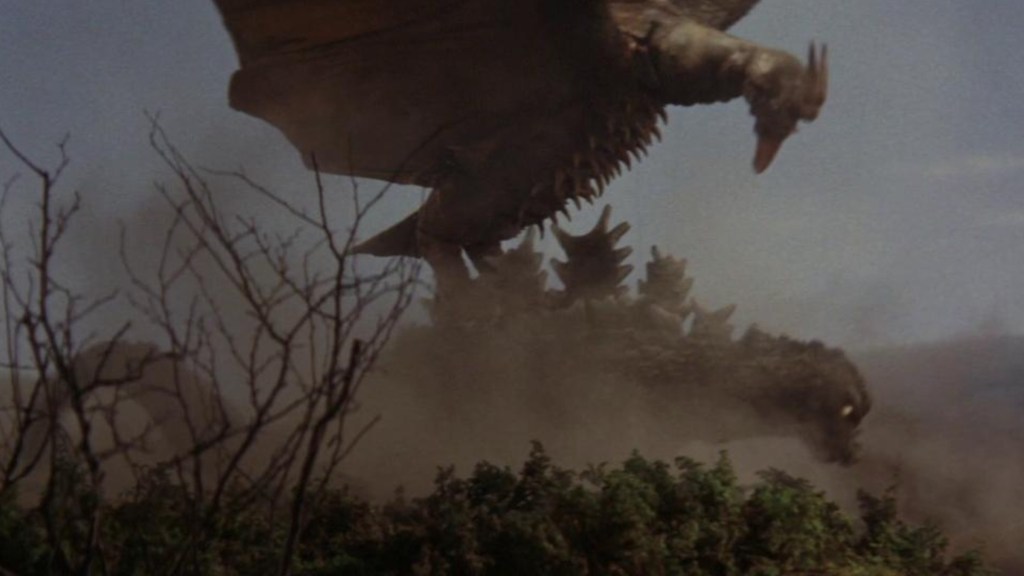
As Godzilla’s mythology and roster of characters got more robust, it became clear that lines needed to be drawn about who were Godzilla’s allies and who were his enemies. Among them, Rodan and Mothra are perhaps the most consistent pairing of characters that fight alongside Godzilla in his many fracases. That said, when the plot needs it, the films will simply decide that Godzilla is alone with no friends, who will sometimes fight against these other kaiju that the audience has come to know as his pals.
2) His Fighting Style
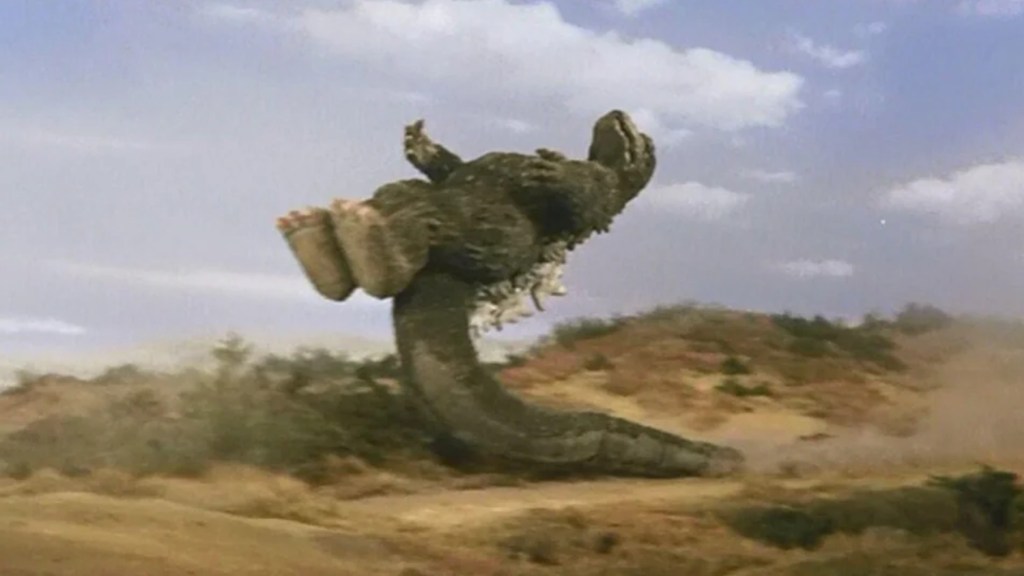
As Godzilla has evolved over the course of the decades, and the technology to bring the character to life has changed from “Guy in suit” to CGI creation, it means that not only has the way he moves changed, but so have his fighting styles. In truth, Godzilla’s abilities to cause carnage and battle his fellow kaiju are always rewritten based on the tone of each individual movie.
Godzilla Raids Again, the first film to feature Godzilla fighting another monster, barely manages to even reach the levels of professional wrestling, as the action comes down to two guys in costumes wailing on each oher even though they can’t see what they’re doing. Godzilla vs. Megalon, however, just 18 years later, fully crosses the threshold of Godzilla as a wrestling star, having him slide on his tail to deliver a dropkick. Even the modern MonsterVerse has had to grapple with this inconsistency, with 2014’s Godzilla having the kaiju use his size as a function of his abilities, holding on to his atomic breath until the finale before unleashing it as a means of expressing his powers. Godzilla x Kong: The New Empire, however, has him use the ability immediately and splatter a giant monster into a glop of goo.
1) How Did He Have a Son?
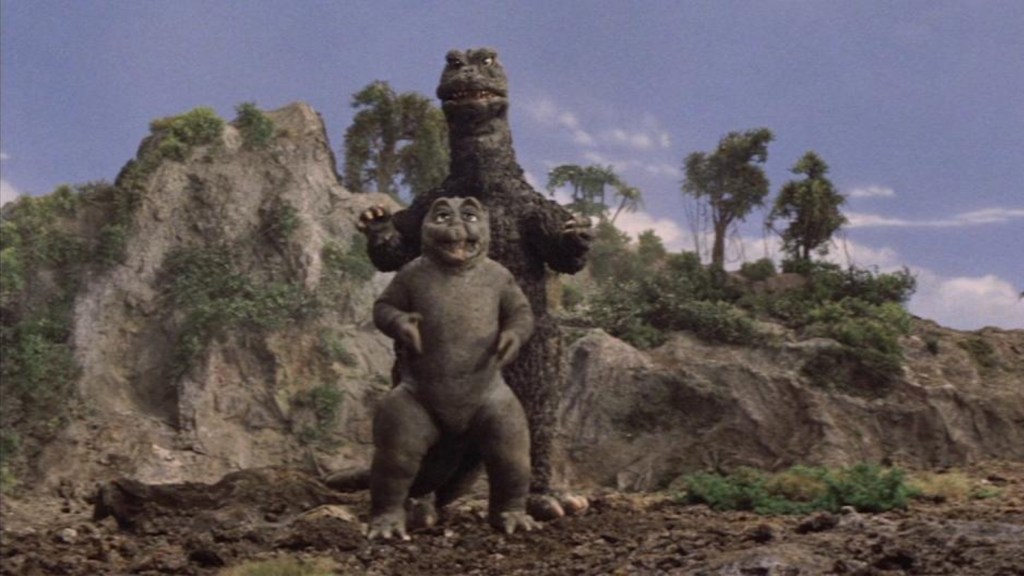
1967’s sequel Son of Godzilla was aptly titled, because it introduced the titular Minilla as the offspring of the King of the Monsters. His origin is explained as him simply hatching from an egg and being raised by Godzilla, but it appears to have minimal thought put behind it in the slightest. Where did this egg come from? What creatures fertilized it? Are Godzilla eggs simply produced by the Earth itself? What about the radiation component? Those questions don’t even dig into the ideas seen in All Monsters Attack, where Minilla befriends a young boy and becomes his pal too.
Time and further films have only made this more complicated, with sequels introducing “Baby Godzilla” and “Godzilla Jr.” who don’t even get the dignity of an explanation of where they come from. It’s a concept that “makes sense” in terms of how the franchise can function when Godzilla dies once again, or in marketing the characters to audiences that would prefer a cute take on the monster, but it’s perhaps the biggest element of Godzilla as a franchise that holds up to no scrutiny and continues to be only baffling.
More Movies
-

Image Courtesy of Peacock -

Image courtesy of Warner Bros. Pictures