Science fiction has become increasingly dependent on computer-generated imagery to construct alien worlds, impossible creatures, and interstellar conflict on screen. That’s ot a surprise as digital effects give directors limitless visual freedom to come up with faraway planets and dystopic futures, passing through alternate dimensions and bioengineered creatures. Hollywood’s reliance on green screens and massive server farms has certainly yielded spectacular results, as we can see with the Avatar franchise, for instance. However, the charm and physical presence of practical effects remain unparalleled in creating truly memorable characters.
Videos by ComicBook.com
Puppetry, in particular, stands as a specialized art form that demands an extraordinary level of craftsmanship and engineering to bring an inanimate object to life. By utilizing elaborate animatronics, cable-controlled limbs, and careful manipulation of latex and foam, practical creature shops build entities that share a physical space with the actors, often eliciting more realistic performances. This tangible interaction translates into a level of weight and authenticity that digital creations frequently lack, allowing these physical designs to age remarkably well.
7) The Harvesters

Independence Day‘s most unforgettable close encounter unfolds in the bowels of Area 51, where a captured alien scout—one of the “Harvesters”—is prepped for an autopsy. The production, led by designer Patrick Tatopoulos, built a full-scale, eight-foot-tall cable-controlled puppet for the creature in its imposing bio-mechanical suit. When Dr. Okun (Brent Spiner) and his team slice into its organic armor, the outer shell splits open to reveal a smaller, more traditional “grey” alien inside, an ingenious nesting-doll design born from Tatopoulos’s dual concepts. In addition to the cable-controlled puppet, a stunt performer also wore a version of the suit for the chaotic moments when the creature awakens and hurls scientists across the lab. The sequence culminates in the alien’s telepathic hiss of “No peace” through the possessed Dr. Okun, which is made all the more effective due to the physical presence of the puppet and the way the cast interacted with an object that was actually in the set.

6) The Spider-Head

John Carpenter’s The Thing features one of the most grotesquely inventive practical effects in sci-fi horror history when the severed head of Norris (Charles Hallahan) detaches from his body, sprouts crab-like legs, and scuttles across the floor. Designed by special makeup effects artist Rob Bottin, the Spider-Head was an elaborate cable-operated puppet, with technicians hidden just out of frame manipulating its spindly limbs and bulging eyes in real time. Bottin’s team crafted the creature from foam latex and intricate joint mechanisms, giving it a jerky quality that stop-motion animation would have struggled to convey. The sequence was performed directly on the set, with Kurt Russell and the rest of the cast reacting to the physical object skittering past them, which allows the scene to be even more impactful.
5) Jabba the Hutt

While Star Wars functions structurally as a fantasy story, many of its elements are unquestionably sci-fi. Since we already highlighted the wonders of the Yoda puppet in our fantasy list, we’ll use this opportunity to honor another of the franchise’s best practical creations: Jabba the Hutt. Return of the Jedi introduced the galaxy’s most depraved gangster through a monumental feat of practical engineering that required a full-scale puppet weighing close to a ton. The creature was operated from within by puppeteers David Barclay and Mike Quinn, while a separate team, supervised by Phil Tippett, controlled the tail, tongue, and facial expressions through an array of radio-controlled servos and cable mechanisms concealed in the throne set. Carrie Fisher’s visible revulsion at the slithering tongue and grasping limbs of Jabba stemmed directly from her interaction with a mechanized character that lurched, chuckled, and glared back at her, instead of a green-screen stand-in to be replaced in post-production. The puppet’s sheer volume and weight also helped to establish the oppressive atmosphere of the throne room, one of the franchise’s most iconic locations.
4) The T-800 Endoskeleton
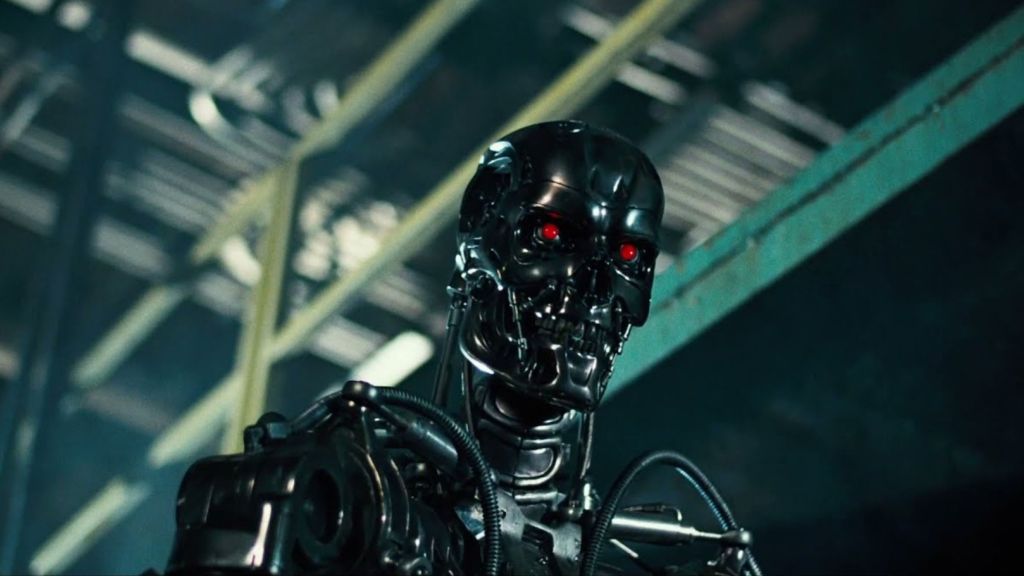
James Cameron’s The Terminator reached its terrifying climax with the reveal of the machine beneath Arnold Schwarzenegger’s flesh, a chrome nightmare brought to life through a combination of stop-motion animation and a life-sized animatronic puppet. Designed by Stan Winston, the full-scale endoskeleton featured glowing sensor eyes operated by radio control and a mechanically articulated jaw driven by cable servos embedded within the skull. For the factory showdown, the production employed the physical puppet for close-up shots where it limped inexorably through the machinery, its skeletal grin fixed and unmoving as it closed in on Sarah Connor (Linda Hamilton). Hamilton’s terrified performance was grounded by the metallic, lurching presence sharing the set with her, with the servos emitting an audible mechanical whine that reinforced the cold nature of the artificial intelligence pursuing her.
3) The Xenomorph Queen

With Aliens, James Cameron changed the sci-fi franchise by introducing breathtaking action set pieces and a broader mythology that includes the Xenomorph Queen. Built by Stan Winston’s team, the sixteen-foot-tall Queen was operated in part by creature performer Tom Woodruff Jr. from inside the torso, while off-screen puppeteers managed the sweeping neck, extending inner jaws, and flared carapace through a network of cables, hydraulic rams, and radio-controlled mechanisms. The production’s centerpiece confrontation saw Ripley (Sigourney Weaver) strapped into a power loader, physically slamming the mechanical forklift against the Queen’s shrieking, lunging form. The sequence’s emotional payoff owes its power to the fact that the actress battled a creature that was actually in the room with her, rather than a digital phantom to be added months later.
2) The Tyrannosaurus Rex
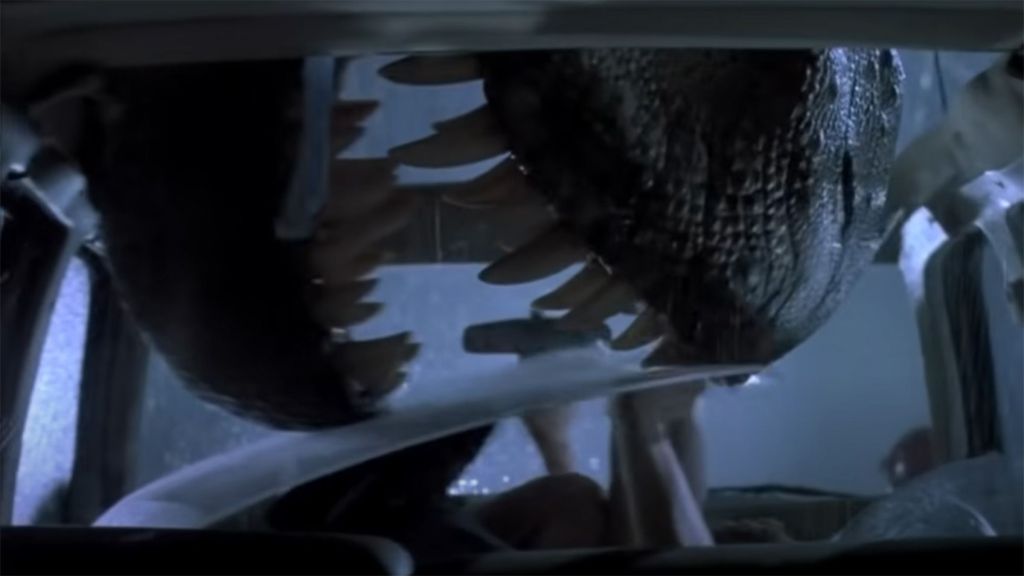
Steven Spielberg’s Jurassic Park resurrected dinosaurs through a revolutionary combination of computer-generated imagery and full-scale practical creatures, and the Tyrannosaurus rex constructed by Stan Winston’s team remains the crown jewel of the animatronic workshop. The forty-foot-long puppet was operated by massive hydraulic systems capable of delivering bone-crushing force and, in quieter moments, the delicate nudging of an overturned vehicle. The creature’s skin was assembled from individually molded scales stretched over a steel armature, while puppeteers worked from a control console to synchronize roaring, blinking, and breathing with the rain-drenched action. For instance, during the attack on the Explorer, Joseph Mazzello and Ariana Richards were directly interacting with a colossal snout, which explains why the movie aged so well.
1) E.T. the Extra-Terrestrial

E.T. the Extra-Terrestrial could never deliver its emotional heights without Carlo Rambaldi’s animatronic puppet performance. E.T.’s face contained an intricate system of cables and levers that allowed a team of puppeteers, working in real time, to produce expressions ranging from curious wonder to the despair of a being far from home. The puppet’s telescoping neck also extended and retracted during moments of alarm, while the glowing heart-light pulsed in rhythm with the creature’s emotional state, all effects achieved through live manipulation beneath the set. Henry Thomas formed a bond with the physical puppet during production, speaking to it as a friend rather than a machine, and that genuine connection radiates through the screen. When E.T. lies dying, and his chest light fades, audiences mourn a character they believe in, which makes E.T. the Extra-Terrestrial a testament to the power of practical puppetry to create the illusion of life.
Which sci-fi puppet do you think represents the absolute peak of practical character design? Leave a comment below and join the conversation now in the ComicBook Forum!
More Movies
-

Image courtesy of Warner Bros. Pictures