From the start, the Marvel Cinematic Universe has streamlined the complex comic book canon to fit a cinematic audience, distilling decades of convoluted continuity into cohesive story arcs that emphasize character motivations over literal translations of the source material. In the franchise’s early years, Marvel Studios’ adaptation philosophy was also particularly evident in the studio’s treatment of superhero costumes, where filmmakers intentionally moved away from colorful spandex in favor of grounded designs and tactical gear. This aesthetic shift was driven by a fear that mainstream audiences would fail to take the movies seriously if the heroes appeared in outfits that were too bright or theatrical for a modern setting. By embracing a utilitarian look, the MCU successfully established a world that felt tangible and contemporary, even when dealing with gods and aliens.
Videos by ComicBook.com
Beyond the initial goal of grounded realism, many comic book designs were simply viewed as outdated or visually incompatible with the medium of live-action film. Outfits that looked striking on a 2D page often fail to translate to three-dimensional costumes, appearing either impractical or unintentionally campy when subjected to realistic lighting and movement. To address this, Marvel Studios frequently overhauled iconic looks to better suit the specific tone of individual films. Over time, the success of these cinematic designs triggered a trend of brand synergy, where Marvel Comics began incorporating MCU aesthetics into the mainline comics to maintain consistency for new readers. Consequently, while many modern comic heroes now mirror their cinematic counterparts, the original MCU appearances represented a significant departure from their established comic book visuals.
7) Gamora
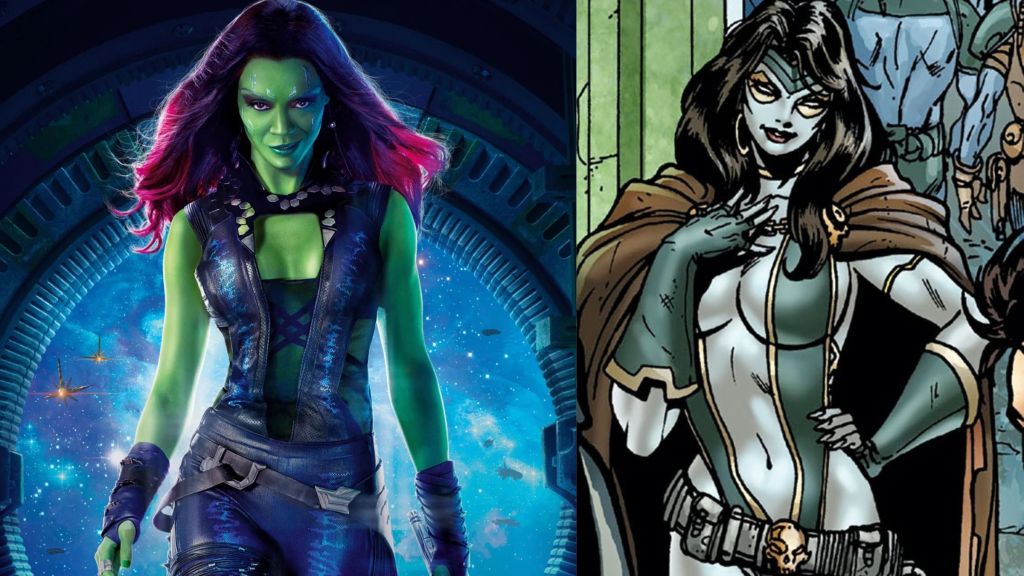
When Gamora (Zoe Saldaña) made her debut in the 2014 film Guardians of the Galaxy, her appearance was a significant departure from the fantasy-inspired aesthetic she maintained in the comics. Historically, the character was known for wearing either incredibly revealing suits or a distinct set of white and gold armor that emphasized her status as the deadliest woman in the galaxy. The MCU version opted for a more practical approach, outfitting the assassin in a combination of dark leather, mesh, and tactical vests. This choice reflected the film’s lived-in space-opera tone, favoring functional gear that felt appropriate for a mercenary on the run. While the change removed some of the otherworldly flair found in Marvel Comics, the fanbase generally supported the move toward a more realistic and combat-ready wardrobe for Gamora. This practical overhaul also ensured that the character felt grounded within the team’s blue-collar dynamic, avoiding the potential campiness of her comic book outfits.
6) Hawkeye
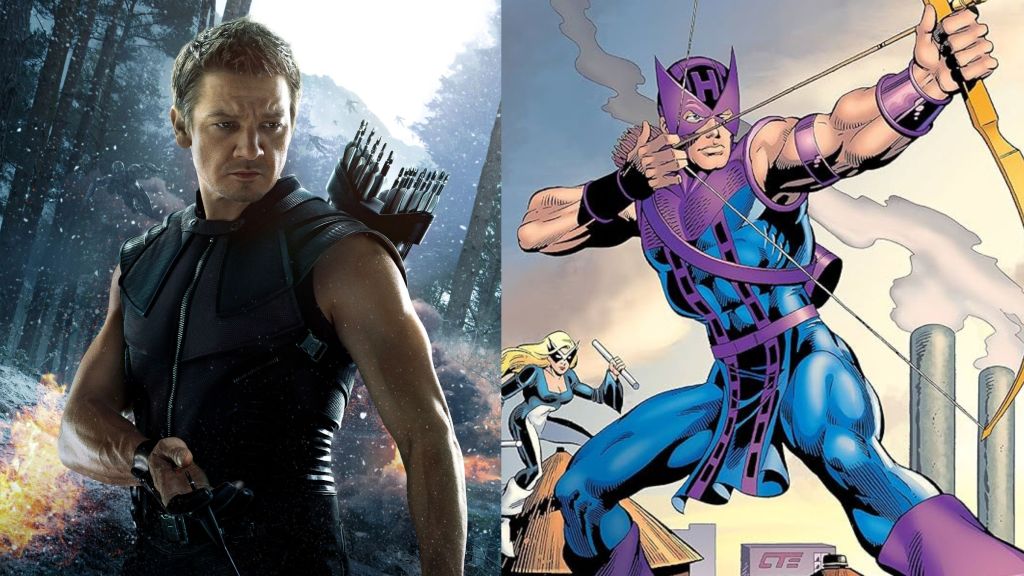
The first appearances of Clint Barton (Jeremy Renner) in Thor and The Avengers saw the character ditch his iconic purple mask and tunic in favor of sleek SHIELD tactical gear. In the comics, Hawkeye’s traditional look was rooted in his history as a circus performer, featuring a flamboyant pointed mask and a bright purple color scheme. The MCU’s decision to provide him with a sleeveless tactical vest and dark trousers was viewed as a major improvement by the fanbase, as it aligned his visual identity with his role as a high-level government operative. This grounded redesign was even echoed in modern future comic book iterations, most notably the celebrated Hawkeye run by Matt Fraction and David Aja. By leaning into functionalism, the studio transformed a potentially silly design into a credible modern hero.
5) Star-Lord
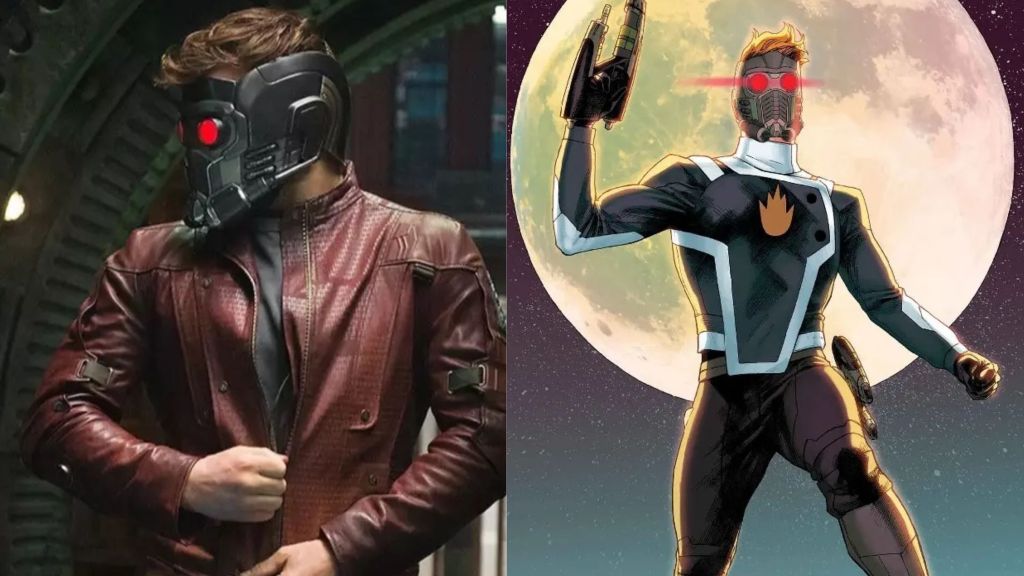
The cinematic version of Peter Quill (Chris Pratt) underwent a radical visual transformation to better fit the roguish persona crafted by director James Gunn. Prior to the release of Guardians of the Galaxy, Star-Lord was most commonly associated with a military-inspired Kree uniform, which he wore during the Annihilation and Annihilation: Conquest comic book events. This uniform included a rigid, full-head helmet that gave him a much more formal and disciplined appearance. The film replaced this soldier-like look with a casual red leather duster, t-shirts, and worn-in trousers, evoking the aesthetic of a galactic pirate rather than a military commander. While the signature mask and glowing red eyes were retained, the overall silhouette was entirely different from the established comic visuals. Despite the lack of accuracy, the change was embraced by audiences, as the red jacket became an instantly iconic symbol for the character.
4) Quicksilver
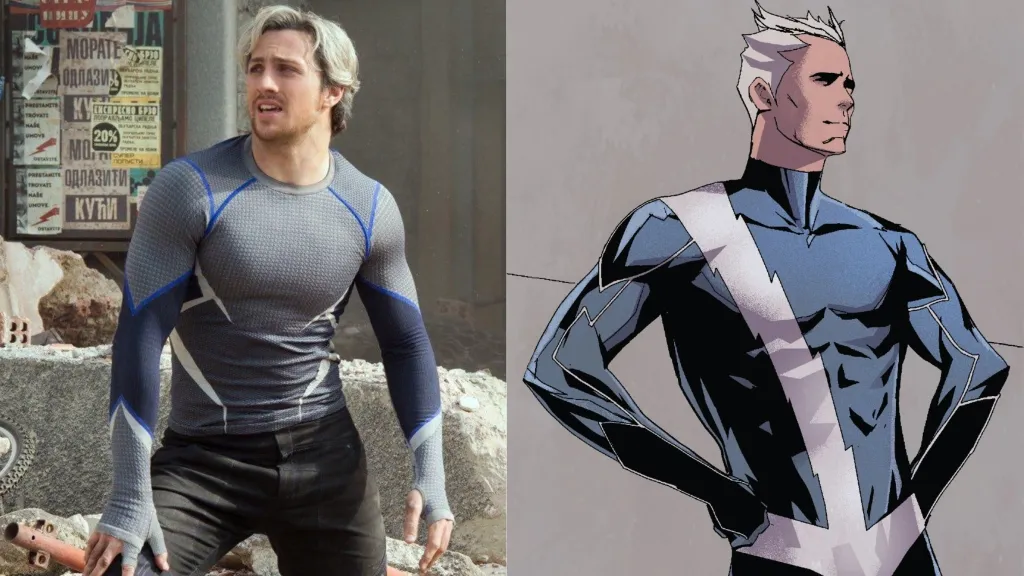
In Avengers: Age of Ultron, the introduction of Pietro Maximoff (Aaron Taylor-Johnson) featured one of the most casual and least accurate costumes in the entire franchise. The comic book version of the speedster is famous for his vibrant blue spandex suits, which almost always feature a prominent white lightning bolt motif across the chest. Instead of the traditional superhero attire, the MCU opted for what essentially amounted to high-end athletic compression gear, including a grey and blue Under Armour-style long-sleeved shirt and running pants. This choice was intended to make Quicksilver’s powers feel more spontaneous, suggesting that the character was simply a young man using whatever gear was available to him. However, the fanbase generally found this look to be underwhelming and uninspired, as it lacked the striking iconography associated with his comic counterpart.
3) Falcon
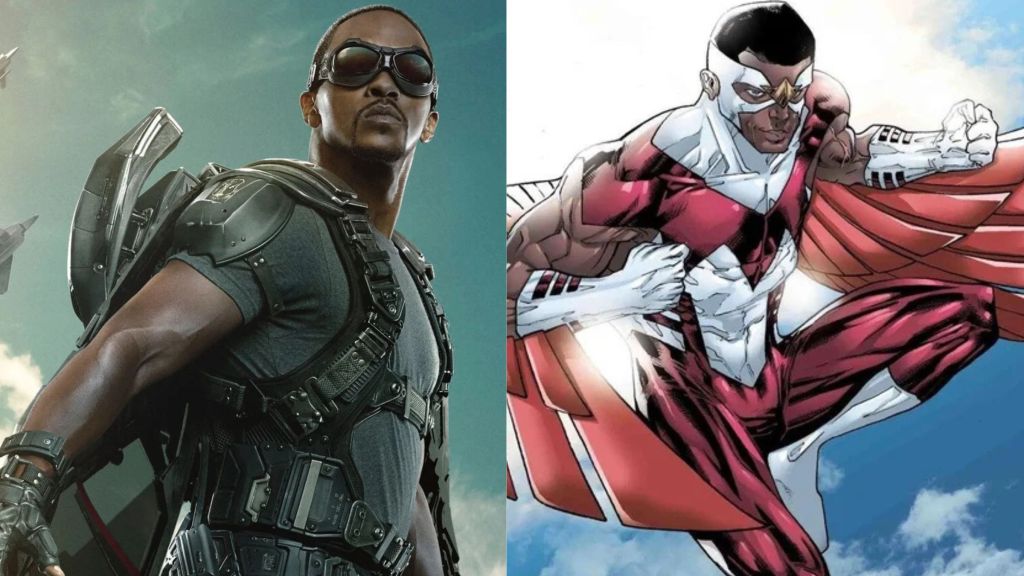
Sam Wilson (Anthony Mackie) entered the MCU in Captain America: The Winter Soldier with a design that completely abandoned the character’s classic superhero aesthetic. In the pages of Marvel Comics, the hero traditionally wore bright red and white spandex, often accompanied by a cowl and actual bird-like wings that allowed for a more fantastical appearance. The film reinterpreted the Falcon as a pararescue veteran, replacing the colorful suit with a grey and olive-drab military flight suit. His wings were also reimagined as a piece of experimental Stark-designed technology known as the EXO-7 Falcon, featuring mechanical rotors and a metallic finish. This drastic departure was widely praised by the fanbase for making the character feel like a legitimate part of a modern military thriller, with the MCU creating a version of Sam Wilson that felt significantly more formidable and realistic than his comic book origins.
2) Mantis

The inclusion of Mantis (Pom Klementieff) in Guardians of the Galaxy Vol. 2 represented a total character rehaul that extended far beyond her costume. In the comics, Mantis was originally a human of Vietnamese and German descent who served as a deadly martial artist and eventually the “Celestial Madonna.” Her traditional look featured human skin and fabric tunics in yellow and green, emphasizing her terrestrial roots. The MCU completely changed her race and origin, presenting her as an alien with large, bug-like eyes and a set of antennae that were far more prominent than the subtle ones seen in print. Her outfit became a green and black leather suit that leaned into an insectoid theme, which was inconsistent with her comic book history. While Klementieff’s performance turned the character into a fan favorite, Mantis’ visual and narrative redesign resulted in a character that was essentially unrecognizable to those familiar with her complex comic book history.
1) Iron Fist

Standing as the most significant departure from source material accuracy, the live-action portrayal of Danny Rand (Finn Jones) in the Iron Fist Netflix series famously lacked a superhero costume entirely. Throughout two standalone seasons and The Defenders crossover event, the character never donned his iconic green jumpsuit, although his signature yellow mask appears in one flashback episode. In the comics, the high-collared suit and the black dragon emblem are central to the character’s identity, representing his heritage as the protector of K’un-Lun. The show opted to keep the character in civilian street clothes or frequently shirtless to showcase his dragon tattoo, which served as his only visual link to the source material. This decision was a major source of frustration for the fanbase, who felt that the refusal to embrace the character’s colorful superhero heritage made this adaptation feel fundamentally incomplete.
Which MCU hero do you think needs a more comic-accurate update in their next big-screen appearance? Leave a comment below and join the conversation now in the ComicBook Forum!
Most Viewed
-
Image Courtesy of Prime Video -

Image Courtesy of A-1 Pictures