How many sci-fi movies can you name that are good from start to finish? Quite a few, right? But the genre also has a tendency to promise a lot more than it actually gives. It often deals with different universes, complexity, advanced technology, and epic-scale storytelling, but it also depends on one basic thing: the film actually needs to know what it’s doing with those ideas instead of just throwing them in and calling it sci-fi. When that doesn’t happen, audiences can obviously tell, and the experience becomes frustrating very quickly. So what started with a strong concept ends up being disappointing instead.
Videos by ComicBook.com
That’s why we put together a list of 7 sci-fi movies that are completely awful from beginning to end. And it’s not just a matter of them simply not being good, but more about a chain reaction of failures, where many elements never manage to come together or align in any meaningful way.
7) Moonfall
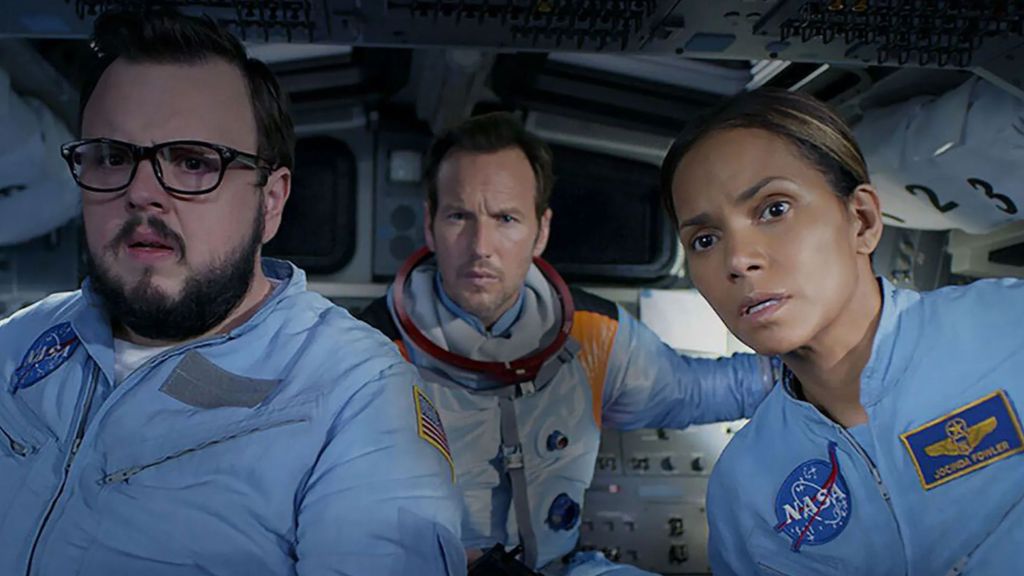
There’s an idea here that stands out right away: Moonfall is basically about the Moon breaking out of its orbit and starting to fall toward Earth. In the middle of all that, Jo Fowler (Halle Berry) and Brian Harper (Patrick Wilson), two former astronauts, along with K.C. Houseman (John Bradley), a conspiracy theorist, try to stop the end of the world. So, given the scale of that premise, this is the kind of movie that could absolutely work as a fun sci-fi disaster film, right? But that’s not really what it wants to be, and that’s exactly the problem.
Moonfall tries to be overly serious and absurd at the same time, without ever finding a proper balance between the two. The script always throws out pseudo-scientific explanations, but none of it really holds together, so you’re just left accepting that things are happening because the movie says so. In sci-fi, that’s a dealbreaker. Besides, the characters are purely functional and not interesting at all; they exist mainly to move you from one explosion to the next. And even the visual spectacle doesn’t save it, because after a while, it all just turns into repetitive CGI destruction with no impact.
6) Starcrash
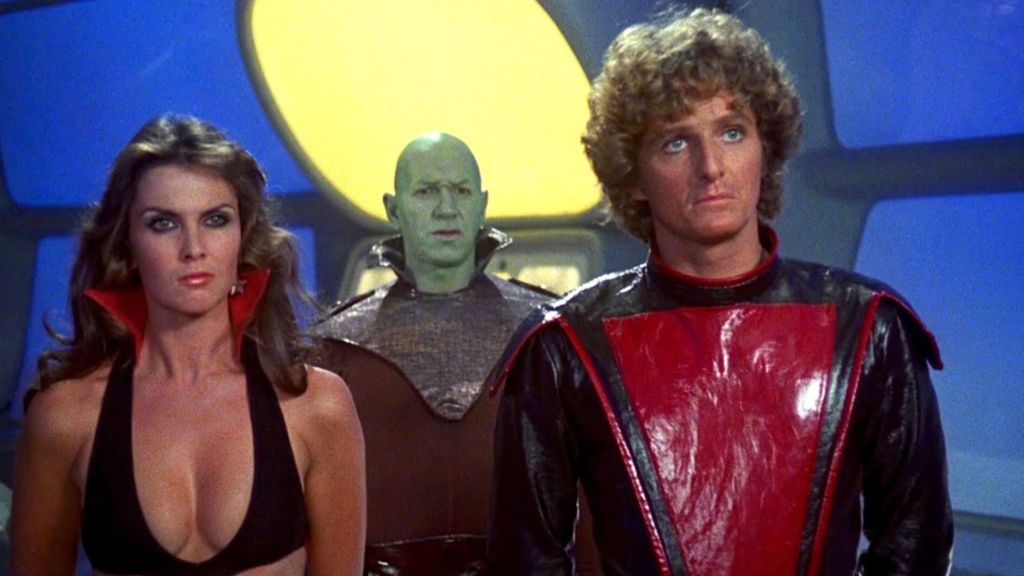
Everyone knows Star Wars, but what if someone tried to make a response to that story? Starcrash is basically that, but it doesn’t understand what made George Lucas’ franchise work in the first place. Here, we get a space opera following space smugglers Stella Star (Caroline Munro) and Akton (Marjoe Gortner) as they take on a galactic empire and the feared Count Zarth Arn (Joe Spinell) in order to rescue the sole survivor of a secret mission. On paper, it sounds like a fun pulp sci-fi adventure, but that’s really just the theory, because in practice, it doesn’t come close to delivering that.
The film has no real sense of rhythm, no visual consistency, and no world-building that actually makes sense. You could maybe excuse some of that, considering it’s a ’70s production, but it’s hard to do so when there is the other landmark sci-fi saga from the same era doing exactly what this one is trying to copy. In Starcrash, everything feels improvised in a nearly chaotic way, as if scenes were shot without much connection to what came before or after. The result is uneven at best; it could have been one of those so-bad-it’s-good cult movies, but instead it’s just hard to follow, lacking both energy and clarity.

5) Jupiter Ascending
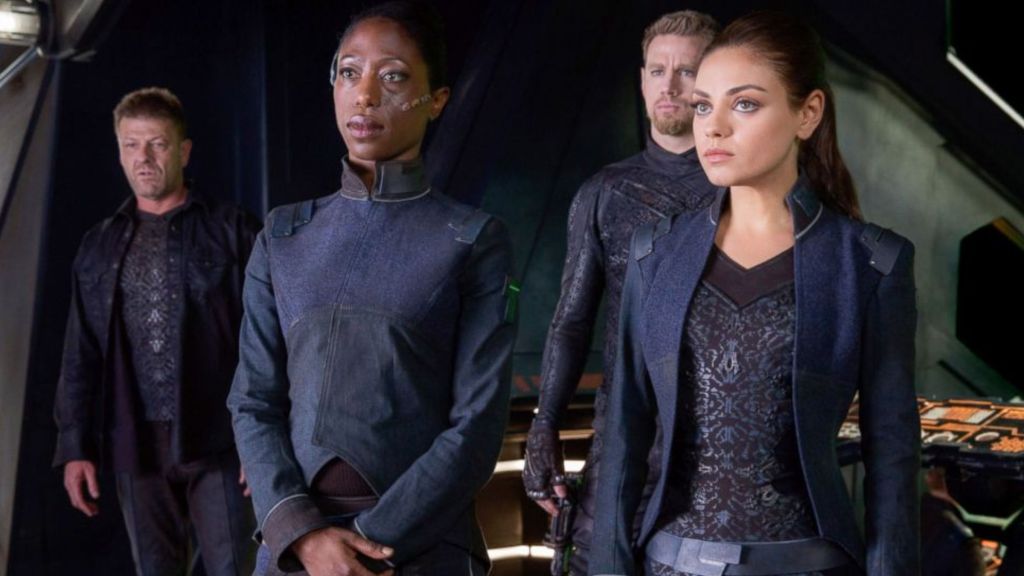
There’s a lot of boldness in the concept here, but unfortunately, the execution doesn’t keep up. Jupiter Ascending tries to tell a massive story about intergalactic royalty, genetics, and power struggles across space. In the story, the titular protagonist (Mila Kunis) discovers she has a cosmic destiny and ends up caught in a war between families that control planets. Overall, there’s a lot of information thrown at the audience, especially because the film is clearly trying to be different and creative — but that kind of ambition needs structure, and that’s what it lacks.
And maybe the biggest issue isn’t even the complexity itself, but the lack of focus. The script keeps introducing new rules for this universe, but never builds a good emotional foundation. So what happens? You don’t really connect with any of the characters, especially Jupiter herself, because she’s always being pushed around by the plot. Even the villains and supporting characters come and go depending on what the story needs at the moment. There’s not even enough time to latch onto anything before the movie moves on. Jupiter Ascending does have interesting ideas, but none of that matters when everything is too messy and complicated to understand.
4) Rebel Moon

Rebel Moon had high expectations leading up to its release, but the audience was left disappointed once they actually watched it (to the point where there’s barely any interest in the sequel). It tries to position itself as the start of a large-scale space saga, where a peaceful colony is threatened and forced to recruit warriors to stand against an oppressive empire. In the story, the focus is on Kora (Sofia Boutella), a warrior with a mysterious past. Throughout the film, there’s a promise that this is a big, important story that deserves its scale, but when you actually watch it, the narrative itself is surprisingly basic.
Everything is pushed toward an extreme level of stylized visuals to sell the idea of a huge sci-fi production, but the story doesn’t match that ambition. The characters are just archetypes with no real layers, and the film never takes the time to give them depth or emotional weight in a way that actually resonates. Plus, the scenes are often developed like trailer moments: visually striking and slow, but without much substance underneath. In the end, Rebel Moon feels less like a great story and more like just a universe being marketed.
3) The Adventures of Pluto Nash

Not many people remember The Adventures of Pluto Nash, and for good reason. The story takes place in a lunar colony in 2087, where the titular character (Eddie Murphy) is a former smuggler trying to protect his nightclub from the mafia. In the middle of that, he gets pulled into a situation involving a villain who wants to take over the entire moon. Here, there’s at least some potential for a light sci-fi comedy that’s easy to watch and occasionally funny, right? But it feels like the idea never got past someone’s head and into any kind of serious development process.
The Adventures of Pluto Nash has humor that doesn’t land, a completely sluggish pace, and a world that has zero personality. On top of that, Murphy himself feels totally disconnected from the project. Nothing really works here — literally. The tone is also all over the place, because it wants to be a comedy but isn’t funny enough for that, and it wants to be sci-fi but isn’t interesting enough for that either. In other words, the movie is just a sequence of scenes that don’t connect properly.
2) Cosmic Sin
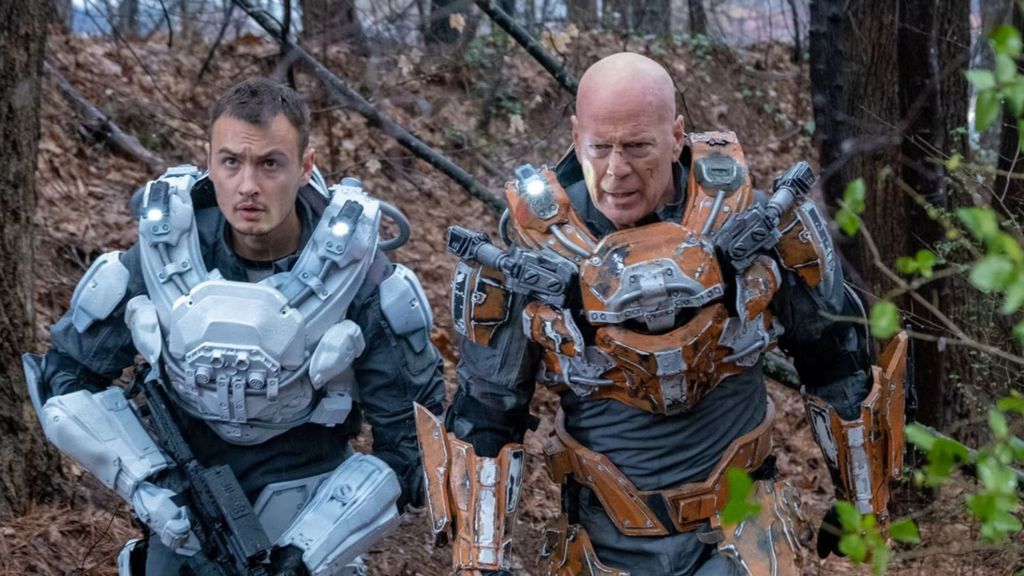
What’s funny about some films that just don’t work is that most of them actually start with a pretty intriguing premise, but completely fall apart in execution. That’s the case with Cosmic Sin, which tries to be a military sci-fi set in 2524, focused on humanity’s first contact with a hostile alien civilization. At the center of it is retired General James Ford (Bruce Willis), who teams up with a group of soldiers to launch a preemptive strike and try to stop an interstellar war before it spreads. And just to give an idea, the production was heavily criticized across the board.
Nothing here is handled in a convincing way because there’s no real tension to pull the audience into the story. The moral dilemma of war is barely explored, and the film never gives weight or consequence to the characters’ decisions. Everything in Cosmic Sin feels rushed and superficial, like it’s just filling time with action scenes and constant exposition. It wants to be a sci-fi movie, but it feels like it doesn’t really understand (or doesn’t care to understand) what actually makes sci-fi work in cinema.
1) Battlefield Earth

There are some movies where you can at least try to find something positive, but with Battlefield Earth, that’s basically impossible, because everything is just bad from top to bottom. The story is set in the year 3000, when Earth has been taken over by an alien race, and humans now live as slaves trying to resist. The protagonist is Johnny Goodboy (Barry Pepper), who leads a rebellion to free Earth from the alien leader Terl (John Travolta). You can see what the intention was: a dystopian sci-fi story that could have worked if it had been carefully thought out in every detail. But the film fails in pretty much every possible way.
Battlefield Earth gets direction, writing, tone, and visuals all wrong at the same time. For example, the constant Dutch angles feel like a stylistic choice from the director, but instead of adding style, they just become distracting because they never stop. On the performance side, Travolta as the villain is a major misfire, since his acting is cartoonish and completely undercuts any seriousness the story is trying to have. And the writing doesn’t help either, because the narrative doesn’t even have a consistent internal logic. This is a movie that falls apart on every level (and remembering it’s based on a book makes it even worse).
What do you think of these movies? Leave a comment below and join the conversation now in the ComicBook Forum!
More Movies
-
Image Courtesy of Warner Bros. -

Image Courtesy of Marvel Comics -

Image Courtesy of Marvel Comics -
Disney – Marvel -

Paramount – Legendary Pictures