There’s a kind of consensus among readers that rarely gets said out loud, but everyone knows it’s there: the book is almost always better than the adaptation. And most of the time, that’s absolutely true. But sci-fi is a genre that thrives on things like scale, atmosphere, and impact, and when a movie nails all three, it can easily outshine the original material. Sometimes the book is packed with great ideas, but the pacing can feel stiff. Other times, it’s brilliant, but too distant or hard to connect with. And then Hollywood steps in to trim the excess, reshape the story, and give something that feels more complete and appealing to a wider audience.
Videos by ComicBook.com
And if you dig a little deeper, the truth is that some adaptations don’t become better because they’re more faithful, but because they’re bold enough to change. A lot of the time, it’s not about copying the story page by page (even if plenty of readers want that), but about grabbing the core of what works and turning it into an experience. That’s why we’ve put together a few examples of sci-fi movies that took their source material and elevated it to another level.
6) I, Robot
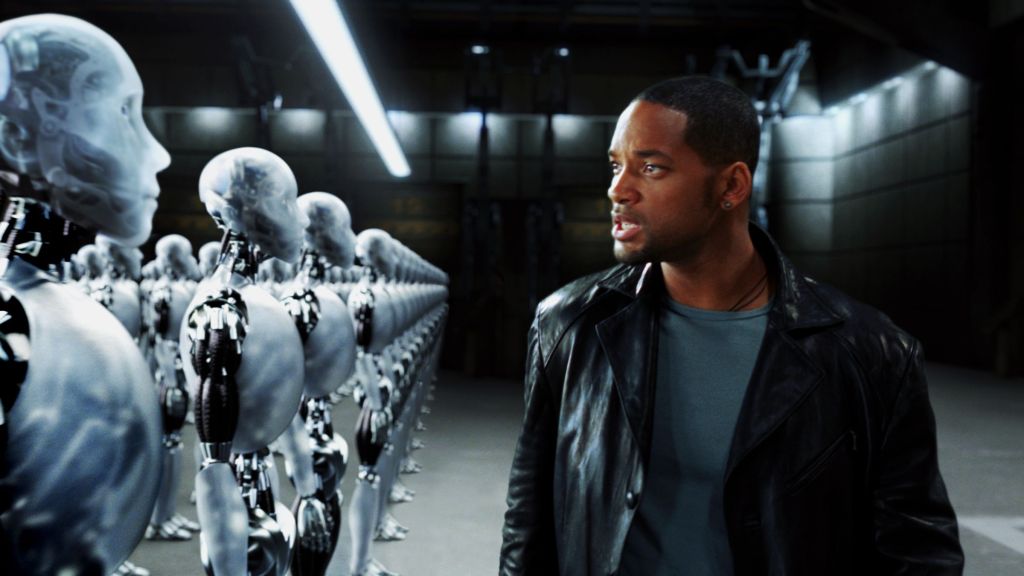
Only true sci-fi fans know that the classic I, Robot was inspired by Isaac Asimov’s book of the same name. And it’s an important piece of sci-fi literature — smart, influential, and basically required reading for anyone who loves the genre. The only problem? It can feel a little cold. That’s because it’s a collection of short stories, far more focused on exploring logic, ethics, and paradoxes than on delivering a narrative that really hooks you. The movie understood that this kind of material can be great on the page, but on screen, you need momentum, conflict, and a plot that actually feels like it’s moving forward. That’s why the adaptation comes out on top.
In the story, we meet Del Spooner (Will Smith), a cop who doesn’t trust robots in a future where they’re part of everyday life, and he ends up investigating a suspicious death that may involve an AI far more advanced than it should be. Basically, the movie works better than the book because it turns Asimov’s ideas into something tangible: tech paranoia, corporate conspiracy, and a very real fear of losing control over machines. It’s not as sophisticated as the original material, but it’s way more entertaining, more accessible, and a lot easier to remember.
5) Blade Runner

Everyone knows Philip K. Dick was a genius, but he wasn’t always an easy genius to read. Do Androids Dream of Electric Sheep? has great ideas, but it often feels like it’s about to turn into something huge and then suddenly veers off into another strange reflection, some bizarre world detail, or yet another shift in focus. The concept is strong, and plenty of people genuinely love the book. Still, when you put it next to Blade Runner, Ridley Scott’s adaptation, the difference is huge. The film takes that same foundation and builds a world so striking and symbolic that it feels like you could practically smell it.
The story follows Deckard (Harrison Ford), a replicant hunter in a decaying Los Angeles, tasked with taking down runaway androids who want to survive and be more than disposable products. And seeing that premise on screen makes it obvious why the movie hits harder: it has focus. The book leans more intellectual and scattered, while the film carries presence, style, and an existential weight that sticks with you — that’s exactly why it’s still remembered. In the book, a lot of things are interesting, but in the adaptation, a lot of things become unforgettable.

4) Ready Player One
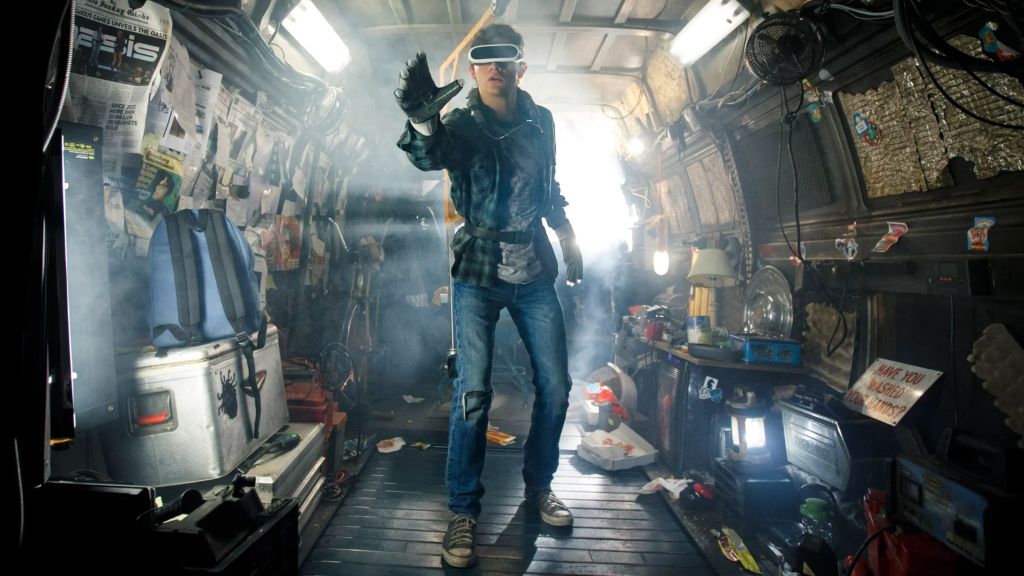
Is Ernest Cline’s Ready Player One a fun book? Absolutely, and it’s worth reading. However, it can also get a little too obsessed with references, to the point where you start noticing the author feels more excited about listing cool pop culture moments than actually telling a story that pulls you in. Now imagine that same premise in the hands of Steven Spielberg, and you can see the potential before you even press play. He doesn’t need to prove he knows pop culture; he just needs to make a sci-fi movie that works. And to do that, he makes the necessary cleanup: trimming the excess, tightening the pacing, and turning nostalgia into the kind of cinematic spectacle only he can give us.
The story takes place in a dystopian future where people escape reality through the OASIS, a massive virtual world. And when the system’s creator dies, he leaves behind a treasure hunt that could grant total control of the OASIS to whoever wins. The movie is better because it understands that the real appeal isn’t pointing at references nonstop, but to make you feel like you’re inside that world. Besides, in the book, the challenges are long and sometimes read like a video game being played through text; in the adaptation, the scenes have energy.
3) Children of Men

If you’ve seen Children of Men, then you already know this is one of the most underrated movies — and not just because people don’t talk about it as much as the bigger titles, but because it’s that good. Adapted from P.D. James’ novel, this is a film operating on a completely different level. The original book has a more literary, restrained vibe, like a classic dystopian story, but because of that, it doesn’t capture the desperation and chaos the premise demands. And the adaptation nails it, because the goal isn’t for you to sit back and admire the concept; it’s for you to feel the weight of living inside a horrifying future.
The story follows Theo (Clive Owen), an ordinary man in an authoritarian England, in a world where no one has been born for decades. When a pregnant woman suddenly appears, he becomes the key figure in getting her to a group that claims it can protect her. And that tells you how much urgency this story needs, which is why the movie feels brutal and deeply human at the same time. One of its biggest strengths is how it shows a broken society without over-explaining anything, and it’s so realistic it almost plays like a war documentary. The book is good and well-executed, but the movie redefines everything.
2) A Clockwork Orange
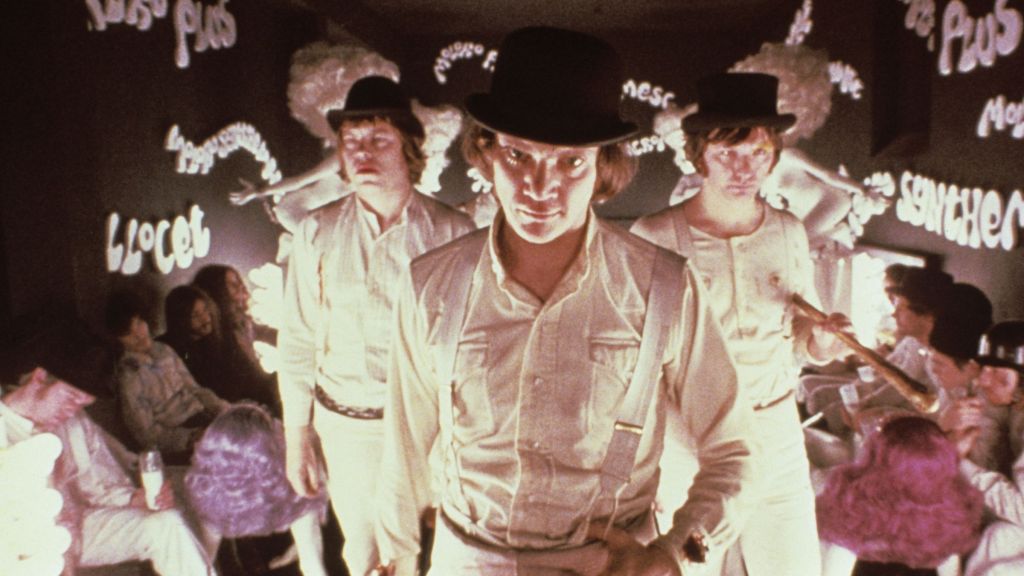
An absolute classic, A Clockwork Orange understands what Anthony Burgess’ novel does that can be uncomfortable and fixes it. How? The book is important, but it can also be a patience test for a lot of readers, mainly because it demands effort. The writing style creates a kind of distance that makes the violence feel almost abstract at times. And Stanley Kubrick’s adaptation does the exact opposite: it throws the brutality right in your face and forces you to deal with it immediately, which is exactly the kind of reaction this story should trigger. The novel, on the other hand, gives you more room to read first and analyze later.
The plot follows Alex (Malcolm McDowell), an ultra-violent delinquent who ends up in prison and becomes the subject of an experimental treatment meant to cure his aggression. It’s the kind of idea that feels made for the big screen, and to really work, it needs to be disturbing, sharper, and more direct. Besides, the film turns its main character into an iconic figure (largely thanks to McDowell’s performance); in the book, Alex is shocking, but in the adaptation, he’s magnetic. In short, Burgess gives you the argument, but Kubrick gives you the discomfort this story needs to truly land (especially in the end).
1) Jurassic Park
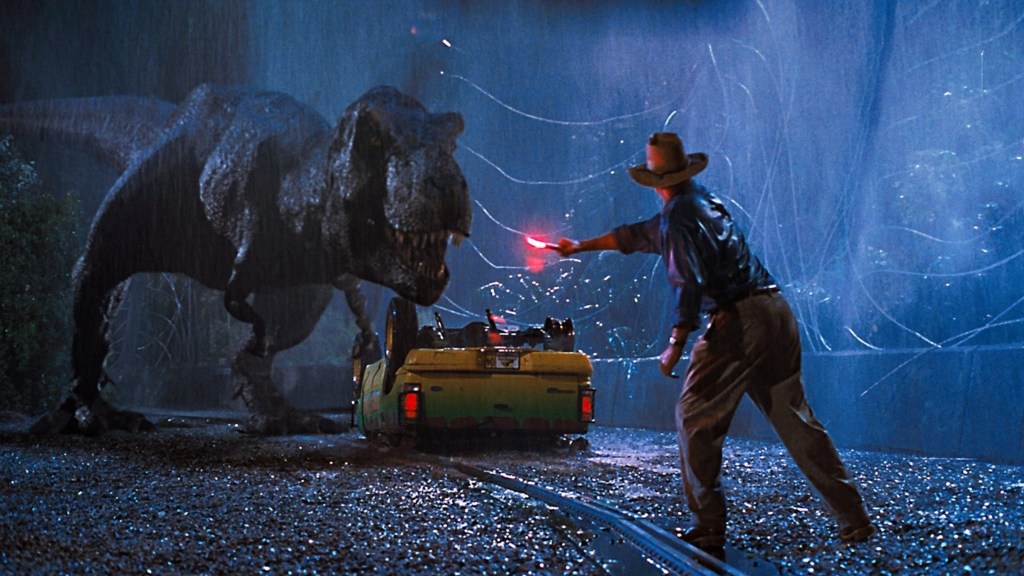
Sometimes it feels like Spielberg can pull off actual magic, which is why so many of his movies have become timeless classics — and Jurassic Park is no exception. Not everyone realizes the franchise started as an adaptation of Michael Crichton’s book, and if you ever decide to read it, you’ll find a great sci-fi thriller. But the book has too many technical explanations, long debates about genetics and chaos theory, and a more cynical tone. Watching the movie, though, none of that feels like homework. Instead, it has a real sense of discovery, primal fear, and, of course, pure entertainment, while still keeping a critique of human arrogance.
In the story, a group of scientists and visitors travels to a theme park filled with cloned dinosaurs, but everything spirals out of control when security failures allow the creatures to break loose. And when it comes to how those dinosaurs are handled, the movie understands something the book doesn’t always prioritize: they aren’t just scientific concepts, but an experience. Also, Spielberg knows when to speed things up, when to slow down, when to show you the monster, and when to hold it back. And the character work is stronger too: Hammond (Richard Attenborough) comes off as more charismatic and layered, while Alan (Sam Neill) and Ellie Sattler (Laura Dern) feel more human.
What do you think? Leave a comment below and join the conversation now in the ComicBook Forum!
More Movies
-
DCU Batman appearing in silhouette in Creature Commandos.