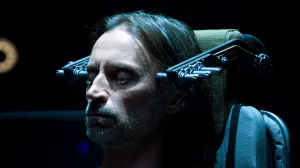
Across its life, Black Mirror has had a knack for upsetting people, not only upsetting people, but doing it at times that are largely built around joy, like Christmas. The very first episode of the series, “The National Anthem,” aka the one with the pig, premiered on December 4th, 2011, and the series has premiered new episodes in the same month as the Christmas holiday and New Year’s, more often than not. There’s even a Christmas special with three twisted, depressing tales that wrap it all up in a bow.
Videos by ComicBook.com
Eight years ago this week, not only did Black Mirror deliver a last-minute Christmas present to fans with the fourth season of the TV series and six glorious episodes, but they also included a major surprise that had gripped fans of the show for six years at that point. With the sixth and final episode of Black Mirror Season 4, series creator Charlie Brooker took fans to an all-new location, the “Black Museum,” which confirmed a fan theory that was considered but never outright proven, until now: every episode of Black Mirror takes place in the same universe.

Black Museum Confirmed All of Black Mirror Is One Connected Universe
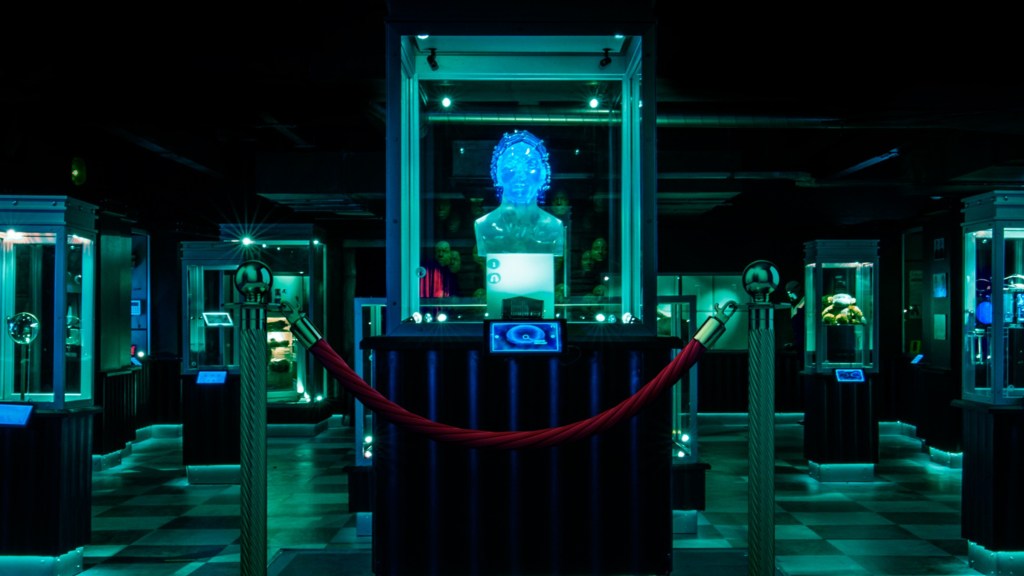
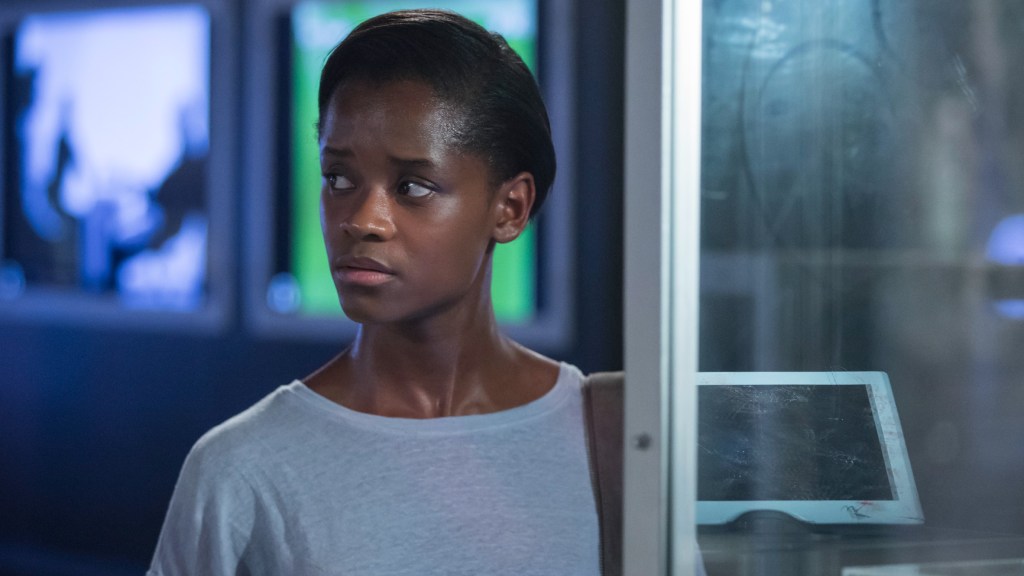
The structure of “Black Museum” as an episode of Black Mirror is a great one. Out in the middle of nowhere, a huckster, Rolo Haynes (Douglas Hodge), has collected artifacts tied to twisted and bizarre stories. Though perhaps well-trafficked at one point, the Black Museum does not get many visitors anymore, prompting a personal guided tour when Nish (Letitia Wright) arrives to take a look at the items, including: a headpiece that allowed a doctor to feel his patient’s pain (which he became addicted to), a stuffed monkey containing the consciousness of a comatose woman, and a sentient hologram of a deathrow inmate. All of these new pieces of tech tied together in a big way with the larger narrative of the episode, but it was the elements on the fringes that fans were especially excited to see.
The stock of the Black Museum isn’t just new items from fresh stories, but also includes elements from previous episodes, even ones that just premiered in Season 4. Among the items from previous Black Mirror episodes that appeared were the killer Victoria Skillane from “White Bear,” one of the robot bees from “Hated in the Nation,” the DNA replicator from USS Callister, the cracked tablet from “Arkangel,” and even a diorama recreating the death of Carlton Bloom, the performance artist who kickstarted the events of “The National Anthem.”
Prior to this, Black Mirror‘s self-referential Easter eggs were largely that, just fun little details and motifs that would appear in other episodes that made it seem like, potentially, all of these stories were set in the same world. This would often take the form of brands and companies, like National Allied Bank, or the chicken restaurant Barnie’s (Bernie’s, depending on the universe you live in), but events of other episodes were largely self-contained, prompting fans to simply speculate that everything in Black Mirror happened all in the same universe. With “Black Museum,” the subtext became text.
Black Mirror’s Big Fan Theory Confirmation Doesn’t Make Sense, But It’s Still Fun
There’s just one problem with the connectivity of all the Black Mirror episodes taking place in one universe: some of them depict a dystopian view of the world so extreme that they can’t all exist in the same place. The biggest example of these is “Fifteen Million Merits,” the second episode of the series, where people work on exercise bikes for a chance to compete on television shows, or simply watch and consume media and food. It seems nearly impossible for this grim view of the world to exist alongside something like “The National Anthem” or even Season 3’s “Nosedive,” but advertisements for the programs in “Fifteen Million Merits” pop up throughout the series.
There’s also the episode “Metalhead,” the only one to be released in black and white, where autonomous drones have taken over the world and hunt down the surviving humans for sport. One could argue that this story is simply set in the far future of the Black Mirror timeline, which could, in fact, be true, as the technology from the episode is referenced routinely. Furthermore, specials like the Black Mirror: Bandersnatch interactive movie complicate things further by referencing other episodes as video games within the world of Black Mirror. This only gets more complicated upon the release of the episode “Plaything,” which acts as a pseudo-sequel to Bandersnatch, which itself references other episodes as stories that have happened. In short, you couldn’t think about it too hard, at least until this year.
Hilariously, though, Black Mirror has found a way to address these Easter egg inconsistencies and actually make all of this make sense. In the episode “Bête Noire,” released earlier this year, Black Mirror introduced the concept of the multiverse to the series, with a character harnessing a quantum computer to simply hop into any alternate timeline and universe that she wished on a whim. In doing this not only did Black Mirror push it science fiction roots to an extreme place, but it also made the Black Mirror Multiverse fully canon, making all of these details and references actually make perfect sense. Does one Easter egg not make sense when put up against another episode? Simply put, they’re in different universes where it does.
More TV Shows
-

20th Television Animation