If you look at the history of sci-fi on TV, you’ll notice how much things have changed, especially when it comes to how stories are built both technically and narratively at the same time. Compared to other genres, this is one of the few that still manages to justify massive scale and ambition without it feeling hollow. And over time, it’s pretty clear that not every new story needs to follow the same “hero + conflict + emotional resolution” manual. These days, it has opened up much more to experimental formats, especially because the streaming era provides both the space (and the budget) for it. As a result, we’re seeing new shows that don’t necessarily try to hook you instantly as if it were a desperate necessity, but instead rely on big ideas strong enough to sustain long-term interest.
Videos by ComicBook.com
That’s the kind of proposal that comes into play here, and it also explains why it’s such a great show to watch and follow while waiting for the epic Dune: Part Three to hit theaters. Both the series and the movie franchise are highly ambitious in quality since they know how to make you want to keep exploring their universes at a slow pace and with genuine curiosity that’s even hard to describe, especially when sometimes nothing huge or flashy is happening in the plot.
Foundation Is a Rare Sci-Fi Epic You Don’t Often See on TV

Apple TV is one of the best streaming platforms when it comes to sci-fi shows, because it really understands what the genre can be in a serialized format across episodes and seasons. And it’s in its catalog that you find Foundation, an adaptation of one of Isaac Asimov’s most famous works, with an ambition that makes it clear we’re not dealing with a story about individual characters exactly, but about entire civilizations in different phases of collapse and reconstruction. With three seasons so far, the premise is psychohistory, a theory developed by Hari Seldon that tries to predict the future of societies using mathematics and statistical patterns. But the focus isn’t on what will happen to a specific character, but on how the whole system will reorganize itself afterward.
And that foundation reflects in the show’s structure, which doesn’t actually rely on a fixed cast, let alone a continuous timeline. Instead, it moves forward in time and forces you to recontextualize everything with each new arc — and that’s where it really sets itself apart from other shows. Even though a lot has changed nowadays, most genre stories are still centered around a small group of main characters with very specific emotional arcs. In Foundation, that simply isn’t the point, since different new characters keep taking over the center.
The whole point of the story is to explore how ideas survive over time, how a decision made in one period affects another completely different one, or how attempts to control the future end up creating new problems in the present. But of course, the character aspect isn’t completely absent or that radical, since, according to showrunner David S. Goyer, the goal was never to lose emotional connection with the audience completely. In the original material, it’s one thing, but for TV, there are mechanisms to avoid a constant full “reset” — things like cloning, cryosleep, and even holographic projections are used to allow some characters to remain active across time jumps. In other words, it’s about balancing the original concept with something more serialized.
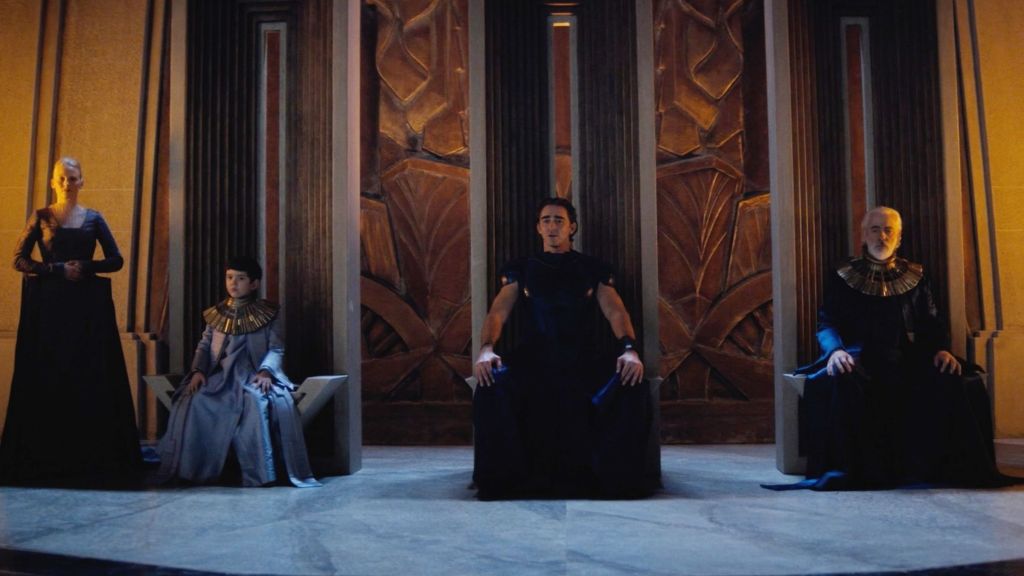
But overall, it’s almost like watching a timeline being edited in real time, with each new arc feeling less like a continuation and more like a consequence of the previous one. You just follow a process — and that process doesn’t have a quick resolution.
If there’s one thing some people criticize about Foundation (aside from the fact that it’s not very faithful to Asimov), it’s the pacing, since it can feel a bit slow. Compared to the books, it actually improves, but the essence of the story can’t really be turned into something fast-paced or action-heavy. Because of that, the show falls into a group of productions that aren’t exactly easy to access. In fact, it wasn’t made for binge-watching, since it also demands a lot of attention. Because of its structure, if you lose focus, you end up missing key elements. But don’t worry, because if the series has one strong point, it’s consistency with what it sets out to do. It’s a complex narrative (because Asimov is a complex writer), but it never stops making sense.
Overall, Foundation is a show made for true sci-fi fans who want to explore a new world with patience. It has a strong story, efficient execution, a grand visual and aesthetic design, and a huge sense of scale, making it perfect for fans of Dune, including. If you fell in love with the universe adapted by Denis Villeneuve, it’s one of the best recommendations.
How Foundation Serves as the Perfect Warm-Up for Dune: Part Three
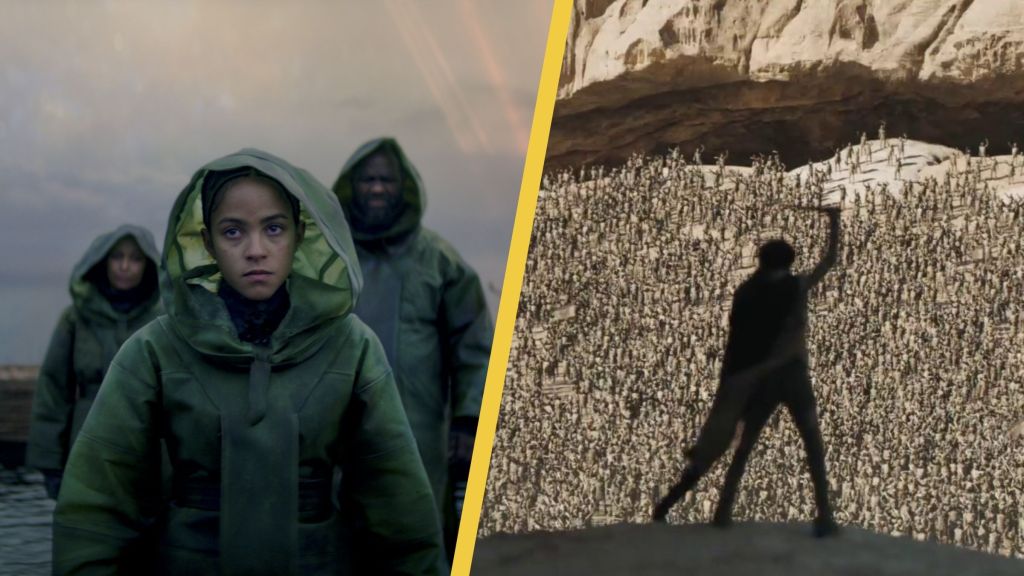
Foundation and Dune are very different works in tone and execution; however, both are built around the same idea: civilizations being pushed forward by forces far greater than any individual can control. And specifically thinking about the upcoming Dune: Part Three, if the first two films were responsible for introducing Arrakis, the conflicts between the Great Houses, and the rise of Paul Atreides to power, the next chapter is going to dive into much bigger consequences. It won’t be just about conquering an empire anymore, but about the weight of ruling it, as well as the impact a single figure can have on billions of people spread across the galaxy. And that kind of scale is something very few productions understand as well as Foundation.
One of the most striking characteristics of the show is its concern with the long term. Since the focus is on ideas, it’s always asking how decisions made today can shape decades or even centuries of history. The Dune franchise is moving toward a phase where the consequences of Paul’s choices will be just as important as the choices themselves, and Foundation is built entirely around that concept. A big part of the series exists to show that historical changes almost never happen all at once, because they are the result of events that keep influencing the future long after the people who caused them are gone from the picture.

And there’s another interesting connection, because Dune and Dune: Part Two were about Paul’s rise, and now it’s specifically about what happens after someone reaches that level of power and influence. And that’s also one of the strongest themes in Foundation, since the series is always exploring how leaders, empires, and beliefs affect societies, as well as the problems that arise when many people start seeing a single individual as the solution to everything. Both stories arrive at these discussions through different paths, but they share a very similar interest in politics, power, legacy, and the attempt to understand or even predict the future (whether through visions or mathematics).
In short, Foundation puts you into the same kind of mindset as the franchise and already starts preparing you for what to expect from Dune: Part Three, where it’s not just about the fate of one character, but about the impact they leave behind for many people. It’s hard to find a show (and even movies) more aligned with these ideas than Foundation.
What do you think? Leave a comment below and join the conversation now in the ComicBook Forum!
More TV Shows
-
Image Courtesy of Warner Bros.