Sci-fi has always had this kind of built-in permission to be more brainy than most other genres, but when it comes to TV, some shows really seem to push that privilege to the limit (in the best way possible). These are the kinds of stories you think you understood, until a question pops up about a key detail you might’ve missed; or the writing structure intentionally scrambles certain information so you can’t grasp everything on the first pass; or there’s a character that throws you off; or the world-building is so dense it’s hard to process while also keeping up with the plot. Either way, whether it’s time travel, parallel universes, or complicated space politics, these series can basically turn you into a detective.
Videos by ComicBook.com
And the thing is that this doesn’t happen because they’re poorly written. If anything, most of these shows are hard to follow the first time because they’re very smart, with clues, hidden connections, and choices that only start making sense later on. With that in mind, here are 5 of the most complicated sci-fi shows that pretty much demand a rewatch if you want to fully absorb and catch everything you were supposed to catch.
5) Dark Matter
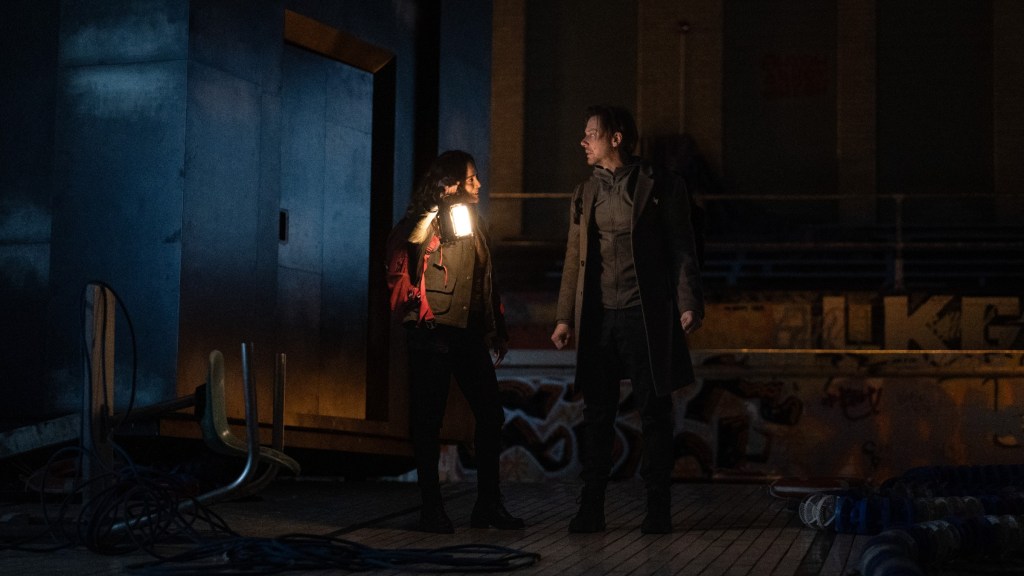
Not many people talk about it, especially considering it’s a show that’s still heading into its second season, but at first glance, Dark Matter looks like just a multiverse thriller. The series follows Jason Dessen (Joel Edgerton), a physicist who gets kidnapped and wakes up in an alternate version of his own life — one where he made different choices and became a completely different person. From there, he has to move through parallel realities to find his way back to his family. But to really get into what the show is doing, you have to remember there isn’t just one Jason; there are many. And each version comes with its own decisions, frustrations, and consequences.
That’s when Dark Matter starts demanding your full attention, because the whole point is seeing how small differences can completely reshape a character’s behavior. In several moments, the show doesn’t clearly spell out which version you’re watching, so you’re forced to pick up on it through tone, body language, and tiny details. Besides, it also dives into more abstract quantum physics concepts like superposition, especially through the Box and the idea that every choice branches off into a brand-new reality.
4) The Expanse

Highly praised by sci-fi fans, The Expanse is still the kind of show people hope will make a comeback. But as beloved as it is, it’s also confusing (especially in Season 1), and not because of its structure, but because of how dense it is. The story takes place in a future where humanity has colonized the Solar System, divided between Earth, Mars, and the Belt. And it all starts with a disappearance that turns into a conspiracy threatening to destabilize the political balance between these major powers. It sounds simple, but it’s a lot of information to absorb all at once.
The Expanse doesn’t simplify anything for the audience. It throws you straight into a massive web of characters, factions, and technical terms that can easily scramble your brain. It can take a while before you understand the dynamics, the context, and how everything connects. There are many dialogues with geopolitical information, every faction has its own agenda, and every decision has long-term consequences. It’s a great show, but it only becomes that great if you actually stop and pay attention; if you’re watching while distracted, you’re going to miss half of what makes it work.
3) Counterpart

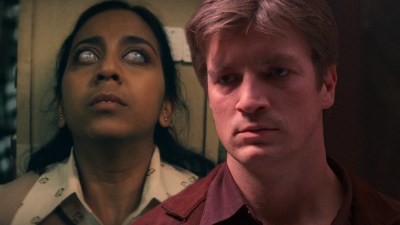
Counterpart is seriously underrated, maybe because it was canceled, but also because it’s the kind of show you rarely see casual audiences talking about. The story starts out like a classic spy drama with an apparently ordinary lead: Howard Silk (J. K. Simmons), a low-level employee who discovers that his agency is secretly in contact with a parallel reality identical to our own. From there, the story reveals that every person has an alternate version of themselves on the other side. Simple? Yes, but the execution is anything but. And until you can follow its non-linear structure without getting tripped up, it takes a while.
The biggest challenge is keeping track of two versions of the same characters at the same time, each one with different motivations and completely different life paths. The show doesn’t stop to spell out who’s who, and a lot of the time, the only giveaway is body language or the way someone speaks. Plus, Counterpart runs on political intrigue, manipulation, and shifting alliances. On a first watch, you’re basically trying to figure out the game while losing track of who’s doing what and why. On a second watch, that’s when you start catching the clues, like the subtle hints about betrayal and hidden intentions that were planted from the very beginning.
2) Foundation
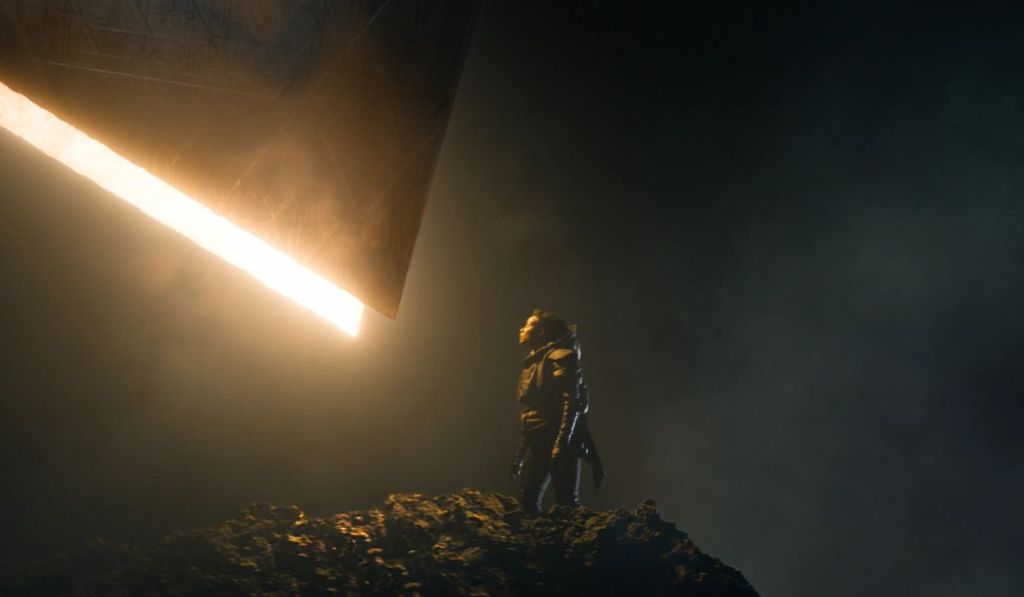
This one is on a whole different level, but Foundation was never trying to be easy. It follows Hari Seldon (Jared Harris), a mathematician who predicts the fall of the Galactic Empire and creates a plan to preserve humanity’s knowledge — that’s the basic setup. But the story expands into big time jumps, several planets, cloned dynasties, and religious and political conflicts all unfolding at the same time. Also, there isn’t one clear main character, so what you’re really watching is an entire system collapsing, and that makes it hard to totally absorb in a single viewing.
More specifically, the complexity comes from the fact that you’re following a historical framework that stretches across thousands of years, with clans, traditions, kingdoms, empires, and groups fighting to protect knowledge — all happening on different planets, driven by shifting political motivations. Decades can pass between episodes, characters disappear while others suddenly take center stage, and some plotlines feel disconnected at first, even though they’re building toward something bigger. Foundation is meant to make you think, so a second watch doesn’t feel optional, but almost like a requirement. There are just too many layers to catch in one go.
1) Dark

The world basically stopped when Dark dropped, and to this day, it’s still remembered as one of sci-fi TV’s absolute peaks. It’s so hard to follow that it literally got an official website just to help viewers track the timelines and characters. The story kicks off with the disappearance of a boy in a small German town, but that mystery is really just the trigger for the show to evolve into something much bigger: a time travel labyrinth built around closed loops and family connections that stretch across generations. And we’re not just talking about a fragmented timeline here; we’re talking about characters literally crossing paths with themselves.
It’s hard to think of any show that matches this one in terms of complexity, because it demands serious mental effort and a ridiculous level of precision to pull off without collapsing under its own logic. The show makes everything even more tangled by always jumping between different life stages and historical periods, meaning characters can run into younger or older versions of themselves, travel through time, form relationships that shouldn’t even be possible, and turn the entire narrative into controlled chaos. Add in some plot twists, and you’ve got the ultimate brain-bender. With Dark, if you don’t have a notebook next to you, you might even need a third watch just to connect every piece.
What do you think? Leave a comment below and join the conversation now in the ComicBook Forum!
More TV Shows
-
Maul With Saber Drawn