Sometimes Stranger Things drops a tiny piece on the board that, at first glance, feels like nothing more than a fun detail or an Easter egg. Then, once you stop and think about it, you realize it’s actually something much bigger. If you’re a fan of the show, following the final season, and obsessed with the countless theories spreading across the internet, you’ve definitely heard the one involving Eleven (Millie Bobby Brown), Kali (Linnea Berthelsen), Will (Noah Schnapp), and D&D. And what’s interesting is that, unlike many wild speculations fans love to dig up from hidden messages, this one truly aligns with the show’s internal logic.
Videos by ComicBook.com
Stranger Things has always treated RPG as a parallel language — practically a secondary script full of spoilers. And to understand why that matters for the final season, here’s a detailed explanation if you’re not familiar with what I’m talking about.
How Eleven, Kali, and Will Could Be the Key to Ending Stranger Things, According to D&D

D&D is an RPG game, and for anyone who doesn’t know, the number 20 on a dice roll is special. Why? Because it’s called a critical hit. When you roll a twenty-sided die and land a natural 20, it doesn’t matter how strong the enemy is, how impossible the attack seems, or how bad your odds are — the critical hit overrides everything and guarantees a perfect strike. No debate, automatic success, and at most tables, it’s even celebrated as a mini-event. Remember in Season 4 when Erica (Priah Ferguson) was called in by Dustin (Gaten Matarazzo) and Mike (Finn Wolfhard) to play with the Hellfire Club and landed a critical hit? That’s exactly what I mean. So some fans noticed that adding Eleven (11), Eight/Kali (8), and Will as “1” ends up making a perfect 20.
The show already taught us that whenever D&D shows up, something important is being explained without being said outright. The surprise return of Kali in Season 5 reinforces this perfectly. For a long time, fans thought the Duffer Brothers had forgotten her Season 2 plot, leaving a loose end behind. But the truth is that she wasn’t abandoned because her story wasn’t clear enough — she was a tool being saved for the right moment. Stranger Things never brings characters back for no reason. Kali has an extremely specific ability (distorting minds and creating illusions) that fits precisely the kind of psychological battle required to face Vecna (Jamie Campbell Bower). If she were just another “lost sister” of Eleven, her return would feel random. But once you see she represents the “8” in the equation, it starts to feel like a chess move.

And then we get to Will. If there’s one character everyone took forever to understand, it’s him. For four seasons, he was treated like a victim, basically the Upside Down’s emotional antenna — the kid who gets chills when evil approaches. But the final season is changing that completely. His connection to the Upside Down isn’t just trauma; it’s a doorway. And that puts him in a position nobody else has: he’s the only character who “hears” Vecna (or Henry/One) from the inside and has access to his powers. Automatically, that makes him the logical “1” in the equation — not as a tattoo, but narratively. Besides, he was also the first victim, and the first is never irrelevant.
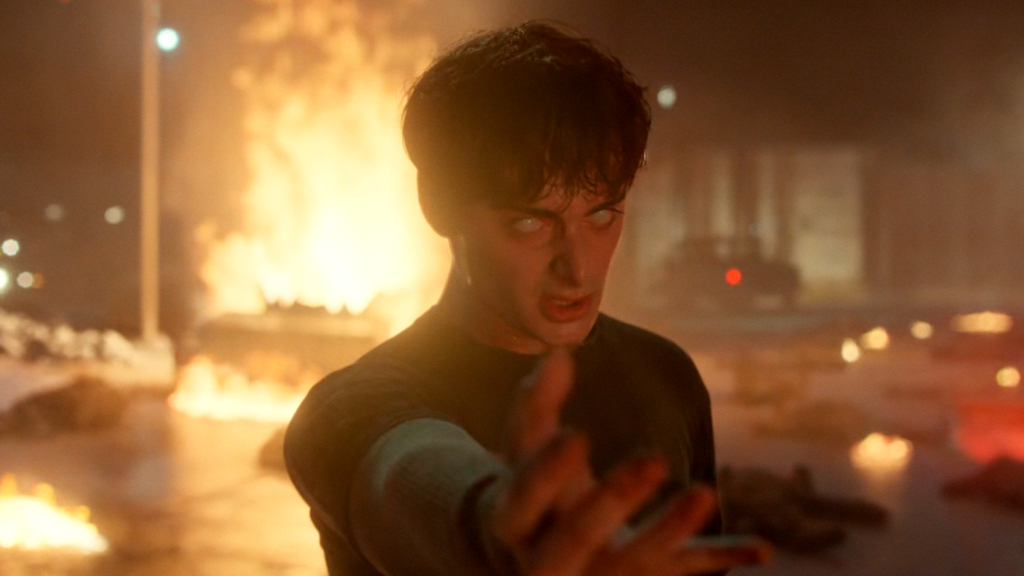
When you combine all three, the “20” stops sounding like a coincidence and starts looking genuinely meaningful. And it gets even better when you remember that already-mentioned D&D scene from Season 4: before Erica rolled the game-changing 20, Dustin rolled an 11 and failed to defeat Vecna. That wasn’t just a cute reference — it was foreshadowing. Eleven failed in real life too, didn’t she? And when the 20 finally appears, the show basically shoves the message in our faces: in the real world, only a “20” can beat the monster. Nothing there is accidental, because Stranger Things has always used RPG to deliver hidden answers.
And here’s the fun part: this detail works whether Vecna is the final villain or not, since another popular theory suggests that the real mastermind isn’t him — it’s the Mind Flayer. And if the show confirms that, the equation still stands. The “20” isn’t about a specific villain; it’s about defeating the creature controlling the board. Still, Will would make more sense in that scenario, since his bond with the Mind Flayer is much deeper. Stranger Things loves narrative parallels, and the idea of the boy facing the entity that marked him from the beginning is dramatically perfect.
The D&D Equation Fits Directly Into Stranger Things‘ Emotional Structure
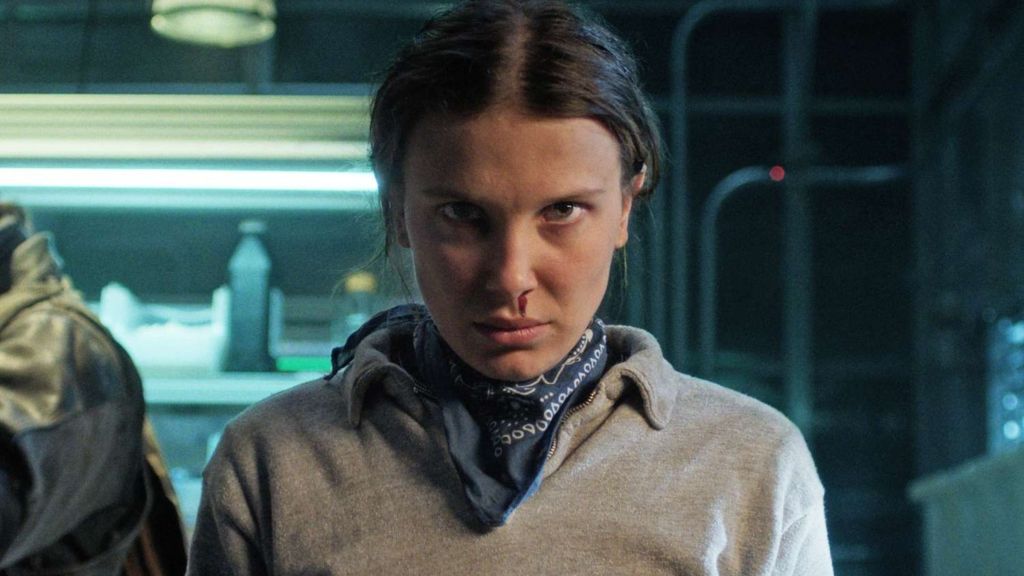
Stranger Things doesn’t have a classic “chosen one;” it’s never been a story where one person saves the world alone. It’s always been about groups, collaboration, and different abilities fitting together (which is also what you expect from an RPG party, by the way). So it makes sense that the final victory won’t be something Eleven does by herself (and honestly, it would feel strange if she could). Vecna is a villain built on mental invasion, so defeating him requires a mix of strength, illusion, and psychic connection. That’s literally what Eleven, Kali, and Will each bring to the table.
And if you look at what Season 5 is doing with Eleven, it’s clear she’s more vulnerable than ever. The writing isn’t setting her up as the sole savior; it’s positioning her as part of a combined strike. And Stranger Things has never been subtle about this, because whenever a character becomes too powerful, the Duffer Brothers immediately introduce limits. Eleven is strong, but she isn’t invincible — and Vecna already proved that. The addition of Kali and Will isn’t just math; it’s strategy. And the best part is that it feels way too coherent: it’s not a theory trying to force symbolism; it’s a detail that simply connects dots the show left scattered for years.
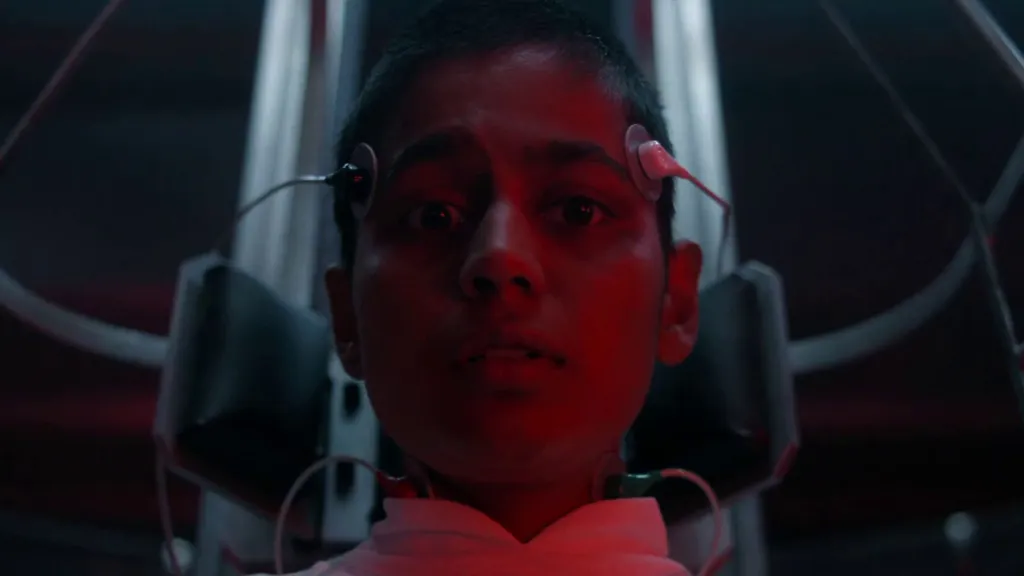
And we know that Stranger Things loves this kind of payoff. The showrunners never waste the chance to turn small details into major conclusions. The series has always followed the logic of “plant now, harvest three seasons later.” Kali’s return, Will’s awakening, the group’s emotional reliance on Eleven — it all feels aligned enough that it’s hard to dismiss as random character work. The D20 math is basically the final flourish.
If Stranger Things truly ends with these three characters joining forces to deliver the final “critical hit,” it’s going to be nearly impossible not to jump off the couch and clap, because it’s brilliant — and it proves exactly why the show reached the level of global phenomenon it has today. It’s not just about defeating Vecna; it’s about a story that always knew its strongest point wasn’t individual power, but what happens when all the right pieces lock into place. And this “20” is exactly that: not a magical number, but the best possible conclusion for everything Stranger Things has built, crafted, and developed over nearly ten years.
What do you think? Leave a comment below and join the conversation now in the ComicBook Forum!
Most Viewed
-

Image Courtesy of ABC -

Image courtesy of Universal Pictures.